Author: akrishnarao

  • From Delhi to Patna: How Student Unrest Reshaped Bankipur

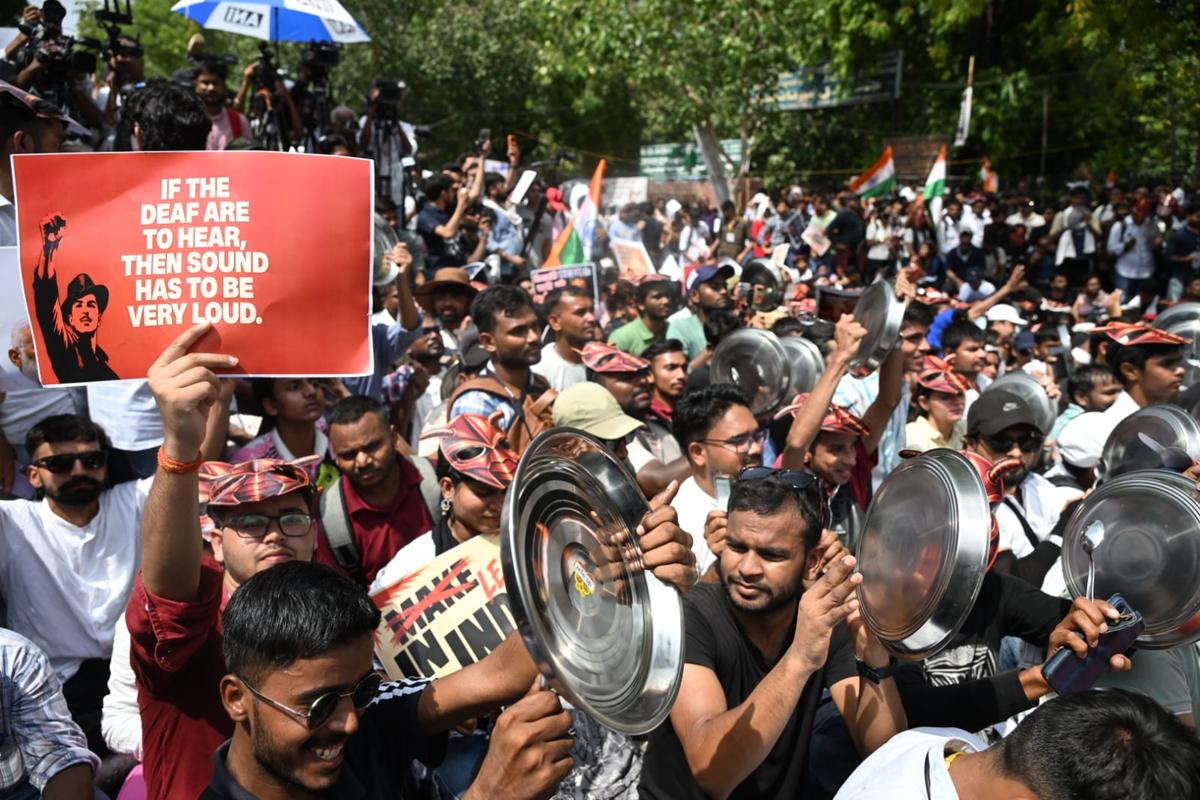
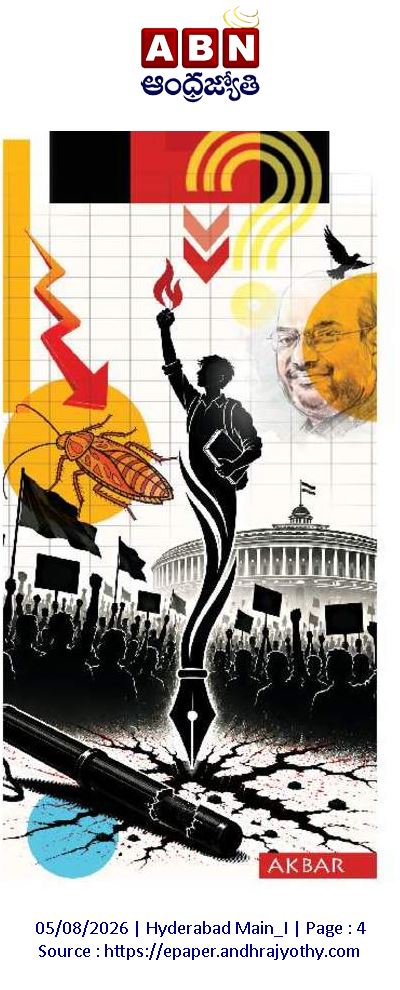
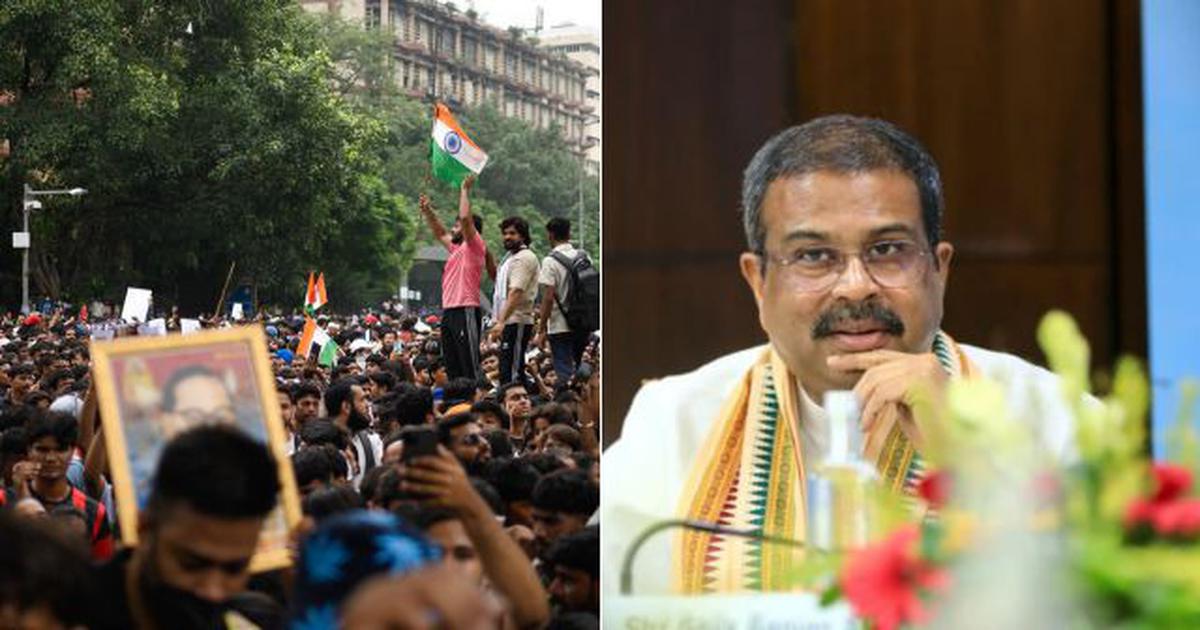
    Even though more than a week has passed since the agitation ignited in the national capital, Delhi, by thousands of students and other forces under the banner of the “Cockroach Janata Party” subsided, its tremors have not yet died down. The situation has not completely settled even after the resignation of Union Education Minister Dharmendra Pradhan. The Opposition is stalling Parliament, demanding a statement from Union Home Minister Amit Shah regarding the lathi charge and firing of pellets on the students. It is gathered that the government, unable to introduce key bills apart from minor and insignificant ones, is planning to adjourn Parliament indefinitely as early as possible. Chief Justice of India Justice Surya Kant—who commented two weeks ago, “Why are you showing us scenes of lathi charge on students? Don’t waste our time”—is now enabling the government to withdraw FIRs against the students. Since the Centre itself approached the Supreme Court in this matter, he appears to be offering the government a way to save face.

    On one side, although his fans and BJP leaders are abusing the students with various words, Prime Minister Narendra Modi announced with a very large heart that he has forgiven them. However, this announcement did not yield the expected positive results. Modi and Amit Shah are coming to Parliament, but they are not getting the opportunity to attend both Houses. Surprisingly, officials themselves say that the Home Minister is not coming to Kartavya Bhavan (the seat of the Home Ministry) at all, and is conducting one or two important meetings in his own room in Parliament. The only incident that made Modi very happy during this crisis was being entertained with songs, dances, and a torrential rain of praise on the occasion of the inauguration of Bhogapuram Airport in Andhra Pradesh. But as soon as he returned to Delhi, the situation returned to the same heat!

    It is unknown how long this troubled period will last, but many observers say that the results of the three Assembly by-elections held during this time indicate a coming change in the country’s politics—especially the election results of the Bankipur constituency in Bihar. Bankipur, a constituency under the Patna Sahib Lok Sabha area in the capital of Bihar, became the center of the Cockroach Janata Party agitation. Recently, when students took to the streets across several cities in the country during the NEET question paper leak, its intensity was seen severely in Patna. Demanding the resignation of Union Education Minister Dharmendra Pradhan, thousands of students residing in colleges and hostels centered in Bankipur marched out in a procession. Normal life came to a standstill on Ashok Rajpath and Boring Road, where a large number of coaching centers for students are located in the city.

    In Siwan and other key districts, the protest turned violent. Incidents such as lathi charges, stone-pelting, use of tear gas and water cannons, burning of police jeeps, and blockades of national highways took place. Videos of students being injured due to firing with AK-47s were circulated. Police barged into private hostels located in the narrow lanes of Bankipur, dragged out students who had come for coaching, and beat them severely. On the single day of the Bihar Bandh called on July 25, 690 people were detained. Murder charges were framed against many. The surprising fact is that while the Bankipur by-election was on July 30, the Bihar Home Department issued emergency orders on July 27 withdrawing all FIRs against the students. Yet, it was of no use.

    In March 1974, when Patna University students laid siege to the Assembly under the leadership of Jayaprakash Narayan, several students lost their lives in the firing and lathi charge carried out by the police. Afterwards, at a public meeting held at Gandhi Maidan in the presence of lakhs of people, JP gave a call for “Sampoorna Kranti” (Total Revolution). The statue of Jayaprakash built at the crossroads right next to the same Gandhi Maidan in Bankipur stands as a direct witness to recent events. In the surroundings of this area, known as JP Golambar, police once again pounced upon students. Before the Emergency, the JP movement spread from Patna to Delhi. Now, the Cockroach protest from Delhi echoed in the streets of Patna. It is no exaggeration to say that this echo decided the Bankipur election results.

    It goes without saying that in Bankipur, which had been in the BJP’s grip for the past three decades, the winner was not Prashant Kishor, leader of the Jan Suraaj Party that lost all its seats in the previous elections, but the students. It was only because he won five times from here that Nitin Nabin was able to become the BJP National President. The reason he gave up his MLA seat to choose the Rajya Sabha was that the top leaders of that party believed the BJP would win there effortlessly. The comment made by former Union Minister and Patna MP Ravi Shankar Prasad—”Even if a dog is fielded there, the BJP will make it win”—is proof of this. However, the BJP’s vote share plummeted from 62 percent to 34.4 percent in just one year! Because Kayasthas constitute 14 percent of the voters in Bankipur, Nitin Nabin used to win from there, as Bhumihars and Brahmins at 8 percent each, Rajputs at 7 percent, Kurmis at 5 percent, and Kushwahas at 3 percent also used to vote for him. In these by-elections, caste equations failed completely. These results must serve as an eye-opener to politicians who rely solely on caste equations!

    The Bankipur election results are merely a warning that the Bharatiya Janata Party must act with extreme caution hereafter in urban areas with high concentrations of middle-class and upper-caste populations. Bankipur made it clear that educated young voters in this country can influence election results. BJP leaders can no longer remain confident that urban areas like Lucknow, Prayagraj, Kanpur, and Noida in Uttar Pradesh, where elections are due in another seven to eight months, will remain their strongholds as in the past.

    Lekha Chakraborty, a prominent economist and professor at the National Institute of Public Finance and Policy (NIPFP) under the Union Ministry of Finance, attempted to scientifically analyze the students’ agitation. In a study, she expressed the view that just because individuals face similar problems, they do not fight spontaneously; when issues like paper leaks and job insecurity become strong motivators, combined with digital technology, youth unite on a massive scale. She stated that there is no connection between degrees and employment, and that only one-fourth of those with degrees get proper salaried jobs. One-third of the Periodic Labour Force lives on self-employment, and most of them depend on agriculture, earning low incomes.

    The ‘State of Working India 2026’ report released by Azim Premji University also confirms the study conducted by Lekha Chakraborty. It stated that although education has become accessible to sections that did not benefit in the past, meaningful opportunities to convert their qualifications into productive employment are not arising. These studies express deep concern over faculty leaving public universities, the decline in curriculum quality, and the falling value of degrees.

    They make it clear that advanced technology can reduce leaks and increase transparency, but it cannot create labor demand or restore the credibility of educational institutions. Economists themselves say that without increasing the education budget to 6 percent of GDP as recommended by the National Education Policy, and without properly building classrooms, providing teacher salaries and training, creating high-skilled jobs, and restoring the credibility of examinations, the problems cannot be solved. They warn that unresolved discontent provides continuous motivation to the people, and government suppression measures raise the danger level and strengthen collective unity.

    If politicians thought as scientifically as economists think, why would problems turn into crises and water flow under their rugs? Famous historian Will Durant did not remark in vain regarding the fall of the Roman Empire: “Great empires are not conquered from the outside; they destroy themselves from within.”
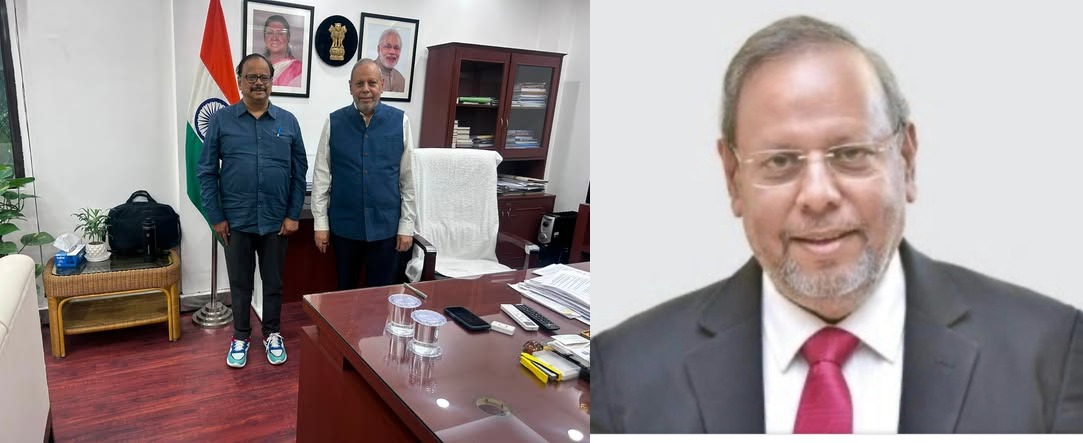
  • ‘India is Flying, Not Dead’: EAC-PM Head Backs Modi Capex Push, Warns on Freebie Risks, and Backs Amaravati Growth Engine

    NEW DELHI — Strongly rejecting claims that India is a “dead economy,” Professor Suryadevara Mahendra Dev, Chairman of the Prime Minister’s Economic Advisory Council, stated that calling the nation’s financial state a dead economy on foreign soil is an insult to the country. Pointing to India’s 7.7 percent GDP growth rate as clear proof of resilience, he emphasized that Prime Minister Narendra Modi’s decisive reform measures—ranging from massive infrastructure capex to Atmanirbhar Bharat and deregulation—are driving the world’s fastest-growing major economy. However, he cautioned that states must curb unproductive freebies and balance welfare with development to avoid long-term debt traps.

    In an exclusive interview with Andhra Jyothy Delhi representative A. Krishna Rao, Prof. Mahendra Dev outlined the country’s macroeconomic trajectory, regional growth dynamics, and structural reform imperatives.

    Growth Resilience, Modi’s Reform Push & The Freebie Warning

    Prof. Mahendra Dev highlighted that two key indicators prove ongoing economic momentum: rising investments and expanding exports. India’s investment rate currently stands at 32 percent, but achieving sustained 7 to 8 percent growth requires pushing this to 34 to 35 percent. While global headwinds—COVID-19, the Ukraine war, international tariffs, the Gulf crisis, and 80 percent crude oil import dependence—continue to exert pressure, policy initiatives under PM Modi are actively insulating the economy.

    • Targeted Manufacturing & Self-Reliance: To counter global protectionism, PM Modi’s focus on manufacturing aims for self-reliance in strategic sectors like semiconductors, rare earths, and microchips. Atmanirbhar Bharat is not a return to the pre-1991 License Raj, but a push to build internationally competitive, high-quality domestic products.
    • Ease of Doing Business: Deregulation and the repeal of obsolete laws under the Modi government have streamlined business operations, though execution needs to accelerate at the state level.
    • Fiscal Prudence vs. Unproductive Freebies: Prof. Mahendra Dev cautioned that unproductive freebie schemes damage long-term financial health and drive up government debt. Welfare benefits must be strictly targeted toward eligible, underprivileged sections rather than affluent beneficiaries. Recalling an anecdote, he shared: “A politician once told me he owns 50 acres of land but still received ₹5 lakhs in his bank account under welfare schemes; people like that do not need schemes like Rythu Bharosa, do they?” While debt should be viewed as a ratio to GDP (with the Centre working to bring its debt down to 50 percent of GDP), states must maintain a strict equilibrium between welfare transfers and productive development spending.

    Manufacturing, Labor & Demographic Strength

    Addressing structural bottlenecks, Prof. Mahendra Dev noted that manufacturing remains stuck at 17 percent of GDP and must expand significantly. Women’s workforce participation also needs to rise from 35 percent to 50 percent.

    On national employment, he clarified that government jobs constitute only 15 to 20 percent of total employment. The remaining 80 percent must come from agriculture, the private sector, manufacturing, and services. Job creation has not halted—as manufacturing grows by 17 percent and services by 53 percent, employment expands alongside. Furthermore, India’s demographic average age of 28 years is a major asset that can be transformed into human capital by aligning education with industry-required skills and integrating Artificial Intelligence into agriculture, healthcare, and production.

    Regional Focus: Capital Development in AP & Telangana’s Growth

    When addressing regional development, Prof. Mahendra Dev affirmed that a newly bifurcated state requires a major, single capital city to generate economic momentum.

    • Amaravati & AP Clusters: Just as Hyderabad generates 67 percent of Telangana’s tax revenue due to its scale, developing Amaravati as the capital will create a multi-faceted economic spillover benefiting nearby Guntur, Machilipatnam, and Vijayawada. Dismissing the YSRCP’s three-capitals proposal as meaningless, he noted that Chief Minister Chandrababu Naidu is simultaneously driving cluster-based development across Visakhapatnam, Tirupati, Anantapur, Rajahmundry, Kadapa, and Kurnool. He added that IT Minister Nara Lokesh possesses a complete understanding of this cluster model.
    • Telangana’s Future City: In Telangana, Chief Minister Revanth Reddy expanding Hyderabad under the prestigious “Future City” project is a right decision that will uplift adjoining districts. Since Telangana also faces a debt load, both states should formulate joint economic growth strategies.

    Historical Legacy & Structural Reforms

    Contextualizing India’s development journey, Prof. Mahendra Dev pointed out that for four decades starting from Jawaharlal Nehru’s tenure, India’s growth rate hovered at a low 3.5 percent. During this era, labor-intensive manufacturing, primary health, and primary education were neglected, whereas China and East Asian nations invested heavily in human capital as early as the 1960s.

    Our pace of economic development went off track right from Nehru’s time, leaving structural problems as a historical legacy, while economic reforms were delayed by 15 years—Prof. Mahendra Dev smiled and remarked, “Everyone was a socialist back then, weren’t they?” While many nations reformed in the 1970s, India implemented reforms in the 1990s under P.V. Narasimha Rao.

    Due to these legacy issues, India’s per capita income remains at around $3,000 (compared to China’s $12,000), meaning the economy cannot run like a tiger just yet. However, growth momentum picked up under the Vajpayee government in 2000 and continues strongly under PM Modi, setting the trajectory toward Viksit Bharat—an inclusive, environmentally sustainable, and fully developed economy.

    Biographical Note

    Prof. S. Mahendra Dev, son of the renowned philosopher, writer, and polymath Sanjeev Dev, was born in Tummapudi in Guntur district. He holds a Ph.D. from the Delhi School of Economics and completed post-doctoral research at Yale University. Over a distinguished career, he has held key leadership positions—including Director and Vice-Chancellor of the Indira Gandhi Institute of Development Research (IGIDR) established by the Reserve Bank of India, Chairman of the Commission for Agricultural Costs and Prices (CACP), and Director of the Centre for Economic and Social Studies (CESS) in Hyderabad.

  • Mid-Course Correction: Why Dharmendra Pradhan’s Exit is a Wake-Up Call

    ‘Today’s youth have not strayed from the right path. They are not acting without direction. One should engage in discussion with them, but not control them. They ask for reasons, not rules. They seek explanations. Curiosity is their trait. Rebellion is their nature’.. These words were spoken not by some Communist leader, but by Rashtriya Swayamsevak Sangh chief Mohan Bhagwat. On July 24, as he was speaking these words at the Vishwa Mangalya Sabha held at the Ambedkar International Centre.. just one kilometer away at Jantar Mantar, an aggrieved group of youth was expressing intense anger. Exactly 24 hours later, Union Education Minister Dharmendra Pradhan resigned from his post. ‘Though delayed, a good thing was done in the end..’ commented 92-year-old Murli Manohar Joshi. A day before Bhagwat made his statement, that veteran grandee commented that the lathicharge on students was atrocious. Joshi also justified that the students’ anxiety regarding the examination system was legitimate.

    Examining these developments closely reveals that it was not only the pressure from the youth, but also the pressure from internal forces within the BJP and the Sangh that led to Dharmendra Pradhan’s resignation. It also becomes clear how much internal disquiet the intensity of the Cockroach Janata Party’s protest demonstration at Jantar Mantar created within the BJP, albeit belatedly. Sonam Wangchuk, an educator and environmental activist from Ladakh who strengthened the Cockroach Janata Party’s protest through his hunger strike unto death, was once a supporter of Modi. When Article 370 was revoked and Ladakh was separated from Jammu and Kashmir, he overflowed with joy. When the BJP promised to include Ladakh in the Sixth Schedule, he campaigned in favor of the BJP during elections. Wangchuk even turned down Rahul Gandhi’s invitation to participate in the Bharat Jodo Yatra. The BJP turned such a person against itself. Not just him, among the young men and women who came to Jantar Mantar, there were many who once admired Modi and the BJP and later turned against them. ‘I too voted for Modi along with my parents. When I was coming to the Jantar Mantar demonstration in Delhi, they did not raise any objection at all,’ said a young woman. BJP leaders themselves say that even in the houses of several Union Ministers and MPs, their children expressed solidarity with the CJP demonstration. In the Jantar Mantar demonstration, many engineers, fashion designers, MBA and law students, and children of farmer families were seen from several states along with Punjab, Mumbai, Haryana, and Telangana. Wearing loose jeans, t-shirts, various kinds of attire, and bands tied around their heads, these youth cannot be linked to any political party.

    It is surprising that these very students are deciding the Parliament’s agenda today. After the commencement of the monsoon session of Parliament, the Lok Sabha functioned smoothly for the first time on Tuesday afternoon after seven days. The students were the reason for that. They were responsible not only for Dharmendra Pradhan’s resignation, but also for the government hastily bringing a bill to prevent irregularities in exams, for the Prime Minister announcing this bill late at night, and for the opposition finally agreeing to a debate. From Smriti Irani to Dharmendra Pradhan, four education ministers have changed during Modi’s tenure. During every education minister’s tenure, there was some controversy or the other. But the situation of having to resign due to student pressure arose only for Dharmendra Pradhan. When Dharmendra stepped into the Parliament premises after resigning, BJP MPs gave him a grand welcome chanting ‘Zindabad’ to him. They crowned him. For what? On whose orders and why did they honor him? It is clear that this was done to claim that even when knocked down, their upper hand remains. Who suffers the loss due to this? Is it not them?

    Many people across the country connected with the young men and women who conducted a peaceful protest demonstration for over a month, demanding that the Education Minister take moral responsibility for the exam paper leak. When they marched towards Parliament and their heads were fractured by lathicharges, and pellet fragments penetrated the bodies of those youths, many felt deep anguish. If those in the CJP were anti-social elements, why did Union Ministers hold three rounds of discussions with their representatives? Why did they promise to discuss reforms in the education system with them as well?

    In reality, in every movement, some amount of violence and destruction keeps taking place. Even in the Sampoorna Kranti movement led by Jayaprakash Narayan, there were allegations that a conspiracy was hatched to blow up railway bridges with dynamite. Violence broke out during the anti-reservation movement as well. Many times, after police brutality occurs, this angle of anti-social elements is brought forward to justify it. That alone does not take away credibility from the entire movement. Portraying every protest as a crime might work for a while, but it will not work at all times. Those in the ruling system must learn to respect the anger of protesters. Otherwise, a permanent hostility towards governance systems will be formed. This wisdom is evident in the comments made by Mohan Bhagwat, even if belatedly.

    Actually, had Congress acted properly, the need for students to take to the streets would not have arisen. Congress did not raise its voice strongly until after seeing the response to the formation of CJP on June 6. After the paper leak occurred in the first week of May and the exam was cancelled on May 12, Congress did not make enough efforts to respond strongly and hold the government accountable. Rahul Gandhi, who organized a student rally named ‘Chatron Ki Goonj’ in Kota, Rajasthan on June 17, disappeared for the next 23 days and spent time in Germany. Rahul showed signs of movement again only after the founder of CJP entered Delhi and intensified their protest, with just three days left for the Parliament session to begin. It was proven that if there is no continuity and daily active presence in politics, the situation goes into someone else’s hands. Congress must realize that theatrically organizing dharnas and getting arrested as in the past will not gain public sympathy. Since 2014, Congress has been stalling Parliament and holding protests. What change has come in electoral politics or in the government’s stance? With just a month-long protest, the Cockroach Party was able to make the government back down. Why did Congress and the opposition lack such moral strength?

    Just because bills are introduced in Parliament, it cannot be said that changes will come in the education system. Just by opening new IITs and medical colleges, the quality in higher education cannot be improved. To this day, not a single Indian university finds a place among the top hundred universities in the world. Even though the size of the Union Budget increases enormously every year, the share allotted to education in the Union Budget over the last 12 years has decreased significantly. In 2013–14, 4.65 percent of the total Union Budget was allocated to education, whereas by 2025–26, that share has fallen to 2.5 percent. Priority in the country is decreasing not just for education, but also for research. Going into the pages of history reveals that during the Congress regime, BJP leaders like Murli Manohar Joshi, Arun Jaitley, Sushma Swaraj, Narendra Modi, and others heavily criticized educational standards, facilities in educational institutions, and the lack of connection between higher education and employment. So to what extent has the situation changed now? Despite test papers leaking multiple times, why did the idea of setting up fast-track courts not arise earlier until students came onto the streets? In 2024, re-examinations were not conducted in certain test centers until the Supreme Court intervened. Now, the entire examinations had to be cancelled. Moreover, they are promoting it as a grand achievement that they are organizing exams properly on a war footing without loopholes. Days might even come when they claim in election manifestos that they conducted exams properly without paper leaks!

    PM Modi described the intervening period until achieving Viksit Bharat by 2047 as Amrit Kaal. The protest by the swarm of cockroaches during this Amrit Kaal should be considered, in a way, an auspicious development that served as an eye-opener for the government. Dharmendra Pradhan’s resignation need not be considered a humiliation. It should be regarded as an opportunity to engage in self-introspection over the developments that occurred and take appropriate measures. Perhaps realizing this very fact, Infosys co-founder Nandan Nilekani was entrusted with the responsibility of Chairman of the Task Force on NTA exam reforms. It was under his leadership during the UPA tenure that the Aadhaar project, which stood as the largest biometric identification system, took shape. He played a key role in the digital transformation currently visible in the country. Technical experts and intellectuals have no affiliation with parties. That is why Modi entrusted him with key responsibilities. If the government moves forward in this same direction and takes steps to bring key changes in the governance system rather than always focusing on politics, there is no one who would not appreciate it. There is an opportunity to take such mid-course correction measures in another three years. If that does not happen, the ruling party itself stands to lose!

  • The Uncontainable Anger of India’s Disillusioned Youth

    “A small body of determined spirits fired by an unquenchable faith in their mission can alter the course of history,” said Mahatma Gandhi. India now seems to be moving toward an indefinable change. The siege of Parliament on the first day of the Monsoon Session in the national capital on Monday by activists of the Cockroach Janata Party (CJP)—who have been protesting for a month demanding the resignation of Union Education Minister Dharmendra Pradhan, holding him responsible for the NEET question paper leak—must be called a monumental development in recent times. Despite setting up four-tier barricades, deploying large-scale forces of the Rapid Action Force, CRPF, Delhi, and Tripura Police, closing metro stations, and shutting down the internet, the Cockroach army, thousands strong, charged up to the gates of Parliament. Even as the police beat them severely, the young men and women displayed sheer daring. The young people lying with injuries at Ram Manohar Lohia Hospital are direct witnesses to Monday’s brutality.

    It is clear that the Modi government, which remained unmoved despite a decade of attacks and criticism from the opposition, has been put on the defensive by this incident of the cockroach rebellion. A BJP MP said that it is not important how many people participated in the movement launched by the Cockroach Party, but how much impact it had. “My father is a very important leader in the BJP. However, the unfolding developments are not very healthy…” said a youth who participated in the Jantar Mantar protest. “Where politicians fail, children will question,” said a student.

    In reality, the Cockroach Janata Party is not an organization. It is a crowd of directionless young men and women in the country’s contemporary history. Those who came to the protest at Jantar Mantar or participated in the procession did not come because someone paid them. No one arranged buses or trains for their arrival. The discussion happening merely on social media made them set out for Delhi. They did not come raging only over the NEET question paper leak. The young men and women who came were simply fed up with the problems faced by youth—especially unemployment, meager salaries, systemic flaws, and the machinations of political parties. Those who came to the Jantar Mantar protest site did not have a specific goal. Youth aged between 14–28 cannot be fitted into the mold of Left or Right ideologies. The Emergency is not part of their experience. They do not know about Loknayak Jayaprakash Narayan, who once united the opposition. They lack even the experience of the Mandal and Kamandal movements. They have no memories of events that happened three decades ago. Struggling with contemporary issues, unable to decide what to do, with an uncertain future, and arriving with various questions… they are not bound by any traditional rules. Over the past four weeks, this protest platform served as a space where they asked their own questions and provided their own answers. That protest was widely publicized on social media. Examining alternative media sources makes one understand how concerned the youth were about the health condition of environmental activist Sonam Wangchuk, who has been on a hunger strike for more than three weeks.

    Believing that the opposition lacked credibility, that there was no alternative to them, and that whatever they did would pass, the Modi government seems to have underestimated the emergence of the Cockroach Janata Party. The Modi government was easily able to deal with the long-drawn protests by farmers over farm laws and Muslims over the Citizenship Amendment Act. It did not listen even to the cries of female wrestlers who questioned the assaults committed against them. Whichever movement occurred in the country, it adopted various means to damage its credibility. It berated the protesters with various names. The Modi government thought it would be enough to treat the surge of youth protest as a law-and-order issue and suppress it. As the Cockroach Party protest was reaching its peak, Delhi Police Commissioner Satish Golcha was removed and replaced by Anurag Kumar, who until then served as Special Director (Intelligence). As the in-charge of the Jammu & Kashmir desk, he played a key role in dismantling terrorist activities in Kashmir. There is no surprise in such a person attempting to suppress the youth protest with the same mindset.

    During the UPA government’s tenure as well, young men and women flooded the streets against the Nirbhaya rape incident. However, back then, social media was not as influential as it is now. There is no doubt that social media today has become an alternative media for the public. In fact, when Modi came to power, the BJP IT Cell carried out various campaigns to mobilize people, especially to inflame the emotions of Hindus. In particular, it made extensive use of WhatsApp groups. Today, those IT Cell campaigns seem to fade before the social media in the hands of the Gen Z generation. This development proves that if any campaign is not aligned with the sentiments of the people, it will not last long.

    The current generation has not failed to notice that the promises with which Modi came before the people have vanished into the background, and emotional issues have become the main agenda. Leave aside the failure to create jobs; they are closely observing the inability to conduct even exams properly, the failure to provide quality education, and the resorting to numerous machinations and unrighteous wars solely for the sake of power. Nevertheless, there is no evidence to say that the current generation is placing the opposition, especially the Congress, on a pedestal. It is an undeniable fact that for a decade, the Congress and other parties have failed to ignite public anger against Modi. However, no one expected that youth would step up where the opposition failed. If the Congress party had acted as a strong opposition and reflected the aspirations of the youth, the Cockroach Janata Party would not have emerged. It is an interesting point that many forces that failed to confront Modi are now visible in the Cockroach army.

    Strangely, on the first day of Parliament’s Monsoon Session, people did not care about the bills the government intended to introduce or the issues the opposition wanted to raise. The ‘Chalo Sansad’ call given by the Cockroach Janata Party received immense publicity. In a way, this development questioned not only the existence of the government but also the existence of the opposition. Congress leaders, who had been silent all this while on the Cockroach Janata Party protest, making a hue and cry about the lathi charge on the youth, or Rahul Gandhi protesting in front of the Prime Minister’s residence, are all part of Congress trying to prove its own existence. Time alone will tell whether Congress will resurrect itself as a strong opposition learning from the experience of the Cockroach Janata Party. Even for Modi, it is fortunate for the opposition to exist at least to some extent. Otherwise, there are chances of more entities like the Cockroach Janata Party being born.

    Moral responsibility has become an unacceptable taboo in present times. Today, there are no leaders like NTR, who made the entire cabinet resign because the budget was leaked, nor are there ministers who take responsibility and resign for train and plane accidents. When Dharmendra Pradhan is constantly utilized to win elections for the party, how can he focus on his ministerial responsibilities? It is true that Dharmendra Pradhan, who efficiently strategized for the BJP’s victories in Bihar, Haryana, and Bengal, did not manage his ministry efficiently. However, that mistake is not entirely his. Treating their party’s victory in elections as a matter of life and death and diverting all energy and skill in that direction is the cause of the failure of leaders like Dharmendra Pradhan. Will the Modi government act with sincerity at least now to take responsibility for the mistakes committed and build public trust in system institutions?

  • Is India’s Judiciary Losing Its Autonomy?

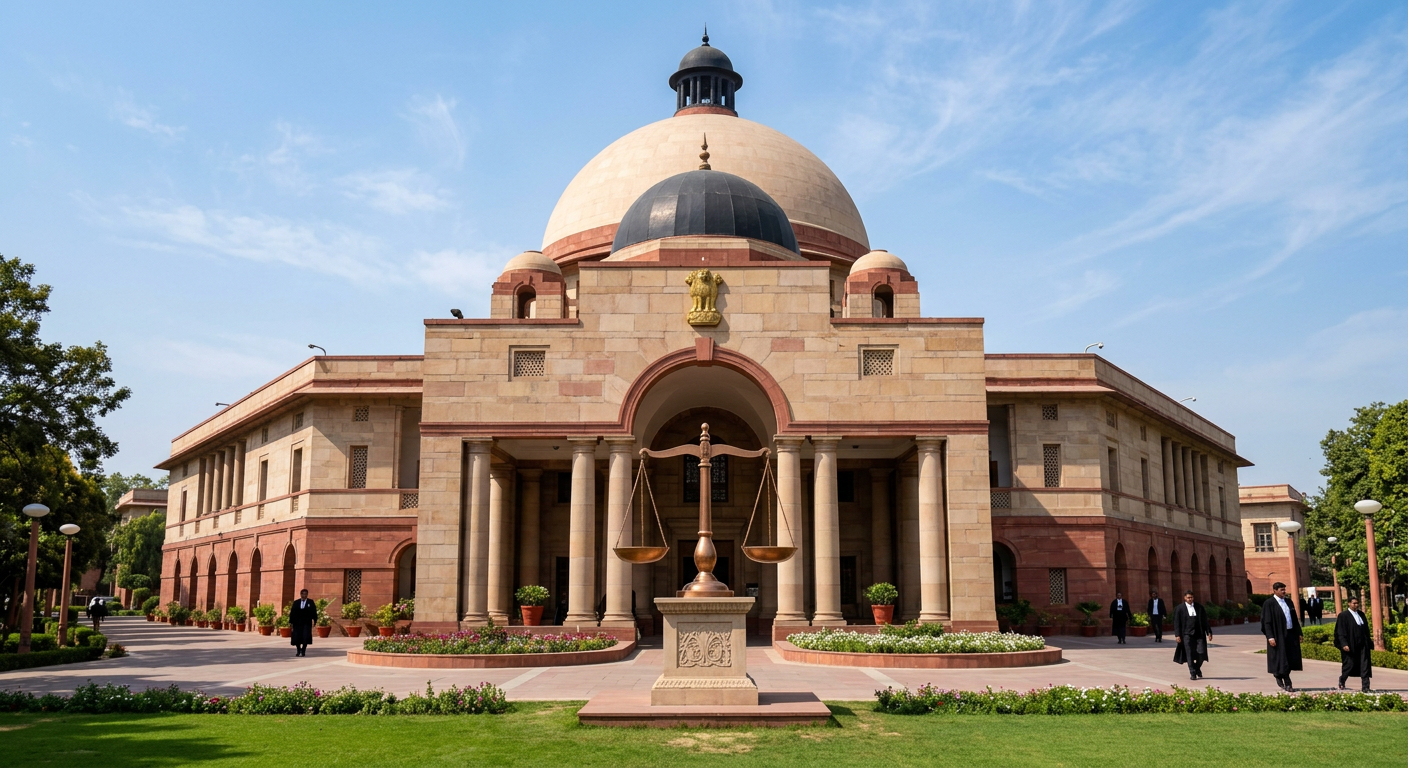
    Supreme Court of India building with dome and scales of justice statue
    The Supreme Court of India building with a prominent scales of justice statue in front

    A boy died when a tanker hit him from behind while a father was taking his five-year-old son to school. That road had neither a footpath nor crossing markings to cross the road. Such incidents keep happening in large numbers in the country, but the apex court responded to this tragic incident in a rare manner. Supreme Court Judge Justice P.S. Narasimha issued directions that walking should be recognized as a fundamental right under Article 19(1)(d) and Article 21. He said that roads should be constructed not just for vehicles but in a manner suitable for pedestrians. He also reminded that walking has cultural, religious, political, and social value in India. Justice Narasimha cited historical events like the Dandi March and the Bhoodan Movement.

    A study has revealed that in this country, where walking itself has turned into a conflict, an average of 36,500 pedestrians die every year due to the lack of proper footpaths and crossings. These incidents are occurring because 80 percent of urban roads lack safe and pedestrian-friendly infrastructure. In metro cities, 44 percent of roads do not have footpaths at all. Most of the existing footpaths do not comply with the regulations laid down by the Indian Roads Congress. To what extent are the government leaders—who talk about Viksit Bharat, a trillion-dollar economy, and global cities—aware of the plight of pedestrians in the country?

    On this occasion, Justice Narasimha questioned the failure to make laws in accordance with the fundamental rights of the people. He clarified that when the Motor Vehicles Act was made, the fundamental right of walking people was not recognized, and it appears as if this Act was made solely for vehicles. After Justice P.S. Narasimha, the second Telugu person who is set to become the Chief Justice next year, gave a judgment to recognize walking as a fundamental right, there has been an overwhelming response from the public. Reports are emerging about the lack of footpaths in many cities. The Supreme Court Bar Association responded positively to another judgment given by Justice Narasimha, stating that advocates should first know about the Rule of Law, independent stance, and standards, and build credibility. As suggested by Justice Narasimha, it has come forward to establish a National Legal Academy for advocates. Many also welcomed the judgment given by Justice Narasimha stating that merely chanting shlokas like ‘Guru Brahma, Guru Vishnu, Guru Devo Maheshwara’ is not primary, proper salaries must be given to those teachers, and ordered that the minimum wage scale be applied to teachers in Gujarat educational institutions. In the name of the Green Energy Corridor, he prevented any threat to the Great Indian Bustard birds in Rajasthan and Gujarat.

    Like pleasant raindrops in the scorching summer, we cannot ignore some good judgments given occasionally not only by Justice Narasimha, but also by Justice Ujjal Bhuyan, Justice Vikram Nath, Justice Nagarathna, Justice Viswanathan, and others. The Chief Justice of the Supreme Court, Justice Surya Kant, stayed a judgment that allowed the demolition of the Aravalli hills if they exceeded a height of one hundred meters, following concerns raised by environmentalists. Although several notable judgments are coming from the Supreme Court on and off, the debate on whether the judiciary is functioning independently continues unabated.

    The fact that the role of the apex court in the country is becoming controversial day by day is becoming a topic of discussion. Even former judges and senior advocates are commenting that the Supreme Court is losing its identity, acting as if it is under someone’s control, and ignoring fundamental rights. Before the country could forget the incident where a shoe was hurled at the Chief Justice of the Supreme Court, a petitioner made obscene remarks against the CJI in full court last week. There are those who describe such incidents as signs of growing frustration and despair toward the apex court. On the other hand, in light of the incident where a huge amount of cash was found at the residence of Delhi High Court Judge Justice Yashwant Varma, Parliament is preparing to introduce an impeachment motion against him. Why would the government let go of an opportunity to put the judiciary on the defensive?

    Chief Justice of the Supreme Court Justice Surya Kant himself expressed the view at a conference held in Stockholm that the independence of the judiciary is essential to preserve constitutional values and prevent the abuse of power. He cited cases such as Kesavananda Bharati, which protected fundamental rights, and S.R. Bommai, which protected the federal spirit. These judgments have entered the pages of history. In the past, the Supreme Court intervened multiple times to ensure that investigative agencies like the CBI and ED function freely, smoothly, and without any external pressure. So, how many such wonderful judgments have come from the Supreme Court in the last few years?

    There is no dearth of instances where good judgments have come from some High Courts as well in recent times. Justice Madhav J. Jamdar of the Bombay High Court questioned whether externment (exile from the city) can be imposed for raising slogans against the government. He declared that people are not slaves to the government, and it is their right to protest and raise slogans opposing government decisions. Justice Madhav clarified that the police are servants to the people, not to the government. Questioning the blocking of the ‘Cockroach Janata Party’ X account, the Delhi High Court ordered that the ban on that account be lifted. The Madras High Court commented, “Judges are not holy cows, there are corrupt people among them too.” It responded in this manner to a petition filed seeking a ban on a movie that depicted a judge engaging in corruption. Ironically, because it was mentioned in the NCERT textbook that corruption exists in the judiciary, the Supreme Court opened its third eye and had that paragraph changed. The details previously mentioned regarding thousands of cases pending in courts were also removed in the new chapter. The textbook stated that the judiciary functions independently, beyond the executive and the legislature. Is that really happening?

    According to the World Justice Project report, India ranks 86th in terms of the Rule of Law. According to that report, prepared by an independent organization based in the US, the Rule of Law is not that great even in the US, finding that it ranks 36th in that regard. A report by the V-Dem Institute in Sweden stated that one-fourth of the countries in the world are sliding into autocracy, and America and India are also among them. The report noted that America lost its recognition as a liberal democratic country for the first time after fifty years. It revealed that systems are systematically collapsing in India. It goes without saying that if governments become autocratic, its impact will be directly felt on the systems.

    Sitting judges like Justice Narasimha, Justice Ujjal Bhuyan, Justice Nagarathna, Justice Dipankar Datta, and others have been repeatedly warning about the independent status of the judiciary and the pressures coming from external forces. Present judge Justice Ujjal Bhuyan said that the biggest threat to the independence of the courts comes from the courts themselves… Justice Dipankar Datta said that it is not enough to say the Election Commission is independent, it must appear to be operating independently. Among former judges as well, there are those who are expressing grief over the current situation. Justice Kurian expressed concern that the federal system is in danger. While Justice Madan Lokur said that thousands of people are languishing in jails without trial, Justice Deepak Gupta criticized that the Supreme Court is acting slowly in the matter of protecting fundamental rights.

    Senior advocates are also expressing similar opinions. Former President of the Supreme Court Bar Association Dushyant Dave said that the judiciary is unable to protect the people from the excesses of the government. He alleged that the leadership of the Supreme Court has failed the country and the judiciary over the last few years. Kapil Sibal, Prashant Bhushan, Indira Jaising, Sanjay Hegde, and others also frequently highlight the plight of the judicial system. In this country, it appears that governments are suffering from more insecurity and experiencing more intolerance than the people. There is no exaggeration in saying that disastrous consequences occur precisely when governments, which ought to focus on governance, project their intolerance and sense of insecurity onto the people and systems.

  • India at a Political Crossroads

    “Be extremely cautious while speaking about the theft of money from the donation boxes (hundis) at the Ram Temple in Ayodhya. This incident has hurt the entire Hindu community and the BJP. It happened because of a few wrong individuals. The government will not spare the culprits,” BJP National President Nitin Nabin said two days ago at a meeting of key party leaders in Uttar Pradesh. His remarks themselves reveal how deeply the incident has shaken the BJP.

    In fact, the thefts in Ayodhya came to light just as Prime Minister Narendra Modi was preparing for a major reshuffle in both the BJP organization and the Union government, including appointments of office-bearers and changes in the Cabinet. Before the upcoming Parliament session, Modi had intended to give both the party and the government a fresh shape. Several rounds of high-level discussions had already taken place.

    The very fact that the Prime Minister was planning a large-scale Cabinet reshuffle suggests that he was not fully satisfied with the performance of several ministries. He held lengthy review meetings with Cabinet ministers and Ministers of State, both individually and collectively, signaling that changes were inevitable. Reports suggesting that key ministers—including the Finance Minister and the Education Minister—might be shifted indicate dissatisfaction with the functioning of their departments.

    It is also noteworthy that Morning Consult, which has consistently reported rising approval ratings for the Prime Minister, has now indicated a decline from around 75–78% to 68–70%. It is therefore understandable that Modi would want to proceed cautiously. However, whether because he felt the timing was not right or due to internal challenges, the proposed reshuffle now appears to have been postponed. According to official sources, several ministers who feared removal have, for the time being, breathed a sigh of relief.

    Ayodhya is not the only issue. One controversy after another continues to emerge across the country.

    A dispute has arisen over the University Grants Commission’s equity regulations. The prestigious NEET-UG medical entrance examination has been rocked by allegations of irregularities and repeated paper leaks. Supporting protesting students, a prominent educationist and environmental activist from Ladakh has been on a hunger strike at Jantar Mantar for the past eight days.

    The government’s E20 ethanol blending policy has also come under severe criticism. Opponents argue that the policy threatens food security and allege that certain ministers have vested interests influencing policy decisions.

    Meanwhile, the ₹90,000-crore Great Nicobar Mega Infrastructure Project in the Andaman and Nicobar Islands has become the subject of intense controversy between the Centre, environmentalists, and opposition parties. Critics claim that the project would require cutting down nearly 15 million rare rainforest trees, damage fragile coral reefs and marine ecosystems, and threaten the survival of indigenous tribal communities. Against this backdrop, the recent removal of several officials from the Union Environment Ministry has also attracted considerable attention.

    The opposition is likely to use all these issues to create disruptions during the upcoming Monsoon Session of Parliament. But the question is: where is the opposition?

    Major constituents of the INDIA alliance—including the Trinamool Congress, Shiv Sena, and Aam Aadmi Party—have been weakened by large-scale defections, raising concerns about their political survival. In Tamil Nadu, after Congress aligned with TVK, the DMK has reportedly distanced itself from Congress. Sharad Pawar’s NCP is also facing an internal crisis. The Jharkhand Mukti Morcha’s position has become uncertain after it supported the BJP-backed independent candidate in recent Rajya Sabha elections. The Aam Aadmi Party has already declared that it is no longer part of the INDIA alliance.

    In these circumstances, even if Congress and a few other parties manage to disrupt Parliament for a day or two, the BJP may face little resistance in advancing its legislative agenda afterward.

    Against this backdrop, the weakening of the opposition ahead of the Monsoon Session and the changing composition of Parliament represent significant developments in Indian politics.

    Even more important is the government’s reported intention to reintroduce the 130th and 131st Constitutional Amendment Bills. The opposition had successfully blocked these bills in April and again during a subsequent special session. But the situation is different now.

    If these two bills are passed, they are expected to bring significant changes to India’s political and constitutional framework. Alongside the Constitutional Amendment Bill providing women’s reservation, the government is also preparing to secure the required two-thirds majority for a delimitation bill.

    If passed, the delimitation exercise would proceed based on the previous Census rather than waiting for the ongoing Census. The bill may also specify the exact increase in the number of parliamentary seats. Furthermore, many observers believe that the Delimitation Commission constituted by the government could redraw constituency boundaries in ways that benefit the ruling BJP.

    The proposed 130th Constitutional Amendment Bill is equally significant. It would reportedly provide for the immediate removal of a Prime Minister, Chief Minister, Union Minister, or State Minister from office if they are arrested in a serious criminal case and remain in jail for 30 days. Many believe this provision is primarily aimed at opposition chief ministers and ministers.

    If the government succeeds in establishing dominance in Parliament and securing passage of these constitutional amendment bills during the Monsoon Session, there may be few obstacles left to passing other major legislation. Most notably, it would pave the way for legislation enabling simultaneous elections under the “One Nation, One Election” proposal.

    BJP chief ministers across the country have already declared their readiness for simultaneous elections. Party strategists reportedly believe that implementing women’s reservation alongside simultaneous elections would significantly strengthen the BJP’s prospects of returning to power once again.

    If that happens, it would mark a major transformation in Indian democracy. BJP circles also reportedly view this as an opportunity to postpone the Assembly elections due in Telangana, Madhya Pradesh, Chhattisgarh, and Rajasthan in 2028 until the next general election.

    This raises an important question: what will elections look like by 2029?

    The Congress does not appear to be taking seriously the possibility that the BJP could further consolidate its dominance in Parliament as several regional parties split or decline. Congress leaders seem to believe that if regional parties disappear, Congress itself will fill the vacuum.

    If that were to happen, India could gradually evolve into a two-party system. Whether the BJP or Congress, other parties could steadily weaken. Is such a development healthy for democracy? Would regional aspirations lose their place in Indian politics? These are questions that deserve discussion.

    The decline of Odia, Bengali, and Dravidian regional identity politics in electoral politics has contributed to these concerns. At the same time, another question must also be asked: have regional parties genuinely safeguarded regional aspirations? Or have parties willing to compromise anything for the survival of their leaders lost their credibility in the eyes of the people?

    It should not be forgotten that India has always functioned as a pluralistic democracy. Even when the Congress was the dominant political force, it was never the only one. During Jawaharlal Nehru’s tenure as Prime Minister, Congress won 364 seats with about 46% of the vote, but opposition parties together secured 54% of the vote and won 125 seats. They represented a wide variety of social groups.

    From the second general election onward, the number of regional parties steadily increased. Even Congress recognizes that this happened largely because of its own arrogance and overconfidence during its years of dominance. As a result, Dravidian parties, socialist parties, and various regional and identity-based political movements emerged, becoming symbols of India’s diversity.

    At one stage, coalition governments at the national level appeared to be the country’s permanent political reality. Leaders like Atal Bihari Vajpayee viewed regional aspirations as an essential expression of India’s pluralism and federal spirit.

    Today, however, history appears to be moving in the opposite direction.

    Whether this trend is dangerous or healthy is not the central question. More troubling is the fact that the number of voices willing to ask difficult questions is steadily diminishing.

  • Betraying Ram’s Path

    On the night before the demolition of the Babri Masjid structure on December 6, 1992, I met Rama Shankar Agnihotri in Ayodhya, a senior RSS member, journalist, and someone who oversaw media affairs during the Ram Janmabhoomi movement. Sitting right next to him, Vinay Katiyar, the MP of Faizabad (Ayodhya), gave me information about the Karseva. As the founding president of the Bajrang Dal, he was one of those who intensified the Ram Janmabhoomi movement. Without leaders like Ashok Singhal, Vinay Katiyar, Kalyan Singh, Mahant Vaidyanath—the guru of UP Chief Minister Yogi Adityanath—Uma Bharti, and Sadhvi Rithambhara, there would be no Ram Janmabhoomi movement at all. Advani, who went among the people in the name of the Ram Rath Yatra, gave a political shape to this movement, but the forces that actually organized the movement, like the VHP and Bajrang Dal, were different. Vinay Katiyar, who won three times from Ayodhya, gained popularity with slogans like ‘Mandir Wahi Banayenge’.

    Such a Vinay Katiyar is taking the developments happening in Ayodhya today very seriously. He expressed deep anguish over the large-scale looting of cash and valuables from the donation boxes (Hundis) in the temple. The severity of the situation can be understood by the very fact that he said, “Everyone who is currently there is a thief.” Not only Vinay Katiyar, but many saints also condemned this plunder. “Those who looted the funds are Ravanas,” said Dhirendra Krishna Shastri, the head of Bageshwar Dham. Swami Avimukteshvarananda Saraswati, preacher Devakinandan Thakur, and Mahant Kamal Nayan Das like many other saints alleged that powerful people are behind this plunder. Shri Ram Janmabhoomi Teerth Kshetra Trust member Mahant Dinendra Das Maharaj on Sunday backed the administration’s action in the alleged Ram Mandir donation embezzlement case, saying the steps taken were appropriate and demanding strict punishment for those found guilty. Speaking to news agency ANI, he said the ongoing investigation and arrests were justified and credited the state leadership for swift action. “If I tell the truth in this matter, I will get into trouble,” said a former BJP MP.

    Mahipal Singh, the former CEO of the trust, alleged that these funds have been plundered ever since the Centre formed the Shri Ram Janmabhoomi Teerth Kshetra Trust in 2020 to manage the temple construction, properties, and public donations, and that no one properly accounted for the gold, silver, and jewelry offered by the devotees. Instead of conducting an investigation after he pointed out the mismatch between vouchers, cash, and jewelry, he was removed from his job. The matter leaked out only after Akhilesh Yadav, the leader of the Samajwadi Party, raised this issue on June 7, 2026 and demanded a judicial inquiry. BJP leader Rajnish Singh wrote a letter directly to Prime Minister Narendra Modi, demanding that bank accounts and trust accounts be shown to the public and disclosed transparently. Finally, on June 13, the Yogi government appointed a Special Investigation Team (SIT).

    There is no count of how large an amount of donations, ornaments, gold, and silver bricks the devotees offered for the Ram Janmabhoomi in Ayodhya. One can gauge the extent of the issue across religious institutions as The Indian Express reported that the Shri Badrinath Kedarnath Temple Committee on Friday ordered an inquiry into allegations of misappropriation of donations at the Badrinath shrine in Uttarakhand. All employees and officials involved in counting donations have been issued show-cause notices, ANI quoted the temple committee chairperson, Hemant Dwivedi, as saying.

    Meanwhile, in Ayodhya, many devotees responded with deep devotion to the programs conducted in the name of distributing Akshatalu (sacred rice) and the ‘Ram Ram Gram Abhiyan’. Visuals of cash being taken away and bags being carried were exposed at least 70 times on CCTV cameras. The SIT concluded that some staff members intentionally stood in front of the cameras to prevent the scenes of stealing cash from the donation boxes from being recorded. Information was also obtained that large-scale lands were purchased with the looted money. Among those arrested by the SIT are some officials who count notes, the General Secretary of the Trust and International Vice President of the VHP, Champat Rai Bansal, and his personal driver Rama Shankar Yadav alias Tinnu Yadav, among others. But Champat Rai Bansal and Trustee Anil Mishra, who should have taken responsibility, merely resigned. Reports emerged that Anil Mishra built a magnificent three-story bungalow with ultra-modern amenities in Ayodhya. In fact, Alok Bansal, his wife Shivani Bansal, Chandan Rai Bansal, Manish Bansal, and others who ran real estate businesses worth crores of rupees in Ayodhya, are relatives of Champat Rai. Several land purchase documents seized by the SIT reached the media. Gopal Rao, a Pracharak of the Karnataka region belonging to Maharashtra and the Central Joint Secretary of the VHP, was appointed as the administrative officer. It is also reported that Gopal Rao, who is the most powerful person after Champat Rai, is the creator of many Udupi hotels in Ayodhya.

    It is not entirely far from the truth to say that if there were no Ram Mandir movement, there would be no Bharatiya Janata Party. Lal Krishna Advani himself explained in his autobiography that the Ram Janmabhoomi had a role in the rise of the BJP. He described the Ram Janmabhoomi movement as the largest mass movement in the history of independent India. Only after he conducted the Rath Yatra from Somnath did the BJP win 120 seats in the 1991 elections. After promising about the Ram Mandir in the BJP’s election manifesto in 1998, the first non-Congress coalition government led by the BJP under the leadership of Atal Bihari Vajpayee was formed at the Centre in the subsequent elections. He declared that they proved that if the people’s identification with religion is directed in a positive path, it can be shaped into an wonderful force, and that the collective expression of the people resonated in unison with the expression of a nation’s soul. Advani, who wished to awaken the dormant Hindutva through his movement, described Rama as a distinctive symbol of India’s national personality, unity, and integrity. Many people lost their lives due to this movement. Thousands of people died in the firing ordered by the then UP Chief Minister Mulayam Singh Yadav’s government in Ayodhya in October and November 1990, and in the riots that took place across the country after the demolition of the Babri Masjid structure. Many people were jailed. Today, it appears that the ultimate purpose of the many sacrifices made for the Ram Janmabhoomi has been lost.

    People like Advani believed that the Ramayana has influenced the high moral value system in this country for several decades. Pamidighantam Kodandaramaiah, a former High Court judge who established the Arsha Vijnana Trust, wrote that the Ramayana transcends religion and religious systems. He stated in his book ‘Ramayana Prabha’ that the Ramayana has endured forever in India because Rama is dharma personified, as in ‘Ramo Vigrahavan Dharmah’. Scholars like Ilapavuluri Panduranga Rao said that Valmiki’s Ramayana mentions Sri Rama’s truthfulness at every step, and that very adherence to the spoken truth has sustained Indian society through the ages. Valmiki made Maricha describe Rama as the personification of the Deity of Dharma. Valmiki praised Rama as a saintly person, one of true valor, devoted to truth and righteousness, true to his word, of truthful character, and one whose soul is truth itself. “Truth is the only God; truth is the foundation of devotion in the world. The root of everything lies in truth alone. There is no higher goal beyond truth,” Valmiki said. He formulated that “Dharma is born out of strength (Balo pratishtaho dharmah dharanyamiva jangamam). If righteousness and strength are coupled with truth, they can protect against any great calamity.” He said that even the world can be conquered through truth. Valmiki makes Rama himself say, “I have no infatuation for wealth, gold, objects, or vehicles; what I want is not the kingdom, but the nation (Na hahamartha paro devi lokamavastu mutsahe).”

    But what is happening now? Ramayana means the path walked by Rama. Are we walking in that path? Are the strong standing by truth and righteousness today? Do they think the nation is more important than the kingdom? Is it enough to construct a Ram temple and install the idol of Rama? The ongoing developments prove that there is absolutely no value for truth and righteousness anywhere in the country, and that self-interest, wealth accumulation, desire for power, and tyrannical rule have become the sole goals. Leaders of the BJP, along with other parties, are proving the maxim: “Power corrupts. Absolute power corrupts absolutely.” It has turned out that some within the Sangh Parivar are also not exceptions to this. Today, one has to search for virtuous people in the BJP and the Sangh like Nanaji Deshmukh, Kushabhau Thakre, J.P. Mathur, Bhairon Singh Shekhawat, and Lakshmanrao Inamdar. There is also a rumor going around that the plunder in Ayodhya took place either to take the management of the temple away from the Sangh into the control of the government, or to put Yogi Adityanath in a tight spot. At a time when the BJP’s grip on national politics was thought to be tightening completely, the occurrence of plunder in Ayodhya—the very place responsible for the party’s progress—is a bad development. This development is causing distress among the people. Today, even lawyers in Ayodhya are collectively refusing to argue on behalf of the plunderers. This is not a stain that has come upon just a political party or an organization like the RSS, which claims to be committed to Hindu Dharma. It is a wound inflicted on the minds of the people who worship Sri Rama and the Ramayana in the country. The responsibility lies on the leaders of that party to ensure that the very arrow of Rama that caused the rise of the BJP does not become the cause of the BJP’s downfall.

  • As Regional Parties Fade, a BJP–Congress Contest Looms

    A few days ago, Prime Minister Narendra Modi remarked that “the Congress is a parasite; it survives by depending on other parties and abandons them once its needs are fulfilled.” He may have made this comment keeping in mind the Congress party’s decision in Tamil Nadu to distance itself from the DMK and join hands with actor Vijay’s TVK. However, judging by the developments of the past few days, it has become impossible to predict how many parties will remain in the INDIA alliance or how many parties will remain in the National Democratic Alliance led by Modi by the time of the 2029 elections. Several regional parties are facing an existential test and must decide their future course, though they do not have much time to do so.

    In this context, the question arises: will the next general election witness a direct contest between the BJP and the Congress? The Congress does not appear particularly worried about regional parties splitting or aligning with the BJP. In fact, many regional parties have occupied the political space that once belonged to the Congress. The Congress also does not seem to be taking very seriously the BJP’s war-footing strategies to increase its strength in both Houses of Parliament. It appears that the Congress is moving with the objective of confronting the BJP directly by 2029. In particular, the party seems to be focusing on how to mobilize the youth.

    The Congress rarely appears to work according to a clear and consistent agenda. Until recently, it focused on caste census, social justice, and reservations. Now, observing growing unrest among the youth, it has begun efforts to attract them. It organized a massive rally titled “Chhatron Ki Goonj” in Kota, Rajasthan, where Rahul Gandhi addressed thousands of young men and women. The growing influence of the “Cockroach Janata Party” may also have strengthened Rahul Gandhi’s resolve to appeal to young voters. Several studies after the 2024 Lok Sabha elections indicated that in many states, women, youth, and especially first-time voters favored the BJP. Will this situation change by 2029? Can the Congress regain its lost support among youth and women? This question is crucial to the party’s future.

    At the same time, the BJP’s intensive efforts to increase its strength in both the Lok Sabha and Rajya Sabha and to bring many parties to its side cannot be dismissed lightly. According to an RSS leader, the Hindutva agenda remains the BJP’s highest priority. Only by remaining in power not just in 2029 but for several more decades can that agenda be fully implemented. As part of this objective, the BJP has focused on many regional parties across the country. It is rapidly moving to absorb parties such as JD(U), Trinamool Congress, Shiv Sena, and NCP. In Tamil Nadu, the DMK; in Jharkhand, the JMM; in Telangana, the BRS; and in Delhi, the AAP are now facing a difficult test of deciding their future direction. The BJP’s strategy is to bring various parties to its side through persuasion or pressure in order to fulfill its broader agenda.

    To ensure that the 2024 election results are not repeated in 2029 and that it does not again face the risk of losing its majority, the BJP is taking rapid measures. Delimitation and women’s reservation are among the most important of these. It hardly needs to be said that the Modi government’s approach to constituency delimitation would be favorable to the BJP. The party appears determined to ensure that neither the Congress nor regional parties outside the NDA gain significant advantage from the exercise. The BJP is attempting to secure more seats in Uttar Pradesh, Maharashtra, and West Bengal, where it fell short of expectations in the last elections, and to gain additional seats in Bihar, Jharkhand, Haryana, Rajasthan, and other states through changes in geographical and demographic arrangements.

    The consequences of delimitation in Assam and Jammu and Kashmir are already known. In Assam, Muslim-majority constituencies in Lower Assam and the Barak Valley were divided, and the fragmented areas were merged with constituencies dominated by local populations. This caused severe damage to the Congress and the AIUDF. The increase in seats reserved for Scheduled Tribes and Scheduled Castes benefited the BJP’s regional allies. Similarly, in Jammu and Kashmir, the number of Hindu-majority seats in Jammu increased relative to Muslim-majority seats in the Kashmir Valley. Furthermore, increasing the number of seats helps counter anti-incumbency against sitting legislators. By allocating newly created seats to youth, women, and newcomers, the BJP aims to maximize its majority.

    It is difficult to determine to what extent the Congress understands the BJP’s comprehensive strategies. The Congress campaign against the BJP remains largely centered on Narendra Modi. Instead of preparing itself ideologically to confront the growing influence of the RSS across the country, it raises unproductive debates such as whether the organization possesses formal registration. This creates doubts about whether the Congress truly understands the BJP’s strategies.

    Out of India’s 4,123 Assembly seats, the Congress holds only 662. The party failed to win even a single Assembly seat in five states. In states such as Uttar Pradesh, Bihar, Gujarat, and Odisha, it won less than ten percent of the seats. In the 2024 general elections, the BJP and the Congress directly contested 286 constituencies; the BJP won 180 and the Congress 83. Gaurav Gogoi, who serves as Deputy Leader in the Lok Sabha and PCC president, recently suffered a crushing defeat in the Assam Assembly elections. Another Lok Sabha member and two-time Chief Minister, V. Vaithilingam, the Puducherry PCC president, even lost his deposit in the previous Assembly elections.

    Why is the Congress unable to convert anti-incumbency sentiment into political gains? Until it answers this question, no number of rallies or dramatic displays will strengthen the party. Regional parties face the same problem, and many of them are also splitting. Rather than merely blaming the BJP, the leaders of these parties must honestly examine why these divisions are occurring and why people are turning against them. What is the present condition of the Left parties, which were once strong ideological forces?

    The reality is that regional strongholds based solely on a single leader’s charisma or caste equations are collapsing rapidly. It is becoming clear that political ambitions unsupported by ideology cannot succeed indefinitely. This explains why the futures of Mamata Banerjee, Sharad Pawar, Uddhav Thackeray, Arvind Kejriwal, K. Chandrashekar Rao, Naveen Patnaik, and Jagan Mohan Reddy appear uncertain. None of the regional giants currently enjoys overwhelming influence. The conduct of successors in some parties also appears unpromising. As one analyst observed, these are not ordinary developments but indications of deep structural changes taking place within India’s political system.

    Although the BJP revolves around Modi, it is not a Modi-dependent party. Numerous powerful forces behind the BJP ensure that its strategies, expansion, and actions align with long-term objectives. Both the RSS and the BJP understand that Modi is merely an important instrument in achieving these goals.

    The same cannot be said about the Congress. Under its dynastic leadership, there is little evidence that Rahul Gandhi is attempting to build a strong organizational and ideological structure that extends to every village and transforms the Congress into an overwhelmingly popular mass party. It has been demonstrated repeatedly that power cannot be attained merely through the opponent’s weaknesses, mistakes, or anti-incumbency.

    There is little reason to fear that India’s political system is collapsing. In reality, it is undergoing a phase of reorganization. As regional voices weaken, it is increasingly evident that future elections may witness a principal contest between two national poles. Regional forces struggling for survival may inevitably gravitate toward one of these poles. Delimitation and the absorption of regional forces may naturally increase the Congress’s seat tally to some extent. However, if it wishes to create a political wave and capture power, politics must once again be shaped by influential national ideologies rather than individual leaders.

  • Winning Without Contest: The New Politics of Power

    In the 2017 Legislative Council elections, some leaders from Rayalaseema exerted intense pressure on the Returning Officer, Satyanarayana Rao, who was then serving as the Assembly Secretary, to reject the nomination of a candidate. They also tried to influence him with inducements. Frightened and disturbed, that Returning Officer reportedly approached Chief Minister Chandrababu Naidu. It is said that he told the officer, “Do not yield to any pressures. Act fearlessly according to the rules.”

    In 2009, during the YSR era, Telugu Desam Party candidate Kadiri Baburao, who contested for the Legislative Assembly from Kanigiri, forgot to sign in one place in his affidavit. The Returning Officer, who maintained strategic silence without saying anything until 5 p.m., later rejected Baburao’s nomination papers on the grounds that the signature was missing. Baburao was known to be a close associate of the prominent film actor Nandamuri Balakrishna. These are merely examples to illustrate how crucial a role Returning Officers play in determining the fate of candidates. Just as Jayadratha in the Mahabharata possessed the power to prevent the Pandavas from entering the battlefield even for a single day, Returning Officers too occasionally play the role of Jayadratha in the electoral battle. Their power is that formidable.

    Recently, in Madhya Pradesh, Returning Officer Arvind Sharma played a key role in rejecting the nomination papers of Congress candidate and party General Secretary Meenakshi Natarajan. Arvind Sharma, who is a Principal Secretary in the Madhya Pradesh government, had previously served as a Director in the Lok Sabha. The very fact that he came to Madhya Pradesh with the assistance of Narendra Singh Tomar, who was the Agriculture Minister during the period when farmers were protesting against the farm laws, indicates the strength of his connections with the BJP. Tomar is now the Speaker of the Madhya Pradesh Assembly.

    Perhaps BJP circles were aware of the complaint filed in Hyderabad against Meenakshi Natarajan even before they received official notification of it. Otherwise, they would not have fielded a third candidate despite lacking the necessary strength. Meenakshi filing her nomination, the BJP immediately reminding the Returning Officer about the case against her, the officer promptly rejecting her nomination, and then announcing the BJP candidate as elected unopposed—all of this happened in rapid succession. It appears that whatever the BJP does is executed with meticulous planning and considerable advance preparation.

    Although the Modi government convened special sessions of Parliament for three days last April, it failed to secure passage of the Delimitation and Women’s Reservation Bills, which it had introduced with great prestige. This was the first time since Modi came to power that the opposition succeeded in preventing the passage of such bills. Following the BJP’s first-ever sweeping victory with an overwhelming majority in West Bengal, the party’s confidence increased. It sought to employ all possible methods to increase its strength in both Houses of Parliament.

    As part of that effort, twenty Lok Sabha members belonging to the Trinamool Congress reportedly broke away from the party, joined an obscure party called the Nationalist Citizens Party, and declared support for the NDA. Three Rajya Sabha members belonging to that party resigned. Negotiations are reportedly underway with others as well. Leaders who until recently criticized Modi during the Bengal elections are now said to regard him as their leader. In Jharkhand, efforts are underway to field Parimal Nathwani, considered Ambani’s right-hand man, as an independent candidate and thereby attract legislators from the ruling party to their side. By strategically ensuring the rejection of Meenakshi Natarajan’s nomination, three BJP candidates from Madhya Pradesh were elected unopposed. Not only that, across the country nineteen BJP MPs won without any contest. These developments make it clear that the Modi government is preparing the ground to ensure that it faces no obstacles in either House and can pass the bills it desires. Although the NDA has not yet reached a two-thirds majority in both Houses, discussions are taking place in the national capital about how many more people the BJP might bring into its fold by the time the monsoon session begins in July.

    After the rejection of Meenakshi Natarajan’s nomination and the surrender of Trinamool Congress members to the NDA, a sense of anxiety regarding political survival has reportedly emerged in every party across the country. Reports suggest that even the Shiv Sena led by Uddhav Thackeray and the NCP led by Pawar are facing an existential test. In this context, it is becoming clear that the Modi government has prepared the ground to secure passage during the monsoon session of several important bills, including the Delimitation and Women’s Reservation Bills.

    The surprising thing is that although Returning Officers have behaved controversially in the past, no one has received as much sympathy as Meenakshi Natarajan. That may be because she is a Gandhian who leads a very simple life, making her a rare kind of political leader. There is little point in criticizing the Returning Officer here. “What can we do if orders come from above?” said one official from Madhya Pradesh.

    Rejecting her nomination on the basis of a case filed on the basis of a private complaint entirely unrelated to her appears completely unreasonable. Many individuals who have served as Returning Officers in legislative bodies say that under Section 33A of the Representation of the People Act, only cases in which a charge sheet has been filed, charges have been framed, and which are punishable with imprisonment of more than two years need to be disclosed. Even if the Returning Officer believed that the affidavit had not been fully completed, they say that a nomination should not be rejected solely for that reason and that the candidate should be given another opportunity to correct the error.

    On the very day Meenakshi Natarajan’s nomination was rejected in Madhya Pradesh, a BJP candidate in Jharkhand was given 24 hours to correct an error in his affidavit. There have been many such instances across the country where Returning Officers have acted fairly. Officials should facilitate a candidate’s democratic election, not create obstacles preventing that candidate from being elected. When officials act in accordance with the political interests of the ruling party, it becomes clear that democracy in our country is not in a healthy condition.

    Another surprising aspect is that courts also do not make efforts to dispose of election petitions quickly and thereby give wronged candidates an opportunity to be re-elected. Recently, even the Madras High Court criticized the Supreme Court on this issue. In a petition filed by a candidate who lost by just 49 votes in a constituency during the 2016 Tamil Nadu Assembly elections, it took the Supreme Court six years to deliver a verdict. What benefit is there in the court declaring that the defeated candidate had actually won? By then, the term of the Assembly had already ended. The Madras High Court criticized even the Supreme Court, saying that justice had become a mockery.

    A similar situation occurred in the case of Ponguleti Sudhakar Reddy versus Tummala Nageswara Rao. Although the case was filed in 1999 and Tummala had won, it took the High Court seven years to decide the matter.

    When Meenakshi Natarajan approached the Supreme Court claiming that her nomination had been unfairly rejected, it refused to intervene. The Supreme Court held that under Article 329(b), elections to legislative bodies cannot be challenged. The Court clarified that she could, if she wished, file an election petition in the High Court. The Supreme Court is also aware of the deplorable condition of election petitions in the country’s judicial system. A former Supreme Court judge said that, based on past experience, no one knows how many years it will take for Meenakshi Natarajan’s petition to be decided.

    In a speech in 2019, then Vice President Venkaiah Naidu also said that courts should establish special benches for election petitions and deliver decisions within six months. If the Supreme Court does not decide the matter and election petitions do not receive speedy judgments, who will protect the democracy that is being crushed in between?

    Moreover, under the current circumstances in the country, the attitude adopted by the courts appears peculiar. A situation is arising in which the courts themselves characterize those filing cases on public issues as cockroaches, idle people, or obstacles to development. “The Centre is spending money to build roads. Who are you to question the progress of roads under the Right to Information Act? This is yellow journalism,” the Supreme Court reportedly told an RTI activist on Tuesday before dismissing the case.

    Some say that it is politics for the ruling party to try to secure majorities in legislative bodies and achieve its desired objectives. Others call it Machiavellian politics. Whatever one may call it, it is not wrong to question the methods being adopted and the institutions that are failing.

  • Modi’s Ascendancy and the Opposition’s Search for Direction

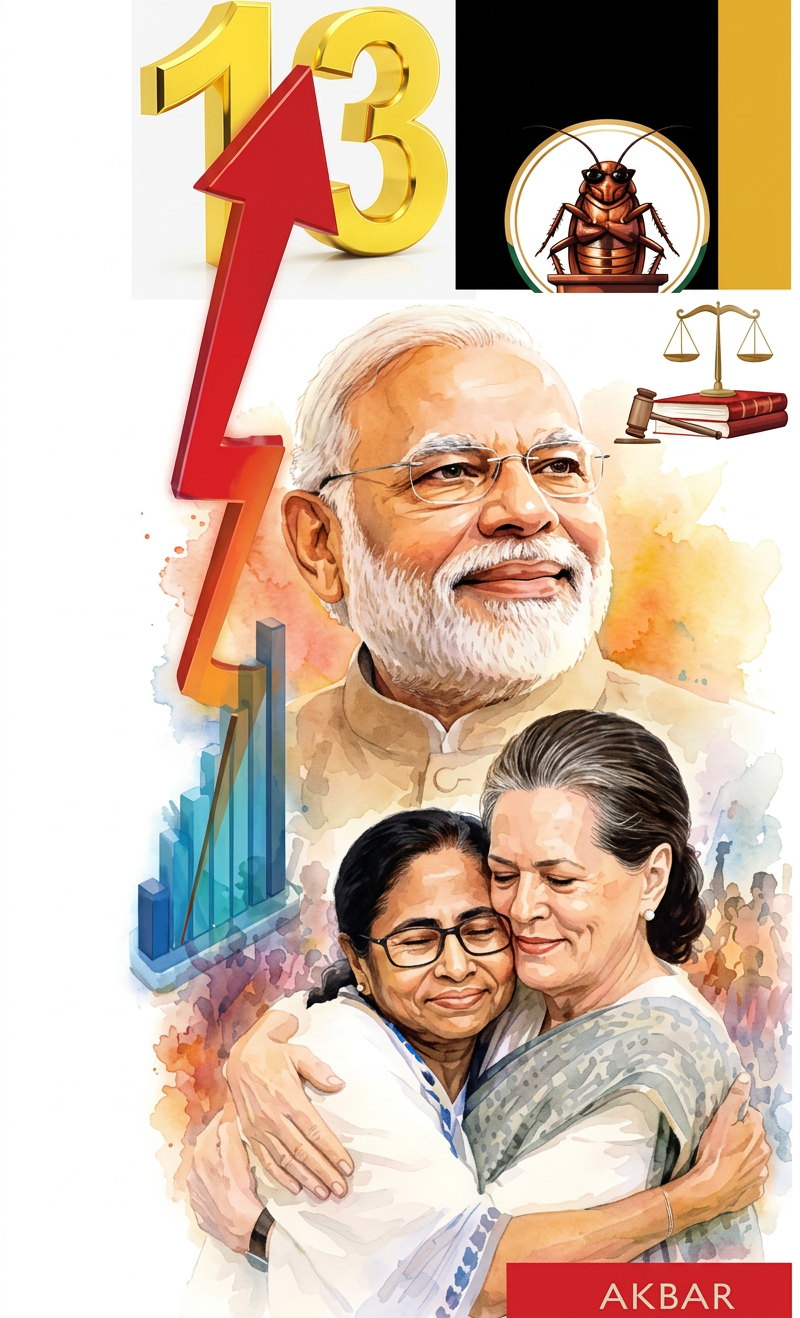
    On Monday, at the INDIA alliance meeting held in Delhi, Trinamool Congress supremo Mamata Banerjee, who appeared with a faded face, was tightly embraced by former Congress president Sonia Gandhi. Who other than one woman can understand another woman’s heart? “Some scenes cannot be expressed in words,” remarked a senior leader.

    These two were once described by international organizations as the most powerful leaders in the country. While Sonia ruled the country’s politics for more than ten years, Mamata Banerjee ruled Bengal politics for 15 years. But they are not unaware that the present circumstances are different.

    After the results of the five state elections announced last month, anti-BJP forces met again in Delhi. Mamata Banerjee and the Left parties, forgetting that until yesterday they were also fighting Congress, have become ready to join hands with Congress at the national level. Mamata Banerjee also appears to have forgotten that Rahul Gandhi, the Leader of the Opposition in the Lok Sabha, had only recently criticized her harshly over her anarchic and corrupt rule. She also may not now remember that in 2021 she dreamed of the Prime Minister’s post and declared, “Congress has become ineffective in the country. I alone will play the key role at the national level.”

    The tigress-like Mamata Banerjee, who rebelled against Congress in 1998 and launched her party by holding a rally in Kolkata while the AICC plenary session was taking place, now appears to have had her claws removed. Public representatives belonging to her party in both the Lok Sabha and the Assembly have declared rebellion against her. Her right-hand man Abhishek Banerjee, MP Kalyan Banerjee, and other party leaders are facing attacks on the streets. The same methods Mamata Banerjee once employed against her opponents are now being used against her by her rivals. While Mamata Banerjee and her followers are now crying in the wilderness on the streets of Kolkata, Congress leaders have become the ones standing by her. In this context, it appears that Mamata Banerjee has realized that Congress alone is her refuge if she is to face a mighty force like the BJP both in the state and in Delhi. Though Congress and the Left did not win many seats in the Bengal Assembly elections, they were able to damage the Trinamool considerably. In minority-dominated areas such as Murshidabad, Malda, and Uttar Dinajpur, the Congress–Left alliance ensured that Trinamool did not receive its traditional support. In 32 Assembly constituencies where Muslims constitute more than 50 percent of the population, Trinamool did not win even a single seat. In the Jangipur constituency, the Congress candidate secured 31,000 votes while the Trinamool candidate received only 10,542 votes. Likewise, in the Karandighi constituency, CPI(M) secured 39,000 votes, while the BJP candidate won with 20,000 votes. Perhaps the manner in which these results came has taught Mamata Banerjee lessons about her arrogance, authoritarian approach, and disregard for allies. That is why she is now seen on the streets of Delhi.

    Likewise, for the Left parties, whose ground is slipping from beneath their feet in the country, the streets of Delhi have also become a refuge. In the 140-member Kerala Assembly, the Congress-led UDF winning more than 100 seats, the BJP winning three seats, and the defeat of most ministers in Pinarayi Vijayan’s cabinet cannot be ignored. Analysts described the Left alliance’s defeat there as the result of Pinarayi Vijayan’s centralized and arrogant governance, severe disappointment among farmers, youth, and ASHA workers, dissatisfaction among party cadres, and public resentment against ten years of rule. Congress leaders such as Rahul Gandhi and Revanth Reddy criticized Pinarayi Vijayan, alleging that he was colluding with the BJP and encouraging corrupt elements. They questioned why central agencies had not investigated Vijayan. Be that as it may, the Left parties, which have reached a situation where they are not in power anywhere in the country for the first time in five decades, have realized that they have no option except to work together with other anti-BJP forces. Left leaders D. Raja and John Brittas, who attended the INDIA alliance meeting, have that clarity.

    The late CPI(M) General Secretary Sitaram Yechury, who passed away two years ago, understood the present situation in the country very well. When Congress inducted Prasenjit Bose, who had been expelled by CPI(M), Rahul Gandhi joked with Yechury, saying, “We have taken your comrade into our party.” Laughing, Yechury replied, “What is yours and ours? In this struggle, both of us are travelling in the same boat.” He had long ago understood the need for all anti-BJP forces to shed their narrow-mindedness and work together to confront the BJP, which was advancing unchecked across the country. Today, none of the parties in the NDA are fighting among themselves. But the parties in the INDIA alliance do not possess that level of unity. How much sincerity of purpose do the 23 parties that met at Delhi’s Constitution Club after nearly two years really have? What is the significance of the DMK and Aam Aadmi Party not attending? After the Emergency, in 1977, opposition parties contested against Congress under a single election symbol in the name of the Janata Party. How many parties today possess that same sincerity and fighting spirit? Can Congress provide leadership to other parties in the same way that the BJP has been able to guide even its allies along its ideological path?

    Two days after the INDIA alliance meeting, Prime Minister Narendra Modi organized a meeting of NDA allies on the occasion of completing 12 years in power. Though nominally an NDA meeting, it is in reality a BJP meeting. Leaving aside small states like Nagaland, Meghalaya, and Puducherry, Andhra Pradesh is the largest state where NDA rule is currently in effect. Until recently, Janata Dal (United) chief Nitish Kumar was the Chief Minister in Bihar. Now, even there, a BJP leader is Chief Minister. With his entry into the Rajya Sabha, the 12 JD(U) MPs in the Lok Sabha will have to regard Modi as their leader. While Trinamool has 28 MPs in the Lok Sabha, 20 MPs under the leadership of party chief whip Kakoli Ghosh Dastidar have decided to write to Speaker Om Birla seeking recognition as a separate group after rebelling against Mamata Banerjee. At some auspicious moment, they too may have no option but to join the BJP and wear the saffron scarf as BJP MPs. That means the BJP effectively already has a full majority in the Lok Sabha even without the support of the Telugu Desam Party. Moreover, seven MPs from Shiv Sena, five from Lok Janshakti Party, two from Janata Dal (Secular), two from Rashtriya Lok Dal, one from the NCP Pawar group, two from Apna Dal and Hindustani Awam Morcha, along with six MPs from northeastern states, are already supporting the BJP. Since Modi came to power, the Bharatiya Janata Party has earned the distinction of splitting several regional parties such as Shiv Sena, NCP, Lok Janshakti Party, Rashtriya Lok Samata Party, Aam Aadmi Party, and Trinamool, and also attracting many leaders from other parties into its fold. Not only that, during Modi’s tenure, parties such as BSP, BJD, DMK, and AIADMK have faced tests of survival, making their future uncertain. A situation has arisen in the country where many regional parties feel that their survival will be difficult unless they surrender to Modi.

    In this context, as Modi enters his 13th year in power today, no one can deny that his political strength is increasing day by day, despite social media commentary about how intense his politics may become, developments such as the “cockroach party,” the weakening of democratic institutions, allegations that the judiciary has surrendered, and the flood of criticism over the failure of institutions such as NEET and CBSE to conduct examinations properly. Without eliminating their internal contradictions and creating an equally compelling alternative vision, what change can opposition parties or other non-BJP forces achieve, no matter how many meetings they conduct?