Category: A Journalist’s view point

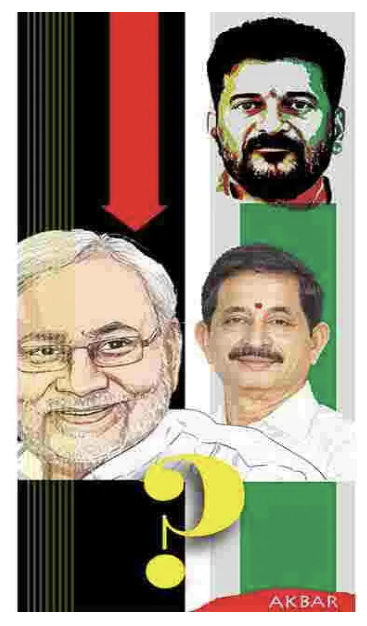
  • What does Nitish’s exit indicate?

    This is a story from two decades ago. In January 2006, an unprecedented Congress Party plenary was held at the Balayogi Auditorium in Hyderabad. Chief Minister Y. S. Rajasekhara Reddy and his associate K. V. P. Ramachandra Rao worked day and night to make the plenary a grand success. Congress president Sonia Gandhi was delighted after seeing the arrangements made in Hyderabad. After that, speculation arose that KVP would surely get a Rajya Sabha seat in the upcoming elections. When the time for selecting candidates approached, one day I asked AICC general secretary Digvijaya Singh, and he said that KVP had a good chance of getting the Rajya Sabha seat. I wrote that as a news report.

    The next day, when the media met Digvijaya Singh, a colleague asked him, “A report has come that KVP will be given a Rajya Sabha seat. Is he the one getting it?” Digvijaya Singh laughed and asked, “Who told you that? By the way, who is KVP?” Within a single day the mood of the Congress high command had changed. Some of YSR’s rivals in Delhi had told Sonia all sorts of things and changed her mind. In those days the Congress was in power in about 16 states. For every small matter YSR had to explain himself to Delhi. He had to wait another two years before his close confidant could get a Rajya Sabha seat.

    Compared with YSR’s situation then, the present Telangana Chief Minister Revanth Reddy can be described as extremely powerful. YSR could not get a Rajya Sabha seat immediately for his right-hand man even after asking, but Revanth succeeded in securing one for Vem Narender Reddy. Though YSR had been a loyal Congress leader for decades, even when he wanted his brother Y. S. Vivekananda Reddy to resign so that his son Y. S. Jagan Mohan Reddy could get the Kadapa seat, the high command did not agree. It took YSR many years to win over the Congress leadership. After his death, the high command did not hesitate to file cases against his son.

    But what is the secret behind Revanth Reddy’s success? Within four years of joining the Congress he became PCC president, and within another four years he became Chief Minister. Not only in the Rajya Sabha seat issue but in many matters he has been able to make the high command accept his word.

    Just as the unanimous election of Vem Narender Reddy to the Rajya Sabha from Telangana carries political significance, the decision of Bihar Chief Minister Nitish Kumar to contest for the Rajya Sabha also has equal importance. One development reflects the changed culture of power within the Congress, while the other reflects the expanding political dominance of the Bharatiya Janata Party across the country.

    Even leaders within his party are still shocked that Nitish Kumar, who served as Chief Minister of Bihar for nearly two decades and played a key role in the NDA’s victories, gave up the post. In internal meetings of the Janata Dal (United), several leaders questioned his decision. Party workers vandalized the JD(U) office outside Nitish Kumar’s residence at 1 Anne Marg. They raised slogans saying unknown conspirators were behind his resignation. Until recently no one imagined that Nitish’s son Nishant would enter politics. Moreover, Nitish himself had strongly criticized dynastic politics on several occasions. Even though he says he is voluntarily going to the Rajya Sabha, anyone observing the present course of national politics understands that his resignation as Chief Minister was not a natural development.

    In fact, it is believed that the BJP had long been writing the script for Nitish to leave Patna and move to Delhi. Reports say that after Union Home Minister Amit Shah’s three-day tour of the Seemanchal region in the last week of February and his discussions with party leaders, the decision was finalized. Through intermediaries Nitish was reportedly told that he had no option but to step aside. The BJP, which has already consolidated its hold over the Hindi belt, has long been strategizing to completely capture Bihar as well. Many political observers believe that this development happened because the BJP has begun moving its pieces to ideologically take control of Bihar, thereby tightening its grip over power politics across northern India.

    With about 18 percent Muslims and a border with Bangladesh, it would not be surprising if the BJP wanted to turn Bihar into a laboratory for Hindutva and nationalism. Some have even described this development as a bloodless coup. The social forces unleashed in Bihar through Mandal politics had brought leaders like Lalu Prasad Yadav and Nitish Kumar—disciples of socialist leader Karpoori Thakur—to prominence. They had given a sense of dignity to backward classes and emerged as forces that could not be ignored.

    There is historical significance in the BJP coming to power in the same Bihar where Lalu Prasad Yadav had once stopped L. K. Advani’s Ram Rath Yatra. Analysts say that Nitish Kumar—who created the conditions that eventually allowed the BJP to come to power there—now giving up his position for the party could herald major political developments across the country.

    The Janata Dal, which emerged in 1988 under the leadership of V. P. Singh against the Congress, has a long history. In 1989 it played a key role in the National Front government in which the Telugu Desam Party was a partner. In 1991 it emerged as the third largest party. In the United Front government that came to power in Delhi after P. V. Narasimha Rao, the Janata Dal was again a crucial participant. Later it split into several factions but survived in the form of parties such as Biju Janata Dal in Odisha, Janata Dal (Secular) in Karnataka, Rashtriya Janata Dal in Bihar, and Janata Dal (United).

    But now, with JD(U) handing over power in Bihar to the BJP, political observers believe this marks the final chapter in the history of the Janata Dal. The political strategies used by the BJP to weaken Janata Dal factions in Odisha and Karnataka are already recorded in history. Lalu Prasad Yadav, who was once part of the old Janata Dal, has retired from active politics after getting entangled in corruption cases. Ram Vilas Paswan has passed away. The final phase of the Janata Dal (United) under Nitish’s leadership has now begun.

    The Bihar elections held last year were fought entirely under Nitish’s leadership. Though the BJP initially hesitated to project him as the chief ministerial candidate, it later had to compromise. They entered the election with the slogan “Pachchis se Tees (from 2025 to 2030), once again Nitish.” Yet, even with four years remaining in the term, Nitish’s rule has ended within just four months. Amit Shah himself stood beside him when he filed his nomination for the Rajya Sabha.

    In fact, though the BJP won more seats than JD(U) in both the 2020 and 2025 elections, it continued to keep Nitish as Chief Minister out of political necessity. If it has now decided to assume power itself, it means Nitish must have been completely neutralized. His attempts to touch Narendra Modi’s feet during the NDA meeting in 2024 and again at the Patna airport after his swearing-in are cited as examples. His ill health also added to his weakness.

    Nitish Kumar, who broke away from Lalu Prasad and built his own party, is not an ordinary politician. In the early days he conducted “Janata Darbars” and personally resolved people’s grievances. Brick by brick he brought extremely backward non-Yadav groups closer to him. He earned the title “Sushasan Babu.” He also gained strong support from women. During his 20-year rule he brought at least some change to Bihar. Although in the last elections the JD(U) won only four seats fewer than the BJP, the latter seems to have gained confidence that it can take control of the party and run politics in Bihar on its own, and also attract all the social groups that Nitish had mobilized.

    After the NDA’s victory in Maharashtra in 2024, the BJP sidelined Eknath Shinde, the leader of the Shiv Sena breakaway faction who had been Chief Minister until then, and installed its own leader as Chief Minister. Though a similar formula was applied in Bihar, Nitish Kumar was allowed to continue as Chief Minister for four months. In the BJP, touching feet or excessive praise does not change the party’s assessment of individuals.

    Above all, the BJP’s determination to establish a two-party system in the country has now materialized in Bihar. Just as the BJP is confronting the Samajwadi Party in Uttar Pradesh and the Trinamool Congress in West Bengal, it is moving in the same direction across the country. Preparing for the simultaneous elections expected in 2029 in a presidential-style contest, Narendra Modi is positioning himself as an unbeatable leader on one side.

    But whom are the opposition parties preparing to face him? And in this battle, what will be the future of other regional party leaders?
  • If the Judiciary Is Bleeding, Who Fired the First Shot?

    Screenshot

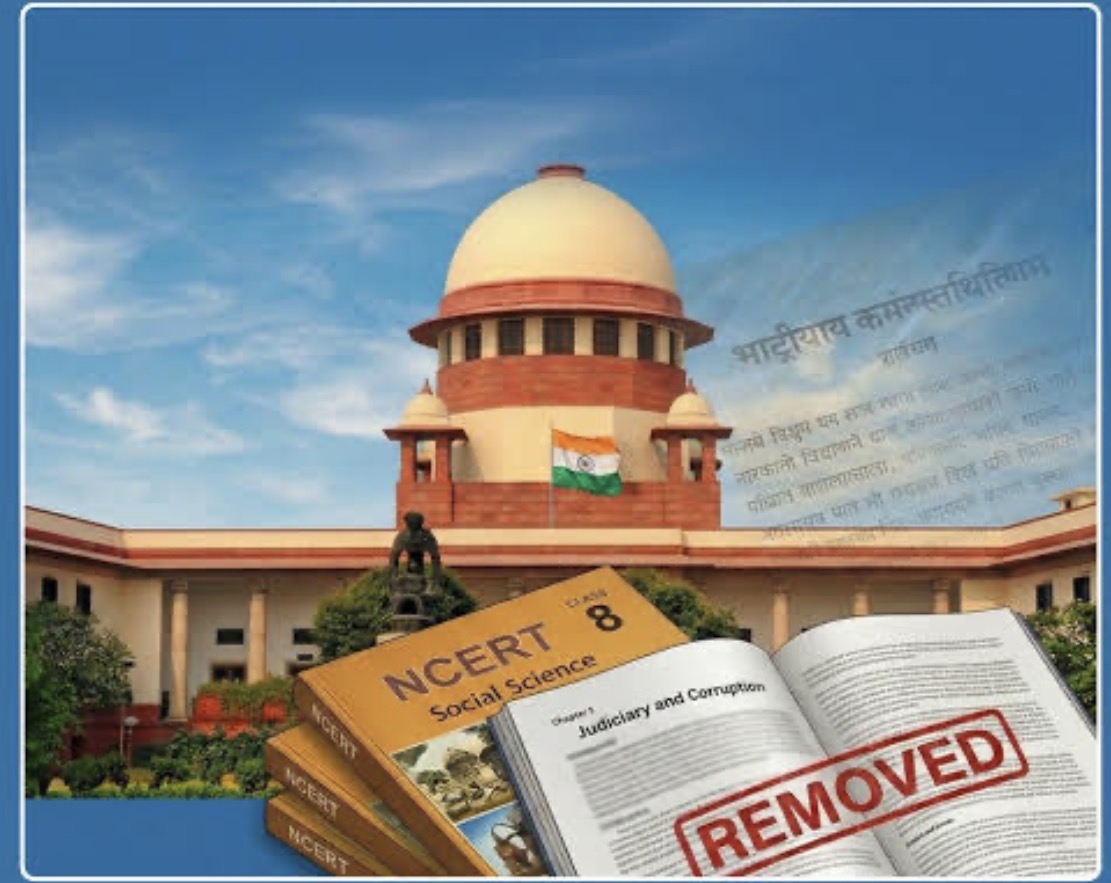
    There are systematic attempts underway to undermine the institutional authority of the Supreme Court and to damage the reputation of the judiciary. If these attempts are not stopped, the sanctity of the judiciary in the eyes of the people will erode. It will influence the tender minds of the youth. “Shots have been fired at us… the judiciary is bleeding,” expressed Justice Suryakant of the Supreme Court of India in anguish. For describing corruption in the judiciary in an 8th-grade textbook published by the National Council of Educational Research and Training, he went so far as to announce a ban on that very book. He ordered that the book should not be available even in digital form. Following these prohibitory orders, NCERT withdrew several lakh copies of the textbook. It was also reported that a bookstore owner was arrested by the police for selling photocopies of the textbook. “I will not tolerate anyone on this earth attempting to defame the judiciary,” said the Chief Justice.

    When he expressed his anger over the textbook, Prime Minister Narendra Modi was in Israel. Official sources told the media that Modi too was distressed that the judiciary’s sentiments had been hurt and remarked, “Who is overseeing all this?” After returning to the country, Modi reportedly raised the issue in a Cabinet meeting as well. News reports said he remarked, “How can we tell 8th-grade children ourselves that there is corruption in our judiciary?” Education Minister Dharmendra Pradhan also expressed regret over including the controversial chapter on corruption in the judiciary in the 8th-grade textbook. “We have immense respect for the judiciary. We did not intend to insult it deliberately,” he said. The Supreme Court sent notices to NCERT Chairman Professor Dinesh Prasad Saklani.

    With the Chief Justice expressing concern, is there really a conspiracy behind this entire episode to defame the judiciary? Are there systematic efforts underway to reduce public respect for the judiciary? In fact, the Congress attempted to create the impression that it was the Modi government itself that engineered this conspiracy. “For a decade, the BJP government has been trying to spread its ideological virus through textbooks. The inclusion of details about corruption in the judiciary was not accidental. It was a systematic attempt to corrupt the minds of students,” said Congress spokesperson Jairam Ramesh. He made indirect remarks suggesting there was evidence that Modi himself guided this process and that the RSS was behind it. Lawyers Kapil Sibal and Abhishek Singhvi, who argue opposition cases in the Supreme Court, made submissions that led Justice Suryakant to treat the matter more seriously. They succeeded in creating the impression that a major conspiracy had taken place.

    It is because people believe that they will ultimately receive justice through the judiciary that lakhs of them approach the courts. If they did not believe courts would deliver justice, there is a possibility that they might resort to vigilante justice instead of going to court. It cannot be said that Justice Suryakant’s view — “We cannot allow students to develop the impression that justice is not available in this country” — is entirely wrong. The textbook mentioned a judgment that described slum dwellers as encroachers. However, by highlighting such instances, it would be inappropriate to portray the entire judiciary as anti-poor.

    Quoting Martin Luther King Jr.’s words, “Injustice anywhere is a threat to justice everywhere,” CBI Special Judge Justice Jitendra Singh, in his recent judgment on the Delhi liquor case, detailed across nearly 600 pages how the CBI allegedly tailored facts to suit its narrative in order to implicate political opponents of the ruling party. He asked, “If even policy decisions taken to strengthen the economy are treated as crimes, how can any government take decisions?” He pointed out the injustice of keeping accused persons imprisoned for months based solely on the statements of approvers and accomplice witnesses. He observed that the right to life and personal liberty did not come from the government’s grace but from the Constitution, and that unless a balance is maintained between the Constitution and statutory law, public trust in the criminal justice system would erode. It is noteworthy that even constitutional benches which had refused stays in several instances in the Delhi liquor cases did not reflect at such depth as the lower court did. Regardless of how much this judgment is challenged in higher courts, the significance of the questions it raises will not diminish.

    By banning a textbook that mentioned corruption in the judiciary, students may lose the opportunity to learn in the classroom about what is happening within the judicial system. The very act of banning it has created greater discussion and drawn more attention to the issue. Do students learn about the world only through textbooks? Just because something is not mentioned in a textbook, will they automatically form a favorable opinion of the judiciary? It is no secret that today social media has far greater influence than any textbook. Do 8th-grade students not watch television or read newspapers? Moreover, as mentioned in the textbook, the government itself has repeatedly informed Parliament that crores of cases are pending across the Supreme Court, High Courts, district and subordinate courts. The textbook also cited remarks made in 2025 by then Chief Justice Justice Gavai that corruption and misconduct in the judiciary erode public trust. Therefore, merely banning the textbook will not increase public respect for the judiciary. It is impossible to conceal such matters from students simply by excluding them from textbooks.

    Secondly, it has become a matter of debate whether the Supreme Court has the constitutional authority to ban a book or a speech. In a democratic society, censoring a book falls under curtailing freedom of expression guaranteed by Article 19. Legal experts are raising questions about whether judicial orders fall within the permissible restrictions under Article 19 and whether the Constitution grants such authority to the judiciary. When their fundamental rights are violated, citizens can approach the courts. But when courts themselves infringe upon fundamental rights, what is to be done? they ask.

    After the strict stance taken by the Supreme Court, NCERT has fallen in line—and so has the government. Everyone is offering clarifications and apologies. NCERT apologized in court and assured that the books would be withdrawn, but the court is not satisfied with that. The Chief Justice has put a stay on the book. But is this really an issue related to corruption in the judiciary, or is there some other story behind it?

    In reality, the chapter titled ‘Corruption in Judiciary’ included in NCERT’s Class 8 book was not an attempt to inform students about corruption existing at any level within the judiciary. It appears to be an effort to raise questions about the credibility of the judiciary and influence public perception. It should be noted that NCERT books are not prepared randomly, as if someone wrote something arbitrarily and it got printed. There is a long process behind it. Every subject has two committees that oversee the entire process—from preparing the content to its publication.

    This chapter appears in the Class 8 Social Science book. It is perhaps just a coincidence that the head of the Curricular Area Group that prepared the Social Science book is a guest professor at IIT Gandhinagar, Michel Danino. This committee oversees the selection and writing of content for social science textbooks. After this comes the National Syllabus and Teaching Learning Materials Committee, a high-level committee that gave the book its final shape. The chairman of this committee is MC Pant, Chancellor of the National School of Planning and Administration. Professor Manjul Bhargava of Princeton University is its co-chair. Apart from them, there are 19 members including Sudha Murty and Sanjeev Sanyal, a member of the Prime Minister’s Economic Advisory Council. Think about it—if all these people have truly fulfilled their responsibilities, it would mean that the book’s content passed through all their scrutiny and none of them found anything objectionable in it. It is worth noting that around the same time, remarks previously made by Sanjeev Sanyal that “the judiciary is the main obstacle to rapid development in this country,” were also brought up.

    So the question is whether a committee that prepares textbook content in line with the prevailing social and political narrative in the country would inadvertently decide to teach eighth-grade students about alleged corruption in the judiciary. It is hard to believe that this happened accidentally.

    Then the question arises: why did the government not defend it in court? If so many people collectively played a role in preparing the book, then either action should be taken against all of them, or the government should defend the book in court. If one closely observes the narrative that has emerged on social media regarding this entire episode, it seems that the objective behind including this chapter in the book has already been achieved. A discussion on corruption in the judiciary has begun, and a debate has also erupted over the Supreme Court’s move to stop this discussion. There is a large group arguing that corruption exists in the judiciary and that it should be investigated and openly discussed. The same group is also saying that the judiciary becomes immediately sensitive about matters concerning itself and does not want its issues to come before the public.

    Senior Supreme Court lawyer and public interest litigator Prashant Bhushan has also objected to certain remarks made by the Supreme Court and some senior lawyers. He wrote on social media that in 2007, Transparency International had said that in public perception, the judiciary was the second most corrupt institution. He wrote that if discussion on this issue is suppressed, it will only strengthen public perception. Later, former NCERT Director JS Rajput also questioned the Supreme Court’s stance and said that stopping discussion on corruption in the judiciary is not appropriate.

    Why should the court react only when corruption in the judiciary is mentioned? Why remain silent when other institutions are criticized? This entire episode has also brought the case of Yashwant Varma back into discussion. Burnt currency notes were reportedly recovered from his residence when he was a judge of the Delhi High Court. The incident took place around Holi last year, and now another Holi has arrived. Nothing has happened in one year. There is an impeachment motion in Parliament that is to be investigated. People are asking what happened after sacks of cash were allegedly recovered from a judge’s residence. If action had been taken and an example set, it would have positively influenced public perception. But no action has been taken on such a major issue of corruption.

    There are those who argue that there is nothing wrong with textbooks discussing the ailments present in the country and that only by discussing them can they be resolved. For example, irregularities in the electoral system have also been discussed in textbooks, including an image of currency notes found in a candidate’s car. Do such incidents not occur? Over time, several allegations have been made against High Court and Supreme Court judges. There are no records of any judge being convicted or impeached over corruption allegations; at most, transfers have taken place. While ordinary citizens and political leaders face CBI raids and ED investigations, why does the same not happen to judges? The very higher judiciary that banned the 8th-grade textbook must answer these questions.