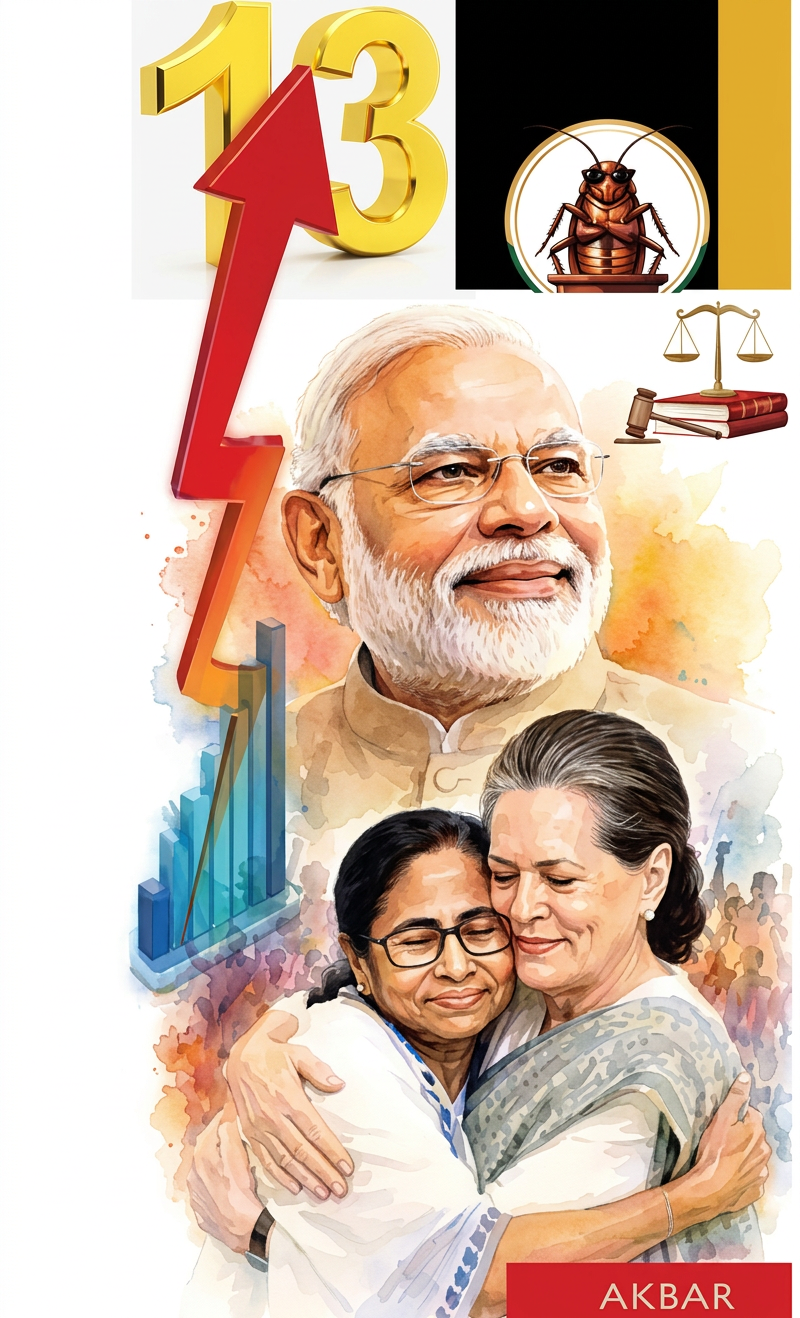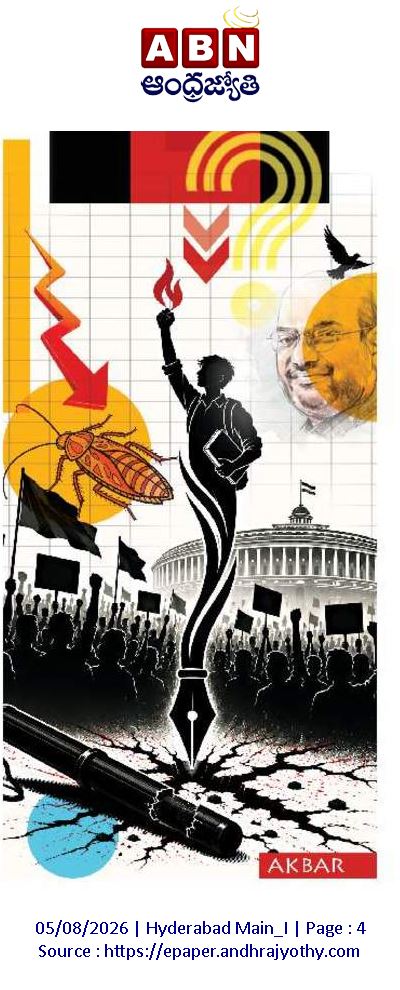
INDIA GATE

  • Tamil Nadu’s Message to India’s Political Class

    Man standing on a car waving to crowd with supporters holding flags in a night rally
    Supporters cheer enthusiastically around a leader standing on a car during a lively political rally at night.

    In Andhra Pradesh, there was a political leader who used to send various kinds of gifts door to door in his constituency. On every occasion, he distributed sweets and snacks; during festivals, Raymond clothes for men and silk sarees for women. Every newly married couple received a gold mangalsutra pendant, silk clothes, and silver anklets as gifts. During elections, things went even further. Reports said that a separate truck was used exclusively for distributing cash lavishly. Even then, he lost the last election by a margin of more than 43,000 votes.

    This single example is enough to show that if people truly decide, no amount of inducement can make them surrender their conscience. Even though political parties and leaders are aware of this, they continue making every possible attempt to lure people and buy votes. This does nothing except create disgust among the public toward political leaders. When leaders try to purchase votes, people naturally begin to wonder how much these politicians are earning in politics and how much public money they are looting. Many people feel that all this money being distributed is nothing but wealth stolen from the public itself.

    Recently in Tamil Nadu, the DMK and AIADMK distributed money on a massive scale. Estimates suggest that between ₹20 crore and ₹50 crore was spent in each constituency. Videos showing these parties distributing cash in envelopes ranging from ₹3,000 to ₹10,000 circulated widely on social media, yet the Election Commission hardly paid attention. An NGO called “Arappor Iyakkam” even lodged a complaint with the Election Commission regarding the large-scale cash distribution. Surprisingly, the TVK party of actor Vijay, which reportedly did not distribute money at all, succeeded in getting the highest number of its candidates elected. Along with Chief Minister Stalin, 15 DMK ministers were defeated. In one constituency, a four-time DMK minister lost to an auto driver. Elsewhere, the son of a car driver won. In many constituencies, TVK candidates won with huge majorities, while in at least 20 seats they lost by extremely narrow margins. These developments prove that if elections had been conducted without the influence of money power, a massive Vijay wave would likely have swept Tamil Nadu.

    In recent democratic history, Vijay earned the distinction of winning elections in a state without purchasing votes from people. In fact, Vijay did not campaign extensively across the state. In many places, his party relied on cutouts, holograms, and duplicates for campaigning. Keeping in mind the stampede incident at Karur, he cancelled many rallies. TVK candidates themselves did not campaign aggressively in several constituencies. There were even reports that in some places DMK and AIADMK candidates offered money to TVK candidates and told them to stay home and rest. In many constituencies, TVK candidates did not even go to the counting centres. They were surprised to learn from television broadcasts that they had won.

    Although huge crowds attended Vijay’s meetings, many believed TVK could not succeed because the party lacked organizational machinery, proper local coordination, sufficient funds, and experienced candidates. In many constituencies, campaigns were carried out with nothing more than a small van, two auto-rickshaws, and a few children blowing whistles while walking ahead of the candidates. In several places, students and women voluntarily went door to door campaigning. Small donations were collected for campaign expenses. In some constituencies, there were not even TVK posters. Often, people could not even recognize TVK candidates when they walked on the roads.

    The Tamil Nadu elections should serve as a lesson to parties that rely on money power, muscle power, and manipulation of systems to come to power. It should open the eyes of those who collect funds from corporate companies in the name of electoral bonds, allot Rajya Sabha seats to donors, and even launch companies for them. Illegal funding from corporations forces governments to return favors through project allocations, ignore irregularities in those projects, and encourages politicians who buy votes to indulge in further corruption to recover their election expenses. Through such corrupt practices, entire systems have become rotten. Electoral corruption plays a major role in India’s political and administrative system. Legislatures are increasingly filled with corrupt individuals, corporates, and wealthy elites. Ordinary people are finding it impossible to contest elections. There is little doubt that black money amounting to 20–50 percent of the country’s GDP has become part of the electoral system.

    Officially, the Election Commission says that an MP candidate can spend up to ₹95 lakh and an MLA candidate up to ₹28 lakh. But politicians themselves say that in reality, this amount is not sufficient even for a single day of campaigning. Although the Election Commission officially seized black money worth ₹10,000 crore during the 2024 general elections, estimates suggest that around ₹1.35 lakh crore actually circulated during the elections—far exceeding the expenditure in the 2020 U.S. elections. The Centre for Media Studies had earlier estimated that an average of ₹1,500 is paid as bribes to every voter in the country. It would not be an exaggeration to say that election observers appointed by the Election Commission have become clowns in this entire drama. Instead of preventing electoral malpractice, they appear more focused on deciding which party should win.

    It appears that the people of Tamil Nadu responded against this vicious cycle of corruption and illegality. Out of the 107 MLAs elected from Vijay’s party, 93 were first-time entrants into politics. Half of them were between 40 and 45 years old. This helps explain the direction in which Tamil Nadu’s youth and Dalits are thinking. It also suggests that they are no longer interested in hollow identity slogans and ideological rhetoric. What they really want is simple: systems that function properly. They want efficient public services in return for the taxes they pay. They want government offices—especially revenue departments—to function properly, without power cuts and delays. Instead of political parties constantly raising emotional slogans and provoking caste, religious, or regional divisions to divert public attention, the country can become modern and ideal only when systems are reformed according to the aspirations of the youth.

    Although India ranks 91st among 182 countries in the corruption index, no government appears to be sincerely working to eliminate corruption within systems. Political parties focused solely on winning elections show little interest in institutional reforms. A recent example is the NEET question paper leak scandal. Over the last four years, question paper leaks have occurred in one form or another. Reports stated that question papers for the May 3 entrance examination were sold under the guise of “guess papers” for amounts ranging from ₹10 lakh to ₹25 lakh, and that a mafia network stretching from Rajasthan, Haryana, Maharashtra, and Uttarakhand to Kerala was responsible for the leak.

    Even after it was discovered last year that students who selected the same examination centre in Godhra, Gujarat scored unusually high marks, the examinations were not fully cancelled. Although a committee headed by former ISRO chairman Radhakrishnan was appointed to investigate the 2024 irregularities, its report merely gathered dust and was never implemented. Even after the CBI investigated 144 people who had purchased leaked question papers and submitted its findings to the Supreme Court, the Court concluded that there was no evidence of a nationwide systemic failure.

    Medical education in India costs crores of rupees. Affordable medical colleges are very few. This is one of the reasons behind examination paper leaks. What is the use of leaders delivering moral sermons when they cannot make education and healthcare accessible to ordinary citizens? After all, are these not the very sectors where people could save the most money?

    Meaningful change will not come unless the kind of political awareness shown by the generation that voted for Vijay in Tamil Nadu spreads across the country. Only when a new political consciousness emerges among the youth nationwide, as seen in Tamil Nadu, can real transformation become possible.

  • BJP’s Southern Challenge: Can the Saffron Wave Cross the Vindhyas?

    Crowd of BJP supporters holding Indian flags and BJP lotus flags at a political rally with party leaders on stage

    When will the BJP’s triumphant march reach the South?

    For several decades, red waves used to surge every year at Kolkata’s Brigade Parade Ground. But on May 9 this year, saffron waves swept across it instead. In the presence of Prime Minister Modi and thousands of people, Suvendu Adhikari took oath as the BJP’s first Chief Minister in West Bengal. Exactly a day later, on Sunday, in Chennai’s Jawaharlal Nehru Stadium, film actor Chandrasekaran Joseph Vijay took oath as the 9th Chief Minister of Tamil Nadu in the presence of national opposition leader Rahul Gandhi. Vijay’s coronation too witnessed an equally massive public turnout. This development clearly indicates that while the Bharatiya Janata Party has firmly rooted itself in Hindi-speaking states, expanded in western states like Gujarat and Maharashtra, in northeastern states such as Assam, Arunachal Pradesh, Manipur, and Tripura, and in the eastern coastal region first through Odisha and now Bengal, entering the South is not going to be easy. On one side stands Suvendu Adhikari, and on the other Joseph Vijay — both appearing as reflections of these changing political realities. Do these two events represent two distinct dimensions in the thinking of the Indian people?

    While Narendra Modi, standing beside Suvendu Adhikari in Bengal, is now eager to expand into the South, Rahul Gandhi, who stood beside Joseph Vijay after achieving success in Kerala, has been unable to regain lost ground in North India despite repeated efforts. The southern states that once resisted Congress have not particularly welcomed the BJP either. In Andhra Pradesh, Telangana, and Tamil Nadu, there has been no experiment or attempt left untried by the BJP to gain entry.

    In Andhra Pradesh, the BJP accepted the dominance of the Telugu Desam Party. In Karnataka, after losing power, it is making every possible effort to regain it. In Tamil Nadu, after realizing that strengthening independently is difficult, it had no choice but to once again ally with the AIADMK. In Kerala, although the BJP won 3 seats for the first time in this Assembly election, its vote share did not increase significantly compared to the past. If Kerala and Tamil Nadu remain distant dreams for the BJP, the only promising states appear to be Karnataka and Telangana. That is why Prime Minister Narendra Modi toured these two states immediately after the results of the five-state elections were announced. However, his tours in Karnataka and Telangana were markedly different. In Karnataka, Modi declared that people were inclining towards nationalist politics and that a saffron wave would soon sweep the state. But in Telangana, he did not express the same confidence.

    In 1984, among the only two seats won by the BJP nationwide, one was Mehsana in Gujarat and the other was Hanamkonda in Telangana. Today, while the BJP has come to power in many states including Gujarat, it has still not expanded in Telangana to the extent expected. Modi himself reportedly mentioned this to state leaders and criticized them. During Bandi Sanjay’s tenure as state president, some enthusiasm had developed within the BJP cadre, but later that momentum gradually faded. The Sangh Parivar organizations may be able to steer people toward Hindutva ideologically, but it is BJP leaders who must create political momentum among the people. During Modi’s latest visit, he did not publicly provide any direct guidance to BJP leaders. He knows that the strategies adopted in North India and Bengal may not work in the South. However, his words and meetings regarding Telangana suggest that he may have some strategy in mind. Time alone will reveal what it is.

    With the BJP’s victory in Bengal, it appears that after Mamata Banerjee, every force capable of challenging the saffron party is gradually disappearing. At the same time, questions are arising whether even the national party Congress is capable of taking on the BJP. Leaders who tried to unite opposition parties against the BJP have all collapsed one by one. Nitish Kumar, Mamata Banerjee, M.K. Stalin, KCR, Sharad Pawar, Kejriwal, and Uddhav Thackeray all once sought to unite the opposition against Modi. Nitish Kumar, who made intense efforts in 2023 to unify the opposition, later shifted towards the BJP for power and has now effectively handed over power to the BJP itself. Modi used every possible political strategy to sideline leaders capable of offering alternative politics nationally. None of them are now in a position to challenge Modi at the national level; instead, they are struggling for survival at the state level. In Maharashtra, after splitting the Shiv Sena and NCP to establish dominance, the BJP also encouraged rebellion within the Aam Aadmi Party. Although a new force has emerged in Tamil Nadu, it is too early to determine how much strength it can gather before the Lok Sabha elections. The Left parties’ only government is now under Congress influence. The Left’s presence in Parliament is also steadily declining.

    As regional parties and Left parties weaken, a situation is emerging where Congress alone must face the BJP. Perhaps the BJP desires exactly that. Anti-BJP politics appears to be either weakening or losing relevance altogether. This is evident both at the leadership level and at the ideological level. Consequently, even in the South, parties are no longer hesitant to join hands with the BJP or accept its political ideology. It is difficult to say how long it will take for anti-BJP sentiment to spread beyond the “paper tigers” of social media into the broader public.

    Congress ruled the country for decades after Independence, but gradually weakened over time. The condition Congress finds itself in today resembles the condition the Jana Sangh and later the BJP once faced. Within just two years, the BJP managed to come to power in Odisha, Bihar, and West Bengal in the East. It secured power for a third consecutive term in Assam. In the West, BJP has its own Chief Ministers in Rajasthan, Gujarat, and Maharashtra. In Gujarat, it has been in power continuously for 30 years. Except for Jharkhand and Himachal Pradesh, BJP Chief Ministers govern almost the entire Hindi belt. Even in Punjab, the BJP has already begun plans to gradually establish itself. If the BJP could establish dominance in the North, East, and West, is entering the South truly impossible?

    However, in electoral politics, the BJP has become so strategically sophisticated that defeating the party now seems nearly impossible. No one has been able to crack the BJP’s winning formula in elections. The BJP leaves no instrument unused in its pursuit of victory; whether those methods are ethical or unethical is irrelevant to the party. Since Trinamool Congress leaders themselves admitted that the BJP won 31 seats because of “Sir,” it is likely that the BJP deployed additional strategies to win the remaining seats.

    No political party can remain at its peak forever. If the BJP is to lose that position, it must become the cause of its own downfall. An alternative political force capable of dethroning the BJP must emerge. Conditions must arise where people begin resisting the party at every step. None of these three possibilities seem likely in the near future. Ordinarily, anti-incumbency sentiment against governments becomes visible, but the BJP has managed to overcome even that. BJP leaders are experts at neutralizing anti-government sentiment. In Assam, despite ruling twice, not only did Congress fail to defeat the BJP, but even Gaurav Gogoi — a three-time MP and Congress’s Chief Ministerial face — lost by a margin of 23,000 votes. What more needs to be said?

    It is impossible to predict how much strength the opposition can build before the 2029 general elections to challenge the BJP. It is uncertain how many parties will align nationally with a Congress that defeated the Left in Kerala while simultaneously trying to weaken Trinamool in Bengal with Left support. Even if all opposition parties unite again, creating an ideological foundation and leadership capable of defeating the BJP will not be easy. Leaders like Jayaprakash Narayan and V.P. Singh are unlikely to emerge again. In reality, many votes now won by regional parties once belonged to Congress. If regional parties weaken, Congress should theoretically regain those votes. But Congress has not been able to rebuild that strength. In Hindutva politics, the BJP has no competition. Organizationally too, Congress cannot match the BJP. Congress has failed to inspire confidence that it can defeat the BJP in a direct contest. What message will the elections in Uttar Pradesh, Madhya Pradesh, Rajasthan, Karnataka, Telangana, and other states over the next two years deliver? Will Karnataka and Telangana preserve their distinctiveness like Tamil Nadu? Only time will tell.

  • The Lotus Emerging from Bengal’s Cultural Roots

    “I will not resign. It is not the BJP that has defeated me, but the Election Commission,” declared Trinamool Congress leader Mamata Banerjee after the electoral setback. For years, many believed that the Trinamool Congress’s hold over Bengal—strengthened by welfare politics, village-level networks, and appeals to Bengali identity—would remain unshaken. The state’s complex social fabric, including the decisive influence of minority votes in several constituencies, further reinforced that assumption.

    Yet the Bharatiya Janata Party’s rise in West Bengal marks one of the most significant political developments in post-independence India. Overcoming deep-rooted regional loyalties and decades of ideological resistance, the BJP transformed itself from a marginal force into a major political contender in Bengal. To its supporters, this was not merely an electoral breakthrough but the re-emergence of a long-suppressed nationalist current within Bengal’s political consciousness.

    In many ways, Bengal’s historical and cultural evolution always contained strands that could eventually align with the BJP’s ideological narrative. Bengal has never been untouched by religious or identity politics. The 1905 partition of Bengal by British Viceroy Lord Curzon triggered the Swadeshi movement and ignited a powerful wave of anti-colonial nationalism. Long before independence, Bengal had already become a battleground of competing religious, cultural, and political identities.

    Thinkers and spiritual leaders such as Ramakrishna Paramahamsa, Swami Vivekananda, and Bankim Chandra Chattopadhyay profoundly shaped Bengali consciousness. Vivekananda envisioned Bengal’s youth as custodians of India’s spiritual resurgence, while Bankim Chandra’s writings fused cultural pride with patriotic fervor. His novel Anandamath became closely associated with early nationalist sentiment.

    Bengal also produced some of the fiercest critics of both colonial rule and mainstream Congress politics. Revolutionary figures such as Sri Aurobindo, Chittaranjan Das, and Subhas Chandra Bose challenged conventional political approaches and inspired militant nationalism. During Partition, communal violence—including the Calcutta killings and the Noakhali riots—left deep scars on Bengal’s collective memory.

    It was in this atmosphere that Syama Prasad Mukherjee emerged as a major political figure. Opposing both communal violence and special constitutional status for Kashmir, Mukherjee later founded the Bharatiya Jana Sangh, the ideological predecessor of today’s BJP.

    Despite these historical undercurrents, Bengal did not embrace the BJP for decades. Instead, the state evolved into one of India’s strongest centers of liberal, intellectual, and left-wing politics. Bengal nurtured social reform movements, literary modernism, trade union activism, and revolutionary thought. The Congress once dominated the state, only to decline before the rise of the Left Front, which ruled for more than three decades. Later, the Trinamool Congress under Mamata Banerjee displaced the Left and established its own political dominance.

    At the same time, Bengal remained a cradle of artistic and intellectual achievement. From Rabindranath Tagore to generations of filmmakers, musicians, actors, and writers, Bengal became synonymous with cultural sophistication, pluralism, and ideological debate.

    The BJP’s advance into such a political landscape therefore raises an important question: what changed?

    Part of the answer lies in long-term organizational work. The Rashtriya Swayamsevak Sangh steadily expanded its grassroots presence across Bengal over several years. The BJP combined this organizational machinery with a carefully crafted political narrative centered on nationalism, border security, religious identity, and allegations of minority appeasement under the Trinamool Congress government.

    Another major controversy during the elections was the debate surrounding the Special Intensive Revision (SIR) of electoral rolls and the role of the Election Commission. Opposition parties, especially the Trinamool Congress, alleged that large-scale deletions of voter names disproportionately affected minority-dominated districts such as Murshidabad, Malda, and North 24 Parganas. The BJP, however, defended the exercise as a necessary step to remove duplicate and ineligible voters and to strengthen the integrity of the electoral process. The controversy intensified political polarization, with the opposition accusing the Election Commission of acting in a partisan manner, while the BJP projected the revision as part of a broader campaign against illegal infiltration and electoral manipulation. Regardless of the competing narratives, the issue became a crucial psychological and political factor shaping the atmosphere of the election.

    The party also demonstrated a level of electoral planning and discipline that many opposition parties struggled to match. Having already secured close to 40 percent of the vote share in previous parliamentary and assembly elections, the BJP focused on incremental expansion constituency by constituency. Elections were approached not merely as campaigns but as highly coordinated political operations involving booth management, cadre mobilization, and targeted messaging.

    Former CPI(M) leader Sitaram Yechury himself acknowledged that even sections of traditional Left voters had shifted toward the BJP in recent years. This reflected not only ideological polarization but also the collapse of older political structures that once anchored Bengal’s electoral landscape.

    The opposition now faces a broader national challenge. Regional leaders who once treated Congress as politically irrelevant increasingly recognize the need for coordination against the BJP. Yet the Congress party continues to struggle with organizational weakness, inconsistent strategy, and the absence of a durable grassroots network comparable to that of the BJP.

    The contrast between the two parties is striking. The BJP invests continuously in cadre-building, ideological outreach, and local organizational structures. Congress, by contrast, often appears reactive rather than strategic. Electoral alliances and parliamentary tactics alone cannot compensate for the absence of sustained grassroots engagement.

    This is perhaps the larger lesson emerging from Bengal. Modern politics is not sustained by rhetoric alone. It requires organization, ideological clarity, long-term planning, and the ability to emotionally connect with voters across social divisions. One may agree or disagree with the BJP’s politics, but its capacity to build a disciplined political machine is difficult to ignore.

    Whether Bengal’s political transformation represents a temporary shift or a deeper civilizational realignment remains uncertain. But one fact is clear: Bengal, which has repeatedly shaped the course of Indian political history, is once again at the center of a major national turning point.

  • How long will these unethical politics continue?

    Leaders exchanging party scarves during symbolic switch from AAP to BJP
    Leaders symbolically switch from Aam Aadmi Party to Bharatiya Janata Party

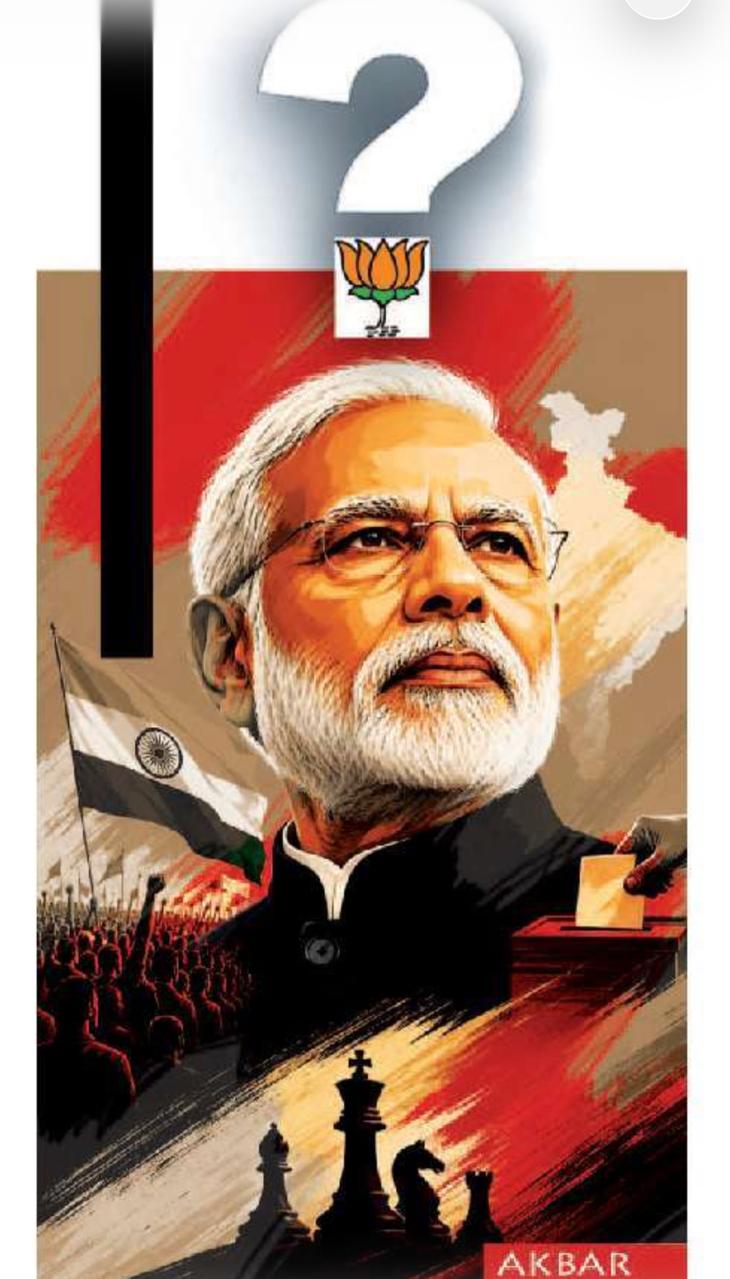
    On the last day of the election campaign, Prime Minister Narendra Modi confidently declared, “After May 4, I will have to come to Bengal once again for the swearing-in ceremony of a BJP government.” He expressed confidence that “after Odisha and Bihar, the lotus will bloom in Bengal.” The Election Commission has deployed CAPF forces across Bengal. Union Home Minister Amit Shah said, “Even after the elections are over, these forces will remain in Bengal for another two months.”

    While Modi’s campaign efforts aim to attract the masses, especially women voters, Amit Shah, who stayed in Bengal for 15 days, is an expert strategist working at a micro level. This leadership duo prepares meticulous strategies well in advance to win a state. They craft narratives necessary for victory, employ all possible tactics—persuasion, incentives, division, and force—and make use of every system available. With 250,000 security personnel, Bengal has been turned into a battleground. Even after all this, can the BJP come to power in Bengal? If people desire change, if Hindu voters consolidate, if women support in large numbers, and if institutions fully cooperate, BJP’s victory is certain. However, if the people of Bengal view Mamata Banerjee as a symbol of their identity and resist Hindutva influence, the Trinamool Congress will return to power for a fourth consecutive term.

    In reality, even the Congress party under Rahul Gandhi does not want Mamata Banerjee to win in Bengal. When the Women’s Reservation Bill was collectively opposed in Parliament by the INDIA alliance, Trinamool supported it. The very next day, Rahul Gandhi toured Bengal and sharply criticized Mamata Banerjee’s corrupt governance. He argued that her policies are responsible for the consolidation of Hindu voters. While leaders like Tejashwi Yadav and Jharkhand Chief Minister Hemant Soren campaigned in her support, Congress and the Left parties strongly criticized her. This approach not only exposes divisions within the INDIA alliance but may also benefit the BJP to some extent. As Venkaiah Naidu once described, Congress behaves like “friendship in Delhi, wrestling in the streets.” While the BJP unites forces at both national and regional levels under the NDA, Congress has failed to build a strong coalition capable of challenging BJP across the country, highlighting its weakness.

    Not just with Mamata Banerjee, but even in the case of Kejriwal, Congress follows a similar approach. There are reasons for this, but it also reflects how independent regional parties in the country are becoming isolated and forced into defensive positions.

    Even as the Bengal elections are underway, a significant development is that seven Aam Aadmi Party MPs have joined the BJP. What does this indicate? Even before the current assembly battles conclude, BJP leaders have turned their attention to Punjab, where elections are due in eight months. Considering the growing anti-incumbency against the AAP government there, BJP seems to have devised a strong strategy to strengthen itself in the state. Though there are allegations that leaders like Raghav Chadha were pressured and others intimidated using ED and CBI cases, Kejriwal’s leadership style has also contributed to this situation. BJP is making every effort to weaken AAP, a one-man party, both in Punjab and Delhi, and to draw its leaders into their fold. This reflects BJP’s political strategy—using every possible tool to assert dominance and weaken opposition parties.

    The way AAP handled Rajya Sabha seats also contributed to this moral decline. Selling seats and later intimidating or re-buying those who purchased them is not difficult. By sidelining people like Yogendra Yadav, Prashant Bhushan, Ashutosh, and Shazia Ilmi and elevating industrialists and millionaires instead, AAP weakened itself morally. In contrast, Mamata’s party, though regional, sent individuals like journalist Sagarika Ghose, lawyer Menaka Guruswamy, and marginalized representative Mamata Bala Thakur to the Rajya Sabha. Similarly, CPI(M) sent journalist John Brittas from Kerala. Can BJP lure such individuals? This episode shows how carefully regional parties must choose whom they send to Parliament.

    The fact that seven AAP MPs left their party overnight to join another highlights how degraded Indian politics has become. Leaders like Raghav Chadha, who once labeled BJP as a party using agencies like CBI and ED as tools of intimidation, and Ashok Mittal, now joining BJP, what message are they sending? Are parliamentary seats being expanded just to accommodate such leaders? Rajya Sabha MPs are not directly elected by the people but chosen by party MLAs. When those MLAs remain in the same party, how is it legal for MPs to defect? The current anti-defection law appears not to prevent defections but to enable them through loopholes.

    When ideological commitment and political ethics are abandoned for selfish gains, can other systems remain unaffected? Recently, former U.S. President Trump calling India a “hellhole” was completely inappropriate. His remark recalls Russian writer Alexander Kuprin’s novel “The Pit,” which exposed prostitution. Kuprin’s observation—that systems often promote the very evils they claim to prevent—applies equally to the anti-defection law. The provision for “merger” within the law creates room for legal defections. The law mentions party merger but not parliamentary party merger. How can a parliamentary party be considered the real party? The Supreme Court’s constitutional bench in the Eknath Shinde case ruled that legislative or parliamentary parties cannot act independently of the political party’s stance. Should this not apply to the AAP MPs’ merger? As early as 2003, the Supreme Court clarified that defining a parliamentary party as the real party would render the Tenth Schedule meaningless. However, in 2019, the Bombay High Court’s Goa bench ruled differently, validating Congress defections as mergers. The Supreme Court’s delay in hearing the appeal rendered it irrelevant, as the assembly term ended and fresh elections were held in 2022. Now, it remains uncertain when the Supreme Court will address the petition challenging AAP’s merger into BJP in the Rajya Sabha.

    The BJP government claims to enact useful laws for the country, but why does it not introduce a law to curb unethical political defections? Until such a law is enacted, MPs and MLAs will continue defecting at will. BJP, which claims to be different, is behaving no differently from Congress, which once popularized the “Aaya Ram, Gaya Ram” culture. Its focus remains on winning elections and expanding nationwide rather than fostering ethical political values. It was Congress’s past mistakes that led people to embrace BJP. For years, people supported BJP despite its flaws, keeping Congress’s misdeeds in mind. However, just as medicine has an expiry date, political support too has a time limit. Until recently, Raghav Chadha enjoyed immense popularity on social media, but after joining BJP, over two million people distanced themselves from him. Once leaders begin to decline morally, it does not take long for people to see them as corrupt.

  • The Great Women’s Reservation Show: Reform or Electoral Strategy?

    Illustration of a woman ascending steps labeled Reservation, Quota, and Reservation in a legislative chamber with supporters holding signs for empowerment and equality and opponents debating.
    “Will this bill pass? My boss is asking me again and again,” a friendly-party MP asked Parliamentary Affairs Minister Kiren Rijiju last week. “Why do you have that doubt? As long as Narendra Modi is Prime Minister, whatever he decides will be achieved under any circumstances. A lot of efforts are happening behind the scenes. Many people will lean towards us. Just wait and watch,” he told that leader. “Not only that, I myself will speak to your boss,” he said, personally calling him and assuring, “There are no obstacles for the bill to pass.” Following this, arrangements were made in that state to gather large numbers of women and celebrate.

    In fact, it did not appear that even the Prime Minister had any apprehension that the bill might not be approved. From the second week of April, women from across the country were being brought to Delhi. BJP national president Nitin Nabin called state presidents and key leaders and instructed them to organize women’s conferences in the states and hold press meets on women’s reservation. A large conference with women was held at Vigyan Bhavan, where Prime Minister Narendra Modi spoke. Key women leaders from the party were brought to the central office and trained to go among the public and speak to the media. Documents were prepared and distributed showing how many seats would increase in which states. Eventually, the Lok Sabha galleries were filled with women representatives. The national capital and Parliament premises were vibrant with women. Many women dreamed that they too would soon enter the House; some even identified their prospective seats.
    However, on the very first day of the Parliament session on April 16, it became clear that the opposition was united. Behind-the-scenes efforts intensified to win over or ensure the absence of opposition members. Modi even had to warn, “If this bill fails, women will not forgive the opposition.” Doubts were raised about whether opposition MPs from states going through elections would attend the session. In West Bengal, Trinamool Congress chief Mamata Banerjee is facing unusually tough competition this time, and her party MPs were deeply engaged in campaigning. Despite efforts to stay united, seven Trinamool MPs had to be absent during voting. Even so, since there was a significant gap between the two-thirds majority required in the Lok Sabha and the NDA’s strength, the constitutional amendment inevitably failed.

    Just as there are many reasons behind Karna’s death, there are many reasons behind the failure of this bill. Why did what was considered a historic moment ultimately turn into a farce? When all parties unanimously approved the constitutional amendment bill for women’s reservation in 2023, why was it opposed now? Why was there a need to modify that bill? If it had to be changed, why were efforts not made to build consensus on it as well? If women’s reservation is to be implemented in 2029, there is still three years’ time—then why extend budget sessions and hold special sessions during ongoing assembly elections? In the Bengal elections, which Modi has taken very prestigiously, was the women’s reservation issue used as a move to attract women voters? If so, why link reservation with an increase in seats through a constitutional amendment? Since an increase in seats would also benefit the Samajwadi Party in Uttar Pradesh, was this strategy aimed at drawing that party closer? Did the government not anticipate that basing delimitation on population, the absence of a proposal for a 50% seat increase, and rising concerns about North–South disparities would lead to suspicion? Even though Home Minister Amit Shah said at the last minute that the bill would be modified, the opposition did not agree—this shows the deep mistrust between the ruling party and the opposition. It also did not appear that the government anticipated criticism that using the 2011 census as a basis would ignore OBCs.
    In our country, politics driven by short-term gains and excessive publicity sometimes pushes back even necessary decisions like women’s representation.

    The job of an MP or MLA is to enact new legislation. They have to perform legislative functions. An MP may represent a single Lok Sabha constituency, but when they sit in the Lok Sabha, they are responsible for the 1.4 billion people of the country. They are part of the law-making process. The laws made by their votes apply to every citizen of the country. They determine each citizen’s fate. The Constitution provides for the executive to handle citizens’ daily needs. The executive is responsible for implementing laws made by the legislature. If Parliament or the Legislative Assemblies make good laws and the executive implements them effectively, citizens’ problems will be resolved.

    Therefore, there is a need to work on improving the quality of laws made in Parliament and the state legislatures. There is a need to work on improving the quality of debate and discussion in Parliament or the Legislative Assemblies. Then, arrangements must be made for better implementation of those laws. Increasing the number of MPs or MLAs will not change anything.

    If there is a water, electricity, or sewage problem in an MP’s constituency, the local administration must resolve it. If there is a law and order problem, the police will address it, not the MP. Therefore, it is essential that the number of police stations be increased in proportion to the population growth, the number of police personnel be increased and they be better trained, and the number of civil service staff and officers be increased so that citizens’ problems can be resolved.

    As the population grows, the number of schools and teachers should be increased. As the population grows, the number of hospitals and doctors should be increased. As the population grows, civic amenities should be developed. As the population grows, infrastructure should be developed. While this is not to say that work is not being done in this direction, it is not being done in proportion to the population growth. No one can deny the fact that the quality of civil services is continuously deteriorating.

    Therefore, the entire delimitation debate is a ‘misplaced priority’. It could also be called ‘barking on the wrong tree’. It will not bring any qualitative change to the country’s current legislative or executive system. On the contrary, it will deepen the division between North and South India.
    If, as Modi hopes, women in large numbers shift toward the BJP in the Bengal elections, the party is bound to achieve a major victory. This time, 200,000 more women voters have been added in Bengal. Out of 67.5 million voters, 34.4 million are women. Moreover, in the last elections, more women than men voted—88% of women cast their vote. Not only in Bengal but across the country, women’s voting percentages are rising faster than men’s. In many states, schemes targeting women have benefited ruling parties in elections. Therefore, there is little doubt that Modi used women’s reservation as a strategic move to attract women voters away from Mamata Banerjee. In fact, compared to all parties, Mamata Banerjee has provided greater representation to women—about 33% in her party. Of 29 Trinamool MPs, 11 are women; 20% of her cabinet are women. This time, the party has given tickets to 52 women, more than any other party. Welfare schemes like Kanyashree and Lakshmi Bhandar have also gained popularity. So whether the BJP can attract women voters through the reservation bill remains debatable—but if the BJP wins, it will have the opportunity to claim that women made the difference.
    More than women, the BJP has focused this time on Hindu-majority seats. In West Bengal’s 294 seats, only 234 have less than 40% Muslim population. The BJP had won 77 of these seats in the last election. Before 1977, Muslims supported Congress; until 2006, the Left; and since then, the Trinamool Congress. They have been a key factor in Mamata’s success.

    The BJP, which had virtually no presence in West Bengal until 2014, secured 17% votes in the 2014 Lok Sabha elections and increased it to 40% in 2019. This percentage hasn’t changed much in the last seven years. The gap between Trinamool and BJP is about five percent. To bridge this, consolidation of Hindu votes is necessary—and within that, Hindu women’s votes are crucial.
    Ultimately, increasing the number of MPs and MLAs may create more political positions and even increase women’s representation numerically, but without deeper institutional reforms, it is unlikely to bring meaningful change on the ground.
     
  • From Masterstroke to Misfire: The Amendment That Backfired

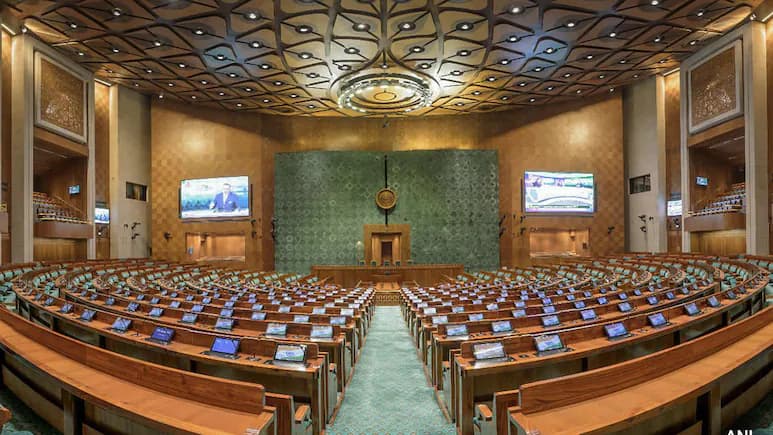
    The failure of the Constitution (131st Amendment) Bill, 2026 marks a significant political and constitutional moment. It demonstrates that even a strong executive cannot always secure its will, and that institutional checks within India’s parliamentary system remain robust. For Prime Minister Narendra Modi, whose style of governance has often been described as decisive and minimally consultative, this episode represents a rare but important setback.

    The Bill, widely expected to pass, fell short of the required two-thirds majority. While 298 members voted in favour and 230 against, it did not meet the threshold of 352 votes out of the 528 members present and voting. In response, the government chose to shelve not only the amendment but also the Delimitation Bill and the Union Territories Laws (Amendment) Bill, arguing that these measures were interconnected. Notably, this is the first time in over a decade in power that such a major legislative initiative has been blocked.

    The Opposition’s coordinated resistance played a crucial role. What initially appeared to be a foregone conclusion turned into a rare moment of unity among diverse political parties. Critics argue that the government’s approach itself contributed to this consolidation, as a top-down style of decision-making left little room for dialogue or consensus-building.

    Rahul Gandhi sharpened the political attack by likening the Prime Minister to a “magician” who had been “caught,” suggesting that the push to expand the Lok Sabha was driven by political calculations rather than genuine reform. According to the Opposition, the proposal sought to reshape India’s electoral map while simultaneously projecting a pro-women image through the reservation component.

    This episode raises a broader question: can strong, centralized leadership consistently deliver effective governance? While such leadership can accelerate decision-making, it may also limit consultation and erode consensus. The perception of “bulldozing” policies—whether accurate or not—can undermine democratic legitimacy. At the same time, it is important to recognize that this pattern is not unique to the current government. Indian political history offers several examples of unilateral decision-making, from the Emergency under Indira Gandhi to the Shah Bano legislation under Rajiv Gandhi.

    The proposal to introduce 33% reservation for women in legislatures is, in itself, a landmark reform. It addresses a long-standing structural imbalance in political representation and has the potential to significantly enhance women’s participation in governance. However, the timing and method of its introduction have raised legitimate concerns. Convening a special session of Parliament during ongoing assembly elections, rather than building broader consensus, invited suspicion about political motives.

    From an electoral perspective, the move is understandable. Women voters now constitute a decisive segment of the electorate, often turning out in greater numbers than men. Welfare policies targeting women have already proven electorally effective across several states. Expanding political representation could further consolidate this support. Even opposition resistance could be framed politically to mobilize women voters in favour of the ruling party.

    Yet, the linkage of women’s reservation with delimitation proved to be the most contentious aspect. Home Minister Amit Shah attempted to reassure critics by offering verbal guarantees that southern states would not lose proportional representation in an expanded Lok Sabha. He even proposed a temporary pause to revise the Bill. However, the Opposition rejected these assurances, pointing out that such safeguards were absent from the Bill’s text.

    As drafted, the proposal relied on the 2011 Census for delimitation, which would likely reduce the representation of states with lower population growth—particularly in southern and northeastern India—while increasing the share of the Hindi heartland. This raised serious concerns about federal balance and fairness.

    The urgency with which the government pursued the amendment further fueled criticism. With the 2026–27 Census still underway, many questioned the need to rush such a significant constitutional change. Linking a broadly supported reform like women’s reservation with a highly divisive issue like delimitation was seen by critics as a strategic miscalculation.

    The Opposition’s unified stance, particularly within the INDIA bloc, proved decisive. Parties such as the Congress, Trinamool Congress, DMK, and the Left coordinated effectively, setting aside differences. In contrast, regional parties like the TDP and AIADMK faced criticism for supporting the Bill based on assurances rather than textual guarantees, despite potential implications for their states.

    The defeat of the Bill has been framed by the Opposition as a victory for constitutional principles. Rahul Gandhi described it as a rejection of an “attack on the Constitution,” while Priyanka Gandhi Vadra emphasized the importance of separating women’s reservation from delimitation. These reactions highlight the broader political narrative that has emerged from the episode.

    Procedurally, the outcome underscores the strength of constitutional safeguards. Amendments of this nature require not only a majority of the total membership but also a two-thirds majority of members present and voting, along with ratification by at least half of the state legislatures in certain cases. These high thresholds are designed to ensure that major structural changes are enacted only with broad consensus—and in this instance, that safeguard functioned as intended.

    Looking ahead, the proposal to expand the Lok Sabha remains contentious. Critics argue that such a move, especially if based on outdated Census data, risks deepening regional imbalances and straining the federal structure. While women’s reservation enjoys wide support, delimitation is likely to remain a politically sensitive and divisive issue.

    Ultimately, the episode highlights a fundamental principle of democracy: process matters as much as outcome. Even well-intentioned reforms can lose legitimacy if they are perceived as unilateral or politically driven. The challenge for any government lies not only in pursuing reform but in building the consensus necessary to sustain it.

  • “From Uncertainty to Legitimacy: The Amaravati Capital Story”

    “Which region should be the capital of a state is a decision that rests with the state government,” said Union Minister of State for Home Affairs Nityanand Rai on February 5, 2020, in the Lok Sabha in response to a question raised by a Telugu Desam Party member. The Union Home Ministry also stated in an affidavit submitted to the Andhra Pradesh High Court at the same time that it had no role in deciding the capital. Exactly six years later, history has rewritten itself. The same minister who once said in Parliament that they had nothing to do with the capital issue, has now introduced in the Lok Sabha, last Thursday, an amendment bill to the Andhra Pradesh Reorganisation Act, clearly stating that Amaravati will be the capital of Andhra Pradesh.

    Everyone knows why the Centre, which once kept itself completely aloof saying it had no involvement in the capital issue, has now agreed to grant legal status to Amaravati as the capital. Everyone also knows why a situation arose where a state had no capital for twelve years. The scenes of intense chaos in the Lok Sabha and Rajya Sabha when Parliament decided to bifurcate Andhra Pradesh twelve years ago have not yet faded from the public memory. In complete contrast to that atmosphere, almost all parties supported the bill granting legal status to Amaravati as the capital of Andhra Pradesh. Only the members of the YSR Congress Party walked out of both Houses, because they are well aware that it was the stand taken by their leader Y. S. Jagan Mohan Reddy that led to the necessity of introducing such a bill in Parliament.

    When the Telugu Desam Party entered the 2024 elections in alliance with the Jana Sena Party and the Bharatiya Janata Party, many were surprised. Some even questioned whether there was any need for the BJP in Andhra Pradesh at all. However, the benefits of this alliance would have become clear to them on the day the Amaravati bill was passed. After becoming Chief Minister for the second time in the bifurcated Andhra Pradesh, N. Chandrababu Naidu took steps to revive the Amaravati works that had stalled during the YSRCP rule. With the Centre’s support, loans were secured from the Asian Development Bank and the World Bank. Many other banks also came forward to finance infrastructure. However, some industrialists and diplomats from various countries expressed doubts about whether Amaravati would continue as the capital in the future. It was to remove these doubts that Chandrababu sought the Centre’s support. Since the Telugu Desam Party is a key ally, the top leadership of the BJP stood firmly behind him this time.

    After Chandrababu personally requested Prime Minister Narendra Modi last year to grant legal status to Amaravati, the Centre raised several questions. It sent a note to multiple ministries including the Home Ministry, Law Ministry, Urban Development Ministry, NITI Aayog, and the Expenditure Department of the Finance Ministry, seeking their opinions. It even consulted the Attorney General. It examined aspects such as the basis for ensuring a comfortable life for people in the new capital, measures taken to ease business, international best practices being followed, and the law and order situation. Only after extensive deliberations and discussions did the Centre decide to grant legal status to Amaravati. As the second phase of Parliament’s budget session was to conclude within a week, the Prime Minister’s Office informed the Chief Minister that if a resolution granting legal status to Amaravati as the state capital was passed and sent, a decision would be taken immediately. Notably, this information was conveyed through Satya Kumar Yadav, a minister representing the BJP in the state.

    If Modi decides, what cannot be done? After the Assembly passed the resolution, the amendment bill to the Andhra Pradesh Reorganisation Act was decided overnight and given legal form in the last two days of the budget session. Leaders from several parties, including JD(U) leader Sanjay Kumar Jha, stated that it is due to the crucial support extended by a visionary leader like Chandrababu that Amaravati is receiving legal recognition in Parliament in such an extraordinary manner. In any case, a state capital receiving recognition in the Government of India Gazette after approval from Parliament and the President in such an exceptional manner is a testament to Chandrababu’s effectiveness. Raising debates now on whether Amaravati should be the capital or not, or trying to politicize it, is completely unnecessary. In fact, if the decisions taken earlier by Chandrababu had been continued by governments led by Y. S. Rajasekhara Reddy and later K. Chandrashekar Rao, and even by the Jagan government, this discussion would not have arisen today. It is natural to have doubts about how the capital will look, how it will be built over thousands of acres, and how long it will take to complete. Chandrababu is a person who has fought many battles, endured setbacks, and emerged victorious again. He has immense confidence and experience, and has proven many times that he possesses long-term vision. Therefore, his decisions cannot be judged with short-sighted thinking or a mindset that finds fault at every step. Unfortunately, in our country, not only opposition parties but even critics have long abandoned a constructive approach.

    Those who have seen Chandrababu as Chief Minister of united Andhra Pradesh between 1995 and 2004 would have no doubts about his capability. The language used by Chief Ministers before him was different, and the language he used was different. As a journalist, I personally witnessed his whirlwind visits to Delhi, where he would meet ministers, industrialists, foreign representatives, and World Bank officials all in a single day, giving PowerPoint presentations. When he took us to the inauguration of the Hitech City building amidst rocks and barren land, when he introduced Bill Gates, when he spoke about optical fiber and broadband in an era without mobile phones, and when he used data as a tool, everything seemed confusing at the time. But gradually, an area in Hyderabad transformed into Cyberabad, becoming a modern face of India with IT companies and institutions like ISB. It was a time when government orders were issued overnight for industrialists and approvals were granted within 15 days. Recently, when I visited Ireland, I was reminded that Chandrababu had visited the Dublin dockyard back then and adopted its PPP model for developing the Hitech City area in Hyderabad.

    During Chandrababu’s tenure as Chief Minister, I underwent nearly a month of training as a financial journalist at the invitation of the World Bank to understand the terminology of reforms and new economic policies of that time. That was a period when Andhra Pradesh had a strong association with the World Bank. At that time, after the newspaper I worked for shut down, I was managing a Telugu website. One day, while I was presenting e-governance services at a stall on behalf of that organization at Hotel Grand Kakatiya in Hyderabad, Chief Minister Chandrababu came to the stall, saw me, and was surprised. He asked, “What are you doing here?” I replied, “I don’t have a newspaper job anymore.” There is no doubt that changing circumstances also create new opportunities. Change is always for the better.

    As British singer John Lennon sang, “Imagine there’s no heaven… it’s easy if you try… no hell below us… above us only sky,” nothing is impossible if one tries. However, some may ask whether there is no difference between the conditions of 1995–2004 and those of today. Chandrababu is well aware of the changing circumstances, the people around him, and the ongoing developments.

  • Silence in Face of Injustice Threatens Sovereignty, Warns Justice N. V. Ramana

    Former Chief Justice of India Justice N. V. Ramana voiced deep concern over recent global developments, warning that the current international climate reflects a troubling erosion of diplomatic norms and respect for national sovereignty. He remarked that certain actions and statements by powerful world leaders signal a growing disregard for the foundational principle that nations must govern their own affairs without external interference. Justice Ramana was among the first former constitutional functionaries to openly warn against the dangers of silence in the face of such developments.

    He was speaking at the 20th Memorial Lecture organised by the Badrivishal Pannalal Pitti Trust in Hyderabad on March 28, 2026, held to mark the 98th birth anniversary of the late socialist leader Badrivishal Pannalal Pitti. The event featured reflections on Pitti’s legacy alongside discussions on contemporary issues of national and global importance.

    Justice Ramana noted that claims of having “stopped” conflicts involving other countries, along with interventions in regions such as Venezuela and Iran, raise serious questions about the intent and legitimacy of such actions. According to him, these moves lack the essence of diplomacy and instead challenge the very idea of sovereignty, often reflecting arrogance, economic greed, and a desire to control natural resources under the guise of maintaining order and stability.

    He emphasized that the notion of one nation intervening in another’s internal matters, particularly in regions that are home to ancient civilizations, is deeply concerning. He observed that for powerful countries, morality often becomes negotiable, shaped by strategic and economic interests, while for less powerful nations, morality and sovereignty remain central, rooted in hard-won independence achieved through long struggles and sacrifices.

    Highlighting the global impact of such tensions, he pointed out that conflicts between major powers have far-reaching consequences, affecting ordinary citizens across the world. In this context, he stressed that the responsibility to respond does not lie with any one nation or political group but must be shared collectively, calling for a unified global voice against actions that undermine peace and sovereignty.

    Turning to the question of ideology, Justice Ramana said ideology is not confined to politics alone but is a manifestation of an individual’s values, closely tied to human principles and beliefs. He observed that a decline in human values has led to a weakening of commitment to ideologies, even as numerous ideologies continue to promise visions of a perfect society. Emphasising the need for clarity of purpose, he said individuals must focus on their “swadharma,” or inner duty, rather than attempting to adopt every ideological framework.

    Recalling India’s past approach to global issues, Justice Ramana said he was reminded of an article by journalist Krishna Rao of Andhra Jyothy, which brought back an important moment in recent history. He noted that in 2003, under the leadership of former Prime Minister Atal Bihari Vajpayee, the Indian Parliament had taken a principled stand by condemning the United States’ actions in Iraq. He described it as a moment of moral clarity that reflected India’s commitment to universal fundamental values, adding that such clarity now appears to have diminished, with the world growing quieter even in the face of visible suffering.

    Drawing from history, he warned against the dangers of silence by invoking the words of Martin Niemöller in the context of the Second World War: “First they came for the Communists, and I did not speak out—because I was not a Communist. Then they came for the Socialists, and I did not speak out—because I was not a Socialist. Then they came for the trade unionists, and I did not speak out—because I was not a trade unionist. Then they came for the Jews, and I did not speak out—because I was not a Jew. Then they came for me—and there was no one left to speak for me.”

    Expressing disappointment over what he described as a lack of moral leadership globally, Justice Ramana said that many leaders have remained silent in the face of war and suffering. He lamented the absence of a widely respected international figure who can command moral authority and mobilize collective resistance against injustice.

    Justice Ramana urged individuals and nations alike not to remain silent in the face of suffering, cautioning that failing to support others in times of crisis ultimately weakens collective security and undermines the very values that sustain a just and equitable world order.

    Rising Political Opportunism Undermines Democratic Values

    At the political level, he noted that while different parties have held power over time, none have succeeded in building an ideal society. This, he said, is because political parties have largely failed to translate their ideologies into meaningful action, echoing the idea of a “poverty of philosophy.” He described ideology as the crucial link between political parties and the people, but pointed out that in recent years, loyalty has increasingly shifted from principles to power.

    Justice Ramana highlighted a growing trend where elected representatives switch allegiances based on electoral prospects, sometimes even immediately before or after elections. Such actions, he said, undermine democratic values and reduce ideology to mere opportunism. He cautioned that when ideologies are not backed by action, the effectiveness of democratic institutions diminishes and public trust is eroded.

    Referring to rising instances of political defections, he said that constitutional mechanisms meant to address such practices are being undermined, turning what was once seen as political betrayal into an accepted strategy. He warned that treating the voter’s mandate as a transferable asset poses a serious threat to democracy, adding that morality cannot be enforced by law alone and must be internalised by those in positions of power.

    He also expressed concern over increasing divisions in society despite the weakening of ideological commitment, particularly the use of misunderstood religious ideologies as tools for polarisation. Emphasising that all religions fundamentally promote values of peace, compassion and fraternity, he said the true strength of a society lies in its ability to embrace diversity and coexist harmoniously.

  • India at a Turning Point: The Decline of Naxalism and the Road Ahead

    A discussion is scheduled to be held in Parliament on March 30 regarding the measures being taken by the government to eradicate Maoist extremism. In this context, the reported imminent surrender of top Maoist leader Muppala Lakshmana Rao (Ganapathi) is being viewed as a potentially decisive moment. Union Home Minister Amit Shah has reiterated the government’s commitment to eliminate Maoist extremism by March 31, 2026. Recent developments—including the killing of several senior leaders in 2025 and the surrender of nearly 4,000 cadres—indicate that sustained security operations and policy measures have significantly weakened the movement. If Ganapathi surrenders, it would represent not only a strategic setback but also a major symbolic blow to the Naxalite movement.

    The Naxalite movement traces its origins to the 1967 uprising in Naxalbari, where peasants revolted against feudal landlords. Inspired by Maoist ideology, leaders such as Charu Majumdar and Kanu Sanyal mobilized marginalized communities around demands for land redistribution and social justice. Over time, the movement spread across states like Chhattisgarh, Jharkhand, Odisha, and Telangana, forming what came to be known as the “Red Corridor.” The formation of the Communist Party of India (Maoist) in 2004 sought to consolidate the insurgency, though internal divisions had already begun to weaken its cohesion.

    Over the decades, the movement fragmented due to ideological differences, leadership rivalries, and disagreements over strategy. Some factions advocated immediate armed revolution, while others emphasized mass-based political mobilization. Disputes over tactics—including the targeting of civilians—further eroded unity. Even after consolidation attempts, splinter groups continued to emerge, weakening the movement’s overall strength and coordination.

    This fragmentation was accompanied by a steady erosion of public support. While the movement initially drew legitimacy from its opposition to exploitation and inequality, its increasing reliance on violence, extortion, and coercive control alienated the very communities it claimed to represent. As a result, public perception has shifted significantly: encounter deaths of Maoist leaders no longer evoke widespread sympathy, and in many areas, there is growing acceptance—if not quiet support—for state action aimed at restoring stability and enabling development.

    Despite this decline, the persistence of the movement was rooted in structural issues such as land inequality, displacement of tribal populations, governance deficits, and lack of economic opportunities. These conditions enabled Maoists to sustain support in certain pockets and continue guerrilla operations for decades.

    The government’s response evolved significantly over time. Under P. Chidambaram, a coordinated national strategy was introduced that combined security operations with development initiatives. Measures such as synchronized inter-state operations, strengthening of central forces, expansion of intelligence networks, and programs like the Integrated Action Plan aimed to improve infrastructure and governance in affected regions.

    Building on this foundation, the government under Narendra Modi, with Amit Shah leading internal security efforts, has adopted a comprehensive, time-bound, and highly coordinated strategy to eliminate Naxalism. This approach has emphasized close cooperation with state governments, expansion of security infrastructure, improved connectivity, and the implementation of the SAMADHAN doctrine. The increasing use of advanced technologies—including surveillance drones, cyber intelligence, and systems influenced by international practices—has further constrained the operational space available to Maoist groups. In an era of digital monitoring, maintaining secrecy and sustaining long-term insurgency has become significantly more difficult.

    A clear indication of the movement’s internal crisis is the surrender of senior Maoist leader Mallojula Venugopal Rao, who described the CPI (Maoist) as a “failed experiment.” He acknowledged that the movement failed to adapt to changing conditions, underestimated the strength of the Indian state, and gradually lost its social base due to its own mistakes. His appeal to cadres to lay down arms reflects a broader shift within the movement itself.

    Another dimension shaping the trajectory of Naxalism has been its romanticisation by sections of intellectual and cultural circles. In its early decades, it was often portrayed as a heroic struggle against injustice. While such narratives drew attention to genuine social issues, they also created an idealized image of armed revolution that did not align with ground realities. This sometimes misled sections of youth, who were drawn by ideological appeal but later confronted the harsh realities of violence, isolation, and limited outcomes. Over time, the gap between romantic portrayals and lived experiences contributed to disillusionment.

    As the movement declines, previously inaccessible regions—particularly in mineral-rich states like Chhattisgarh, Jharkhand, and Odisha—are opening up for economic and industrial activity. Improved security conditions have reduced operational risks for businesses, enabling infrastructure projects and attracting investment in sectors such as mining, manufacturing, logistics, and telecommunications. This has the potential to generate employment, boost local economies, and integrate remote regions into the national development framework.

    However, this transition also brings important responsibilities. Sustainable progress will depend on ensuring that development does not replicate past patterns of displacement and exploitation. Fair compensation, environmental protection, and meaningful engagement with tribal communities are essential to maintaining long-term stability and preventing the re-emergence of unrest.

    In conclusion, the Naxalite movement has evolved from a peasant uprising in Naxalbari into a major insurgency and now into a weakened, fragmented, and increasingly isolated force. The combined impact of internal divisions, declining public support, sustained security operations, and technological advancements suggests that India may be approaching a decisive turning point. However, the lessons of the past remain crucial. The government must ensure that the conditions which once enabled exploitation and alienation do not re-emerge in new forms. Preventing exploitative practices, safeguarding the rights of vulnerable communities, and ensuring equitable and inclusive development are essential—not only to consolidate current gains but also to ensure that discontent does not give rise to similar movements in different forms in the future.

  • “Strategic Autonomy or Strategic Adjustment? India’s New Reality”

    Prime Minister Narendra Modi stated in both Houses of Parliament that, due to the war raging in West Asia, the country is facing a situation similar to the crisis that arose during the COVID period, and that everyone should be prepared to face it together. While saying that there is no shortage of gas and oil at present, it is noteworthy that he also described the situation as worrying. He declared that not just India but the entire world is facing an energy crisis. In reality, it is not unknown to him that people have already begun facing difficulties regarding cooking gas. With the sudden rise in demand for induction stoves in the country, their prices have also increased. Those who cannot afford these stoves have already begun either going hungry or depending on others. “You have CNG at home, right… I’ll make four rotis and go…” our domestic worker asked. The sale of gas cylinders in the black market is also taking place. Shops that used to fill gas into 5 kg cylinders have shut down. There are many instances of consumers quarrelling with dealers over cylinders due to them. Prices of tea and food items at roadside stalls have also increased. “No stock” boards are visible at many petrol pumps. People, believing rumors, are lining up at petrol pumps. Since it is unclear how this situation will be in the future, Prime Minister Narendra Modi came before the people. Recalling the experience of some selling oxygen in the black market during COVID, he warned that black marketing will not be tolerated. Modi is also aware that people will not ignore these issues during the Assembly elections in five states. India imports nearly 60 percent of its LPG. Of that, 90 percent must pass through the Strait of Hormuz. According to the latest reports, with great difficulty, we have managed to bring in four ships so far. Modi told Parliament that a large number of Indians have been safely brought back from the Gulf. The benefits that families here used to receive from the remittances sent by them have now stopped. “We know you will face problems at present. But this war is happening so that there will be no problems in the world in the long term,” Israel’s ambassador Reuven Azar said recently in Delhi. Who gave Israel, or its godfather America, the authority to wage war on behalf of all countries in the world?

    In fact, as soon as Parliament sessions began, the opposition strongly demanded that Prime Minister Narendra Modi make a statement on the West Asia situation. With insistence on a discussion in Parliament, the House was adjourned several times. Rahul Gandhi made serious allegations that Modi avoided discussion. Finally, Modi made a statement in Parliament explaining the situation, but a discussion on West Asia has still not been conducted. Modi said in his speech that he is speaking with Israel, America, and Iran, and has made it clear that the issue should be resolved diplomatically. However, even as he emphasized diplomacy, global developments indicate parallel backchannel efforts: the Donald Trump administration has reportedly offered a 15-point ceasefire plan to Iran, conveyed through intermediaries from Pakistan, which has also offered to host renewed negotiations between Washington and Tehran. Trump stated for a second consecutive day that the United States is in talks with Iran to end the war, while JD Vance may lead potential negotiations that could take place in Islamabad, with Pakistan acting as a mediator.

    Unlike in the past when Trump claimed he had stopped an India–Pakistan war, Modi is not in a position to make such a claim now. India has developed such close ties with America and Israel during Modi’s tenure that it is no longer in a position to criticize those two countries. This could turn into a double-edged sword. The fact that Modi did not criticize the stance of America and Israel at all in his lengthy speech in both Houses of Parliament is evidence of this. Even when an Iranian ship returning after participating in naval exercises conducted by India in the waters off Visakhapatnam was blown up by America in the Indian Ocean, India did not condemn it. At the same time, India is also in a position where it cannot sever its historical ties with Iran. Modi has already spoken twice with Iran’s President Masoud Pezeshkian and expressed sympathy over the attacks. He requested that there be no obstacles to energy supplies.

    In fact, when America attacked Iraq in 2003 on the pretext of chemical weapons, the government of Atal Bihari Vajpayee not only strongly condemned it but also introduced a resolution in Parliament. The ruling and opposition parties together unanimously passed that resolution condemning America’s stance. Speaker Manohar Joshi himself introduced the resolution, severely criticizing the attacks by American coalition forces on Iraq. Congress leader Jaipal Reddy described it as a very unusual resolution and explained how dangerously America was acting. He urged India to remain alert to the consequences of America’s toxic conspiracies. BJP leader Vijay Kumar Malhotra, Telugu Desam Parliamentary Party leader Yerran Naidu, Samajwadi Party leader Mulayam Singh Yadav, CPI(M) leader Somnath Chatterjee, along with leaders of all parties, condemned American aggression. Then External Affairs Minister Yashwant Sinha declared that no one could suppress the voice of India, the world’s largest democracy, and that the country was ready to face any challenge.

    What changes have occurred between the Vajpayee government and the Modi government? Why are the BJP and its allies now unable to comment clearly on developments in West Asia? Why have they ignored attacks on Venezuela and Iran?

    What is surprising is that Pakistan, which has been closer to America than India, is now playing a key role in trying to broker peace between Iran and America. Reports indicate that Pakistan’s Army Chief Field Marshal Munir spoke with US leadership, and Prime Minister Shehbaz Sharif also spoke with Iran’s President Masoud Pezeshkian. It is said that Pakistan, along with Turkey and Egypt, is making serious efforts to stop the war. In fact, Pakistan strongly condemned the joint attacks by America and Israel on the Islamic Republic of Iran in violation of international law. Instead of punishing such Pakistan, why is America allowing it to attempt mediation?

    Amid these developments, the Indian government on Wednesday convened an all-party meeting around 5 pm over the ongoing West Asia conflict that began after US–Israeli strikes on Iran on February 28. Defence Minister Rajnath Singh chaired the meeting, with External Affairs Minister S. Jaishankar and Petroleum Minister Hardeep Singh Puri in attendance. The meeting was held inside the Parliament building without the presence of Prime Minister Narendra Modi. Rajya Sabha’s Leader of the Opposition Mallikarjun Kharge objected to the format and demanded a full debate in the House instead of just a briefing. Lok Sabha Leader of Opposition Rahul Gandhi said he would be unable to attend due to a prior engagement in Kerala. This meeting followed Modi’s address in Parliament, where he urged citizens to be prepared for every challenge and warned that the effects of the war could last for a long time. He also stated that the government has constituted seven empowered groups to formulate strategies on fuel, supply chains, fertilizers, and other sectors to mitigate the impact of the Iran–Israel–US conflict.

    Prime Minister Modi has so far visited 68 countries. He has toured the United States, the United Arab Emirates, Japan, Russia, and many other countries multiple times. It cannot be said that this has not enhanced India’s reputation or brought economic benefits. Large-scale defense and industrial investments and technology transfers have increased. Modi has invited foreign direct investment from many countries, including China, and has entered into strategic agreements with several nations. Modi is the only Indian Prime Minister to have visited the United States nine times and Israel twice. Having recently completed 8,931 days in public office, Modi was praised unanimously by NDA leaders. Home Minister Amit Shah described him as a Prime Minister who upheld India’s self-respect on the global stage. Even so, it remains to be discussed whether India has lost its strategic autonomy under Modi, who has acted differently from the approaches followed during the tenures of Indira Gandhi, Vajpayee, and P.V. Narasimha Rao, or whether it is merely being forced to take a temporary step back.

    In any case, at this juncture, the Modi government suddenly bringing forward the women’s reservation bill and the delimitation of constituencies is another surprising development. As initially planned, the latest census should have been completed, the number of constituencies increased, and then women’s reservation implemented. But why was there a need to introduce delimitation and women’s reservation based on the 2011 census? If these bills are passed, the focus of political parties and the public will certainly shift entirely to constituencies and women’s seats. Whether this will bring the expected political advantage to the Modi government in the Assembly elections in five states can only be known once the results are declared.