Tag: amaravati

  • ‘India is Flying, Not Dead’: EAC-PM Head Backs Modi Capex Push, Warns on Freebie Risks, and Backs Amaravati Growth Engine

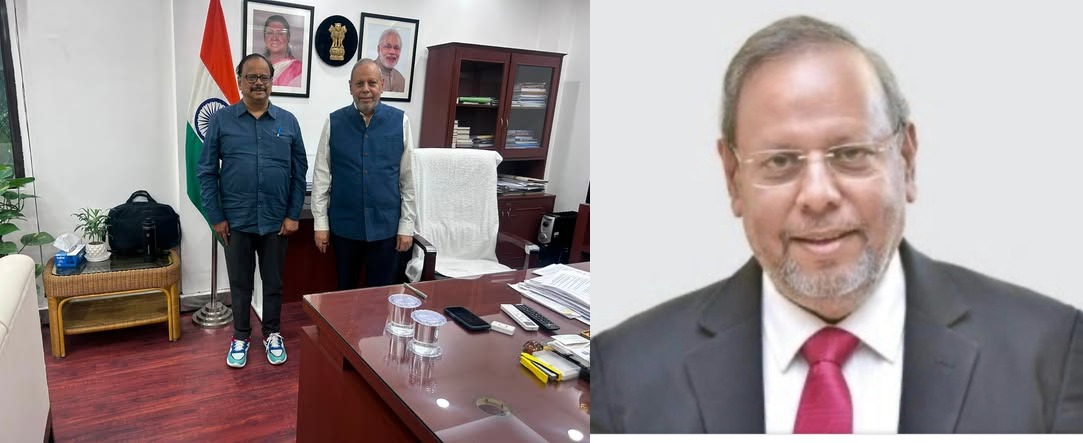
    NEW DELHI — Strongly rejecting claims that India is a “dead economy,” Professor Suryadevara Mahendra Dev, Chairman of the Prime Minister’s Economic Advisory Council, stated that calling the nation’s financial state a dead economy on foreign soil is an insult to the country. Pointing to India’s 7.7 percent GDP growth rate as clear proof of resilience, he emphasized that Prime Minister Narendra Modi’s decisive reform measures—ranging from massive infrastructure capex to Atmanirbhar Bharat and deregulation—are driving the world’s fastest-growing major economy. However, he cautioned that states must curb unproductive freebies and balance welfare with development to avoid long-term debt traps.

    In an exclusive interview with Andhra Jyothy Delhi representative A. Krishna Rao, Prof. Mahendra Dev outlined the country’s macroeconomic trajectory, regional growth dynamics, and structural reform imperatives.

    Growth Resilience, Modi’s Reform Push & The Freebie Warning

    Prof. Mahendra Dev highlighted that two key indicators prove ongoing economic momentum: rising investments and expanding exports. India’s investment rate currently stands at 32 percent, but achieving sustained 7 to 8 percent growth requires pushing this to 34 to 35 percent. While global headwinds—COVID-19, the Ukraine war, international tariffs, the Gulf crisis, and 80 percent crude oil import dependence—continue to exert pressure, policy initiatives under PM Modi are actively insulating the economy.

    • Targeted Manufacturing & Self-Reliance: To counter global protectionism, PM Modi’s focus on manufacturing aims for self-reliance in strategic sectors like semiconductors, rare earths, and microchips. Atmanirbhar Bharat is not a return to the pre-1991 License Raj, but a push to build internationally competitive, high-quality domestic products.
    • Ease of Doing Business: Deregulation and the repeal of obsolete laws under the Modi government have streamlined business operations, though execution needs to accelerate at the state level.
    • Fiscal Prudence vs. Unproductive Freebies: Prof. Mahendra Dev cautioned that unproductive freebie schemes damage long-term financial health and drive up government debt. Welfare benefits must be strictly targeted toward eligible, underprivileged sections rather than affluent beneficiaries. Recalling an anecdote, he shared: “A politician once told me he owns 50 acres of land but still received ₹5 lakhs in his bank account under welfare schemes; people like that do not need schemes like Rythu Bharosa, do they?” While debt should be viewed as a ratio to GDP (with the Centre working to bring its debt down to 50 percent of GDP), states must maintain a strict equilibrium between welfare transfers and productive development spending.

    Manufacturing, Labor & Demographic Strength

    Addressing structural bottlenecks, Prof. Mahendra Dev noted that manufacturing remains stuck at 17 percent of GDP and must expand significantly. Women’s workforce participation also needs to rise from 35 percent to 50 percent.

    On national employment, he clarified that government jobs constitute only 15 to 20 percent of total employment. The remaining 80 percent must come from agriculture, the private sector, manufacturing, and services. Job creation has not halted—as manufacturing grows by 17 percent and services by 53 percent, employment expands alongside. Furthermore, India’s demographic average age of 28 years is a major asset that can be transformed into human capital by aligning education with industry-required skills and integrating Artificial Intelligence into agriculture, healthcare, and production.

    Regional Focus: Capital Development in AP & Telangana’s Growth

    When addressing regional development, Prof. Mahendra Dev affirmed that a newly bifurcated state requires a major, single capital city to generate economic momentum.

    • Amaravati & AP Clusters: Just as Hyderabad generates 67 percent of Telangana’s tax revenue due to its scale, developing Amaravati as the capital will create a multi-faceted economic spillover benefiting nearby Guntur, Machilipatnam, and Vijayawada. Dismissing the YSRCP’s three-capitals proposal as meaningless, he noted that Chief Minister Chandrababu Naidu is simultaneously driving cluster-based development across Visakhapatnam, Tirupati, Anantapur, Rajahmundry, Kadapa, and Kurnool. He added that IT Minister Nara Lokesh possesses a complete understanding of this cluster model.
    • Telangana’s Future City: In Telangana, Chief Minister Revanth Reddy expanding Hyderabad under the prestigious “Future City” project is a right decision that will uplift adjoining districts. Since Telangana also faces a debt load, both states should formulate joint economic growth strategies.

    Historical Legacy & Structural Reforms

    Contextualizing India’s development journey, Prof. Mahendra Dev pointed out that for four decades starting from Jawaharlal Nehru’s tenure, India’s growth rate hovered at a low 3.5 percent. During this era, labor-intensive manufacturing, primary health, and primary education were neglected, whereas China and East Asian nations invested heavily in human capital as early as the 1960s.

    Our pace of economic development went off track right from Nehru’s time, leaving structural problems as a historical legacy, while economic reforms were delayed by 15 years—Prof. Mahendra Dev smiled and remarked, “Everyone was a socialist back then, weren’t they?” While many nations reformed in the 1970s, India implemented reforms in the 1990s under P.V. Narasimha Rao.

    Due to these legacy issues, India’s per capita income remains at around $3,000 (compared to China’s $12,000), meaning the economy cannot run like a tiger just yet. However, growth momentum picked up under the Vajpayee government in 2000 and continues strongly under PM Modi, setting the trajectory toward Viksit Bharat—an inclusive, environmentally sustainable, and fully developed economy.

    Biographical Note

    Prof. S. Mahendra Dev, son of the renowned philosopher, writer, and polymath Sanjeev Dev, was born in Tummapudi in Guntur district. He holds a Ph.D. from the Delhi School of Economics and completed post-doctoral research at Yale University. Over a distinguished career, he has held key leadership positions—including Director and Vice-Chancellor of the Indira Gandhi Institute of Development Research (IGIDR) established by the Reserve Bank of India, Chairman of the Commission for Agricultural Costs and Prices (CACP), and Director of the Centre for Economic and Social Studies (CESS) in Hyderabad.

  • “From Uncertainty to Legitimacy: The Amaravati Capital Story”

    “Which region should be the capital of a state is a decision that rests with the state government,” said Union Minister of State for Home Affairs Nityanand Rai on February 5, 2020, in the Lok Sabha in response to a question raised by a Telugu Desam Party member. The Union Home Ministry also stated in an affidavit submitted to the Andhra Pradesh High Court at the same time that it had no role in deciding the capital. Exactly six years later, history has rewritten itself. The same minister who once said in Parliament that they had nothing to do with the capital issue, has now introduced in the Lok Sabha, last Thursday, an amendment bill to the Andhra Pradesh Reorganisation Act, clearly stating that Amaravati will be the capital of Andhra Pradesh.

    Everyone knows why the Centre, which once kept itself completely aloof saying it had no involvement in the capital issue, has now agreed to grant legal status to Amaravati as the capital. Everyone also knows why a situation arose where a state had no capital for twelve years. The scenes of intense chaos in the Lok Sabha and Rajya Sabha when Parliament decided to bifurcate Andhra Pradesh twelve years ago have not yet faded from the public memory. In complete contrast to that atmosphere, almost all parties supported the bill granting legal status to Amaravati as the capital of Andhra Pradesh. Only the members of the YSR Congress Party walked out of both Houses, because they are well aware that it was the stand taken by their leader Y. S. Jagan Mohan Reddy that led to the necessity of introducing such a bill in Parliament.

    When the Telugu Desam Party entered the 2024 elections in alliance with the Jana Sena Party and the Bharatiya Janata Party, many were surprised. Some even questioned whether there was any need for the BJP in Andhra Pradesh at all. However, the benefits of this alliance would have become clear to them on the day the Amaravati bill was passed. After becoming Chief Minister for the second time in the bifurcated Andhra Pradesh, N. Chandrababu Naidu took steps to revive the Amaravati works that had stalled during the YSRCP rule. With the Centre’s support, loans were secured from the Asian Development Bank and the World Bank. Many other banks also came forward to finance infrastructure. However, some industrialists and diplomats from various countries expressed doubts about whether Amaravati would continue as the capital in the future. It was to remove these doubts that Chandrababu sought the Centre’s support. Since the Telugu Desam Party is a key ally, the top leadership of the BJP stood firmly behind him this time.

    After Chandrababu personally requested Prime Minister Narendra Modi last year to grant legal status to Amaravati, the Centre raised several questions. It sent a note to multiple ministries including the Home Ministry, Law Ministry, Urban Development Ministry, NITI Aayog, and the Expenditure Department of the Finance Ministry, seeking their opinions. It even consulted the Attorney General. It examined aspects such as the basis for ensuring a comfortable life for people in the new capital, measures taken to ease business, international best practices being followed, and the law and order situation. Only after extensive deliberations and discussions did the Centre decide to grant legal status to Amaravati. As the second phase of Parliament’s budget session was to conclude within a week, the Prime Minister’s Office informed the Chief Minister that if a resolution granting legal status to Amaravati as the state capital was passed and sent, a decision would be taken immediately. Notably, this information was conveyed through Satya Kumar Yadav, a minister representing the BJP in the state.

    If Modi decides, what cannot be done? After the Assembly passed the resolution, the amendment bill to the Andhra Pradesh Reorganisation Act was decided overnight and given legal form in the last two days of the budget session. Leaders from several parties, including JD(U) leader Sanjay Kumar Jha, stated that it is due to the crucial support extended by a visionary leader like Chandrababu that Amaravati is receiving legal recognition in Parliament in such an extraordinary manner. In any case, a state capital receiving recognition in the Government of India Gazette after approval from Parliament and the President in such an exceptional manner is a testament to Chandrababu’s effectiveness. Raising debates now on whether Amaravati should be the capital or not, or trying to politicize it, is completely unnecessary. In fact, if the decisions taken earlier by Chandrababu had been continued by governments led by Y. S. Rajasekhara Reddy and later K. Chandrashekar Rao, and even by the Jagan government, this discussion would not have arisen today. It is natural to have doubts about how the capital will look, how it will be built over thousands of acres, and how long it will take to complete. Chandrababu is a person who has fought many battles, endured setbacks, and emerged victorious again. He has immense confidence and experience, and has proven many times that he possesses long-term vision. Therefore, his decisions cannot be judged with short-sighted thinking or a mindset that finds fault at every step. Unfortunately, in our country, not only opposition parties but even critics have long abandoned a constructive approach.

    Those who have seen Chandrababu as Chief Minister of united Andhra Pradesh between 1995 and 2004 would have no doubts about his capability. The language used by Chief Ministers before him was different, and the language he used was different. As a journalist, I personally witnessed his whirlwind visits to Delhi, where he would meet ministers, industrialists, foreign representatives, and World Bank officials all in a single day, giving PowerPoint presentations. When he took us to the inauguration of the Hitech City building amidst rocks and barren land, when he introduced Bill Gates, when he spoke about optical fiber and broadband in an era without mobile phones, and when he used data as a tool, everything seemed confusing at the time. But gradually, an area in Hyderabad transformed into Cyberabad, becoming a modern face of India with IT companies and institutions like ISB. It was a time when government orders were issued overnight for industrialists and approvals were granted within 15 days. Recently, when I visited Ireland, I was reminded that Chandrababu had visited the Dublin dockyard back then and adopted its PPP model for developing the Hitech City area in Hyderabad.

    During Chandrababu’s tenure as Chief Minister, I underwent nearly a month of training as a financial journalist at the invitation of the World Bank to understand the terminology of reforms and new economic policies of that time. That was a period when Andhra Pradesh had a strong association with the World Bank. At that time, after the newspaper I worked for shut down, I was managing a Telugu website. One day, while I was presenting e-governance services at a stall on behalf of that organization at Hotel Grand Kakatiya in Hyderabad, Chief Minister Chandrababu came to the stall, saw me, and was surprised. He asked, “What are you doing here?” I replied, “I don’t have a newspaper job anymore.” There is no doubt that changing circumstances also create new opportunities. Change is always for the better.

    As British singer John Lennon sang, “Imagine there’s no heaven… it’s easy if you try… no hell below us… above us only sky,” nothing is impossible if one tries. However, some may ask whether there is no difference between the conditions of 1995–2004 and those of today. Chandrababu is well aware of the changing circumstances, the people around him, and the ongoing developments.