Tag: Bharatiya Janata party

  • The Sangh and the Saffron Party: A Struggle for Ideological Course Correction

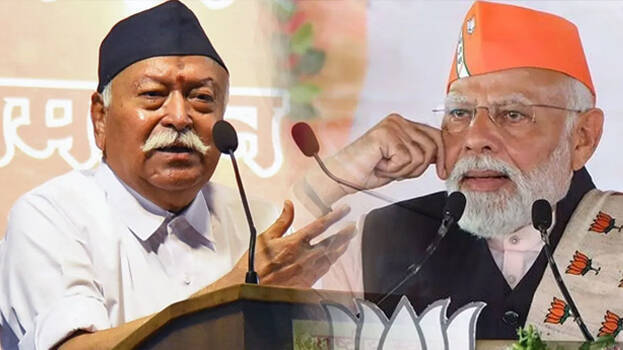
    Has there been a shift in the functioning of the Bharatiya Janata Party and the Union Government following the student protests in July that caused unprecedented shockwaves, the subsequent washed-out Monsoon Session of Parliament amid roaring slogans, and the trends seen in the by-elections across three Assembly constituencies including Bankipur? This has now become a major topic of discussion in the national capital. It goes without saying that the impact of these developments has also been felt deeply within the Rashtriya Swayamsevak Sangh (RSS). Seemingly startled by the changes taking place in society, the RSS has suddenly plunged into a massive nationwide mobilization drive aimed at youth and students. Thirty-two affiliate organizations of the RSS, including the BJP, are attending the three-day RSS All India Coordination Meeting (Akhil Bharatiya Samanwaya Baithak) held at Gudilova on the outskirts of Visakhapatnam. In these meetings as well, the primary agenda is: “How to improve engagement with Gen Z and the youth?” The Gudilova meetings are taking place at a time when a major internal overhaul within the RSS is slated for completion by March 2027 to present a brand-new face to the public under fresh leadership. These sessions are set to play a pivotal role in the Sangh’s evolution, with the distinct possibility of catalyzing a transformation within the Bharatiya Janata Party as well.

    There is no doubt that the developments over the twelve years since the BJP came to power at the Centre have also influenced the RSS. While some within the Sangh might view the BJP as just one of its 32 affiliates, one cannot discount that the BJP, governing at the Centre under Modi’s leadership over this decade-plus period, has reshaped the Sangh itself. Having Sangh functionaries step into every Union ministry is one aspect; having the Sangh bear responsibility for the government’s missteps and transgressions is quite another. The Sangh once held the distinction of compelling veteran BJP leader L.K. Advani to resign simply for visiting Pakistan and paying glowing tributes to Muhammad Ali Jinnah. But does the Sangh still possess the power to exercise such moral and ideological authority under current conditions? This is the question now being debated. Having once played a central role in government appointments, alliance decisions, and candidate selections, the key issue today is whether the Sangh can question or confront the government. RSS Sarsanghchalak Mohan Bhagwat has repeatedly stated that rulers must heed the concerns of students and youth, and that the Modi government must acknowledge mistakes made in policy decisions. Yet, to what extent is the government engaging in self-reflection? This cannot be ignored. Today, several opposition leaders, including Rahul Gandhi, are dragging both the BJP and the RSS into the political arena and questioning their ideological clarity, effectively putting them on trial before the court of public opinion. It is not just the opposition; even the general public is increasingly finding it difficult to tell the Sangh and the BJP apart. Against this backdrop, it remains to be seen whether the RSS can redefine its future ideological role and reshape its affiliate, the BJP, to meet future needs.

    In fact, a stage had arrived where the BJP argued it no longer needed the support of the RSS. During the 2024 Lok Sabha elections, the then BJP National President Jagat Prakash Nadda clearly stated: “In the beginning, when we lacked capability, we needed the RSS. Today, our party has expanded significantly and stands on its own feet. The BJP can run itself.” Thanks to Amit Shah’s strategic planning, the BJP emerged as the world’s largest party with 140 million members, constructing a massive apparatus capable of winning elections with ease. To make the BJP unchallenged, it succeeded in either subduing or splintering rival parties through persuasion or pressure. Consequently, despite securing only 240 seats in the 2024 elections, the leadership of Modi and Shah remained undisputed. Thereafter, by weakening opponents, it continued to win successive assembly elections, ultimately capturing Bengal as well. Many within the Sangh had little choice but to accept the leadership of Modi and Shah. Once a party emerges as an invincible force both internally and externally, which organization retains the ideological and moral authority to question its top leadership?

    Perhaps the emergence of the Cockroach Janata Party and the student protests provided an opportunity for introspection over these developments. For more than a decade, Modi crafted a political ideology and an accompanying vocabulary, unleashing it upon the world. The BJP maintained a well-oiled machinery to embrace this discourse and direct sharp attacks at rivals. Any doubt as to whether Modi created the BJP’s ideological foundation or whether it carried the Sangh’s blessings evaporated; in short, “Modi-ism” indisputably dictated the ideology of both the BJP and the Sangh. The same “ism” prevailed across all key appointments, from Chief Ministers and Union Ministers to the party’s National President.

    However, in the wake of the events in July, ideological analysts note a distinct Sangh imprint on the newly appointed team led by Nitin Nabin. Ideologue Ram Madhav, who remained distant from the BJP for nearly six years, was appointed as Vice President, while 11 out of 14 Vice Presidents and 11 out of 18 General Secretaries reportedly share a strong foundation in Sangh training. Furthermore, removing Amit Malviya—who headed the IT Cell for 11 years with a reputation for projecting any narrative as truth and launching aggressive attacks on opponents—and sidelining figures known for belligerent rhetoric like Tejasvi Surya are notable developments. Speculation suggests an effort is underway to steer the party away from Modi’s mindset and Amit Shah’s strategic style. Even so, will conditions return to the days when the BJP central office buzzed with healthy, regular interactions among party workers, media, and leaders like Venkaiah Naidu, Sushma Swaraj, Arun Jaitley, and Ananth Kumar? Turning back the clock is never easy.

    Surprisingly, during his 13th Red Fort address on the occasion of the 80th Independence Day, Prime Minister Narendra Modi devoted little time to recounting the achievements of the past 12 years. He did not walk the path of Nehru, who spoke to a young India in the language of scientific temper and modern nation-building. He did not echo Lal Bahadur Shastri’s call of “Jai Jawan, Jai Kisan.” Nor did he emulate Atal Bihari Vajpayee by adding “Jai Vigyan” to emphasize the primacy of science. He did not seek to unpack complex economic reforms in simple language like P.V. Narasimha Rao, nor did he discuss a knowledge-based economy like Manmohan Singh. Departing from all of them, Narendra Modi added a new phrase to the lexicon of Indian politics: Dimagi Naxal (an intellectual or ideological Naxalite). Yet, Modi offered no definition for the term. Do those who question an education system that fails to provide jobs, those who raise their voices against paper leaks and unfulfilled promises, and those who take to the streets not just at Jantar Mantar but in cities like Ranchi and Patna fall into this category? Modi knows how to battle legacy systems; in the past, he successfully branded rivals as “Lutyens,” “Andolan Jeevis,” or “Urban Naxals,” lumping them all under a single ideological label. But dismissing Gen Z with such tags will not be easy. Does warning the nation to stay vigilant against thoughtful, questioning citizens from within reflect the true national spirit? In an India recognized globally as an intellectual powerhouse that has produced CEOs for major global enterprises, who exactly is Modi worried about?

    After 12 years of uninterrupted rule, the new challenge Modi faces today is the inability to formulate an acceptable ideology and an appropriate vocabulary to match it. The primary reason is that neither the Bharatiya Janata Party nor the Rashtriya Swayamsevak Sangh has consistently built a robust, clear, scientific, and modern ideology suitable for the new generation, leaving room instead for a politics of slogans and abuse. What the country urgently needs today is not individuals who revel in having their names chanted, but an ideology that moves in step with the times.
  • Betraying Ram’s Path

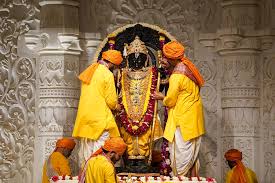
    On the night before the demolition of the Babri Masjid structure on December 6, 1992, I met Rama Shankar Agnihotri in Ayodhya, a senior RSS member, journalist, and someone who oversaw media affairs during the Ram Janmabhoomi movement. Sitting right next to him, Vinay Katiyar, the MP of Faizabad (Ayodhya), gave me information about the Karseva. As the founding president of the Bajrang Dal, he was one of those who intensified the Ram Janmabhoomi movement. Without leaders like Ashok Singhal, Vinay Katiyar, Kalyan Singh, Mahant Vaidyanath—the guru of UP Chief Minister Yogi Adityanath—Uma Bharti, and Sadhvi Rithambhara, there would be no Ram Janmabhoomi movement at all. Advani, who went among the people in the name of the Ram Rath Yatra, gave a political shape to this movement, but the forces that actually organized the movement, like the VHP and Bajrang Dal, were different. Vinay Katiyar, who won three times from Ayodhya, gained popularity with slogans like ‘Mandir Wahi Banayenge’.

    Such a Vinay Katiyar is taking the developments happening in Ayodhya today very seriously. He expressed deep anguish over the large-scale looting of cash and valuables from the donation boxes (Hundis) in the temple. The severity of the situation can be understood by the very fact that he said, “Everyone who is currently there is a thief.” Not only Vinay Katiyar, but many saints also condemned this plunder. “Those who looted the funds are Ravanas,” said Dhirendra Krishna Shastri, the head of Bageshwar Dham. Swami Avimukteshvarananda Saraswati, preacher Devakinandan Thakur, and Mahant Kamal Nayan Das like many other saints alleged that powerful people are behind this plunder. Shri Ram Janmabhoomi Teerth Kshetra Trust member Mahant Dinendra Das Maharaj on Sunday backed the administration’s action in the alleged Ram Mandir donation embezzlement case, saying the steps taken were appropriate and demanding strict punishment for those found guilty. Speaking to news agency ANI, he said the ongoing investigation and arrests were justified and credited the state leadership for swift action. “If I tell the truth in this matter, I will get into trouble,” said a former BJP MP.

    Mahipal Singh, the former CEO of the trust, alleged that these funds have been plundered ever since the Centre formed the Shri Ram Janmabhoomi Teerth Kshetra Trust in 2020 to manage the temple construction, properties, and public donations, and that no one properly accounted for the gold, silver, and jewelry offered by the devotees. Instead of conducting an investigation after he pointed out the mismatch between vouchers, cash, and jewelry, he was removed from his job. The matter leaked out only after Akhilesh Yadav, the leader of the Samajwadi Party, raised this issue on June 7, 2026 and demanded a judicial inquiry. BJP leader Rajnish Singh wrote a letter directly to Prime Minister Narendra Modi, demanding that bank accounts and trust accounts be shown to the public and disclosed transparently. Finally, on June 13, the Yogi government appointed a Special Investigation Team (SIT).

    There is no count of how large an amount of donations, ornaments, gold, and silver bricks the devotees offered for the Ram Janmabhoomi in Ayodhya. One can gauge the extent of the issue across religious institutions as The Indian Express reported that the Shri Badrinath Kedarnath Temple Committee on Friday ordered an inquiry into allegations of misappropriation of donations at the Badrinath shrine in Uttarakhand. All employees and officials involved in counting donations have been issued show-cause notices, ANI quoted the temple committee chairperson, Hemant Dwivedi, as saying.

    Meanwhile, in Ayodhya, many devotees responded with deep devotion to the programs conducted in the name of distributing Akshatalu (sacred rice) and the ‘Ram Ram Gram Abhiyan’. Visuals of cash being taken away and bags being carried were exposed at least 70 times on CCTV cameras. The SIT concluded that some staff members intentionally stood in front of the cameras to prevent the scenes of stealing cash from the donation boxes from being recorded. Information was also obtained that large-scale lands were purchased with the looted money. Among those arrested by the SIT are some officials who count notes, the General Secretary of the Trust and International Vice President of the VHP, Champat Rai Bansal, and his personal driver Rama Shankar Yadav alias Tinnu Yadav, among others. But Champat Rai Bansal and Trustee Anil Mishra, who should have taken responsibility, merely resigned. Reports emerged that Anil Mishra built a magnificent three-story bungalow with ultra-modern amenities in Ayodhya. In fact, Alok Bansal, his wife Shivani Bansal, Chandan Rai Bansal, Manish Bansal, and others who ran real estate businesses worth crores of rupees in Ayodhya, are relatives of Champat Rai. Several land purchase documents seized by the SIT reached the media. Gopal Rao, a Pracharak of the Karnataka region belonging to Maharashtra and the Central Joint Secretary of the VHP, was appointed as the administrative officer. It is also reported that Gopal Rao, who is the most powerful person after Champat Rai, is the creator of many Udupi hotels in Ayodhya.

    It is not entirely far from the truth to say that if there were no Ram Mandir movement, there would be no Bharatiya Janata Party. Lal Krishna Advani himself explained in his autobiography that the Ram Janmabhoomi had a role in the rise of the BJP. He described the Ram Janmabhoomi movement as the largest mass movement in the history of independent India. Only after he conducted the Rath Yatra from Somnath did the BJP win 120 seats in the 1991 elections. After promising about the Ram Mandir in the BJP’s election manifesto in 1998, the first non-Congress coalition government led by the BJP under the leadership of Atal Bihari Vajpayee was formed at the Centre in the subsequent elections. He declared that they proved that if the people’s identification with religion is directed in a positive path, it can be shaped into an wonderful force, and that the collective expression of the people resonated in unison with the expression of a nation’s soul. Advani, who wished to awaken the dormant Hindutva through his movement, described Rama as a distinctive symbol of India’s national personality, unity, and integrity. Many people lost their lives due to this movement. Thousands of people died in the firing ordered by the then UP Chief Minister Mulayam Singh Yadav’s government in Ayodhya in October and November 1990, and in the riots that took place across the country after the demolition of the Babri Masjid structure. Many people were jailed. Today, it appears that the ultimate purpose of the many sacrifices made for the Ram Janmabhoomi has been lost.

    People like Advani believed that the Ramayana has influenced the high moral value system in this country for several decades. Pamidighantam Kodandaramaiah, a former High Court judge who established the Arsha Vijnana Trust, wrote that the Ramayana transcends religion and religious systems. He stated in his book ‘Ramayana Prabha’ that the Ramayana has endured forever in India because Rama is dharma personified, as in ‘Ramo Vigrahavan Dharmah’. Scholars like Ilapavuluri Panduranga Rao said that Valmiki’s Ramayana mentions Sri Rama’s truthfulness at every step, and that very adherence to the spoken truth has sustained Indian society through the ages. Valmiki made Maricha describe Rama as the personification of the Deity of Dharma. Valmiki praised Rama as a saintly person, one of true valor, devoted to truth and righteousness, true to his word, of truthful character, and one whose soul is truth itself. “Truth is the only God; truth is the foundation of devotion in the world. The root of everything lies in truth alone. There is no higher goal beyond truth,” Valmiki said. He formulated that “Dharma is born out of strength (Balo pratishtaho dharmah dharanyamiva jangamam). If righteousness and strength are coupled with truth, they can protect against any great calamity.” He said that even the world can be conquered through truth. Valmiki makes Rama himself say, “I have no infatuation for wealth, gold, objects, or vehicles; what I want is not the kingdom, but the nation (Na hahamartha paro devi lokamavastu mutsahe).”

    But what is happening now? Ramayana means the path walked by Rama. Are we walking in that path? Are the strong standing by truth and righteousness today? Do they think the nation is more important than the kingdom? Is it enough to construct a Ram temple and install the idol of Rama? The ongoing developments prove that there is absolutely no value for truth and righteousness anywhere in the country, and that self-interest, wealth accumulation, desire for power, and tyrannical rule have become the sole goals. Leaders of the BJP, along with other parties, are proving the maxim: “Power corrupts. Absolute power corrupts absolutely.” It has turned out that some within the Sangh Parivar are also not exceptions to this. Today, one has to search for virtuous people in the BJP and the Sangh like Nanaji Deshmukh, Kushabhau Thakre, J.P. Mathur, Bhairon Singh Shekhawat, and Lakshmanrao Inamdar. There is also a rumor going around that the plunder in Ayodhya took place either to take the management of the temple away from the Sangh into the control of the government, or to put Yogi Adityanath in a tight spot. At a time when the BJP’s grip on national politics was thought to be tightening completely, the occurrence of plunder in Ayodhya—the very place responsible for the party’s progress—is a bad development. This development is causing distress among the people. Today, even lawyers in Ayodhya are collectively refusing to argue on behalf of the plunderers. This is not a stain that has come upon just a political party or an organization like the RSS, which claims to be committed to Hindu Dharma. It is a wound inflicted on the minds of the people who worship Sri Rama and the Ramayana in the country. The responsibility lies on the leaders of that party to ensure that the very arrow of Rama that caused the rise of the BJP does not become the cause of the BJP’s downfall.

  • “Beyond the Uproar: Elections Will Decide All”

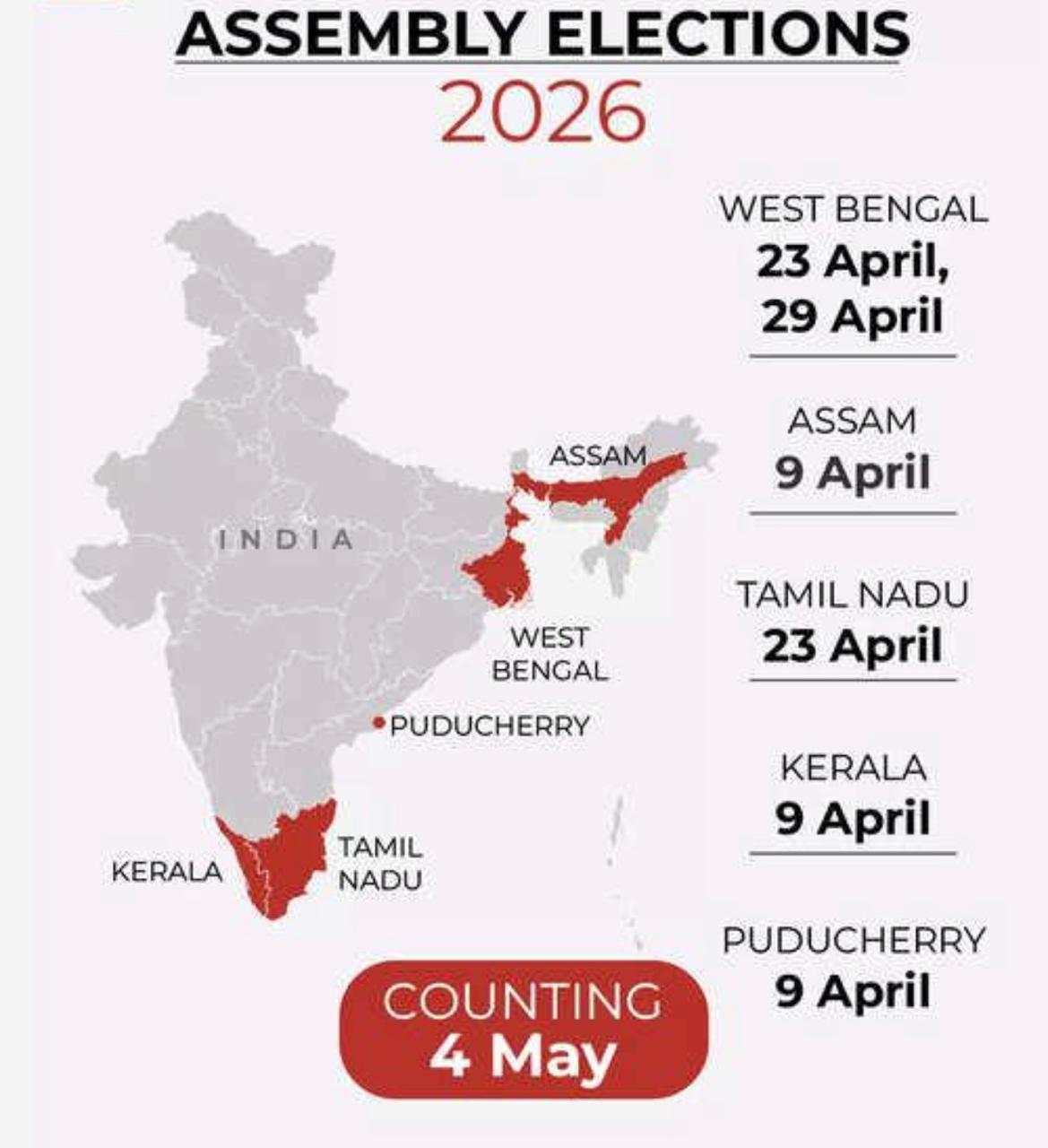
    Elections have been announced in a Union Territory. Now everyone’s attention is on the developments taking place in the election-bound states. For the past two days, parliamentary proceedings have been running smoothly. The government and the Speaker agreeing to lift the suspension of eight MPs who were suspended in previous sessions is an indication that some understanding has been reached between both sides. However, no matter how much uproar is created in Parliament, or how stubbornly the government behaves, ultimately both the ruling party and the opposition must prove their strength before the people, right? Unless public anger against the government erupts and is reflected in election results, there is no benefit in stalling Parliament. After Parliament discussed and rejected the no-confidence motion brought against him over two days, Speaker Om Birla, upon resuming his seat, remarked, “These two days of the House’s time have been wasted.”

    It is surprising that the opposition was not even ready for voting on the no-confidence motion they themselves introduced. Wouldn’t it have been better if a message had gone out that 233 opposition members in the House opposed Om Birla? Perhaps the opposition feared that it would give an impression to the public that they are not united. It is noteworthy that MPs from the Samajwadi Party and Trinamool Congress did not sign the no-confidence motion. Even so, adhering to opposition dharma, they spoke in favor of it. While a discussion was supposed to take place on the no-confidence motion against Om Birla, insisting on discussing West Asia and stalling the House suggests that Congress was not serious about its own motion and had its reasons. Yet, their opposition is directed more at Modi than at Birla, isn’t it?

    In fact, Parliament provides an excellent platform for the opposition to clearly present their views and attract public attention. In the past, leaders like Hiren Mukherjee, Indrajit Gupta, Piloo Mody, Atal Bihari Vajpayee, George Fernandes, Sushma Swaraj, Arun Jaitley, and Venkaiah Naidu made remarkable speeches while in opposition, which established them as national leaders. Compared to them, it must be said that Rahul Gandhi has not yet emerged as a powerful orator in Parliament. It cannot be said that Congress lacks good speakers, but since Rahul Gandhi is the Leader of the Opposition, politics revolves around him. He seems to have developed a style of creating commotion by bringing up topics like Nirav or Epstein just moments after beginning to speak. Perhaps he is missing the opportunity to present the same issues in a powerful, flowing speech that could captivate not only members but the entire nation. On the other hand, Priyanka Gandhi Vadra, though she has delivered only a few speeches so far, has made them widely discussed. After she challenged, “Make all your criticisms against Nehru at once… let’s discuss them,” the ruling party’s criticism of Nehru in Parliament subsided. During the debate on the no-confidence motion against Om Birla, Trinamool MP and 33-year-old actress Sayoni Ghosh spoke so effectively and exposed the BJP’s stance in a way that no one had expected.

    The fortune of the Bharatiya Janata Party, especially Prime Minister Narendra Modi, lies in the fact that the opposition has not only failed to stand strong in elections but is also not effectively using Parliament as a platform. Even though there are many issues to criticize Modi on, Congress’s attacks are not reaching the public strongly. Interestingly, even in states where the BJP is not very strong, there are intellectuals who argue that Modi is extremely powerful. For example, in Karnataka, Tamil Nadu, Kerala, Andhra Pradesh, and Telangana, the BJP is not very strong. Yet, if two people from these regions talk for ten minutes, Modi’s name repeatedly comes up in their conversation. There are more people overestimating Modi’s strength than perhaps necessary. It is said that a German leader once remarked, “Even criticizing me is a crime, and ignoring me is also a crime!” This situation is perhaps pushing Modi to consider simultaneous elections.

    Coming to the southern states, after losing in Karnataka in 2023, the BJP has not yet recovered and is struggling with internal conflicts. B. S. Yediyurappa has completed 50 years in politics but has made it clear that he is not ready to retire. Just as there is uncertainty at the national level about who will succeed Modi, in Karnataka too it is unclear who will lead after Yediyurappa. Even BJP leaders themselves cannot say whether the party will strengthen in Karnataka by the next elections. In Telangana, everyone knows the BJP is struggling to rise above the third position. In Kerala, which is heading into assembly elections, it is not easy to predict whether the BJP will increase its vote share or win even ten seats. In Tamil Nadu, the confusion within the BJP is evident from its own actions. Despite attempts to split the AIADMK or promote Annamalai, the BJP has not gained strength. Ultimately, it has had to ally again with the AIADMK and depend on the seats given by it, even resorting to moves like offering the Deputy Chief Minister post to actor Vijay, who is new to politics. No matter how much the BJP expands in northern India, the people of the southern states have not yet embraced it. It is leaders who are welcoming it with shawls, not the people!

    At the national level, the BJP’s strategy broadly includes consolidating Hindu votes, pursuing politics in the name of nationalism, and projecting Modi as a strong leader. However, in states like West Bengal, Assam, Tamil Nadu, Kerala, and Puducherry, where elections are being held, Hindutva politics is not as strong as in the north and west. A form of sub-nationalism exists in these states, similar to Andhra Pradesh and Telangana. Therefore, making BJP-style politics succeed in these states is a real test for the party and for Modi. The BJP knows that fighting regional parties is not as easy as fighting Congress. Moreover, in states where the BJP has won, even relatively unknown leaders have been accepted as Chief Ministers. But such a situation does not exist in the current election-bound states. When L. K. Advani was BJP president, strong leadership was built in every state, including leaders like Modi. Today, Modi does not have leaders at either the national or regional level who can stand beside him and draw public applause. This is both his strength and his weakness.

    In the southern states, apart from marginally increasing vote share and maintaining alliances, there is little the BJP can achieve. Winning West Bengal is a major challenge for Modi. Modi and Amit Shah are making every possible effort to defeat Mamata Banerjee this time. They are well aware that Hindutva politics alone cannot secure victory in Bengal. Efforts such as revising voter lists and allegedly removing over six million voters, replacing the governor with IPS officer R. N. Ravi, making administrative changes, conducting ED raids, and consolidating Hindu votes are all being undertaken. Addressing a rally at Kolkata’s Parade Ground a day before the election announcement, Modi expressed concern that Hindus might become a minority in Bengal. The BJP’s strength in Bengal is gradually increasing. However, Modi and Amit Shah failed to defeat Mamata Banerjee in 2016 and 2021. Now they are facing her for the third time. Although they could not defeat Arvind Kejriwal in Delhi in 2015 and 2020, they managed to secure victory in 2025 on the third attempt. Will they be able to repeat that success in Bengal this time? Can Bengal be compared with Delhi? In any case, past elections are one thing, and the upcoming elections are another. These elections can be seen as a trial by fire for the strategies Modi has pursued over the past twelve years. Will Modi be able to withstand the challenges emerging at both national and international levels, counter questions about his policies, and outmaneuver opposition strategies to stand tall like a formidable leader?