Tag: bjp

  • “Beyond the Uproar: Elections Will Decide All”

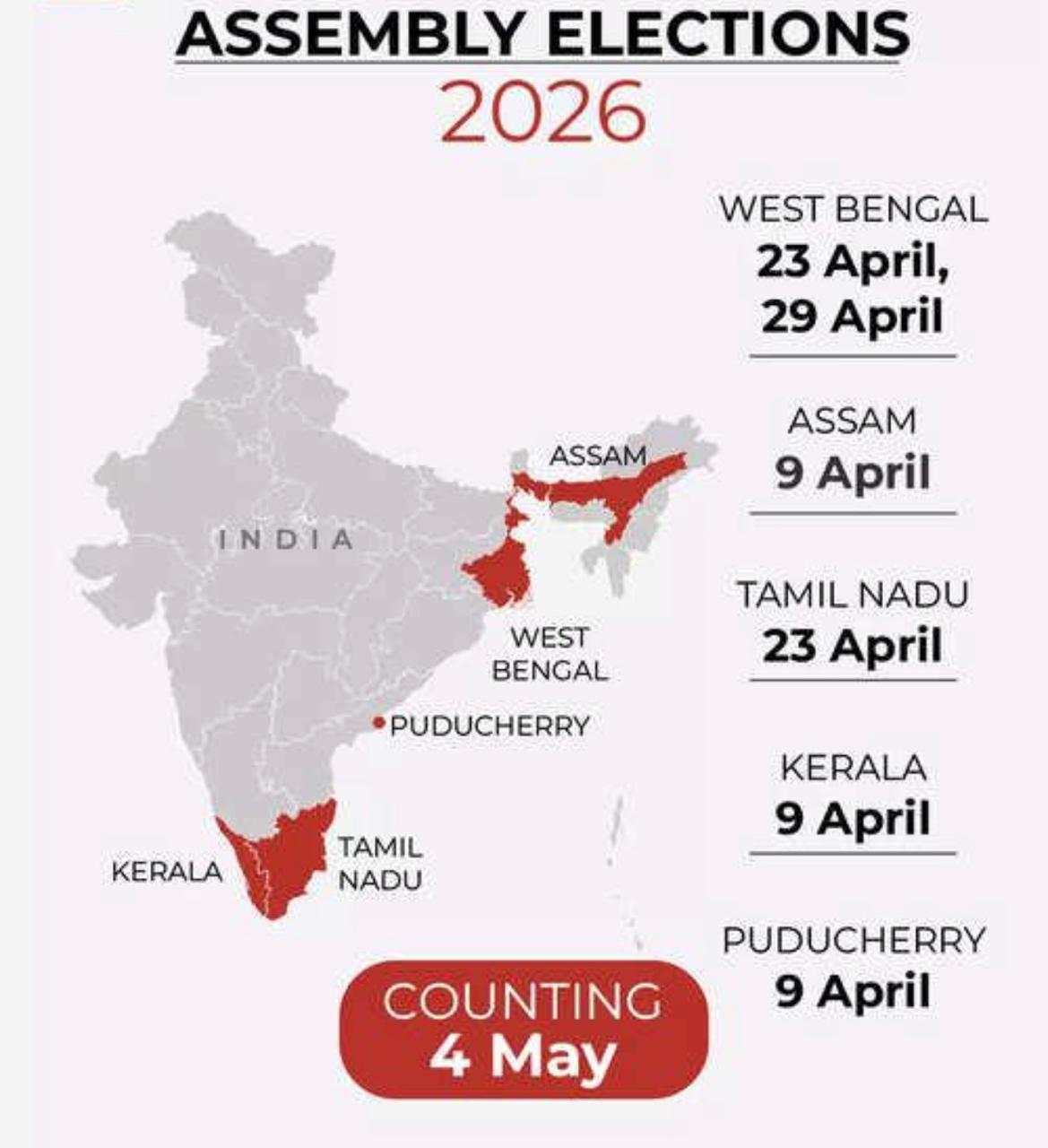
    Elections have been announced in a Union Territory. Now everyone’s attention is on the developments taking place in the election-bound states. For the past two days, parliamentary proceedings have been running smoothly. The government and the Speaker agreeing to lift the suspension of eight MPs who were suspended in previous sessions is an indication that some understanding has been reached between both sides. However, no matter how much uproar is created in Parliament, or how stubbornly the government behaves, ultimately both the ruling party and the opposition must prove their strength before the people, right? Unless public anger against the government erupts and is reflected in election results, there is no benefit in stalling Parliament. After Parliament discussed and rejected the no-confidence motion brought against him over two days, Speaker Om Birla, upon resuming his seat, remarked, “These two days of the House’s time have been wasted.”

    It is surprising that the opposition was not even ready for voting on the no-confidence motion they themselves introduced. Wouldn’t it have been better if a message had gone out that 233 opposition members in the House opposed Om Birla? Perhaps the opposition feared that it would give an impression to the public that they are not united. It is noteworthy that MPs from the Samajwadi Party and Trinamool Congress did not sign the no-confidence motion. Even so, adhering to opposition dharma, they spoke in favor of it. While a discussion was supposed to take place on the no-confidence motion against Om Birla, insisting on discussing West Asia and stalling the House suggests that Congress was not serious about its own motion and had its reasons. Yet, their opposition is directed more at Modi than at Birla, isn’t it?

    In fact, Parliament provides an excellent platform for the opposition to clearly present their views and attract public attention. In the past, leaders like Hiren Mukherjee, Indrajit Gupta, Piloo Mody, Atal Bihari Vajpayee, George Fernandes, Sushma Swaraj, Arun Jaitley, and Venkaiah Naidu made remarkable speeches while in opposition, which established them as national leaders. Compared to them, it must be said that Rahul Gandhi has not yet emerged as a powerful orator in Parliament. It cannot be said that Congress lacks good speakers, but since Rahul Gandhi is the Leader of the Opposition, politics revolves around him. He seems to have developed a style of creating commotion by bringing up topics like Nirav or Epstein just moments after beginning to speak. Perhaps he is missing the opportunity to present the same issues in a powerful, flowing speech that could captivate not only members but the entire nation. On the other hand, Priyanka Gandhi Vadra, though she has delivered only a few speeches so far, has made them widely discussed. After she challenged, “Make all your criticisms against Nehru at once… let’s discuss them,” the ruling party’s criticism of Nehru in Parliament subsided. During the debate on the no-confidence motion against Om Birla, Trinamool MP and 33-year-old actress Sayoni Ghosh spoke so effectively and exposed the BJP’s stance in a way that no one had expected.

    The fortune of the Bharatiya Janata Party, especially Prime Minister Narendra Modi, lies in the fact that the opposition has not only failed to stand strong in elections but is also not effectively using Parliament as a platform. Even though there are many issues to criticize Modi on, Congress’s attacks are not reaching the public strongly. Interestingly, even in states where the BJP is not very strong, there are intellectuals who argue that Modi is extremely powerful. For example, in Karnataka, Tamil Nadu, Kerala, Andhra Pradesh, and Telangana, the BJP is not very strong. Yet, if two people from these regions talk for ten minutes, Modi’s name repeatedly comes up in their conversation. There are more people overestimating Modi’s strength than perhaps necessary. It is said that a German leader once remarked, “Even criticizing me is a crime, and ignoring me is also a crime!” This situation is perhaps pushing Modi to consider simultaneous elections.

    Coming to the southern states, after losing in Karnataka in 2023, the BJP has not yet recovered and is struggling with internal conflicts. B. S. Yediyurappa has completed 50 years in politics but has made it clear that he is not ready to retire. Just as there is uncertainty at the national level about who will succeed Modi, in Karnataka too it is unclear who will lead after Yediyurappa. Even BJP leaders themselves cannot say whether the party will strengthen in Karnataka by the next elections. In Telangana, everyone knows the BJP is struggling to rise above the third position. In Kerala, which is heading into assembly elections, it is not easy to predict whether the BJP will increase its vote share or win even ten seats. In Tamil Nadu, the confusion within the BJP is evident from its own actions. Despite attempts to split the AIADMK or promote Annamalai, the BJP has not gained strength. Ultimately, it has had to ally again with the AIADMK and depend on the seats given by it, even resorting to moves like offering the Deputy Chief Minister post to actor Vijay, who is new to politics. No matter how much the BJP expands in northern India, the people of the southern states have not yet embraced it. It is leaders who are welcoming it with shawls, not the people!

    At the national level, the BJP’s strategy broadly includes consolidating Hindu votes, pursuing politics in the name of nationalism, and projecting Modi as a strong leader. However, in states like West Bengal, Assam, Tamil Nadu, Kerala, and Puducherry, where elections are being held, Hindutva politics is not as strong as in the north and west. A form of sub-nationalism exists in these states, similar to Andhra Pradesh and Telangana. Therefore, making BJP-style politics succeed in these states is a real test for the party and for Modi. The BJP knows that fighting regional parties is not as easy as fighting Congress. Moreover, in states where the BJP has won, even relatively unknown leaders have been accepted as Chief Ministers. But such a situation does not exist in the current election-bound states. When L. K. Advani was BJP president, strong leadership was built in every state, including leaders like Modi. Today, Modi does not have leaders at either the national or regional level who can stand beside him and draw public applause. This is both his strength and his weakness.

    In the southern states, apart from marginally increasing vote share and maintaining alliances, there is little the BJP can achieve. Winning West Bengal is a major challenge for Modi. Modi and Amit Shah are making every possible effort to defeat Mamata Banerjee this time. They are well aware that Hindutva politics alone cannot secure victory in Bengal. Efforts such as revising voter lists and allegedly removing over six million voters, replacing the governor with IPS officer R. N. Ravi, making administrative changes, conducting ED raids, and consolidating Hindu votes are all being undertaken. Addressing a rally at Kolkata’s Parade Ground a day before the election announcement, Modi expressed concern that Hindus might become a minority in Bengal. The BJP’s strength in Bengal is gradually increasing. However, Modi and Amit Shah failed to defeat Mamata Banerjee in 2016 and 2021. Now they are facing her for the third time. Although they could not defeat Arvind Kejriwal in Delhi in 2015 and 2020, they managed to secure victory in 2025 on the third attempt. Will they be able to repeat that success in Bengal this time? Can Bengal be compared with Delhi? In any case, past elections are one thing, and the upcoming elections are another. These elections can be seen as a trial by fire for the strategies Modi has pursued over the past twelve years. Will Modi be able to withstand the challenges emerging at both national and international levels, counter questions about his policies, and outmaneuver opposition strategies to stand tall like a formidable leader?
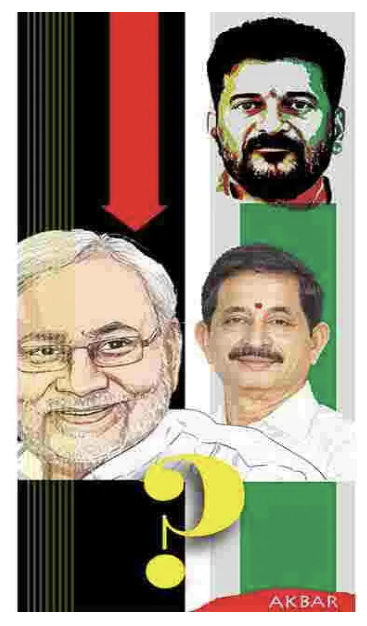
  • What does Nitish’s exit indicate?

    This is a story from two decades ago. In January 2006, an unprecedented Congress Party plenary was held at the Balayogi Auditorium in Hyderabad. Chief Minister Y. S. Rajasekhara Reddy and his associate K. V. P. Ramachandra Rao worked day and night to make the plenary a grand success. Congress president Sonia Gandhi was delighted after seeing the arrangements made in Hyderabad. After that, speculation arose that KVP would surely get a Rajya Sabha seat in the upcoming elections. When the time for selecting candidates approached, one day I asked AICC general secretary Digvijaya Singh, and he said that KVP had a good chance of getting the Rajya Sabha seat. I wrote that as a news report.

    The next day, when the media met Digvijaya Singh, a colleague asked him, “A report has come that KVP will be given a Rajya Sabha seat. Is he the one getting it?” Digvijaya Singh laughed and asked, “Who told you that? By the way, who is KVP?” Within a single day the mood of the Congress high command had changed. Some of YSR’s rivals in Delhi had told Sonia all sorts of things and changed her mind. In those days the Congress was in power in about 16 states. For every small matter YSR had to explain himself to Delhi. He had to wait another two years before his close confidant could get a Rajya Sabha seat.

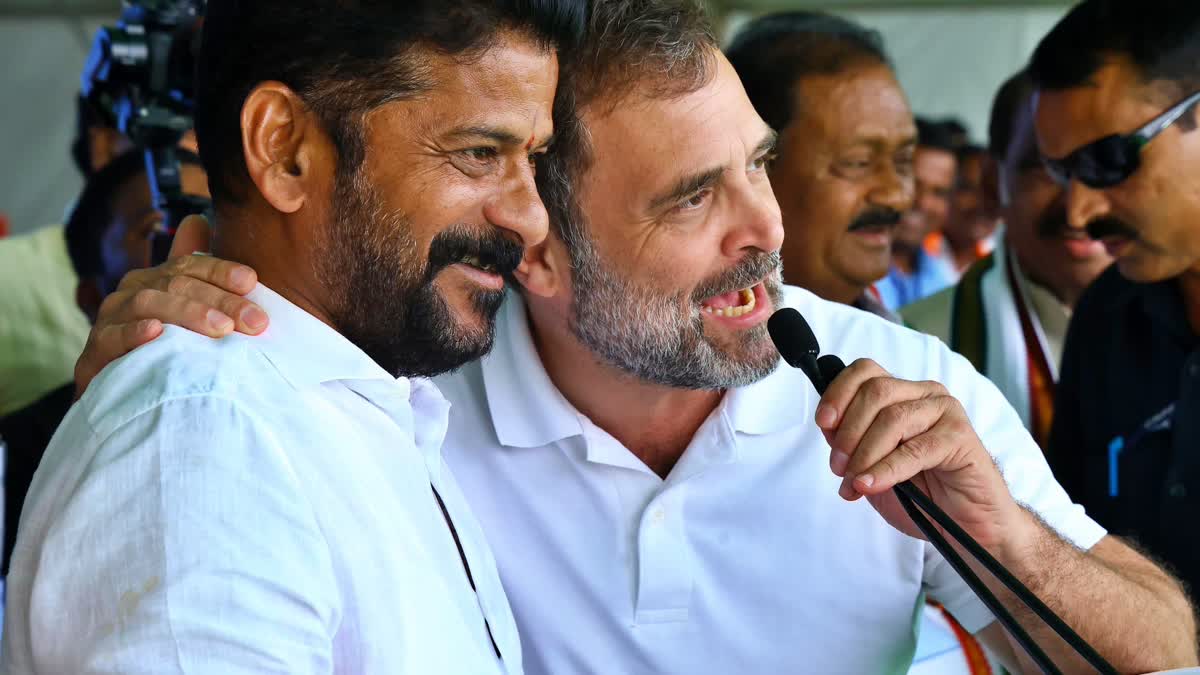
    Compared with YSR’s situation then, the present Telangana Chief Minister Revanth Reddy can be described as extremely powerful. YSR could not get a Rajya Sabha seat immediately for his right-hand man even after asking, but Revanth succeeded in securing one for Vem Narender Reddy. Though YSR had been a loyal Congress leader for decades, even when he wanted his brother Y. S. Vivekananda Reddy to resign so that his son Y. S. Jagan Mohan Reddy could get the Kadapa seat, the high command did not agree. It took YSR many years to win over the Congress leadership. After his death, the high command did not hesitate to file cases against his son.

    But what is the secret behind Revanth Reddy’s success? Within four years of joining the Congress he became PCC president, and within another four years he became Chief Minister. Not only in the Rajya Sabha seat issue but in many matters he has been able to make the high command accept his word.

    Just as the unanimous election of Vem Narender Reddy to the Rajya Sabha from Telangana carries political significance, the decision of Bihar Chief Minister Nitish Kumar to contest for the Rajya Sabha also has equal importance. One development reflects the changed culture of power within the Congress, while the other reflects the expanding political dominance of the Bharatiya Janata Party across the country.

    Even leaders within his party are still shocked that Nitish Kumar, who served as Chief Minister of Bihar for nearly two decades and played a key role in the NDA’s victories, gave up the post. In internal meetings of the Janata Dal (United), several leaders questioned his decision. Party workers vandalized the JD(U) office outside Nitish Kumar’s residence at 1 Anne Marg. They raised slogans saying unknown conspirators were behind his resignation. Until recently no one imagined that Nitish’s son Nishant would enter politics. Moreover, Nitish himself had strongly criticized dynastic politics on several occasions. Even though he says he is voluntarily going to the Rajya Sabha, anyone observing the present course of national politics understands that his resignation as Chief Minister was not a natural development.

    In fact, it is believed that the BJP had long been writing the script for Nitish to leave Patna and move to Delhi. Reports say that after Union Home Minister Amit Shah’s three-day tour of the Seemanchal region in the last week of February and his discussions with party leaders, the decision was finalized. Through intermediaries Nitish was reportedly told that he had no option but to step aside. The BJP, which has already consolidated its hold over the Hindi belt, has long been strategizing to completely capture Bihar as well. Many political observers believe that this development happened because the BJP has begun moving its pieces to ideologically take control of Bihar, thereby tightening its grip over power politics across northern India.

    With about 18 percent Muslims and a border with Bangladesh, it would not be surprising if the BJP wanted to turn Bihar into a laboratory for Hindutva and nationalism. Some have even described this development as a bloodless coup. The social forces unleashed in Bihar through Mandal politics had brought leaders like Lalu Prasad Yadav and Nitish Kumar—disciples of socialist leader Karpoori Thakur—to prominence. They had given a sense of dignity to backward classes and emerged as forces that could not be ignored.

    There is historical significance in the BJP coming to power in the same Bihar where Lalu Prasad Yadav had once stopped L. K. Advani’s Ram Rath Yatra. Analysts say that Nitish Kumar—who created the conditions that eventually allowed the BJP to come to power there—now giving up his position for the party could herald major political developments across the country.

    The Janata Dal, which emerged in 1988 under the leadership of V. P. Singh against the Congress, has a long history. In 1989 it played a key role in the National Front government in which the Telugu Desam Party was a partner. In 1991 it emerged as the third largest party. In the United Front government that came to power in Delhi after P. V. Narasimha Rao, the Janata Dal was again a crucial participant. Later it split into several factions but survived in the form of parties such as Biju Janata Dal in Odisha, Janata Dal (Secular) in Karnataka, Rashtriya Janata Dal in Bihar, and Janata Dal (United).

    But now, with JD(U) handing over power in Bihar to the BJP, political observers believe this marks the final chapter in the history of the Janata Dal. The political strategies used by the BJP to weaken Janata Dal factions in Odisha and Karnataka are already recorded in history. Lalu Prasad Yadav, who was once part of the old Janata Dal, has retired from active politics after getting entangled in corruption cases. Ram Vilas Paswan has passed away. The final phase of the Janata Dal (United) under Nitish’s leadership has now begun.

    The Bihar elections held last year were fought entirely under Nitish’s leadership. Though the BJP initially hesitated to project him as the chief ministerial candidate, it later had to compromise. They entered the election with the slogan “Pachchis se Tees (from 2025 to 2030), once again Nitish.” Yet, even with four years remaining in the term, Nitish’s rule has ended within just four months. Amit Shah himself stood beside him when he filed his nomination for the Rajya Sabha.

    In fact, though the BJP won more seats than JD(U) in both the 2020 and 2025 elections, it continued to keep Nitish as Chief Minister out of political necessity. If it has now decided to assume power itself, it means Nitish must have been completely neutralized. His attempts to touch Narendra Modi’s feet during the NDA meeting in 2024 and again at the Patna airport after his swearing-in are cited as examples. His ill health also added to his weakness.

    Nitish Kumar, who broke away from Lalu Prasad and built his own party, is not an ordinary politician. In the early days he conducted “Janata Darbars” and personally resolved people’s grievances. Brick by brick he brought extremely backward non-Yadav groups closer to him. He earned the title “Sushasan Babu.” He also gained strong support from women. During his 20-year rule he brought at least some change to Bihar. Although in the last elections the JD(U) won only four seats fewer than the BJP, the latter seems to have gained confidence that it can take control of the party and run politics in Bihar on its own, and also attract all the social groups that Nitish had mobilized.

    After the NDA’s victory in Maharashtra in 2024, the BJP sidelined Eknath Shinde, the leader of the Shiv Sena breakaway faction who had been Chief Minister until then, and installed its own leader as Chief Minister. Though a similar formula was applied in Bihar, Nitish Kumar was allowed to continue as Chief Minister for four months. In the BJP, touching feet or excessive praise does not change the party’s assessment of individuals.

    Above all, the BJP’s determination to establish a two-party system in the country has now materialized in Bihar. Just as the BJP is confronting the Samajwadi Party in Uttar Pradesh and the Trinamool Congress in West Bengal, it is moving in the same direction across the country. Preparing for the simultaneous elections expected in 2029 in a presidential-style contest, Narendra Modi is positioning himself as an unbeatable leader on one side.

    But whom are the opposition parties preparing to face him? And in this battle, what will be the future of other regional party leaders?

  • Telangana Checkmates BJP

    It was reported in the media that on December 11, 2025, Prime Minister Narendra Modi, in a review meeting with his party leaders, expressed dissatisfaction with the performance of BJP MPs from Telangana. The meeting appears to have conveyed a clear message to Telangana BJP leaders: set aside internal differences, work as a united team, strengthen grassroots outreach, and make better use of social media to improve the party’s prospects in the state. Modi is said to have remarked that although the party has strong potential in Telangana, leadership weaknesses and internal factionalism are weakening it. Despite having eight MPs and two Union Ministers, the party has not effectively played the role of a strong opposition, he reportedly observed.

    But what happened in the recent municipal elections held for seven corporations and 116 municipalities in Telangana? The BJP, which emerged as the single largest party in neighbouring Maharashtra elections, secured third place in Telangana with just 15.68 percent of the votes. With eight MPs — half of the total Lok Sabha seats from the state — and an equal number of MLAs, the party won only 259 wards and not even a single municipality. The saffron party’s performance in other municipalities falling under the Lok Sabha constituencies represented by its MPs has been dismal. Though the BJP has the potential to grow in Telangana, especially after its good Lok Sabha results, it has not fully capitalized on the opportunities. However, strong local leaders have made some difference in places like Karimnagar and Nizamabad, but this will not be sufficient to give a tough fight in the next Lok Sabha elections.

    The municipal results followed strong performances in recent Panchayat elections, where Congress-supported candidates secured approximately 66 percent of Gram Panchayats statewide. In an Assembly segment-wise analysis, Congress secured majorities in 68 out of 81 constituencies where municipal elections were held. After forming the government on December 7, 2023, Congress also won the Cantonment by-election and the Jubilee Hills by-election. This indicates that both urban and rural voters are increasingly supporting Congress.

    The credit goes to Mr. Revanth Reddy, the Chief Minister of Telangana, who has been able to stop the juggernaut of the BJP in the state, despite the Prime Minister himself showing keen interest in Telangana. Under his leadership, the Congress party has demonstrated its strength convincingly. These elections were held at a time when there was widespread speculation in political circles that public dissatisfaction with the Revanth Reddy government was growing. The principal opposition, BRS, had been strongly criticizing the government and claiming that its end was near. Given that the government had completed two years, interest in the municipal results was high, and doubts were raised about Congress’ prospects.

    However, contrary to predictions, Congress performed well. Though leaders like KTR may not acknowledge the importance of the results, it is significant for a party like Congress, which is often known for internal dissent, to achieve this level of success. Revanth Reddy’s strategy ensured favorable outcomes across both North and South Telangana. Districts like Nizamabad, Adilabad, and Karimnagar, previously considered strongholds of BJP and BRS, saw gains for Congress. Even in his home district of Mahabubnagar, where BRS appeared strong, Congress made inroads.

    The Congress party attributes its success to development and welfare initiatives under Chief Minister Revanth Reddy, such as ₹17,000 crore spent on urban development, 200 units of free electricity for poor families, free RTC bus travel for women, issuance of 30 lakh ration cards, expansion of Rajiv Aarogyasri coverage from ₹5 lakh to ₹10 lakh, construction of 3,500 houses per constituency, and the Young India Integrated Schools initiative.

    Apart from its socio-economic agenda, it seems that Revanth Reddy adopted a clever strategy of not completely annihilating the BRS. He understands that if the BRS is finished, it would create space for the BJP to rise. He instead put the BRS on the defensive by exposing alleged corrupt practices such as the Kaleswaram project and the telephone tapping controversy. It is a strategy similar to the one adopted by KCR a few years ago, when he allowed the BJP to rise after sensing that Revanth Reddy was gaining momentum in the state as a Congress leader.

    The Telangana setback for the BJP has come at a time when the party is facing pressure from opposition parties at the national level over issues such as General Naravane’s book, Indo-US trade matters, and elections in five states. The political graph of Narendra Modi appears to be facing challenging weather, and the Modi-Shah duo are trying their best to prevent it from declining.

    Revanth Reddy has shown the Congress party a path forward. The Congress should not confine itself to parliamentary tactics alone; it must reach out to the people on issues such as farmers’ concerns, price rise, and unemployment, and strengthen the party at the grassroots level.

  • In Search of Lost Standards

    “Lok Sabha’s first Speaker G.V. Mavalankar, the second Speaker Ananthasayanam Ayyangar, and the first Chairman of the Rajya Sabha and Vice President Dr. Sarvepalli Radhakrishnan had a profound influence on the functioning of parliamentary institutions. They conducted themselves with dignity and impartiality while framing rules, procedures, conventions, and practices. Even though the Jana Sangh had no representation in the Rajya Sabha, I used to watch the proceedings from the visitors’ gallery. It was because of them that I had the opportunity to learn about Question Hour, adjournment motions, bills and resolutions, standing committees, calling attention notices, members’ privileges, and many other aspects. Eminent leaders sitting on the opposition benches spoke with as much eloquence as those on the treasury benches. The Speaker acted as an honest guardian of the rights of the opposition. It was because of these noble traditions that Indian democracy withstood many tests and maintained its international reputation.”

    These words were written by none other than Lal Krishna Advani, one of the founders of the Bharatiya Janata Party, in his autobiography My Country–My Life, describing the parliamentary standards of earlier times.

    Standards endure only when individuals uphold them. If individuals sacrifice standards for personal interests, no standards remain worth citing as examples. If declining social standards enter Parliament, the current functioning of legislatures is proof of what happens. “Guide us. If we go astray, correct us if necessary. Advise us. Scrutinize our conduct,” India’s first Prime Minister Jawaharlal Nehru requested the first Lok Sabha Speaker G.V. Mavalankar. Mavalankar acted accordingly. Whenever serious differences arose, the Prime Minister and the Speaker would consult and resolve them. On one occasion, there was an argument between Nehru and Mavalankar in the House. Nehru wanted to make a second statement the same day, but Mavalankar clarified that it was against the rules. Nehru accepted and withdrew.

    Mavalankar strongly opposed the frequent promulgation of ordinances. He insisted they should be issued only in rare emergencies and that laws must be made in Parliament. He even wrote to the Prime Minister on this matter. If any legal doubt arose, he personally consulted the Attorney General, asserting that the Speaker must function like a judge. Nehru accorded him equal respect. When officials complained to Nehru that parliamentary committees were subjecting their decisions to excessive scrutiny, Nehru replied that it was not within his domain and advised them to approach the Speaker. Many rules framed by Mavalankar remain in force even today. The first Lok Sabha Secretary-General Shakdher described him as a Speaker who maintained balance between the ruling and opposition parties, conducted the House efficiently, and safeguarded public interest. It is noteworthy that Mavalankar, who insisted that Parliament must remain independent of government control, was elected from Gujarat.

    After Mavalankar’s death, Ananthasayanam Ayyangar followed the same path. Born into a Vaishnava Brahmin family in Tiruchanur near Tirupati, he conducted the Lok Sabha impartially. He once stated: “Under a dictatorship or absolute monarchy, citizens’ lives and freedoms have no protection. If the dictator is benevolent, people may live well. But even in a democracy, there is a danger that dominant groups may behave dictatorially and suppress those in smaller numbers. The only person who can firmly control such tendencies and protect minority interests in the House is the Speaker.” He remarked that there were no greater orators than Hiren Mukherjee (CPI) in English and Atal Bihari Vajpayee (Jana Sangh) in Hindi. Even without formal recognition of an Opposition Leader due to inadequate numbers, Ayyangar gave full respect and opportunity to opposition members. In the second Lok Sabha, both ruling and opposition members unanimously proposed his re-election as Speaker — a testimony to the standards he upheld. In 1972, when a Dalit Christian candidate contested from Tirupati, Ayyangar campaigned to support him at Congress’s request, responding to critics by saying, “Secularism is embedded within Vishishtadvaita.” This was later revealed by former Prime Minister P.V. Narasimha Rao.

    After Mavalankar, Speaker Sardar Hukam Singh admitted no-confidence motions against Nehru’s government, declaring that Parliament held supremacy over the government. His successor Neelam Sanjiva Reddy allowed a discussion on a no-confidence motion on the very day the President addressed both Houses. During his tenure, the first parliamentary committee on the welfare of Scheduled Castes and Scheduled Tribes was formed.

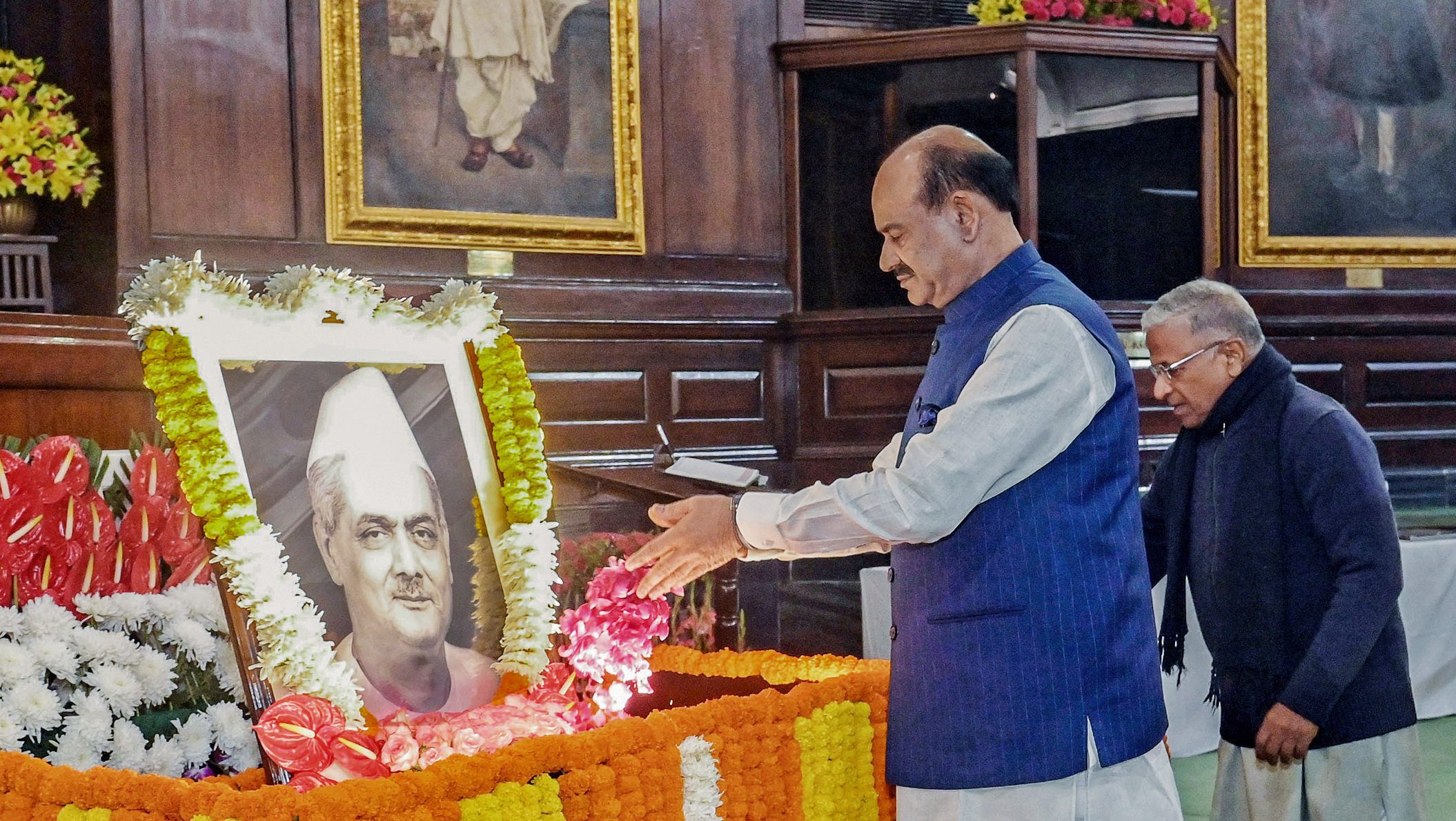
    Gradually, parliamentary standards began to decline from 4th Lok Sabha. During the Emergency, parliamentary proceedings were censored in unprecedented ways, yet the presiding officers remained silent. Indira Gandhi forced G.S. Dhillon to resign as Speaker and appointed him Shipping Minister the same day. After the Emergency, Speakers such as K.S. Hegde, Balram Jakhar, Rabi Ray, Shivraj Patil, P.A. Sangma, Balayogi, Manohar Joshi, and Somnath Chatterjee each tried in their own way to uphold the dignity of the office. Balayogi, the first Dalit and first Speaker from a regional party, maintained such neutrality that during his tenure the Vajpayee government fell by just one vote. Later, during the tenures of women Speakers Meira Kumar and Sumitra Mahajan, frequent disruptions occurred. The Telangana movement made Meira Kumar’s tenure extremely difficult, while increasing confrontation between ruling and opposition parties during Narendra Modi’s premiership placed Sumitra Mahajan in a challenging position. Since then, tensions have intensified, and Speaker Om Birla too has found himself in a helpless situation over the past six years, with parliamentary standards steadily declining.

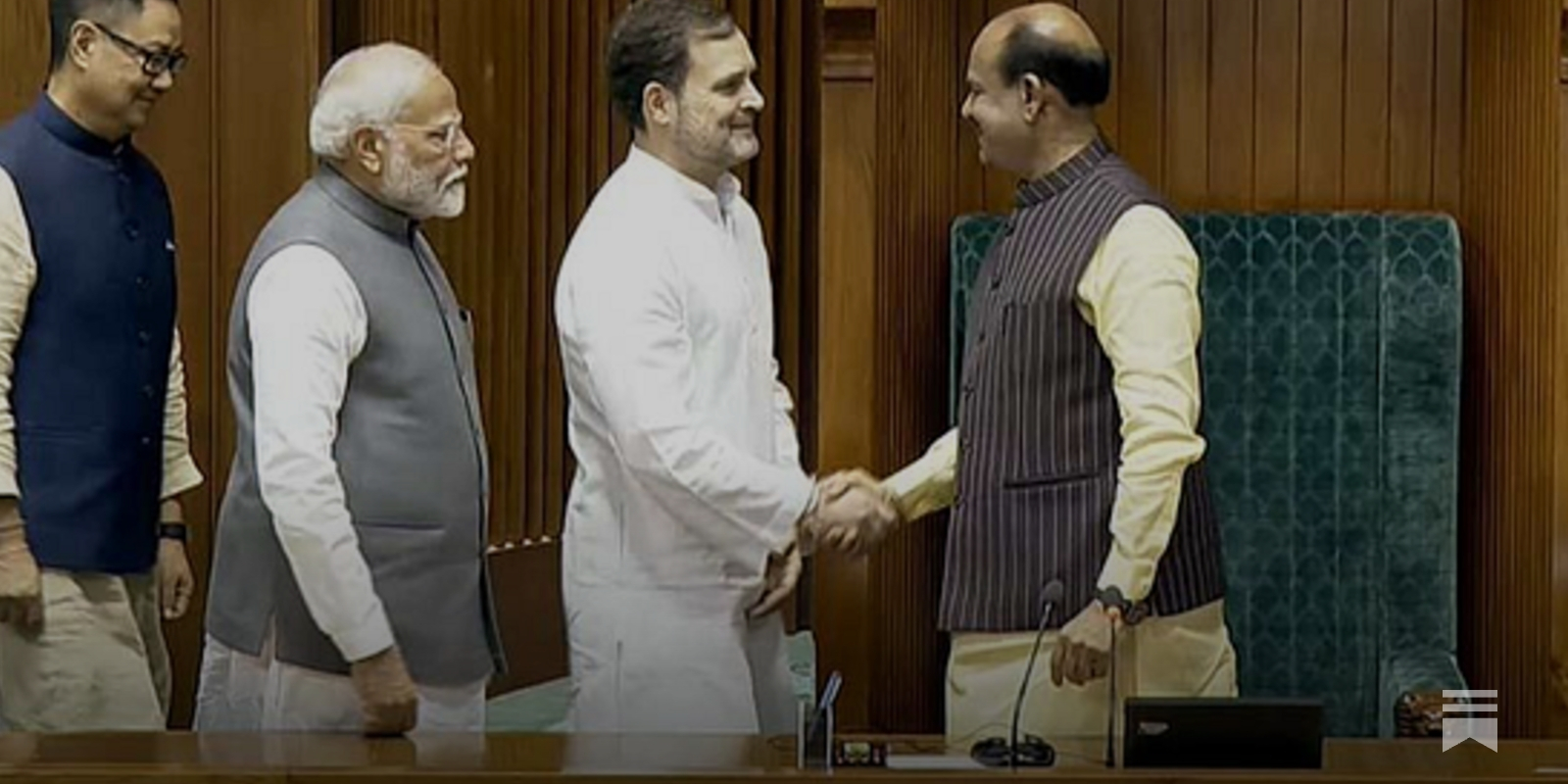
    Recently, opposition parties moved a no-confidence motion against Om Birla for not allowing Congress leader Rahul Gandhi to speak — a sign of the deteriorating condition of Indian democracy. If a discussion had been allowed on former Army General Naravane’s book on the India–China conflict, and if the government had responded, people would have had the opportunity to assess the facts. Instead, opposition parties stalled Parliament. Sessions ended without full discussions on the President’s Address or the Budget, and without the Prime Minister speaking in the Lok Sabha. Furthermore, the Speaker himself claimed he had information that women MPs were planning to attack Modi — an unusual development. In reality, both government and opposition are responsible for failing to show flexibility and for using Parliament as a political arena. In an atmosphere where mutual respect is absent, no one expects the Speaker to remain impartial. As a result, the office of the Speaker too appears to be losing its dignity.

    “The Speaker represents the entire House. He reflects its dignity and freedom. Since the House represents the nation, the Speaker becomes a symbol of freedom in the country. It is therefore a position of great honor. Only individuals of the highest competence and impartiality should occupy it,” said Nehru. But it is impossible to compare those days with the present. Those in power then sought to set standards themselves and serve as role models for future generations. At a time when the country aspires toward a ‘Viksit Bharat’ (Developed India), leaders must internally deliberate on preserving parliamentary democratic standards within a defined timeframe.

  • Trade ties and War controversies

    On the second day after the Union Budget was presented, immediately following the President’s address, Parliament plunged into severe chaos. This raises a fundamental question: do either the opposition or the government genuinely intend for Parliament to function smoothly? Conventionally, after the Budget is presented, discussion takes place on the motion of thanks to the President’s address, and only thereafter do debates on budget proposals begin. The President’s address to both Houses of Parliament is, in effect, a policy document of the government.

    The President’s address detailed the various welfare schemes being implemented by the Modi government, its programmes, and the priority being accorded to infrastructure development. Rising above political differences, the President called upon all national representatives to work collectively in the national interest in line with the goal of Viksit Bharat (Developed India). Ironically, the very next day after the Budget presentation, parliamentary proceedings became impossible due to intense confrontations between the ruling and opposition parties. Who is responsible for this situation?

    During the discussion on the President’s address that began on Monday, BJP MP Tejasvi Surya launched sharp attacks on the Congress. His remarks accusing the Congress of being opposed to Indian civilisation, culture, nationalism, and patriotism provoked the party. Would a Congress already seething with multiple wounds remain silent?

    Immediately thereafter, Leader of the Opposition Rahul Gandhi entered the fray, strongly objecting to questioning Congress’s patriotism and nationalism. He began by saying, “Since the BJP’s young MP has made remarks about our patriotism and Indian culture, I would like to read out a few sentences.” He proceeded to read excerpts published by The Caravan magazine from Four Stars of Destiny, a book written by former Army Chief General M.M. Naravane on the 2020 border clash with China.

    As soon as Rahul Gandhi began reading passages written by Naravane about Prime Minister Narendra Modi and Defence Minister Rajnath Singh, BJP MPs created an uproar. Defence Minister Rajnath Singh, Home Minister Amit Shah, and Parliamentary Affairs Minister Kiren Rijiju raised strong objections, questioning how excerpts from an unpublished book could be read in Parliament. Speaker Om Birla clarified that doing so was not permissible under Rule 342. Heated arguments ensued not only between ruling and opposition members but also between the Speaker and opposition MPs.

    The same situation continued on Tuesday. Rahul Gandhi submitted a written note to the Speaker asserting that the contents of Naravane’s book were authentic and resumed his speech. However, ruling party members obstructed him as usual. Every time the word “Prime Minister” was uttered, the Speaker intervened. Amid the chaos over Rahul Gandhi being repeatedly stopped, eight Congress MPs were suspended. Eventually, after several adjournments, the House was adjourned till Wednesday.

    Why did the situation deteriorate to this extent? Were Tejasvi Surya’s attacks solely responsible for provoking Congress? Why is the BJP preventing any reference to the contents of General Naravane’s book? In reality, the Centre has been blocking the book’s publication for the past two years. The Ministries of Defence and External Affairs have not yet granted permission to the publisher. Naravane himself stated, “I have written what I had to write. It is for the publisher to decide how to release the book.” He has neither commented on the controversy surrounding the book’s contents nor responded to The Caravan excerpts—suggesting that he stands by what he wrote.

    Border clashes between India and China are not new. Numerous books have documented the mistakes of the Nehru government that led to war with China. During that war, Nehru expressed anguish over possibly losing Assam, saying, “My heart goes out to the people of Assam,” a remark that caused a sensation. The Congress never attempted to conceal the failures, defeats, and mistakes that occurred during its rule. Those very failures are partly why Congress today finds itself on the defensive on issues of national security and unable to recover from electoral defeats.

    But under Modi’s tenure, even discussion of such matters appears impossible. Why is there a refusal to debate issues of national importance, even while minor successes are exaggerated and celebrated with excessive propaganda? Had Naravane’s book been released, it would have been debated for a few days and the matter would have settled.

    Naravane wrote that during China’s intrusion into the Galwan Valley, the Defence Minister conveyed that the Prime Minister told him, “Do whatever you deem appropriate.” What exactly happened at that time, how many discussions were held, with whom, and after how much deliberation the Prime Minister decided to leave the matter to the Army—these details cannot be explained transparently on the floor of Parliament. At the same time, completely suppressing the issue and preventing any voice from being raised in Parliament only fuels suspicion.

    In reality, budget sessions are meant for discussion on the Budget. A positive environment should have been created for debate on the so-called “mother of all agreements” signed with the European Union just days before the Budget. Instead, discussion on the Budget presented by Nirmala Sitharaman collapsed on the second day itself.

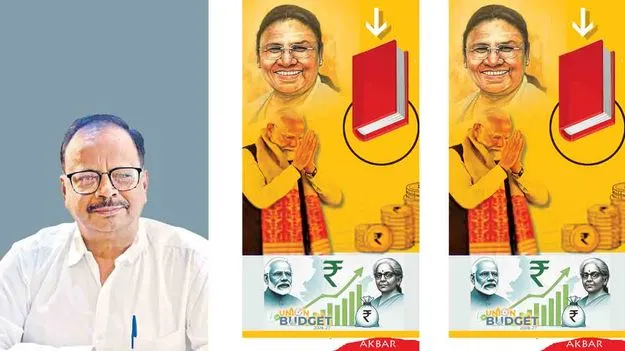
    This is the third Budget presented by the Modi government since returning to power for a third term. With revenues estimated at ₹36.5 lakh crore and expenditures at ₹53.5 lakh crore, the government plans to borrow nearly ₹12 lakh crore and raise the remaining funds from the public and through disinvestment. Allocating ₹12.20 lakh crore for capital expenditure, nearly half of it to roads and rail networks, supporting the manufacturing sector, announcing industrial corridors, attempting to curb food inflation, and preparing the country for free trade agreements with global markets—all these may appear impressive. However, none of this may be sufficient to dramatically revive the Indian economy. While the Economic Survey suggested structural reforms, the government appears to have limited itself to announcements suited to current conditions, avoiding tough policy decisions.

    Markets behave like flowing rivers. When blocked in one place, they find another route. The world was not intimidated by Trump’s tariffs. The U.S. was isolated as even its partner countries entered into their own trade agreements. The EU’s agreement with India introduced zero tariffs on many goods. China and Canada struck their own agreements as well. Consequently, Trump was compelled to revise his stance and reduce tariffs on India to 18% to stay competitive.

    However, Trump’s declaration that India would stop buying Russian oil and instead purchase $500 billion worth of agricultural products, energy, technology, coal, and other goods from the U.S. triggered debate over the agreement’s implications. Rahul Gandhi alleged that Modi compromised with the U.S. and that Indian farmers would suffer, while Commerce Minister Piyush Goyal asserted that this historic agreement would create vast opportunities for Indian citizens.

    Until the official details of the India–U.S. joint trade agreement are publicly disclosed, neither excessive optimism nor pessimism is advisable. Nevertheless, the Modi government has entered into two major international agreements at the beginning of 2026—an undeniable development. At the same time, it has become entangled in controversies such as Naravane’s book and the Epstein files. The consequences of these developments will become clear in due course.(4-2-2026)