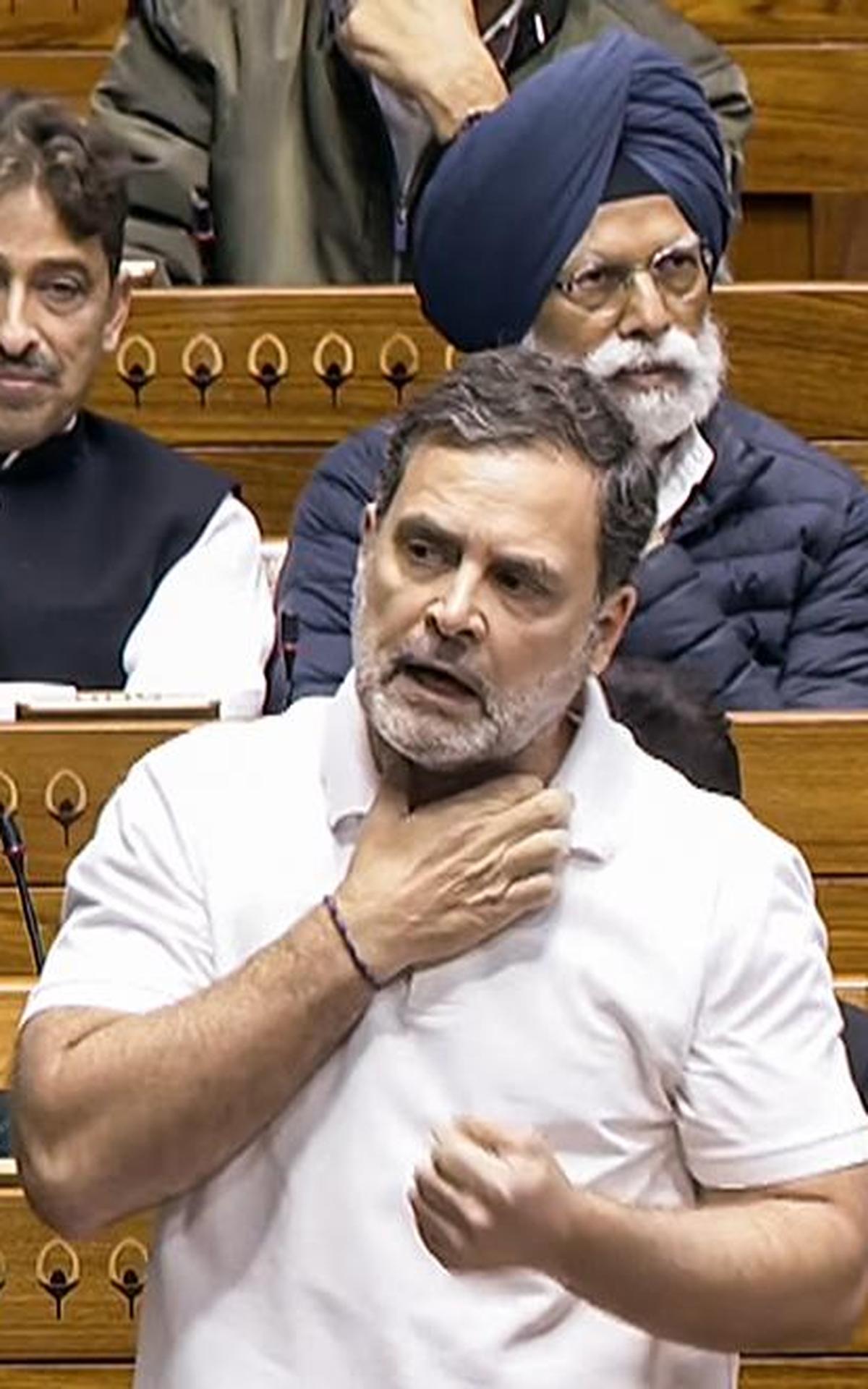
The political storm following Leader of the Opposition Rahul Gandhi’s speech in the Lok Sabha has shifted from economic policy to parliamentary privilege. The Bharatiya Janata Party is reportedly considering a privilege motion against him over remarks linking senior leaders to the so-called “Epstein Files.” Union Minister Hardeep Singh Puri has firmly rejected the allegations as “baseless,” clarifying that his limited interactions with Jeffrey Epstein were in the context of an International Peace Institute delegation and unrelated to any criminal matters.
Whether Gandhi’s remarks constitute a breach of parliamentary privilege is ultimately a matter for the Speaker of the Lok Sabha, who must interpret them within established rules and precedents. Parliament provides wide latitude for political speech, but it also imposes responsibility. That determination should be made institutionally and without partisan escalation.
Yet focusing exclusively on the privilege question risks overlooking the larger policy issues raised in the speech — issues that warrant substantive engagement rather than procedural confrontation.
The Strategic Context
In his address, Rahul Gandhi framed the Union Budget and the India–U.S. trade understanding within a broader geopolitical narrative. He argued that the global order is entering a phase of instability marked by conflict, technological rivalry, and the weaponisation of energy and finance. In such an environment, he contended, India must negotiate from a position of strength.
At the core of his argument was the assertion that India possesses three strategic assets: its population and digital data, its agricultural base, and its energy sovereignty. According to him, recent trade negotiations risk diluting these strengths.
These are consequential claims. They deserve careful examination.
One area of concern raised relates to digital trade rules. Has India altered its position on data localisation? Are cross-border data flows being liberalised in ways that constrain regulatory autonomy? Do trade commitments affect India’s ability to impose digital taxes or regulate major technology firms?
Given the centrality of data to artificial intelligence and digital sovereignty, clarity on these points is essential. Trade agreements in the digital domain often contain complex provisions that are not easily understood without detailed disclosure.
A transparent explanation of the Government’s commitments would help dispel uncertainty.
Agriculture and Market Access
Gandhi also warned that the trade framework could expose Indian farmers to competition from highly mechanised American agriculture. India’s agricultural economy is dominated by small and marginal farmers whose cost structures differ significantly from those of large-scale U.S. farms.
The key question is whether tariff reductions or market access commitments contain adequate safeguards. If protections remain intact, the Government should clearly articulate them. If phased adjustments are planned, their timeline and compensatory measures should be made public.
Food security is not merely an economic issue; it is a matter of national resilience.
Energy Sovereignty
Energy security formed the third pillar of Gandhi’s critique. In an era when sanctions, supply disruptions and geopolitical tensions influence energy markets, any perception that India’s sourcing flexibility is constrained can generate concern.
Here again, clarity matters. If India retains full sovereign discretion over its energy imports, an unequivocal statement to that effect would strengthen confidence.
Trade Balance and Industrial Impact
Concerns were also expressed about tariff asymmetry and potential sectoral impacts, particularly in textiles. Trade agreements often produce winners and losers across industries. The role of government is to ensure that transitions are managed, vulnerabilities are addressed, and competitiveness is strengthened.
A detailed presentation of expected gains and sector-specific protections would elevate the discussion beyond rhetoric.
Democratic Accountability Over Escalation
The controversy over alleged personal references and the potential privilege motion should not overshadow the importance of answering substantive policy questions. Democratic accountability requires both responsible speech from the Opposition and transparent explanation from the Government.
Prime Minister Narendra Modi enjoys a strong domestic mandate and significant international stature. Supporters argue that his government would not compromise India’s interests in any negotiation. That confidence can only be reinforced through openness.
Parliamentary debate is not an act of defamation; it is a mechanism of scrutiny. Equally, allegations must be supported by evidence. The health of democratic institutions depends on maintaining this balance.
If a privilege motion is moved, it should proceed strictly within parliamentary rules. But beyond procedural action, what the moment calls for is clarity — on the nature of India’s trade commitments, on safeguards for farmers and industry, and on the preservation of data and energy sovereignty.
In times of global uncertainty, trust in national leadership is strengthened not by silencing dissent, but by addressing it transparently.
The Government has an opportunity to do precisely that.
 akrishnarao