Tag: democracy

  • Constitutional Courts and Economic Power: A Tale of Two Democracies

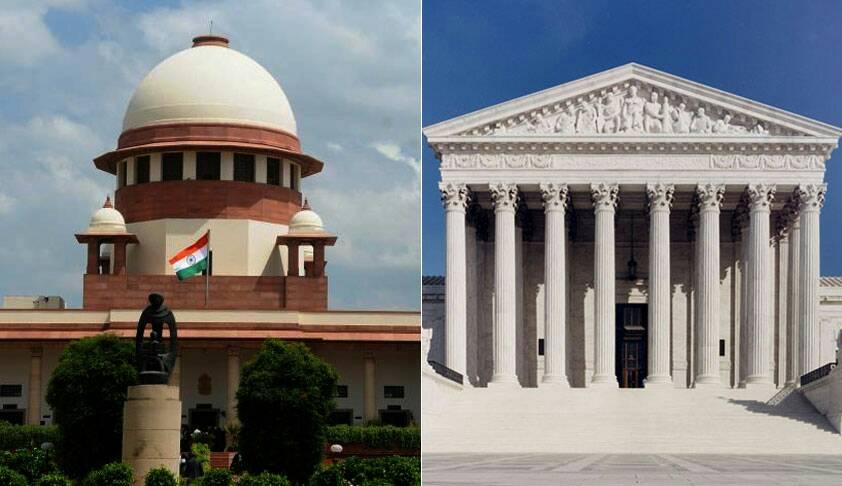
    The recent ruling of the Supreme Court of the United States striking down former President Donald Trump’s sweeping global tariffs has not only redrawn the limits of executive authority in Washington but also triggered diplomatic and political recalibration in New Delhi. At the core of the episode lies a constitutional constant shared by both democracies: the principle of judicial independence and the judiciary’s role in enforcing the separation of powers.

    In a 6–3 verdict, the U.S. Supreme Court held that the President had exceeded his authority under the International Emergency Economic Powers Act by imposing wide-ranging import duties without explicit congressional approval. Reaffirming that the constitutional power to levy taxes and duties rests with Congress under Article I, Section 8, the Court underscored that emergency powers cannot become a gateway for bypassing legislative authority. The judgment was widely viewed as a strong institutional assertion of judicial independence, especially given the political and economic stakes attached to the tariff regime.

    The ripple effects were immediate. The interim Indo-U.S. trade framework, announced earlier with provisions to reduce reciprocal tariffs on Indian goods from 25% to around 18%, was premised on the enforceability of the U.S. Executive’s tariff structure. With the Supreme Court invalidating the legal foundation of that regime, trade experts suggested that more than half of India’s exports to the United States could revert to standard tariff treatment. Although the U.S. administration subsequently invoked Section 122 of the Trade Act of 1974 to impose temporary global tariffs for 150 days, the long-term contours of the bilateral arrangement remain uncertain. Indian negotiators have reportedly deferred further talks to reassess the new legal landscape, placing the trade deal in a state of cautious pause rather than definitive rollback.

    Domestically, the ruling has intensified political debate. Senior Congress leader Jairam Ramesh questioned the timing of the interim agreement and called for it to be placed on hold until greater clarity emerges from the U.S. side. He urged the government to ensure that import liberalisation would not proceed without legally sustainable commitments and warned of potential adverse effects on Indian farmers cultivating crops such as corn, cotton, soybeans, and apples. Ramesh’s remarks framed the U.S. Court’s decision as an illustration of constitutional checks in action and suggested that India must exercise similar prudence in safeguarding domestic interests.

    The broader debate inevitably draws comparisons with India’s own judicial approach to major economic decisions. The Supreme Court’s judgment in Vivek Narayan Sharma v. Union of India, which upheld the 2016 demonetisation of ₹500 and ₹1000 notes, remains one of the most consequential economic rulings in recent years. By a 4–1 majority, the Court concluded that the decision-making process satisfied the requirements of the Reserve Bank of India Act and that economic policy choices fall within the domain of the Executive unless they violate constitutional or statutory limits. The majority emphasized judicial restraint, holding that courts should not substitute their judgment for that of policymakers in complex fiscal matters.

    However, the verdict also contained a powerful dissent. Justice B.V. Nagarathna held that such a sweeping measure, which invalidated 86% of the currency in circulation overnight, should have been carried out through legislation rather than by executive notification. She argued that bypassing Parliament undermined constitutional procedure and that the RBI’s recommendation process was not independent in substance. Critics of the majority judgment contended that the Court avoided a searching inquiry into the socio-economic impact of demonetisation, including hardship faced by small traders, daily wage earners, and rural populations. They also noted that no retrospective relief was granted despite the acknowledgment of widespread inconvenience.

    India’s judicial engagement with economic power can also be seen in its handling of high-stakes corporate and natural resource disputes. In the case concerning gas extraction from the Krishna-Godavari Basin, the Supreme Court, in a judgment authored by Justice Sudershan Reddy in Reliance Natural Resources Ltd. v. Reliance Industries Ltd. (2010), examined the dispute between the Ambani brothers over gas supply from the KG-D6 block operated by Reliance Industries Limited. The Court held that natural gas is a national asset and that its pricing and allocation fall within the sovereign domain of the Government of India. It ruled that private family agreements could not override government policy or the production-sharing contract framework. The verdict reaffirmed that natural resources are held in trust for the public and that executive policy decisions regarding their allocation must align with constitutional principles.

    That judgment underscored an important dimension of judicial independence in India: the willingness to assert the State’s sovereign control over strategic resources while resisting attempts to privatise public policy through corporate agreements. At the same time, the Court showed deference to governmental policy prerogatives in determining pricing and allocation, thereby balancing judicial review with executive competence in economic administration.

    This contrast between the U.S. Supreme Court’s assertive invalidation of executive tariffs and the Indian Supreme Court’s deferential stance in demonetisation highlights differing judicial temperaments. While both courts operate within robust constitutional frameworks, the American ruling reflects a readiness to directly curtail executive economic power on separation-of-powers grounds. The Indian verdict, in contrast, underscored institutional restraint in matters of fiscal policy, even as dissenting voices articulated constitutional concerns about process and parliamentary oversight.

    Earlier landmark cases such as Kesavananda Bharati v. State of Kerala had established that judicial review and separation of powers form part of the Constitution’s basic structure, beyond Parliament’s amending power. Yet, the demonetisation ruling demonstrated that the exercise of judicial independence is often calibrated rather than absolute. The Court reaffirmed its authority to review executive action but chose a limited standard of scrutiny in economic governance.

    As the Indo-U.S. trade deal stands at a crossroads, these developments serve as a reminder that judicial decisions can reshape not only domestic governance but also international economic relations. The U.S. Supreme Court’s judgment has recalibrated trade diplomacy, while India’s own judicial precedents continue to shape debates over executive accountability in economic policymaking. In both democracies, the judiciary remains a central constitutional actor—sometimes assertive, sometimes restrained—but always pivotal in defining the limits of power.
  • Privilege, Politics and Policy: The Debate After Rahul Gandhi’s Speech

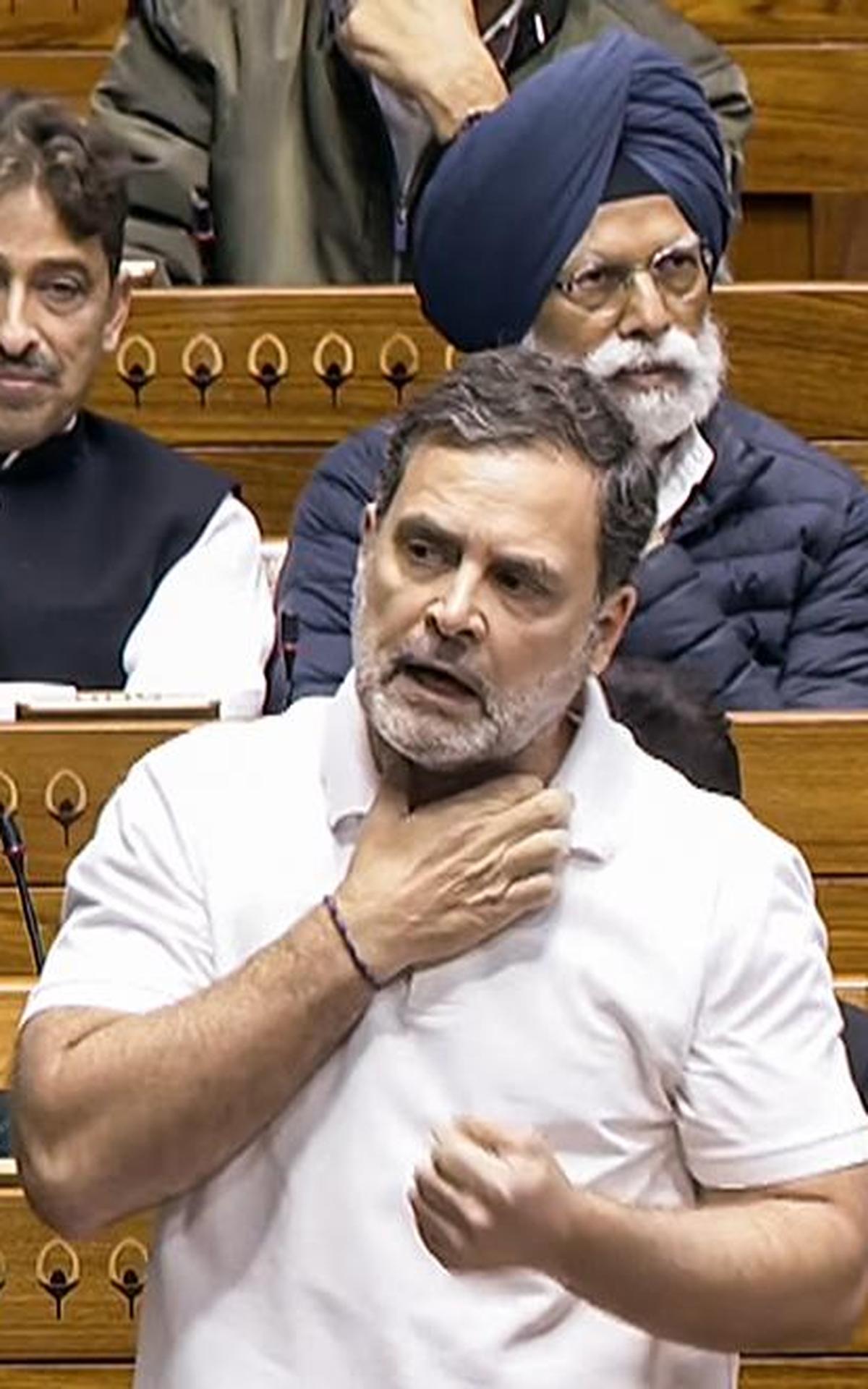
    The political storm following Leader of the Opposition Rahul Gandhi’s speech in the Lok Sabha has shifted from economic policy to parliamentary privilege. The Bharatiya Janata Party is reportedly considering a privilege motion against him over remarks linking senior leaders to the so-called “Epstein Files.” Union Minister Hardeep Singh Puri has firmly rejected the allegations as “baseless,” clarifying that his limited interactions with Jeffrey Epstein were in the context of an International Peace Institute delegation and unrelated to any criminal matters.

    Whether Gandhi’s remarks constitute a breach of parliamentary privilege is ultimately a matter for the Speaker of the Lok Sabha, who must interpret them within established rules and precedents. Parliament provides wide latitude for political speech, but it also imposes responsibility. That determination should be made institutionally and without partisan escalation.

    Yet focusing exclusively on the privilege question risks overlooking the larger policy issues raised in the speech — issues that warrant substantive engagement rather than procedural confrontation.

    The Strategic Context

    In his address, Rahul Gandhi framed the Union Budget and the India–U.S. trade understanding within a broader geopolitical narrative. He argued that the global order is entering a phase of instability marked by conflict, technological rivalry, and the weaponisation of energy and finance. In such an environment, he contended, India must negotiate from a position of strength.

    At the core of his argument was the assertion that India possesses three strategic assets: its population and digital data, its agricultural base, and its energy sovereignty. According to him, recent trade negotiations risk diluting these strengths.

    These are consequential claims. They deserve careful examination.

    One area of concern raised relates to digital trade rules. Has India altered its position on data localisation? Are cross-border data flows being liberalised in ways that constrain regulatory autonomy? Do trade commitments affect India’s ability to impose digital taxes or regulate major technology firms?

    Given the centrality of data to artificial intelligence and digital sovereignty, clarity on these points is essential. Trade agreements in the digital domain often contain complex provisions that are not easily understood without detailed disclosure.

    A transparent explanation of the Government’s commitments would help dispel uncertainty.

    Agriculture and Market Access

    Gandhi also warned that the trade framework could expose Indian farmers to competition from highly mechanised American agriculture. India’s agricultural economy is dominated by small and marginal farmers whose cost structures differ significantly from those of large-scale U.S. farms.

    The key question is whether tariff reductions or market access commitments contain adequate safeguards. If protections remain intact, the Government should clearly articulate them. If phased adjustments are planned, their timeline and compensatory measures should be made public.

    Food security is not merely an economic issue; it is a matter of national resilience.

    Energy Sovereignty

    Energy security formed the third pillar of Gandhi’s critique. In an era when sanctions, supply disruptions and geopolitical tensions influence energy markets, any perception that India’s sourcing flexibility is constrained can generate concern.

    Here again, clarity matters. If India retains full sovereign discretion over its energy imports, an unequivocal statement to that effect would strengthen confidence.

    Trade Balance and Industrial Impact

    Concerns were also expressed about tariff asymmetry and potential sectoral impacts, particularly in textiles. Trade agreements often produce winners and losers across industries. The role of government is to ensure that transitions are managed, vulnerabilities are addressed, and competitiveness is strengthened.

    A detailed presentation of expected gains and sector-specific protections would elevate the discussion beyond rhetoric.

    Democratic Accountability Over Escalation

    The controversy over alleged personal references and the potential privilege motion should not overshadow the importance of answering substantive policy questions. Democratic accountability requires both responsible speech from the Opposition and transparent explanation from the Government.

    Prime Minister Narendra Modi enjoys a strong domestic mandate and significant international stature. Supporters argue that his government would not compromise India’s interests in any negotiation. That confidence can only be reinforced through openness.

    Parliamentary debate is not an act of defamation; it is a mechanism of scrutiny. Equally, allegations must be supported by evidence. The health of democratic institutions depends on maintaining this balance.

    If a privilege motion is moved, it should proceed strictly within parliamentary rules. But beyond procedural action, what the moment calls for is clarity — on the nature of India’s trade commitments, on safeguards for farmers and industry, and on the preservation of data and energy sovereignty.

    In times of global uncertainty, trust in national leadership is strengthened not by silencing dissent, but by addressing it transparently.

    The Government has an opportunity to do precisely that.

  • In Search of Lost Standards

    “Lok Sabha’s first Speaker G.V. Mavalankar, the second Speaker Ananthasayanam Ayyangar, and the first Chairman of the Rajya Sabha and Vice President Dr. Sarvepalli Radhakrishnan had a profound influence on the functioning of parliamentary institutions. They conducted themselves with dignity and impartiality while framing rules, procedures, conventions, and practices. Even though the Jana Sangh had no representation in the Rajya Sabha, I used to watch the proceedings from the visitors’ gallery. It was because of them that I had the opportunity to learn about Question Hour, adjournment motions, bills and resolutions, standing committees, calling attention notices, members’ privileges, and many other aspects. Eminent leaders sitting on the opposition benches spoke with as much eloquence as those on the treasury benches. The Speaker acted as an honest guardian of the rights of the opposition. It was because of these noble traditions that Indian democracy withstood many tests and maintained its international reputation.”

    These words were written by none other than Lal Krishna Advani, one of the founders of the Bharatiya Janata Party, in his autobiography My Country–My Life, describing the parliamentary standards of earlier times.

    Standards endure only when individuals uphold them. If individuals sacrifice standards for personal interests, no standards remain worth citing as examples. If declining social standards enter Parliament, the current functioning of legislatures is proof of what happens. “Guide us. If we go astray, correct us if necessary. Advise us. Scrutinize our conduct,” India’s first Prime Minister Jawaharlal Nehru requested the first Lok Sabha Speaker G.V. Mavalankar. Mavalankar acted accordingly. Whenever serious differences arose, the Prime Minister and the Speaker would consult and resolve them. On one occasion, there was an argument between Nehru and Mavalankar in the House. Nehru wanted to make a second statement the same day, but Mavalankar clarified that it was against the rules. Nehru accepted and withdrew.

    Mavalankar strongly opposed the frequent promulgation of ordinances. He insisted they should be issued only in rare emergencies and that laws must be made in Parliament. He even wrote to the Prime Minister on this matter. If any legal doubt arose, he personally consulted the Attorney General, asserting that the Speaker must function like a judge. Nehru accorded him equal respect. When officials complained to Nehru that parliamentary committees were subjecting their decisions to excessive scrutiny, Nehru replied that it was not within his domain and advised them to approach the Speaker. Many rules framed by Mavalankar remain in force even today. The first Lok Sabha Secretary-General Shakdher described him as a Speaker who maintained balance between the ruling and opposition parties, conducted the House efficiently, and safeguarded public interest. It is noteworthy that Mavalankar, who insisted that Parliament must remain independent of government control, was elected from Gujarat.

    After Mavalankar’s death, Ananthasayanam Ayyangar followed the same path. Born into a Vaishnava Brahmin family in Tiruchanur near Tirupati, he conducted the Lok Sabha impartially. He once stated: “Under a dictatorship or absolute monarchy, citizens’ lives and freedoms have no protection. If the dictator is benevolent, people may live well. But even in a democracy, there is a danger that dominant groups may behave dictatorially and suppress those in smaller numbers. The only person who can firmly control such tendencies and protect minority interests in the House is the Speaker.” He remarked that there were no greater orators than Hiren Mukherjee (CPI) in English and Atal Bihari Vajpayee (Jana Sangh) in Hindi. Even without formal recognition of an Opposition Leader due to inadequate numbers, Ayyangar gave full respect and opportunity to opposition members. In the second Lok Sabha, both ruling and opposition members unanimously proposed his re-election as Speaker — a testimony to the standards he upheld. In 1972, when a Dalit Christian candidate contested from Tirupati, Ayyangar campaigned to support him at Congress’s request, responding to critics by saying, “Secularism is embedded within Vishishtadvaita.” This was later revealed by former Prime Minister P.V. Narasimha Rao.

    After Mavalankar, Speaker Sardar Hukam Singh admitted no-confidence motions against Nehru’s government, declaring that Parliament held supremacy over the government. His successor Neelam Sanjiva Reddy allowed a discussion on a no-confidence motion on the very day the President addressed both Houses. During his tenure, the first parliamentary committee on the welfare of Scheduled Castes and Scheduled Tribes was formed.

    Gradually, parliamentary standards began to decline from 4th Lok Sabha. During the Emergency, parliamentary proceedings were censored in unprecedented ways, yet the presiding officers remained silent. Indira Gandhi forced G.S. Dhillon to resign as Speaker and appointed him Shipping Minister the same day. After the Emergency, Speakers such as K.S. Hegde, Balram Jakhar, Rabi Ray, Shivraj Patil, P.A. Sangma, Balayogi, Manohar Joshi, and Somnath Chatterjee each tried in their own way to uphold the dignity of the office. Balayogi, the first Dalit and first Speaker from a regional party, maintained such neutrality that during his tenure the Vajpayee government fell by just one vote. Later, during the tenures of women Speakers Meira Kumar and Sumitra Mahajan, frequent disruptions occurred. The Telangana movement made Meira Kumar’s tenure extremely difficult, while increasing confrontation between ruling and opposition parties during Narendra Modi’s premiership placed Sumitra Mahajan in a challenging position. Since then, tensions have intensified, and Speaker Om Birla too has found himself in a helpless situation over the past six years, with parliamentary standards steadily declining.

    Recently, opposition parties moved a no-confidence motion against Om Birla for not allowing Congress leader Rahul Gandhi to speak — a sign of the deteriorating condition of Indian democracy. If a discussion had been allowed on former Army General Naravane’s book on the India–China conflict, and if the government had responded, people would have had the opportunity to assess the facts. Instead, opposition parties stalled Parliament. Sessions ended without full discussions on the President’s Address or the Budget, and without the Prime Minister speaking in the Lok Sabha. Furthermore, the Speaker himself claimed he had information that women MPs were planning to attack Modi — an unusual development. In reality, both government and opposition are responsible for failing to show flexibility and for using Parliament as a political arena. In an atmosphere where mutual respect is absent, no one expects the Speaker to remain impartial. As a result, the office of the Speaker too appears to be losing its dignity.

    “The Speaker represents the entire House. He reflects its dignity and freedom. Since the House represents the nation, the Speaker becomes a symbol of freedom in the country. It is therefore a position of great honor. Only individuals of the highest competence and impartiality should occupy it,” said Nehru. But it is impossible to compare those days with the present. Those in power then sought to set standards themselves and serve as role models for future generations. At a time when the country aspires toward a ‘Viksit Bharat’ (Developed India), leaders must internally deliberate on preserving parliamentary democratic standards within a defined timeframe.