Tag: donald trump

  • Silence in Face of Injustice Threatens Sovereignty, Warns Justice N. V. Ramana

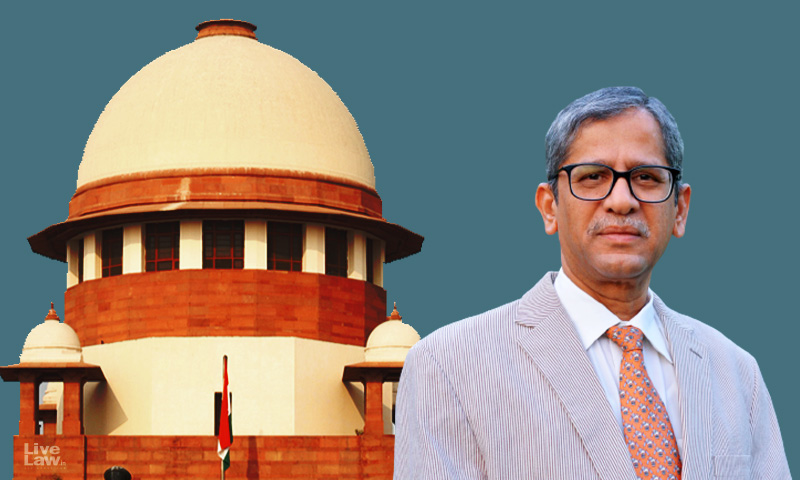
    Former Chief Justice of India Justice N. V. Ramana voiced deep concern over recent global developments, warning that the current international climate reflects a troubling erosion of diplomatic norms and respect for national sovereignty. He remarked that certain actions and statements by powerful world leaders signal a growing disregard for the foundational principle that nations must govern their own affairs without external interference. Justice Ramana was among the first former constitutional functionaries to openly warn against the dangers of silence in the face of such developments.

    He was speaking at the 20th Memorial Lecture organised by the Badrivishal Pannalal Pitti Trust in Hyderabad on March 28, 2026, held to mark the 98th birth anniversary of the late socialist leader Badrivishal Pannalal Pitti. The event featured reflections on Pitti’s legacy alongside discussions on contemporary issues of national and global importance.

    Justice Ramana noted that claims of having “stopped” conflicts involving other countries, along with interventions in regions such as Venezuela and Iran, raise serious questions about the intent and legitimacy of such actions. According to him, these moves lack the essence of diplomacy and instead challenge the very idea of sovereignty, often reflecting arrogance, economic greed, and a desire to control natural resources under the guise of maintaining order and stability.

    He emphasized that the notion of one nation intervening in another’s internal matters, particularly in regions that are home to ancient civilizations, is deeply concerning. He observed that for powerful countries, morality often becomes negotiable, shaped by strategic and economic interests, while for less powerful nations, morality and sovereignty remain central, rooted in hard-won independence achieved through long struggles and sacrifices.

    Highlighting the global impact of such tensions, he pointed out that conflicts between major powers have far-reaching consequences, affecting ordinary citizens across the world. In this context, he stressed that the responsibility to respond does not lie with any one nation or political group but must be shared collectively, calling for a unified global voice against actions that undermine peace and sovereignty.

    Turning to the question of ideology, Justice Ramana said ideology is not confined to politics alone but is a manifestation of an individual’s values, closely tied to human principles and beliefs. He observed that a decline in human values has led to a weakening of commitment to ideologies, even as numerous ideologies continue to promise visions of a perfect society. Emphasising the need for clarity of purpose, he said individuals must focus on their “swadharma,” or inner duty, rather than attempting to adopt every ideological framework.

    Recalling India’s past approach to global issues, Justice Ramana said he was reminded of an article by journalist Krishna Rao of Andhra Jyothy, which brought back an important moment in recent history. He noted that in 2003, under the leadership of former Prime Minister Atal Bihari Vajpayee, the Indian Parliament had taken a principled stand by condemning the United States’ actions in Iraq. He described it as a moment of moral clarity that reflected India’s commitment to universal fundamental values, adding that such clarity now appears to have diminished, with the world growing quieter even in the face of visible suffering.

    Drawing from history, he warned against the dangers of silence by invoking the words of Martin Niemöller in the context of the Second World War: “First they came for the Communists, and I did not speak out—because I was not a Communist. Then they came for the Socialists, and I did not speak out—because I was not a Socialist. Then they came for the trade unionists, and I did not speak out—because I was not a trade unionist. Then they came for the Jews, and I did not speak out—because I was not a Jew. Then they came for me—and there was no one left to speak for me.”

    Expressing disappointment over what he described as a lack of moral leadership globally, Justice Ramana said that many leaders have remained silent in the face of war and suffering. He lamented the absence of a widely respected international figure who can command moral authority and mobilize collective resistance against injustice.

    Justice Ramana urged individuals and nations alike not to remain silent in the face of suffering, cautioning that failing to support others in times of crisis ultimately weakens collective security and undermines the very values that sustain a just and equitable world order.

    Rising Political Opportunism Undermines Democratic Values

    At the political level, he noted that while different parties have held power over time, none have succeeded in building an ideal society. This, he said, is because political parties have largely failed to translate their ideologies into meaningful action, echoing the idea of a “poverty of philosophy.” He described ideology as the crucial link between political parties and the people, but pointed out that in recent years, loyalty has increasingly shifted from principles to power.

    Justice Ramana highlighted a growing trend where elected representatives switch allegiances based on electoral prospects, sometimes even immediately before or after elections. Such actions, he said, undermine democratic values and reduce ideology to mere opportunism. He cautioned that when ideologies are not backed by action, the effectiveness of democratic institutions diminishes and public trust is eroded.

    Referring to rising instances of political defections, he said that constitutional mechanisms meant to address such practices are being undermined, turning what was once seen as political betrayal into an accepted strategy. He warned that treating the voter’s mandate as a transferable asset poses a serious threat to democracy, adding that morality cannot be enforced by law alone and must be internalised by those in positions of power.

    He also expressed concern over increasing divisions in society despite the weakening of ideological commitment, particularly the use of misunderstood religious ideologies as tools for polarisation. Emphasising that all religions fundamentally promote values of peace, compassion and fraternity, he said the true strength of a society lies in its ability to embrace diversity and coexist harmoniously.
  • “Strategic Autonomy or Strategic Adjustment? India’s New Reality”

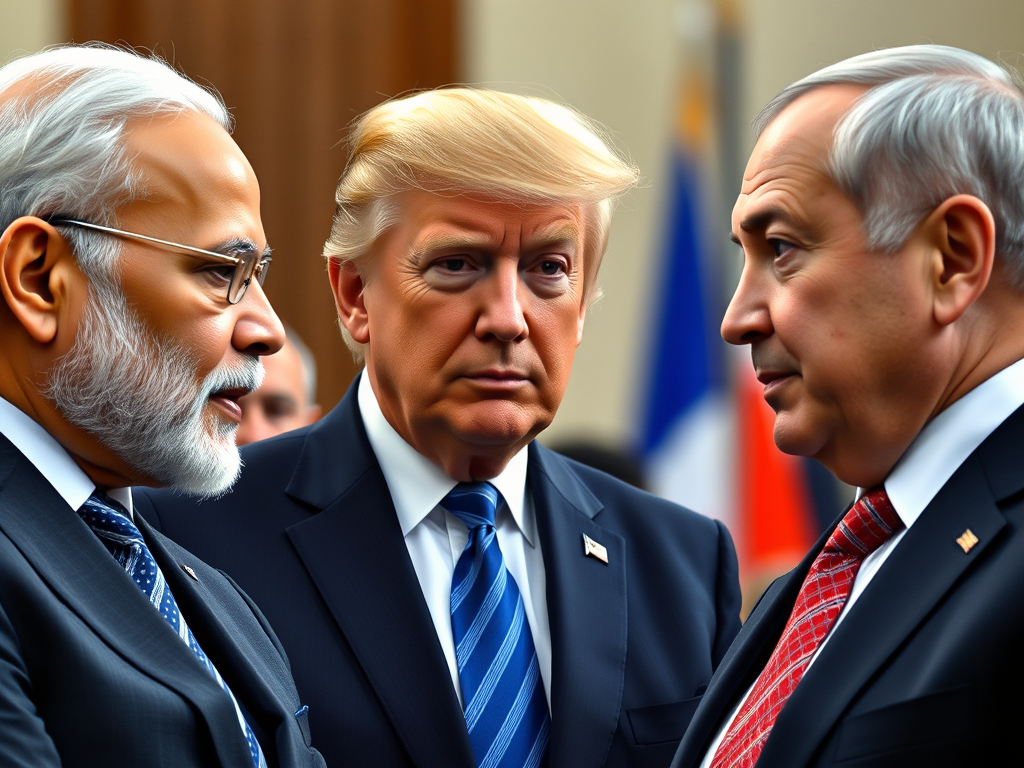
    Prime Minister Narendra Modi stated in both Houses of Parliament that, due to the war raging in West Asia, the country is facing a situation similar to the crisis that arose during the COVID period, and that everyone should be prepared to face it together. While saying that there is no shortage of gas and oil at present, it is noteworthy that he also described the situation as worrying. He declared that not just India but the entire world is facing an energy crisis. In reality, it is not unknown to him that people have already begun facing difficulties regarding cooking gas. With the sudden rise in demand for induction stoves in the country, their prices have also increased. Those who cannot afford these stoves have already begun either going hungry or depending on others. “You have CNG at home, right… I’ll make four rotis and go…” our domestic worker asked. The sale of gas cylinders in the black market is also taking place. Shops that used to fill gas into 5 kg cylinders have shut down. There are many instances of consumers quarrelling with dealers over cylinders due to them. Prices of tea and food items at roadside stalls have also increased. “No stock” boards are visible at many petrol pumps. People, believing rumors, are lining up at petrol pumps. Since it is unclear how this situation will be in the future, Prime Minister Narendra Modi came before the people. Recalling the experience of some selling oxygen in the black market during COVID, he warned that black marketing will not be tolerated. Modi is also aware that people will not ignore these issues during the Assembly elections in five states. India imports nearly 60 percent of its LPG. Of that, 90 percent must pass through the Strait of Hormuz. According to the latest reports, with great difficulty, we have managed to bring in four ships so far. Modi told Parliament that a large number of Indians have been safely brought back from the Gulf. The benefits that families here used to receive from the remittances sent by them have now stopped. “We know you will face problems at present. But this war is happening so that there will be no problems in the world in the long term,” Israel’s ambassador Reuven Azar said recently in Delhi. Who gave Israel, or its godfather America, the authority to wage war on behalf of all countries in the world?

    In fact, as soon as Parliament sessions began, the opposition strongly demanded that Prime Minister Narendra Modi make a statement on the West Asia situation. With insistence on a discussion in Parliament, the House was adjourned several times. Rahul Gandhi made serious allegations that Modi avoided discussion. Finally, Modi made a statement in Parliament explaining the situation, but a discussion on West Asia has still not been conducted. Modi said in his speech that he is speaking with Israel, America, and Iran, and has made it clear that the issue should be resolved diplomatically. However, even as he emphasized diplomacy, global developments indicate parallel backchannel efforts: the Donald Trump administration has reportedly offered a 15-point ceasefire plan to Iran, conveyed through intermediaries from Pakistan, which has also offered to host renewed negotiations between Washington and Tehran. Trump stated for a second consecutive day that the United States is in talks with Iran to end the war, while JD Vance may lead potential negotiations that could take place in Islamabad, with Pakistan acting as a mediator.

    Unlike in the past when Trump claimed he had stopped an India–Pakistan war, Modi is not in a position to make such a claim now. India has developed such close ties with America and Israel during Modi’s tenure that it is no longer in a position to criticize those two countries. This could turn into a double-edged sword. The fact that Modi did not criticize the stance of America and Israel at all in his lengthy speech in both Houses of Parliament is evidence of this. Even when an Iranian ship returning after participating in naval exercises conducted by India in the waters off Visakhapatnam was blown up by America in the Indian Ocean, India did not condemn it. At the same time, India is also in a position where it cannot sever its historical ties with Iran. Modi has already spoken twice with Iran’s President Masoud Pezeshkian and expressed sympathy over the attacks. He requested that there be no obstacles to energy supplies.

    In fact, when America attacked Iraq in 2003 on the pretext of chemical weapons, the government of Atal Bihari Vajpayee not only strongly condemned it but also introduced a resolution in Parliament. The ruling and opposition parties together unanimously passed that resolution condemning America’s stance. Speaker Manohar Joshi himself introduced the resolution, severely criticizing the attacks by American coalition forces on Iraq. Congress leader Jaipal Reddy described it as a very unusual resolution and explained how dangerously America was acting. He urged India to remain alert to the consequences of America’s toxic conspiracies. BJP leader Vijay Kumar Malhotra, Telugu Desam Parliamentary Party leader Yerran Naidu, Samajwadi Party leader Mulayam Singh Yadav, CPI(M) leader Somnath Chatterjee, along with leaders of all parties, condemned American aggression. Then External Affairs Minister Yashwant Sinha declared that no one could suppress the voice of India, the world’s largest democracy, and that the country was ready to face any challenge.

    What changes have occurred between the Vajpayee government and the Modi government? Why are the BJP and its allies now unable to comment clearly on developments in West Asia? Why have they ignored attacks on Venezuela and Iran?

    What is surprising is that Pakistan, which has been closer to America than India, is now playing a key role in trying to broker peace between Iran and America. Reports indicate that Pakistan’s Army Chief Field Marshal Munir spoke with US leadership, and Prime Minister Shehbaz Sharif also spoke with Iran’s President Masoud Pezeshkian. It is said that Pakistan, along with Turkey and Egypt, is making serious efforts to stop the war. In fact, Pakistan strongly condemned the joint attacks by America and Israel on the Islamic Republic of Iran in violation of international law. Instead of punishing such Pakistan, why is America allowing it to attempt mediation?

    Amid these developments, the Indian government on Wednesday convened an all-party meeting around 5 pm over the ongoing West Asia conflict that began after US–Israeli strikes on Iran on February 28. Defence Minister Rajnath Singh chaired the meeting, with External Affairs Minister S. Jaishankar and Petroleum Minister Hardeep Singh Puri in attendance. The meeting was held inside the Parliament building without the presence of Prime Minister Narendra Modi. Rajya Sabha’s Leader of the Opposition Mallikarjun Kharge objected to the format and demanded a full debate in the House instead of just a briefing. Lok Sabha Leader of Opposition Rahul Gandhi said he would be unable to attend due to a prior engagement in Kerala. This meeting followed Modi’s address in Parliament, where he urged citizens to be prepared for every challenge and warned that the effects of the war could last for a long time. He also stated that the government has constituted seven empowered groups to formulate strategies on fuel, supply chains, fertilizers, and other sectors to mitigate the impact of the Iran–Israel–US conflict.

    Prime Minister Modi has so far visited 68 countries. He has toured the United States, the United Arab Emirates, Japan, Russia, and many other countries multiple times. It cannot be said that this has not enhanced India’s reputation or brought economic benefits. Large-scale defense and industrial investments and technology transfers have increased. Modi has invited foreign direct investment from many countries, including China, and has entered into strategic agreements with several nations. Modi is the only Indian Prime Minister to have visited the United States nine times and Israel twice. Having recently completed 8,931 days in public office, Modi was praised unanimously by NDA leaders. Home Minister Amit Shah described him as a Prime Minister who upheld India’s self-respect on the global stage. Even so, it remains to be discussed whether India has lost its strategic autonomy under Modi, who has acted differently from the approaches followed during the tenures of Indira Gandhi, Vajpayee, and P.V. Narasimha Rao, or whether it is merely being forced to take a temporary step back.

    In any case, at this juncture, the Modi government suddenly bringing forward the women’s reservation bill and the delimitation of constituencies is another surprising development. As initially planned, the latest census should have been completed, the number of constituencies increased, and then women’s reservation implemented. But why was there a need to introduce delimitation and women’s reservation based on the 2011 census? If these bills are passed, the focus of political parties and the public will certainly shift entirely to constituencies and women’s seats. Whether this will bring the expected political advantage to the Modi government in the Assembly elections in five states can only be known once the results are declared.

  • Constitutional Courts and Economic Power: A Tale of Two Democracies

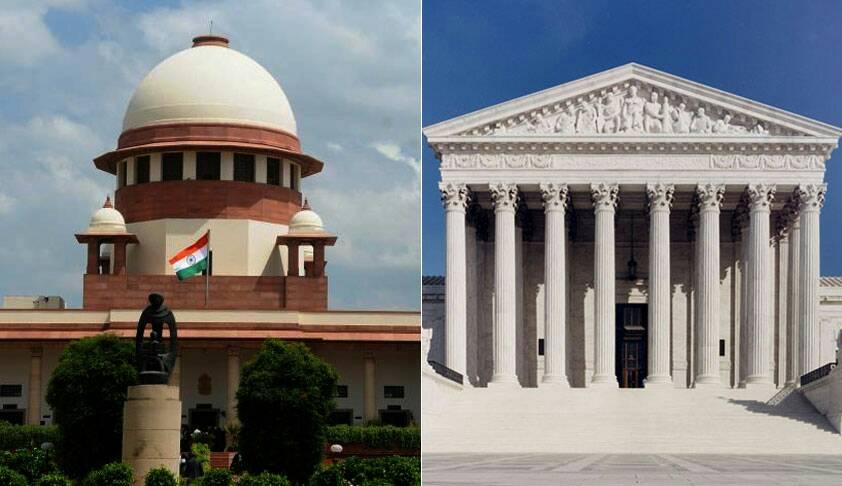
    The recent ruling of the Supreme Court of the United States striking down former President Donald Trump’s sweeping global tariffs has not only redrawn the limits of executive authority in Washington but also triggered diplomatic and political recalibration in New Delhi. At the core of the episode lies a constitutional constant shared by both democracies: the principle of judicial independence and the judiciary’s role in enforcing the separation of powers.

    In a 6–3 verdict, the U.S. Supreme Court held that the President had exceeded his authority under the International Emergency Economic Powers Act by imposing wide-ranging import duties without explicit congressional approval. Reaffirming that the constitutional power to levy taxes and duties rests with Congress under Article I, Section 8, the Court underscored that emergency powers cannot become a gateway for bypassing legislative authority. The judgment was widely viewed as a strong institutional assertion of judicial independence, especially given the political and economic stakes attached to the tariff regime.

    The ripple effects were immediate. The interim Indo-U.S. trade framework, announced earlier with provisions to reduce reciprocal tariffs on Indian goods from 25% to around 18%, was premised on the enforceability of the U.S. Executive’s tariff structure. With the Supreme Court invalidating the legal foundation of that regime, trade experts suggested that more than half of India’s exports to the United States could revert to standard tariff treatment. Although the U.S. administration subsequently invoked Section 122 of the Trade Act of 1974 to impose temporary global tariffs for 150 days, the long-term contours of the bilateral arrangement remain uncertain. Indian negotiators have reportedly deferred further talks to reassess the new legal landscape, placing the trade deal in a state of cautious pause rather than definitive rollback.

    Domestically, the ruling has intensified political debate. Senior Congress leader Jairam Ramesh questioned the timing of the interim agreement and called for it to be placed on hold until greater clarity emerges from the U.S. side. He urged the government to ensure that import liberalisation would not proceed without legally sustainable commitments and warned of potential adverse effects on Indian farmers cultivating crops such as corn, cotton, soybeans, and apples. Ramesh’s remarks framed the U.S. Court’s decision as an illustration of constitutional checks in action and suggested that India must exercise similar prudence in safeguarding domestic interests.

    The broader debate inevitably draws comparisons with India’s own judicial approach to major economic decisions. The Supreme Court’s judgment in Vivek Narayan Sharma v. Union of India, which upheld the 2016 demonetisation of ₹500 and ₹1000 notes, remains one of the most consequential economic rulings in recent years. By a 4–1 majority, the Court concluded that the decision-making process satisfied the requirements of the Reserve Bank of India Act and that economic policy choices fall within the domain of the Executive unless they violate constitutional or statutory limits. The majority emphasized judicial restraint, holding that courts should not substitute their judgment for that of policymakers in complex fiscal matters.

    However, the verdict also contained a powerful dissent. Justice B.V. Nagarathna held that such a sweeping measure, which invalidated 86% of the currency in circulation overnight, should have been carried out through legislation rather than by executive notification. She argued that bypassing Parliament undermined constitutional procedure and that the RBI’s recommendation process was not independent in substance. Critics of the majority judgment contended that the Court avoided a searching inquiry into the socio-economic impact of demonetisation, including hardship faced by small traders, daily wage earners, and rural populations. They also noted that no retrospective relief was granted despite the acknowledgment of widespread inconvenience.

    India’s judicial engagement with economic power can also be seen in its handling of high-stakes corporate and natural resource disputes. In the case concerning gas extraction from the Krishna-Godavari Basin, the Supreme Court, in a judgment authored by Justice Sudershan Reddy in Reliance Natural Resources Ltd. v. Reliance Industries Ltd. (2010), examined the dispute between the Ambani brothers over gas supply from the KG-D6 block operated by Reliance Industries Limited. The Court held that natural gas is a national asset and that its pricing and allocation fall within the sovereign domain of the Government of India. It ruled that private family agreements could not override government policy or the production-sharing contract framework. The verdict reaffirmed that natural resources are held in trust for the public and that executive policy decisions regarding their allocation must align with constitutional principles.

    That judgment underscored an important dimension of judicial independence in India: the willingness to assert the State’s sovereign control over strategic resources while resisting attempts to privatise public policy through corporate agreements. At the same time, the Court showed deference to governmental policy prerogatives in determining pricing and allocation, thereby balancing judicial review with executive competence in economic administration.

    This contrast between the U.S. Supreme Court’s assertive invalidation of executive tariffs and the Indian Supreme Court’s deferential stance in demonetisation highlights differing judicial temperaments. While both courts operate within robust constitutional frameworks, the American ruling reflects a readiness to directly curtail executive economic power on separation-of-powers grounds. The Indian verdict, in contrast, underscored institutional restraint in matters of fiscal policy, even as dissenting voices articulated constitutional concerns about process and parliamentary oversight.

    Earlier landmark cases such as Kesavananda Bharati v. State of Kerala had established that judicial review and separation of powers form part of the Constitution’s basic structure, beyond Parliament’s amending power. Yet, the demonetisation ruling demonstrated that the exercise of judicial independence is often calibrated rather than absolute. The Court reaffirmed its authority to review executive action but chose a limited standard of scrutiny in economic governance.

    As the Indo-U.S. trade deal stands at a crossroads, these developments serve as a reminder that judicial decisions can reshape not only domestic governance but also international economic relations. The U.S. Supreme Court’s judgment has recalibrated trade diplomacy, while India’s own judicial precedents continue to shape debates over executive accountability in economic policymaking. In both democracies, the judiciary remains a central constitutional actor—sometimes assertive, sometimes restrained—but always pivotal in defining the limits of power.

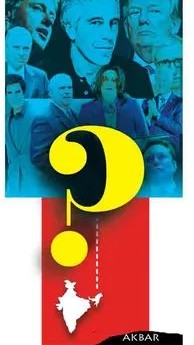
  • How Many Epsteins Walk Among Us?

    Within two days of U.S. Attorney General Pam Bondi announcing that all files related to Jeffrey Edward Epstein—who committed unheard-of atrocities—had been released, President Donald Trump declared that his innocence had been proven and that he had no connections whatsoever with the criminal. Although Trump’s name reportedly appeared 38,000 times in these files, the U.S. Department of Justice also clarified that the mere mention of names does not mean that everyone referenced had any involvement in Epstein’s heinous crimes.

    There may continue to be numerous rumors on social media for some time regarding the names found in Epstein’s emails and the various photographs circulating online. However, strong efforts are underway to draw a curtain over the Epstein episode that shook not only the United States but many other countries as well. In fact, when Epstein was found dead in a U.S. jail in 2019, it seemed as though a major act in the effort to whitewash his crimes had concluded. With the U.S. Justice Department stating that it had nothing further to disclose about Epstein’s connections with top leaders of major American parties, as well as numerous global leaders, business magnates, and prominent individuals, many must have breathed a sigh of relief. How could they welcome the exposure of the rot within the world’s financial systems and the filth embedded in political structures that might engulf them?

    Many of Prime Minister Narendra Modi’s opponents believed that the release of the Epstein files could pose a threat to his government as well. However, it turned out to be a storm in a teacup. Apart from a mention in emails that Modi traveled to Israel for work related to Trump, there was no other reference to him. As for Union Minister Hardeep Singh Puri, though his name reportedly appeared several times, no evidence was found suggesting his involvement in Epstein’s criminal activities. Puri maintains that he became acquainted with Epstein while working with an international peace organization, where Epstein was part of a delegation, and that he later sought his assistance in matters beneficial to India. After retiring from India’s Ministry of External Affairs in 2013, Puri was appointed to the Union Cabinet in 2019. If Prime Minister Modi entrusted the former diplomat with key responsibilities, it is not an exaggeration to assume that Puri must have rendered services beneficial to India on the international stage.

    What does the Epstein affair tell us? It makes clear that the rule of law is not equal—not only in India but anywhere in the world. It reveals that there is perhaps no place where justice is dispensed equally to all, irrespective of wealth, influence, or social standing, and that institutional weaknesses exist everywhere in the investigative process. The growing tendency to commit grave crimes while disregarding the criminal justice system—backed by financial power and political clout—poses a major challenge to modern legal systems.

    Although allegations that Epstein was involved in the trafficking of minor girls surfaced as early as 2005, the American legal system did not take them seriously. When he was arrested in 2008, Epstein accepted the charges against him, thereby securing a reduced legal process. The system appeared to acquiesce to his efforts to mitigate the severity of prosecution. Even during the few months he was in custody, he allegedly continued his illegal activities through his influence, with authorities turning a blind eye. Following renewed allegations and the anguished cries of victims, the case was reopened after 11 years in 2019, and he was arrested again. Within days of that arrest, Epstein died under suspicious circumstances in jail; it was officially ruled a suicide. Owing to media reports and public demand, the Epstein files were released, and the names of many powerful figures surfaced, causing a sensation.

    The tragic reality is that the world is filled with such Epsteins. Exploiting loopholes in political and economic systems, individuals like him rise as influential figures. Though he had no notable academic credentials and once worked as a teacher, Epstein was worth 600 million dollars at the time of his death. He owned the largest private mansion in New York City, two islands, homes in New Mexico and Paris, numerous cars, private aircraft, and substantial investments in several companies. How did all this wealth accumulate?

    Epstein cultivated relationships with U.S. Presidents Trump, Biden, and Clinton; billionaires Elon Musk and Bill Gates; Melania Trump; as well as numerous heads of state, business leaders, and senior officials worldwide. At least a hundred political leaders from various countries, senior diplomats, over 200 billionaires, and corporate chiefs were said to have fallen into his web. He funded public representatives, lawyers, and even media organizations. He provided financial support to universities and research institutions. Even progressive intellectual Noam Chomsky was among those who received his patronage. Epstein flew many individuals on his private jets and hosted others at his Palm Beach mansion in luxury. He not only sexually abused numerous young women and minor girls but also used them to entrap prominent figures. By financing political leaders across several European countries, he reportedly influenced their political systems. Once connections with him were exposed, major figures in ten countries resigned. Diplomats and ministers stepped down in multiple nations. Some expressed regret; most remained silent. “Documents may fuel rumors, but cases cannot be built solely on them,” remarked an American legal expert. The entire episode exposed the nexus between politicians, criminals, and major business magnates. It demonstrated that brokers and intermediaries often determine the dynamics of political and economic systems.

    Do we not have brokers here? The late Prime Minister P. V. Narasimha Rao briefly alluded, in his novel The Insider, to the role played by brokers in the streets of Delhi, in the Prime Minister’s Office, other ministries, and party offices, including the presence of women in such networks. A report prepared by the Central Vigilance Commission during the Vajpayee era about the influence of middlemen in defense procurements was never made public. Although the Commission suggested legalizing intermediaries, who would be willing to transparently disclose financial transactions?

    Global capitalism operates largely through wealth, social connections, and political networks. Power often flows not through official positions but through networks. In our country too, networks and lobbying are used to settle cases, transfer illicit funds abroad, and secure advantages for big business houses. Sponsorships, sexual favors, expensive gifts, and banquets in luxury hotels are common in this process, all under the guise of development. Leaders show little discretion about whom they elevate. Tragically, these brokers sometimes appear openly—and are even helped by political leaders to become members of legislative bodies.

    According to Transparency International, India ranks 91st out of 182 countries in corruption. As per the National Crime Records Bureau, one girl goes missing every eight minutes. The Supreme Court of India has also expressed serious concern about sex trafficking and child exploitation in the country. Does this not reveal how our systems function? Do political leaders who speak grandly about Sanatana Dharma, tradition, Ram Rajya, patriotism, and righteousness practice honesty, transparency, and accountability? Are investigative agencies and judicial processes functioning properly? Are systems protecting those who abide by the law? Above all, are moral standards being upheld?

    In the United States, at least under public pressure, documents related to a depraved individual were made public. In our country, who will discuss such grave secrets?