Tag: GDP

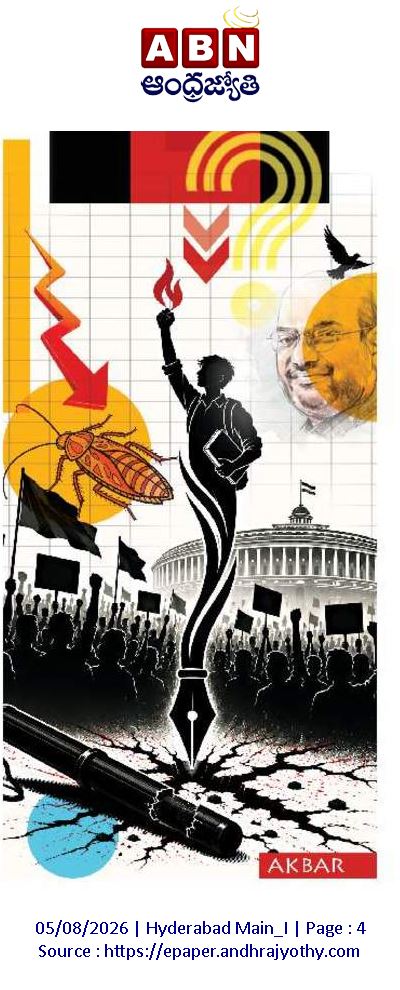
  • From Delhi to Patna: How Student Unrest Reshaped Bankipur

    Even though more than a week has passed since the agitation ignited in the national capital, Delhi, by thousands of students and other forces under the banner of the “Cockroach Janata Party” subsided, its tremors have not yet died down. The situation has not completely settled even after the resignation of Union Education Minister Dharmendra Pradhan. The Opposition is stalling Parliament, demanding a statement from Union Home Minister Amit Shah regarding the lathi charge and firing of pellets on the students. It is gathered that the government, unable to introduce key bills apart from minor and insignificant ones, is planning to adjourn Parliament indefinitely as early as possible. Chief Justice of India Justice Surya Kant—who commented two weeks ago, “Why are you showing us scenes of lathi charge on students? Don’t waste our time”—is now enabling the government to withdraw FIRs against the students. Since the Centre itself approached the Supreme Court in this matter, he appears to be offering the government a way to save face.

    On one side, although his fans and BJP leaders are abusing the students with various words, Prime Minister Narendra Modi announced with a very large heart that he has forgiven them. However, this announcement did not yield the expected positive results. Modi and Amit Shah are coming to Parliament, but they are not getting the opportunity to attend both Houses. Surprisingly, officials themselves say that the Home Minister is not coming to Kartavya Bhavan (the seat of the Home Ministry) at all, and is conducting one or two important meetings in his own room in Parliament. The only incident that made Modi very happy during this crisis was being entertained with songs, dances, and a torrential rain of praise on the occasion of the inauguration of Bhogapuram Airport in Andhra Pradesh. But as soon as he returned to Delhi, the situation returned to the same heat!

    It is unknown how long this troubled period will last, but many observers say that the results of the three Assembly by-elections held during this time indicate a coming change in the country’s politics—especially the election results of the Bankipur constituency in Bihar. Bankipur, a constituency under the Patna Sahib Lok Sabha area in the capital of Bihar, became the center of the Cockroach Janata Party agitation. Recently, when students took to the streets across several cities in the country during the NEET question paper leak, its intensity was seen severely in Patna. Demanding the resignation of Union Education Minister Dharmendra Pradhan, thousands of students residing in colleges and hostels centered in Bankipur marched out in a procession. Normal life came to a standstill on Ashok Rajpath and Boring Road, where a large number of coaching centers for students are located in the city.

    In Siwan and other key districts, the protest turned violent. Incidents such as lathi charges, stone-pelting, use of tear gas and water cannons, burning of police jeeps, and blockades of national highways took place. Videos of students being injured due to firing with AK-47s were circulated. Police barged into private hostels located in the narrow lanes of Bankipur, dragged out students who had come for coaching, and beat them severely. On the single day of the Bihar Bandh called on July 25, 690 people were detained. Murder charges were framed against many. The surprising fact is that while the Bankipur by-election was on July 30, the Bihar Home Department issued emergency orders on July 27 withdrawing all FIRs against the students. Yet, it was of no use.

    In March 1974, when Patna University students laid siege to the Assembly under the leadership of Jayaprakash Narayan, several students lost their lives in the firing and lathi charge carried out by the police. Afterwards, at a public meeting held at Gandhi Maidan in the presence of lakhs of people, JP gave a call for “Sampoorna Kranti” (Total Revolution). The statue of Jayaprakash built at the crossroads right next to the same Gandhi Maidan in Bankipur stands as a direct witness to recent events. In the surroundings of this area, known as JP Golambar, police once again pounced upon students. Before the Emergency, the JP movement spread from Patna to Delhi. Now, the Cockroach protest from Delhi echoed in the streets of Patna. It is no exaggeration to say that this echo decided the Bankipur election results.

    It goes without saying that in Bankipur, which had been in the BJP’s grip for the past three decades, the winner was not Prashant Kishor, leader of the Jan Suraaj Party that lost all its seats in the previous elections, but the students. It was only because he won five times from here that Nitin Nabin was able to become the BJP National President. The reason he gave up his MLA seat to choose the Rajya Sabha was that the top leaders of that party believed the BJP would win there effortlessly. The comment made by former Union Minister and Patna MP Ravi Shankar Prasad—”Even if a dog is fielded there, the BJP will make it win”—is proof of this. However, the BJP’s vote share plummeted from 62 percent to 34.4 percent in just one year! Because Kayasthas constitute 14 percent of the voters in Bankipur, Nitin Nabin used to win from there, as Bhumihars and Brahmins at 8 percent each, Rajputs at 7 percent, Kurmis at 5 percent, and Kushwahas at 3 percent also used to vote for him. In these by-elections, caste equations failed completely. These results must serve as an eye-opener to politicians who rely solely on caste equations!

    The Bankipur election results are merely a warning that the Bharatiya Janata Party must act with extreme caution hereafter in urban areas with high concentrations of middle-class and upper-caste populations. Bankipur made it clear that educated young voters in this country can influence election results. BJP leaders can no longer remain confident that urban areas like Lucknow, Prayagraj, Kanpur, and Noida in Uttar Pradesh, where elections are due in another seven to eight months, will remain their strongholds as in the past.

    Lekha Chakraborty, a prominent economist and professor at the National Institute of Public Finance and Policy (NIPFP) under the Union Ministry of Finance, attempted to scientifically analyze the students’ agitation. In a study, she expressed the view that just because individuals face similar problems, they do not fight spontaneously; when issues like paper leaks and job insecurity become strong motivators, combined with digital technology, youth unite on a massive scale. She stated that there is no connection between degrees and employment, and that only one-fourth of those with degrees get proper salaried jobs. One-third of the Periodic Labour Force lives on self-employment, and most of them depend on agriculture, earning low incomes.

    The ‘State of Working India 2026’ report released by Azim Premji University also confirms the study conducted by Lekha Chakraborty. It stated that although education has become accessible to sections that did not benefit in the past, meaningful opportunities to convert their qualifications into productive employment are not arising. These studies express deep concern over faculty leaving public universities, the decline in curriculum quality, and the falling value of degrees.

    They make it clear that advanced technology can reduce leaks and increase transparency, but it cannot create labor demand or restore the credibility of educational institutions. Economists themselves say that without increasing the education budget to 6 percent of GDP as recommended by the National Education Policy, and without properly building classrooms, providing teacher salaries and training, creating high-skilled jobs, and restoring the credibility of examinations, the problems cannot be solved. They warn that unresolved discontent provides continuous motivation to the people, and government suppression measures raise the danger level and strengthen collective unity.

    If politicians thought as scientifically as economists think, why would problems turn into crises and water flow under their rugs? Famous historian Will Durant did not remark in vain regarding the fall of the Roman Empire: “Great empires are not conquered from the outside; they destroy themselves from within.”
  • ‘India is Flying, Not Dead’: EAC-PM Head Backs Modi Capex Push, Warns on Freebie Risks, and Backs Amaravati Growth Engine

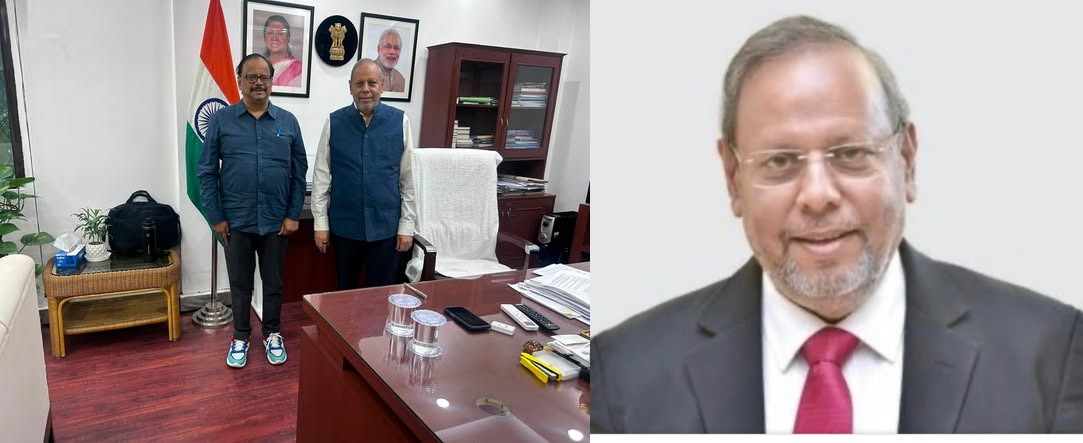
    NEW DELHI — Strongly rejecting claims that India is a “dead economy,” Professor Suryadevara Mahendra Dev, Chairman of the Prime Minister’s Economic Advisory Council, stated that calling the nation’s financial state a dead economy on foreign soil is an insult to the country. Pointing to India’s 7.7 percent GDP growth rate as clear proof of resilience, he emphasized that Prime Minister Narendra Modi’s decisive reform measures—ranging from massive infrastructure capex to Atmanirbhar Bharat and deregulation—are driving the world’s fastest-growing major economy. However, he cautioned that states must curb unproductive freebies and balance welfare with development to avoid long-term debt traps.

    In an exclusive interview with Andhra Jyothy Delhi representative A. Krishna Rao, Prof. Mahendra Dev outlined the country’s macroeconomic trajectory, regional growth dynamics, and structural reform imperatives.

    Growth Resilience, Modi’s Reform Push & The Freebie Warning

    Prof. Mahendra Dev highlighted that two key indicators prove ongoing economic momentum: rising investments and expanding exports. India’s investment rate currently stands at 32 percent, but achieving sustained 7 to 8 percent growth requires pushing this to 34 to 35 percent. While global headwinds—COVID-19, the Ukraine war, international tariffs, the Gulf crisis, and 80 percent crude oil import dependence—continue to exert pressure, policy initiatives under PM Modi are actively insulating the economy.

    • Targeted Manufacturing & Self-Reliance: To counter global protectionism, PM Modi’s focus on manufacturing aims for self-reliance in strategic sectors like semiconductors, rare earths, and microchips. Atmanirbhar Bharat is not a return to the pre-1991 License Raj, but a push to build internationally competitive, high-quality domestic products.
    • Ease of Doing Business: Deregulation and the repeal of obsolete laws under the Modi government have streamlined business operations, though execution needs to accelerate at the state level.
    • Fiscal Prudence vs. Unproductive Freebies: Prof. Mahendra Dev cautioned that unproductive freebie schemes damage long-term financial health and drive up government debt. Welfare benefits must be strictly targeted toward eligible, underprivileged sections rather than affluent beneficiaries. Recalling an anecdote, he shared: “A politician once told me he owns 50 acres of land but still received ₹5 lakhs in his bank account under welfare schemes; people like that do not need schemes like Rythu Bharosa, do they?” While debt should be viewed as a ratio to GDP (with the Centre working to bring its debt down to 50 percent of GDP), states must maintain a strict equilibrium between welfare transfers and productive development spending.

    Manufacturing, Labor & Demographic Strength

    Addressing structural bottlenecks, Prof. Mahendra Dev noted that manufacturing remains stuck at 17 percent of GDP and must expand significantly. Women’s workforce participation also needs to rise from 35 percent to 50 percent.

    On national employment, he clarified that government jobs constitute only 15 to 20 percent of total employment. The remaining 80 percent must come from agriculture, the private sector, manufacturing, and services. Job creation has not halted—as manufacturing grows by 17 percent and services by 53 percent, employment expands alongside. Furthermore, India’s demographic average age of 28 years is a major asset that can be transformed into human capital by aligning education with industry-required skills and integrating Artificial Intelligence into agriculture, healthcare, and production.

    Regional Focus: Capital Development in AP & Telangana’s Growth

    When addressing regional development, Prof. Mahendra Dev affirmed that a newly bifurcated state requires a major, single capital city to generate economic momentum.

    • Amaravati & AP Clusters: Just as Hyderabad generates 67 percent of Telangana’s tax revenue due to its scale, developing Amaravati as the capital will create a multi-faceted economic spillover benefiting nearby Guntur, Machilipatnam, and Vijayawada. Dismissing the YSRCP’s three-capitals proposal as meaningless, he noted that Chief Minister Chandrababu Naidu is simultaneously driving cluster-based development across Visakhapatnam, Tirupati, Anantapur, Rajahmundry, Kadapa, and Kurnool. He added that IT Minister Nara Lokesh possesses a complete understanding of this cluster model.
    • Telangana’s Future City: In Telangana, Chief Minister Revanth Reddy expanding Hyderabad under the prestigious “Future City” project is a right decision that will uplift adjoining districts. Since Telangana also faces a debt load, both states should formulate joint economic growth strategies.

    Historical Legacy & Structural Reforms

    Contextualizing India’s development journey, Prof. Mahendra Dev pointed out that for four decades starting from Jawaharlal Nehru’s tenure, India’s growth rate hovered at a low 3.5 percent. During this era, labor-intensive manufacturing, primary health, and primary education were neglected, whereas China and East Asian nations invested heavily in human capital as early as the 1960s.

    Our pace of economic development went off track right from Nehru’s time, leaving structural problems as a historical legacy, while economic reforms were delayed by 15 years—Prof. Mahendra Dev smiled and remarked, “Everyone was a socialist back then, weren’t they?” While many nations reformed in the 1970s, India implemented reforms in the 1990s under P.V. Narasimha Rao.

    Due to these legacy issues, India’s per capita income remains at around $3,000 (compared to China’s $12,000), meaning the economy cannot run like a tiger just yet. However, growth momentum picked up under the Vajpayee government in 2000 and continues strongly under PM Modi, setting the trajectory toward Viksit Bharat—an inclusive, environmentally sustainable, and fully developed economy.

    Biographical Note

    Prof. S. Mahendra Dev, son of the renowned philosopher, writer, and polymath Sanjeev Dev, was born in Tummapudi in Guntur district. He holds a Ph.D. from the Delhi School of Economics and completed post-doctoral research at Yale University. Over a distinguished career, he has held key leadership positions—including Director and Vice-Chancellor of the Indira Gandhi Institute of Development Research (IGIDR) established by the Reserve Bank of India, Chairman of the Commission for Agricultural Costs and Prices (CACP), and Director of the Centre for Economic and Social Studies (CESS) in Hyderabad.

  • Beyond Slogans: The Structural Gaps Threatening India’s 2047 Aspiration

    As Parliament remains caught in political confrontation over issues ranging from the Indo-US trade deal to federal fiscal transfers, the Standing Committee on Finance has quietly presented a detailed roadmap for achieving the ambitious goal of Viksit Bharat 2047. In its Twenty-Ninth Report (2025–26), the Committee delivers a sobering assessment: India’s reform story is no longer constrained by policy imagination but by the depth and quality of implementation. The timing of this intervention is significant. With state elections scheduled in 2027 and general elections in 2029, the current budget cycle may represent a narrowing window for politically difficult structural decisions before electoral considerations begin to shape fiscal policy more decisively.

    The Committee identifies three interlinked structural risks that could undermine India’s long-term growth trajectory. First is the persistent implementation lag—administrative capacity at various levels of government continues to trail policy ambition. Reforms are announced with clarity, yet execution remains uneven across states and sectors. Second, India’s growth model remains heavily credit-driven. While lending has expanded, equity capital, technological upgrading, and productivity-enhancing reforms have not kept pace. Third, federal capacity gaps threaten to dilute national reform gains, as state-level disparities in regulatory quality and institutional strength create uneven investment climates.

    To achieve high-income status by 2047, India would need to sustain annual growth of around 8 percent for at least a decade. That objective requires raising the investment rate from roughly 31 percent to nearly 35 percent of GDP. Yet private capital formation has slowed considerably, with its share in total fixed investment declining from over 40 percent in 2015–16 to about 33 percent in 2023–24. Government infrastructure spending has remained robust, but manufacturing capital expenditure continues to lag. The Committee’s message is clear: fiscal stability is not the principal constraint; the revival of private investment is. That revival depends on deeper financial sector reforms, faster judicial enforcement, regulatory harmonization across states, and a more predictable business environment.

    Food inflation volatility poses another macroeconomic risk. The Committee stresses that stabilizing prices requires stronger agricultural supply chains, expanded cold storage networks, and deeper digital market linkages for farmers. Without supply-side strengthening, inflation shocks could erode real incomes and dampen domestic demand. At the same time, accelerating investment could widen the current account deficit, underscoring the need for domestic demand-led growth and deregulation that enhances export competitiveness without compromising macroeconomic stability.

    Progress on disinvestment has also been slower than anticipated. The Committee calls for concrete timelines and incentive-based frameworks to encourage reform of state-level public sector undertakings. Credibility in execution, rather than repeated announcements, will shape investor confidence. Similarly, in the MSME sector, inadequate risk capital remains a structural constraint. The Self-Reliant India (SRI) Fund has attempted to provide equity-like financing, but uptake has been limited by legal structures, small ticket sizes, and information asymmetries. Expanding credit alone, the Committee warns, will not yield productivity gains unless firms adopt technology upgrades and integrate into larger supply chains.

    Labour market reforms occupy a central place in the roadmap. The Committee advocates establishing a centralized Labour Market Information System to bridge mismatches between job supply and demand. It recommends benchmarking India’s labour force participation rate against advanced economies and upgrading Industrial Training Institutes in Tier 2 and Tier 3 cities. With artificial intelligence reshaping global employment patterns, curricula must become modular, industry-co-designed, and multilingual to address widening digital divides. The emphasis is on agility and employability rather than scale alone.

    Innovation remains another area of concern. India’s R&D expenditure, at just 0.65 percent of GDP, is far below the global average of 2.7 percent. The Committee cautions that increased funding by itself will not deliver results unless accompanied by stronger intellectual property enforcement, faster patent processing, dedicated commercial courts, and deeper industry–academia linkages. Translating research into commercially viable innovation requires institutional reform as much as financial commitment.

    India’s digital public infrastructure has transformed governance delivery, yet the Committee notes that digitalization must move beyond registration metrics toward measurable income and productivity outcomes. The proposal for an indigenous government-owned AI server reflects concerns over data sovereignty and strategic autonomy, but its true test will lie in whether it enhances productivity across sectors rather than remaining a symbolic asset.

    In an era marked by global fragmentation and shifting supply chains, India’s growth advantage rests on macroeconomic stability and the strength of its domestic demand base. However, the Committee’s overarching message is that the next phase of economic transformation will depend less on new policy articulation and more on execution discipline, institutional strengthening, and sustained private-sector dynamism. As political debates continue to dominate the parliamentary landscape, the roadmap offers a quieter but enduring reminder: achieving Viksit Bharat 2047 will hinge not on reform announcements, but on reform credibility and productivity-led growth.