“Even though the gun is in the hands of the police, the finger on the trigger that decides whom to shoot is in the hands of those above,” renowned novelist George Orwell depicted a terrifying dystopian world in his novel Nineteen Eighty-Four (1984). In the system he defined as the ‘Thought Police’, those who execute decisions lose the power to think independently. They become like robots that do whatever the person above tells them. The administrative system in India functions precisely according to this formula. Not just the atrocities committed against the people during the Emergency, but many anti-people decisions are implemented in alignment with this ‘Thought Police’ system.
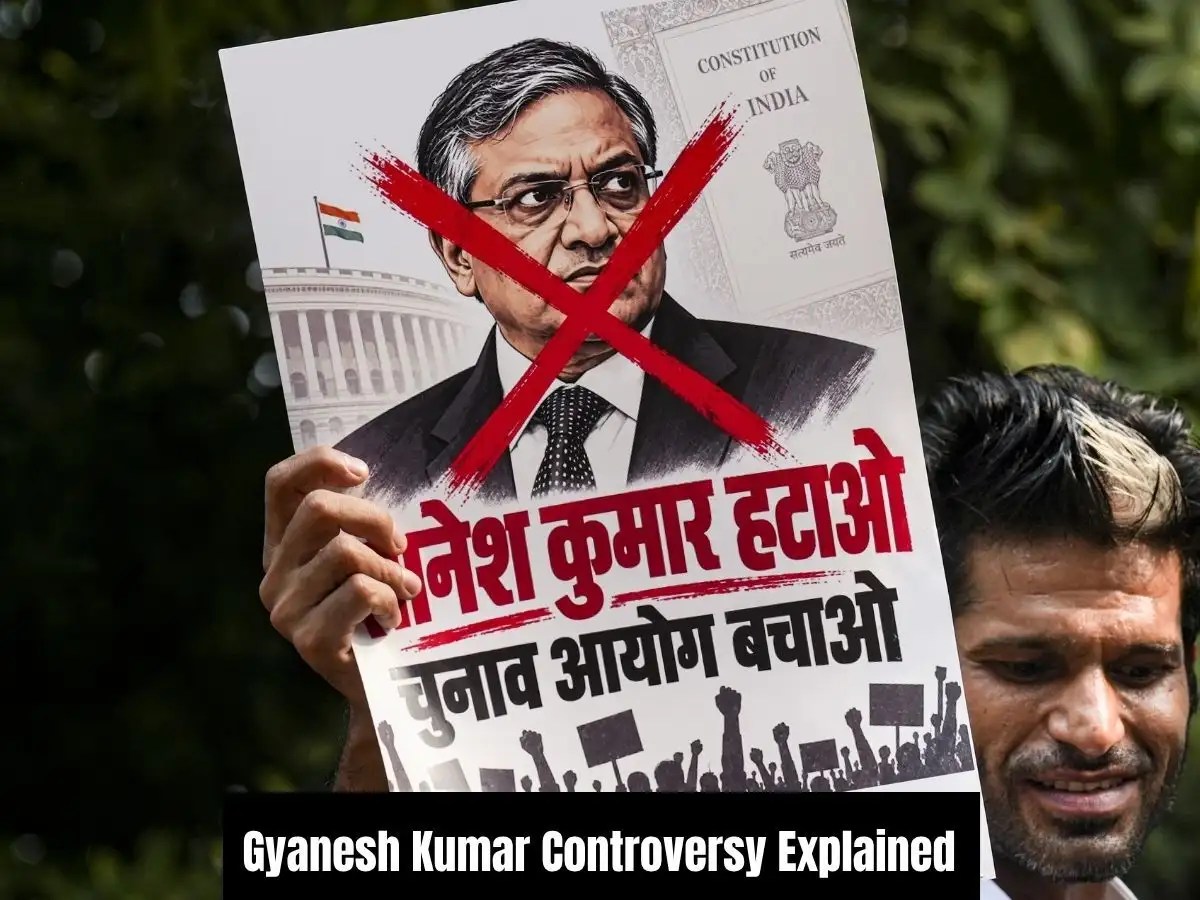
When The Indian Express leaked 14 notes on September 24 sent by two Election Commissioners to various departments within the Election Commission regarding key decisions taken without their knowledge under the name of Special Intensive Revision (SIR) of the voter list, it sparked immense outrage among the opposition and various anti-BJP sections in the country. Demands were raised branding Chief Election Commissioner Gyanesh Kumar a traitor and calling for him to be hanged. Even a newly born cockroach party called for nationwide protests. Curiously, two days later, the very same Election Commission announced that all their decisions were taken collectively. They also released a photograph of the three Election Commissioners meeting to the press.
However, no matter how much hue and cry the opposition and other sections raise, Prime Minister Narendra Modi and Home Minister Amit Shah—who make the crucial decisions at the center—do not appear to be taking it all that seriously. Around the time the news broke in The Indian Express, Modi was holding a two-day high-level meeting with Union Cabinet ministers under the name of ‘Chintan Shivir’ at Sevatirth in Delhi. They discussed at length the administrative reforms they are going to undertake and the Viksit Bharat 2047 roadmap. On September 25, while the opposition was fiercely raging over the Express news, Modi participated in ‘Bhajan Clubbing’ on the occasion of Deendayal Upadhyaya Jayanti, singing devotional songs like Achyutam Keshavam and Radhe Radhe along with young men and women. Playing the kanjira himself, he immersed himself in devotion. Union Home Minister Amit Shah also participated in programs like the UP Trade Show, the launch of an LNG train in Ahmedabad, and an anti-terrorism conference, but did not respond at all to the opposition’s protests.
No thinking intellectual would assume that the electoral system in the country is running properly simply because the three Election Commissioners announced there are no differences among them. Even Lavasa and Rawat—former Election Commissioners appointed during Prime Minister Narendra Modi’s tenure—severely criticized the manner in which the SIR is being conducted. While Lavasa criticized the method adopted for conducting the SIR as unconstitutional and flawed, Rawat opined that the way the Election Commission is functioning is not proper and dark clouds are hovering over its credibility. In fact, how did the notes sent by the two current commissioners to various departments reach the Mumbai correspondent of The Express? Internal sources say that collecting notes from individual departments is difficult, and it is possible that either of the two Election Commissioners leaked all the notes in their possession. Be that asit may, these three Election Commissioners finally washed their hands of the matter by issuing a press release claiming everything is fine. In fact, it is not hard to guess which covert hand aided these three officials—who had not laid eyes on each other from last May to August—in patching things up among themselves.
Until recently, only Congress used to criticize vote theft. But after the notes of the two Election Commissioners came out, various anti-Modi forces across the country began responding differently. YouTubers everywhere started extensively denouncing Gyanesh Kumar. However, it is impossible to say how long any controversy in the country survives. The NEET paper leak controversy subsided. No one talks about the donation theft at the Ram Mandir in Ayodhya. The levy charges on UPI did not get as much discussion as they should have. The ethanol-petrol controversy faded into oblivion long ago. Controversies keep coming and going one after another. Parliament sessions happening and getting disrupted has become normal. Now, it is hard to say how long anyone will talk about the irregularities happening in the electoral system. The less said about the judiciary, the better. When a judge spoke about the opportunity to appoint favored individuals as Election Commissioners, the Solicitor General retorted, “Aren’t you yourselves appointing people you like as judges in the collegium?”
In the past, the opposition agitated fiercely over the Bofors scam for nearly two years, eventually leading to the fall of Rajiv Gandhi’s government. Regarding corruption during the UPA-2 regime, BJP did not rest until it carried out protests for over three years and brought Modi to power. The illegal deletion of 13 million voter names by the Election Commission, the unavailability of the central database to district and state officials, the CEC unilaterally filing appeals stating that the removal of 1.6 million voters was proper, and local officials being unable to restore deleted voters in the voter lists in Goa are indeed serious matters. But if the opposition cannot build a passionate public backlash against all these, there is little they can do. Why are the opposition parties—which argue that the BJP won the elections in Bengal, Bihar, and Haryana largely due to massive voter deletions—failing to organize public protests in these states? Can a situation capable of arousing public consciousness like the Bofors scam and the Watergate scandal ever arise regarding electoral irregularities?
It is hard to say how many people are fighting for the right to vote in India. At least 3 million (3 crore) people in the country have not registered themselves as voters. Among those who registered, if we consider the names removed by the Election Commission under the guise of ‘SIR’, only 860 million (86 crore) voters remain out of the total 990 million (99 crore) voters. Even among them, based on the statistics of the last general elections, only 66 percent—meaning 330 million (33 crore) people—do not even show interest in casting their vote. In fact, the Election Commission’s job is to increase public awareness for voting. But enthusiasm is being drained away because of the ‘SIR’ process. Who has the interest to answer various questions and run around government offices? The population aged between 18-35 in the country is around 350-400 million (35-40 crore). But how many of them are voters? Do the opposition parties and intellectuals have the power to make the people, especially the youth, agitate to register themselves as voters? Will migrant laborers and youth traveling to various places and abroad for livelihood have the eager desire to vote? Even those who express opinions on social media in our country are doubtful to exercise their right. Even those who once told people to boycott elections are now talking about the right to vote.
Perhaps knowing this is why Modi and Shah appear to be watching the ongoing debate as mere spectators. In this country, every party builds a voter base dedicated to itself and subjects them to promises, welfare programs, allurement, and emotional appeals accordingly. With the database under control, it is not impossible for the Bharatiya Janata Party—which devises a booth-level strategy—to know state-by-state who will vote for them and who will vote for their opponents. The party may believe that the deletion of votes resulting from the ‘SIR’ process undertaken by its own shop may not cause significant loss to their favorable majority votes. Furthermore, they might think that the more the opposition makes a fuss over the lost votes of a certain section, the more their own majority votes will consolidate. Amidst this squabbling for votes, no one cares about actual electoral reforms. No one is interested in the thousands of crores of black money flowing lavishly in every election. Nonetheless, it would be a welcome development if the protests built by the opposition and Gen Z on the functioning of the Election Commission bring even the slightest jolt to the system.

