Tag: ideology

  • Silence in Face of Injustice Threatens Sovereignty, Warns Justice N. V. Ramana

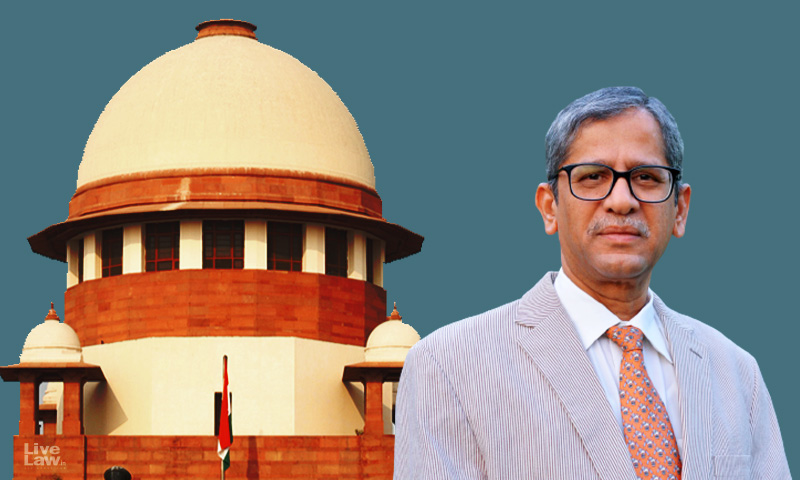
    Former Chief Justice of India Justice N. V. Ramana voiced deep concern over recent global developments, warning that the current international climate reflects a troubling erosion of diplomatic norms and respect for national sovereignty. He remarked that certain actions and statements by powerful world leaders signal a growing disregard for the foundational principle that nations must govern their own affairs without external interference. Justice Ramana was among the first former constitutional functionaries to openly warn against the dangers of silence in the face of such developments.

    He was speaking at the 20th Memorial Lecture organised by the Badrivishal Pannalal Pitti Trust in Hyderabad on March 28, 2026, held to mark the 98th birth anniversary of the late socialist leader Badrivishal Pannalal Pitti. The event featured reflections on Pitti’s legacy alongside discussions on contemporary issues of national and global importance.

    Justice Ramana noted that claims of having “stopped” conflicts involving other countries, along with interventions in regions such as Venezuela and Iran, raise serious questions about the intent and legitimacy of such actions. According to him, these moves lack the essence of diplomacy and instead challenge the very idea of sovereignty, often reflecting arrogance, economic greed, and a desire to control natural resources under the guise of maintaining order and stability.

    He emphasized that the notion of one nation intervening in another’s internal matters, particularly in regions that are home to ancient civilizations, is deeply concerning. He observed that for powerful countries, morality often becomes negotiable, shaped by strategic and economic interests, while for less powerful nations, morality and sovereignty remain central, rooted in hard-won independence achieved through long struggles and sacrifices.

    Highlighting the global impact of such tensions, he pointed out that conflicts between major powers have far-reaching consequences, affecting ordinary citizens across the world. In this context, he stressed that the responsibility to respond does not lie with any one nation or political group but must be shared collectively, calling for a unified global voice against actions that undermine peace and sovereignty.

    Turning to the question of ideology, Justice Ramana said ideology is not confined to politics alone but is a manifestation of an individual’s values, closely tied to human principles and beliefs. He observed that a decline in human values has led to a weakening of commitment to ideologies, even as numerous ideologies continue to promise visions of a perfect society. Emphasising the need for clarity of purpose, he said individuals must focus on their “swadharma,” or inner duty, rather than attempting to adopt every ideological framework.

    Recalling India’s past approach to global issues, Justice Ramana said he was reminded of an article by journalist Krishna Rao of Andhra Jyothy, which brought back an important moment in recent history. He noted that in 2003, under the leadership of former Prime Minister Atal Bihari Vajpayee, the Indian Parliament had taken a principled stand by condemning the United States’ actions in Iraq. He described it as a moment of moral clarity that reflected India’s commitment to universal fundamental values, adding that such clarity now appears to have diminished, with the world growing quieter even in the face of visible suffering.

    Drawing from history, he warned against the dangers of silence by invoking the words of Martin Niemöller in the context of the Second World War: “First they came for the Communists, and I did not speak out—because I was not a Communist. Then they came for the Socialists, and I did not speak out—because I was not a Socialist. Then they came for the trade unionists, and I did not speak out—because I was not a trade unionist. Then they came for the Jews, and I did not speak out—because I was not a Jew. Then they came for me—and there was no one left to speak for me.”

    Expressing disappointment over what he described as a lack of moral leadership globally, Justice Ramana said that many leaders have remained silent in the face of war and suffering. He lamented the absence of a widely respected international figure who can command moral authority and mobilize collective resistance against injustice.

    Justice Ramana urged individuals and nations alike not to remain silent in the face of suffering, cautioning that failing to support others in times of crisis ultimately weakens collective security and undermines the very values that sustain a just and equitable world order.

    Rising Political Opportunism Undermines Democratic Values

    At the political level, he noted that while different parties have held power over time, none have succeeded in building an ideal society. This, he said, is because political parties have largely failed to translate their ideologies into meaningful action, echoing the idea of a “poverty of philosophy.” He described ideology as the crucial link between political parties and the people, but pointed out that in recent years, loyalty has increasingly shifted from principles to power.

    Justice Ramana highlighted a growing trend where elected representatives switch allegiances based on electoral prospects, sometimes even immediately before or after elections. Such actions, he said, undermine democratic values and reduce ideology to mere opportunism. He cautioned that when ideologies are not backed by action, the effectiveness of democratic institutions diminishes and public trust is eroded.

    Referring to rising instances of political defections, he said that constitutional mechanisms meant to address such practices are being undermined, turning what was once seen as political betrayal into an accepted strategy. He warned that treating the voter’s mandate as a transferable asset poses a serious threat to democracy, adding that morality cannot be enforced by law alone and must be internalised by those in positions of power.

    He also expressed concern over increasing divisions in society despite the weakening of ideological commitment, particularly the use of misunderstood religious ideologies as tools for polarisation. Emphasising that all religions fundamentally promote values of peace, compassion and fraternity, he said the true strength of a society lies in its ability to embrace diversity and coexist harmoniously.

  • Revamping the Sahitya Akademi: Restoring Credibility and Cultural Vision

    Indian literature today stands at a fascinating and critical crossroads. It is not a moment of decline, as some may fear, but rather a moment of immense possibility. Across the vast linguistic and cultural landscape of India, there exists an extraordinary wealth of writers—working in dozens of languages, representing countless traditions, and expressing a wide spectrum of human experience. Together, they form a living bridge between the classical past and the evolving modern present.

    This continuity becomes clearer when we look at the grand lineage of Indian literary thought. From ancient sages and poets to modern storytellers, each generation has enriched and reinterpreted the cultural inheritance of the land. The foundations were laid by timeless figures such as Kalidasa, Bhavabhuti, Valmiki, and Vyasa. Their works were not merely literary creations but civilizational pillars. Epics like the Ramayana and the Mahabharata shaped ethical imagination, social values, and philosophical inquiry for centuries. Classical Sanskrit literature brought refinement in aesthetics, language, and dramatic expression, creating standards that continue to inspire writers even today.

    This tradition flowed into regional languages with renewed vitality. Poets such as Tulsidas in Hindi and Kamban in Tamil reimagined the epics in ways that resonated with local cultures while preserving universal values. In Tamil literature, Subramania Bharati emerged as a transformative modern voice who infused poetry with nationalist fervor, social reform, and a passionate call for equality, especially women’s emancipation. His works combined lyrical beauty with revolutionary thought, making literature a vehicle for both cultural pride and progressive change.

    In Telugu literature, alongside the classical brilliance of the Kavitrayam and Pothana, modern writers like Gurajada Apparao played a pioneering role in shaping contemporary literary sensibilities. His celebrated work Kanyasulkam not only introduced realism and social critique into Telugu drama but also challenged regressive social practices such as dowry and caste discrimination. Gurajada’s emphasis on using spoken language (vyavaharika bhasha) marked a significant shift, making literature more accessible and socially relevant.

    These writers did not merely translate or imitate earlier traditions—they transformed, localized, and democratized literature, bringing it closer to the lived realities of the people.

    Alongside them, voices like Kabir emerged as powerful agents of social and spiritual questioning. Rejecting rigid orthodoxy, Kabir’s poetry cut across religious and social boundaries, emphasizing inner truth and human unity. This phase of Indian literature demonstrated that it could be both deeply rooted and radically questioning at the same time.

    As India moved into the modern era, literature began to engage more directly with social realities. Writers like Premchand brought the lives of ordinary people into the center of literary discourse. His works exposed poverty, caste oppression, and moral dilemmas with unprecedented realism and empathy, marking a shift towards socially conscious writing. Literary movements further expanded the expressive possibilities of Indian literature. The Chhayavad movement in Hindi poetry, for instance, introduced a new lyrical sensibility, blending romanticism with introspection and individual expression. Similarly, progressive and modernist movements across languages challenged established norms and opened new avenues for experimentation.

    What is remarkable is that all these writers and movements, despite their differences in time, language, and ideology, contributed to a shared literary civilization. They enriched Indian literature not by conforming to a single viewpoint, but by expanding its horizons. Each added a new dimension—whether it was spiritual insight, aesthetic excellence, social critique, or philosophical depth.

    At the heart of this literary tradition lies a deep engagement with human values—love, devotion, justice, dignity, equality, and the search for meaning. Writers have confronted complex issues such as caste oppression, gender inequality, cultural erosion, and social exploitation. They have not only documented society but have challenged it, questioned it, and, at times, reimagined it.

    In earlier decades, it was perhaps easier—or at least more common—to categorize writers along ideological lines, broadly labelling them as “left” or “right.” Such classifications may have had some contextual relevance during specific political or intellectual movements. However, in today’s literary landscape, these divisions appear increasingly inadequate. They oversimplify the richness of literary expression and reduce complex creative minds to narrow labels.

    A writer cannot be fully understood through the prism of ideology alone. A novelist who critiques tradition in one work may celebrate it in another. A poet who questions authority may simultaneously uphold cultural continuity. Literature is not bound by rigid binaries; it thrives in ambiguity, contradiction, and evolution. To judge writers primarily by their perceived ideological leanings is to diminish the very essence of their craft.

    This concern becomes particularly significant when we turn to contemporary debates around literary institutions and awards. The Sahitya Akademi, India’s premier literary body, continues to play a crucial role in recognizing and promoting literary excellence. However, recent discussions have raised important questions about its processes and decisions.

    The announcement of the annual awards once again triggered debate. The selection of writer Mamta Kalia brought both appreciation and criticism. Some observers argued that the specific work recognized was comparatively weaker, raising a broader concern that in recent years, senior writers have sometimes been honoured for works that may not represent their strongest contributions. This has led to a fundamental question: should awards be given for a particular work, or should they recognize a writer’s overall literary contribution?

    At the same time, concerns have been raised about the role of ideology in shaping decisions. It is often suggested that ideological leanings influence institutional functioning, and that selection committees may not always be entirely neutral.

    Procedural questions have also emerged. Changes in the award process, delays in announcements, administrative transitions within the Akademi, and the involvement of the Ministry have all contributed to a sense of uncertainty. There have been questions about whether proper procedures were consistently followed and whether transparency has been adequately maintained.

    These concerns cannot be dismissed outright. Institutional credibility depends on clarity, fairness, and trust. At the same time, it is important to recognize a deeper issue within these debates. Instead of focusing primarily on literary merit, discussions often shift quickly toward ideological suspicion. Writers and works are evaluated not only on their artistic value but also through the lens of perceived affiliations.

    This tendency reflects the very limitation that contemporary literary discourse must overcome. A writer like Mamta Kalia, with a long and respected career, cannot be reduced to a single work or judged solely through ideological assumptions. Similarly, any award decision should be examined first and foremost on the basis of literary quality.

    The more meaningful questions are: Does the work demonstrate depth, originality, and insight? Does it engage meaningfully with human experience? Does it contribute to the evolving tradition of literature? These are the criteria that must guide literary evaluation.

    In this context, the idea of bringing Indian writers into a shared national stream gains significance. This does not imply erasing differences or enforcing uniformity. On the contrary, it calls for a collective recognition that all these diverse voices—regardless of language, region, or viewpoint—are part of a common cultural heritage.

    Such a vision requires strong and thoughtful institutional support. The Sahitya Akademi must evolve beyond being merely an awarding body into a vibrant, inclusive forum that brings together writers who think beyond rigid ideological boundaries. It should encourage dialogue across languages and regions, expand translation initiatives, mentor emerging writers, and ensure that recognition is based purely on merit.

    At the same time, neutrality should not be mistaken for the absence of values. Literary institutions must nurture a broad and inclusive cultural consciousness—one that respects India’s civilizational depth, cultural diversity, and shared heritage. This perspective does not impose uniformity; rather, it celebrates plurality within a unifying framework.

    If guided by such a vision, Indian literature has the potential to achieve even greater global relevance. Its philosophical depth, ethical concerns, and aesthetic richness offer insights that resonate far beyond national boundaries. The idea of India as a cultural and intellectual guide to the world can find powerful expression through its literary traditions.

    Equally important is the need to elevate the public status of literature within the country. Literary achievements should be recognized as national achievements. Writers should be seen not as isolated individuals but as contributors to a larger cultural and intellectual tradition.

    However, in pursuing unity, one must not lose sight of diversity. The strength of Indian literature lies precisely in its plurality—in its ability to accommodate multiple perspectives within a shared cultural space.

    The way forward is not to erase differences but to transcend divisive labels. It is to move beyond ideological reductionism and return to the core values of literary engagement—depth, authenticity, creativity, and human insight.

    By doing so, we affirm Indian literature as a living, evolving tradition—one that continues to question, inspire, and connect. In that aspiration lies the true realization of India as a literary and cultural force with global significance.