Tag: judiciary

  • Is India’s Judiciary Losing Its Autonomy?

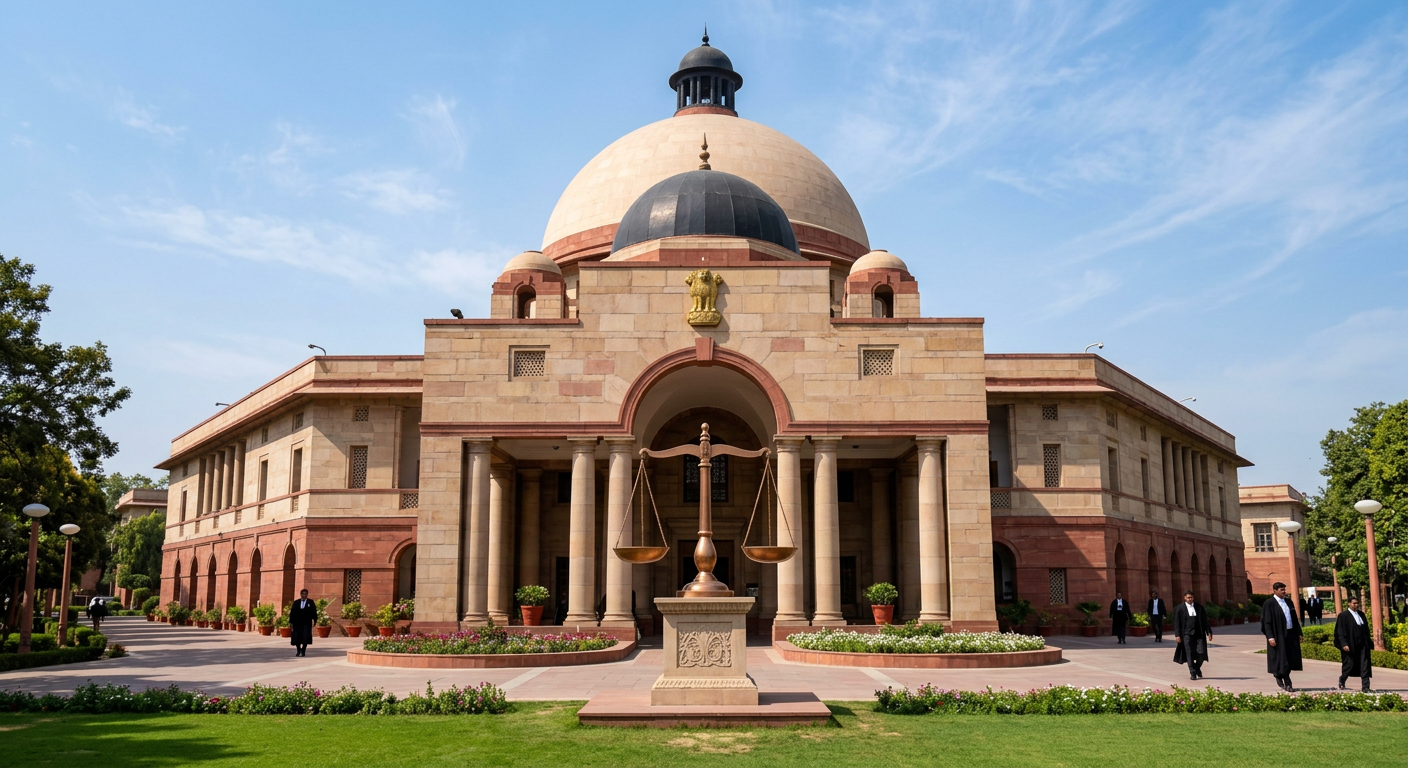
    Supreme Court of India building with dome and scales of justice statue
    The Supreme Court of India building with a prominent scales of justice statue in front

    A boy died when a tanker hit him from behind while a father was taking his five-year-old son to school. That road had neither a footpath nor crossing markings to cross the road. Such incidents keep happening in large numbers in the country, but the apex court responded to this tragic incident in a rare manner. Supreme Court Judge Justice P.S. Narasimha issued directions that walking should be recognized as a fundamental right under Article 19(1)(d) and Article 21. He said that roads should be constructed not just for vehicles but in a manner suitable for pedestrians. He also reminded that walking has cultural, religious, political, and social value in India. Justice Narasimha cited historical events like the Dandi March and the Bhoodan Movement.

    A study has revealed that in this country, where walking itself has turned into a conflict, an average of 36,500 pedestrians die every year due to the lack of proper footpaths and crossings. These incidents are occurring because 80 percent of urban roads lack safe and pedestrian-friendly infrastructure. In metro cities, 44 percent of roads do not have footpaths at all. Most of the existing footpaths do not comply with the regulations laid down by the Indian Roads Congress. To what extent are the government leaders—who talk about Viksit Bharat, a trillion-dollar economy, and global cities—aware of the plight of pedestrians in the country?

    On this occasion, Justice Narasimha questioned the failure to make laws in accordance with the fundamental rights of the people. He clarified that when the Motor Vehicles Act was made, the fundamental right of walking people was not recognized, and it appears as if this Act was made solely for vehicles. After Justice P.S. Narasimha, the second Telugu person who is set to become the Chief Justice next year, gave a judgment to recognize walking as a fundamental right, there has been an overwhelming response from the public. Reports are emerging about the lack of footpaths in many cities. The Supreme Court Bar Association responded positively to another judgment given by Justice Narasimha, stating that advocates should first know about the Rule of Law, independent stance, and standards, and build credibility. As suggested by Justice Narasimha, it has come forward to establish a National Legal Academy for advocates. Many also welcomed the judgment given by Justice Narasimha stating that merely chanting shlokas like ‘Guru Brahma, Guru Vishnu, Guru Devo Maheshwara’ is not primary, proper salaries must be given to those teachers, and ordered that the minimum wage scale be applied to teachers in Gujarat educational institutions. In the name of the Green Energy Corridor, he prevented any threat to the Great Indian Bustard birds in Rajasthan and Gujarat.

    Like pleasant raindrops in the scorching summer, we cannot ignore some good judgments given occasionally not only by Justice Narasimha, but also by Justice Ujjal Bhuyan, Justice Vikram Nath, Justice Nagarathna, Justice Viswanathan, and others. The Chief Justice of the Supreme Court, Justice Surya Kant, stayed a judgment that allowed the demolition of the Aravalli hills if they exceeded a height of one hundred meters, following concerns raised by environmentalists. Although several notable judgments are coming from the Supreme Court on and off, the debate on whether the judiciary is functioning independently continues unabated.

    The fact that the role of the apex court in the country is becoming controversial day by day is becoming a topic of discussion. Even former judges and senior advocates are commenting that the Supreme Court is losing its identity, acting as if it is under someone’s control, and ignoring fundamental rights. Before the country could forget the incident where a shoe was hurled at the Chief Justice of the Supreme Court, a petitioner made obscene remarks against the CJI in full court last week. There are those who describe such incidents as signs of growing frustration and despair toward the apex court. On the other hand, in light of the incident where a huge amount of cash was found at the residence of Delhi High Court Judge Justice Yashwant Varma, Parliament is preparing to introduce an impeachment motion against him. Why would the government let go of an opportunity to put the judiciary on the defensive?

    Chief Justice of the Supreme Court Justice Surya Kant himself expressed the view at a conference held in Stockholm that the independence of the judiciary is essential to preserve constitutional values and prevent the abuse of power. He cited cases such as Kesavananda Bharati, which protected fundamental rights, and S.R. Bommai, which protected the federal spirit. These judgments have entered the pages of history. In the past, the Supreme Court intervened multiple times to ensure that investigative agencies like the CBI and ED function freely, smoothly, and without any external pressure. So, how many such wonderful judgments have come from the Supreme Court in the last few years?

    There is no dearth of instances where good judgments have come from some High Courts as well in recent times. Justice Madhav J. Jamdar of the Bombay High Court questioned whether externment (exile from the city) can be imposed for raising slogans against the government. He declared that people are not slaves to the government, and it is their right to protest and raise slogans opposing government decisions. Justice Madhav clarified that the police are servants to the people, not to the government. Questioning the blocking of the ‘Cockroach Janata Party’ X account, the Delhi High Court ordered that the ban on that account be lifted. The Madras High Court commented, “Judges are not holy cows, there are corrupt people among them too.” It responded in this manner to a petition filed seeking a ban on a movie that depicted a judge engaging in corruption. Ironically, because it was mentioned in the NCERT textbook that corruption exists in the judiciary, the Supreme Court opened its third eye and had that paragraph changed. The details previously mentioned regarding thousands of cases pending in courts were also removed in the new chapter. The textbook stated that the judiciary functions independently, beyond the executive and the legislature. Is that really happening?

    According to the World Justice Project report, India ranks 86th in terms of the Rule of Law. According to that report, prepared by an independent organization based in the US, the Rule of Law is not that great even in the US, finding that it ranks 36th in that regard. A report by the V-Dem Institute in Sweden stated that one-fourth of the countries in the world are sliding into autocracy, and America and India are also among them. The report noted that America lost its recognition as a liberal democratic country for the first time after fifty years. It revealed that systems are systematically collapsing in India. It goes without saying that if governments become autocratic, its impact will be directly felt on the systems.

    Sitting judges like Justice Narasimha, Justice Ujjal Bhuyan, Justice Nagarathna, Justice Dipankar Datta, and others have been repeatedly warning about the independent status of the judiciary and the pressures coming from external forces. Present judge Justice Ujjal Bhuyan said that the biggest threat to the independence of the courts comes from the courts themselves… Justice Dipankar Datta said that it is not enough to say the Election Commission is independent, it must appear to be operating independently. Among former judges as well, there are those who are expressing grief over the current situation. Justice Kurian expressed concern that the federal system is in danger. While Justice Madan Lokur said that thousands of people are languishing in jails without trial, Justice Deepak Gupta criticized that the Supreme Court is acting slowly in the matter of protecting fundamental rights.

    Senior advocates are also expressing similar opinions. Former President of the Supreme Court Bar Association Dushyant Dave said that the judiciary is unable to protect the people from the excesses of the government. He alleged that the leadership of the Supreme Court has failed the country and the judiciary over the last few years. Kapil Sibal, Prashant Bhushan, Indira Jaising, Sanjay Hegde, and others also frequently highlight the plight of the judicial system. In this country, it appears that governments are suffering from more insecurity and experiencing more intolerance than the people. There is no exaggeration in saying that disastrous consequences occur precisely when governments, which ought to focus on governance, project their intolerance and sense of insecurity onto the people and systems.
  • The Cockroach Crisis: Is India’s Judiciary Losing Public Trust?

    “If the judiciary loses its credibility, nothing else will remain. An independent judiciary is the lifeblood of the Constitution. Without it, judges will exist, courts will exist, and judgments will exist—but their heart and soul will disappear,” said Supreme Court Judge Ujjal Bhuyan in a recent memorial lecture in Pune.

    He referred to a stark reality: the collegium itself recorded in its minutes that a High Court judge was being transferred in accordance with the wishes of the Central Government. This serves as a clear example of how a judiciary constitutionally expected to function independently can find itself working under government pressure.

    “The judiciary must remain distant from party politics and function firmly. Changes in government should have absolutely no connection with the judiciary. It should act with goodwill and sympathy towards everyone, but should not side with anyone,” said the first Chief Justice of India, H. J. Kania, at the inaugural sitting of the Supreme Court. Yet, reviewing the situation more than 75 years after the Constitution came into force, deep doubts arise as to whether standards in the higher judiciary have improved or deteriorated.

    The Historical Shield and the Ultimate Downfall

    For nearly twenty-five years after the Constitution came into force, the judiciary largely fulfilled its responsibility of preserving its own existence, protecting the fundamental rights of citizens, and defining the limits of government authority. The Supreme Court progressively interpreted Articles 14, 15, 19, and 31. In the 1967 Golaknath case, it clarified that fundamental rights could not be diluted, and in the landmark 1973 Kesavananda Bharati case, it solidified that Parliament had no authority to alter the basic structure of the Constitution.

    However, after coming to power with an overwhelming majority in 1971, Indira Gandhi’s administration began to toy with judicial independence. The absolute peak of the judiciary’s downfall in capitulating to executive overreach was the infamous ADM Jabalpur case during the Emergency.

    When thousands of political opponents and journalists were jailed without trial, and citizens sought the intervention of the courts to protect their fundamental liberties, a five-judge Constitution Bench delivered one of the most disgraceful judgments in Indian history. By a 4:1 majority, the bench ruled that during an Emergency, citizens do not even possess the right to life under Article 21.

    The majority consisted of Chief Justice A. N. Ray, Justice P. N. Bhagwati, Justice M. H. Beg, and Justice Y. V. Chandrachud (father of former Chief Justice D. Y. Chandrachud). When Justice H. R. Khanna—the sole courageous dissenter—asked during the hearings, “Does that mean people cannot question even if they are shot dead in the name of Emergency?”, the then-Attorney General chillingly replied, “My Lord, that is what the law says.”

    A Era of Introspection and Activism

    Following the Emergency—one of the darkest chapters in judicial history—the Supreme Court undertook deep introspection and initiated significant corrective measures. Moving past its catastrophic failure, the court aggressively declared that the Constitution, not the executive, was supreme.

    It opened its doors to the masses through Public Interest Litigations (PILs), ordered the release of thousands of undertrial prisoners languishing in jails, liberated bonded laborers, and eventually introduced the collegium system to insulate judicial appointments from political interference.

    Most importantly, it expanded the scope of personal liberties, protected the environment, championed the interests of working women, and curbed the arbitrary dismissal of state governments by ruling that political majorities must be proven on the floor of the legislature. At that stage, judicial activism was a remarkable shield for the vulnerable.

    Modern Shadows and Internal Fractures

    If the Supreme Court denied protection to human life twenty-five years after Independence, today, five decades after that judgment, the core functioning of the institution faces renewed skepticism. We may not be living in a formal Emergency, but public faith in the judiciary is noticeably shrinking.

    The fact that sitting judges themselves feel compelled to speak out demands serious reflection:

    • Justice Ujjal Bhuyan publicly emphasized that no external forces should be allowed to intrude upon judicial independence, asserting that personal political or ideological views must not influence decisions on the bench.
    • Justice B. V. Nagarathna warned that judges must not succumb to external pressures, noting that those who cannot live contentedly on their legitimate income should be eliminated from the system entirely. “A tainted judge is a stain on the entire system,” she remarked.
    • Justice S. Muralidhar, former Chief Justice of the Orissa High Court, once noted: “Impartiality is the soul of the judiciary, and independence is the blood flowing through its veins.” Notably, during his tenure at the Delhi High Court, he was transferred overnight after questioning police inaction during civil unrest in the capital.

    In her book Constitution Is My Home, senior advocate Indira Jaising recalled a harrowing 2022 case involving sexual harassment allegations made by a female Additional District Judge against a Madhya Pradesh High Court judge. Not only did the victim fail to find immediate recourse, but she was also swiftly transferred and forced to resign.

    Through Jaising’s persistent legal battles, a Supreme Court bench headed by Justice L. Nageswara Rao eventually restored her position and questioned why the then-Chief Justice of the High Court had refused to even grant her an interview. Disturbingly, just days later, that very Chief Justice was elevated to the Supreme Court.

    Growing Questions and the “Cockroach” Backlash

    Why has it become necessary for judges to comment so defensively on their own institution? Critics increasingly argue that the higher judiciary—originally designed to protect the common citizen—is becoming overwhelmingly responsive to the wealthy, the state, and political elites.

    Calculated bench allocations and predictable judgments in politically sensitive cases have sparked intense debate. Former Supreme Court Bar Association President Dushyant Dave openly criticized the court for failing to check the erosion of vital institutions like the Election Commission, pointing out that judges routinely scramble for lucrative post-retirement positions.

    Simultaneously, ethical questions have mounted. Organizations like the Campaign for Judicial Accountability and Reforms (CJAR) heavily criticized several judges and their families for utilizing private aircraft provided by state governments, arguing it severely compromises judicial ethics. Furthermore, instances like the discovery of massive cash bundles at the residence of a former Delhi High Court judge—followed by an apparent lack of accountability—have deepened public cynicism.

    Perhaps because the public, especially the younger demographic, is closely watching these lapses, an explosive reaction occurred following recent remarks made by Supreme Court Judge Surya Kant.

    During a judicial hearing, Justice Surya Kant criticized unemployed youth, comparing them to “cockroaches” who populate social media, media outlets, and RTI activism to attack institutions. Though he later clarified that the comment was contextualized within a specific petition regarding a lawyer’s designation and was not aimed at the youth at large, the damage was done.

    Justice Surya Kant has faced widening backlash for a series of oral remarks. On May 11, 2026, during a hearing on the Pipavav Port expansion project in Gujarat, his comments drew sharp rebukes from environmentalists and legal experts. Former civil servants under the Constitutional Conduct Group warned that these remarks showed a disturbing pro-corporate bias from the bench, creating an atmosphere of fear that silences dissent. Over 70 lawyers noted that treating citizens who enforce environmental laws as “obstructionists” marks a dangerous jurisprudential shift.

    Similarly, on January 29, 2026, during a PIL hearing on domestic workers’ rights, Justice Surya Kant blamed trade unions for stifling industrial growth and shutting down traditional industries. Labor bodies, including the AITUC, strongly condemned the court for misreading economic realities, arguing that industrial stagnation is driven by corporate monopoly and pro-corporate state policies, not by workers asserting their legal rights.

    The Danger of Erased Boundaries

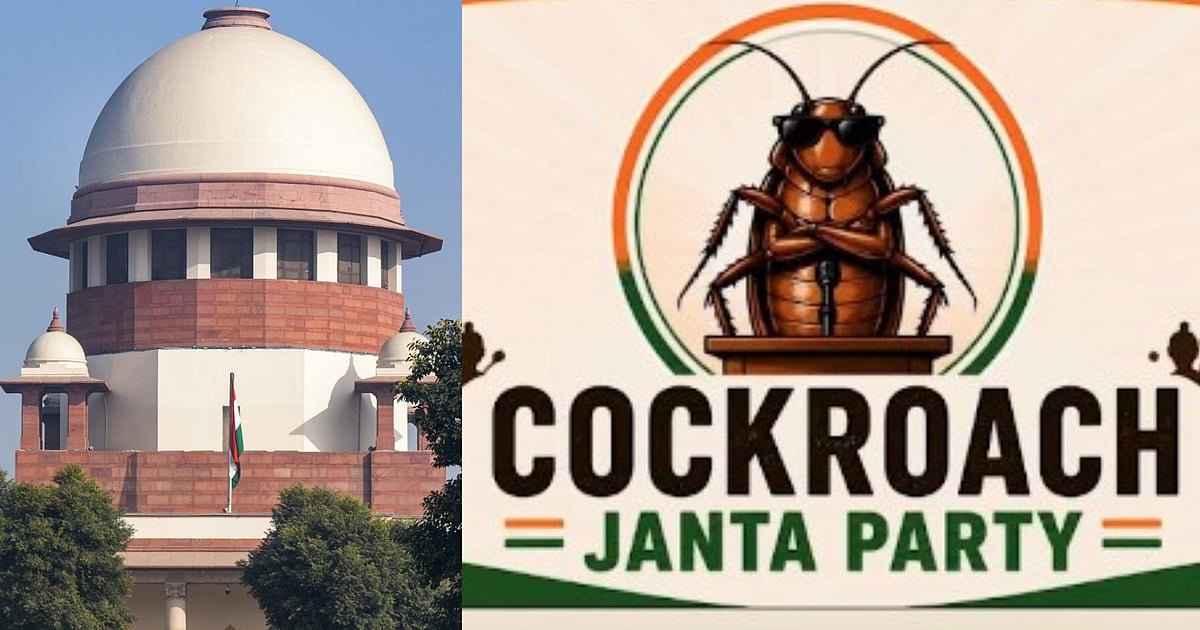
    Following the “cockroach” commentary, a young citizen created a social media movement under the banner of the “Cockroach Janata Party.” Millions responded. Instead of merely deflecting the insult, the youth weaponized it, using the platform to furiously criticize the government over unemployment, inflation, corruption, and systemic scams, proclaiming: “Yes, we are cockroaches.”

    This reaction highlights a profound systemic crisis. The derogatory comments were made by a member of the judiciary, yet the public directed its anger squarely at the executive government.

    This reveals a terrifying reality: the public no longer views the government and the judiciary as separate entities.

    In a constitutional democracy, nothing is more dangerous than the total erasure of the boundary between the ruling executive and the independent judiciary. The judiciary must aggressively reform and rescue itself from this crisis. If it fails, the day may soon arrive when the “cockroaches” themselves feel forced to become the arbiters of justice.