On October 1, 2001, Narendra Modi’s mobile phone rang in New Delhi. Modi was surprised by the question, “Where are you?” because the voice belonged to Prime Minister Atal Bihari Vajpayee.
“I am at the crematorium,” Modi replied.
Vajpayee, shocked, asked, “What are you doing there?”
Modi explained, “Congress leader Madhavrao Scindia died in a plane crash yesterday, and my friend, photojournalist Gopal Bisht, also passed away in the same crash. I have come for his funeral.”
“Alright, come see me this evening,” Vajpayee said and hung up.
When Modi met him that evening, Vajpayee smiled and said, “It looks like you’ve thoroughly digested Punjabi food in Delhi. You have no work here. Go back to Gujarat and do your work there.”
At first, Modi did not understand what Vajpayee meant. He had already been serving in Delhi for six years as the BJP’s National General Secretary, handling responsibilities for other states.
Modi asked Vajpayee, “Sir, what will I have to do in Gujarat?”
“What else? You need to take up the responsibility of Chief Minister,” Atalji replied.
Modi was ecstatic. He had never imagined he would be entrusted with such a massive responsibility. Modi said, “I have never even seen the face of the assembly until now. I have not stepped foot inside a Chief Minister’s office. I don’t know what has been happening there for the past six years.”
Vajpayee quipped, “When I came to Delhi for the first time, I didn’t know anyone here either.”
Walking as if in a dream, Modi immediately went to the house of his mentor, L.K. Advani. When Advani said, “Atalji must have told you everything,” Modi was surprised. He realized that the idea to send him back to Gujarat was not Vajpayee’s alone. Advani told Modi that he and Vajpayee had made the decision only after consulting the then RSS Sarsanghchalak K.S. Sudarshan, organizational general secretary Madan Das Devi, and senior leader Dattopant Thengadi.
The next day, despite it being Gandhi Jayanti, the BJP office on Ashoka Road was bustling and vibrant. Smiling at the reporters gathered around him in the party office, Modi announced, “I am stepping foot in Gujarat again,” and shook hands with everyone. Back then, he shared a great relationship with journalists and used to compete with other leaders to speak at press conferences. I have never seen him speak with that much ease ever since.
There were crucial reasons behind the BJP top leadership’s decision to send Modi to Gujarat as Chief Minister. Due to internal strife between Gujarat BJP leaders Keshubhai Patel and Shankersinh Vaghelas, Modi had been forced to come to Delhi in 1995. Following his intense efforts to lead the party to victory in Gujarat during the February 1998 assembly and Lok Sabha elections, party president Kushabhau Thakre appointed him as a General Secretary, alongside Govindacharya, Venkaiah Naidu, and Sumitra Mahajan. Even after Bangaru Laxman became party president in 2000, Modi was retained in his team.
During this period, the party suffered severe setbacks in Gujarat. Keshubhai Patel’s poor governance, severe droughts, and the government’s failure to handle proper relief operations during the devastating Bhuj earthquake severely dented the party’s prestige. The BJP took a heavy beating in local elections, losing 23 out of 25 district panchayats. The party was also losing its grip on urban areas. In September 2001, the party suffered crushing defeats in two assembly by-elections, including Sabarmati, which fell under Advani’s constituency. Party observers Madan Lal Khurana and Kushabhau Thakre submitted a report stating that a leadership change was imperative. In the wake of these developments, following the decision of Vajpayee and Advani, Modi took the oath as Chief Minister on October 7, 2001.
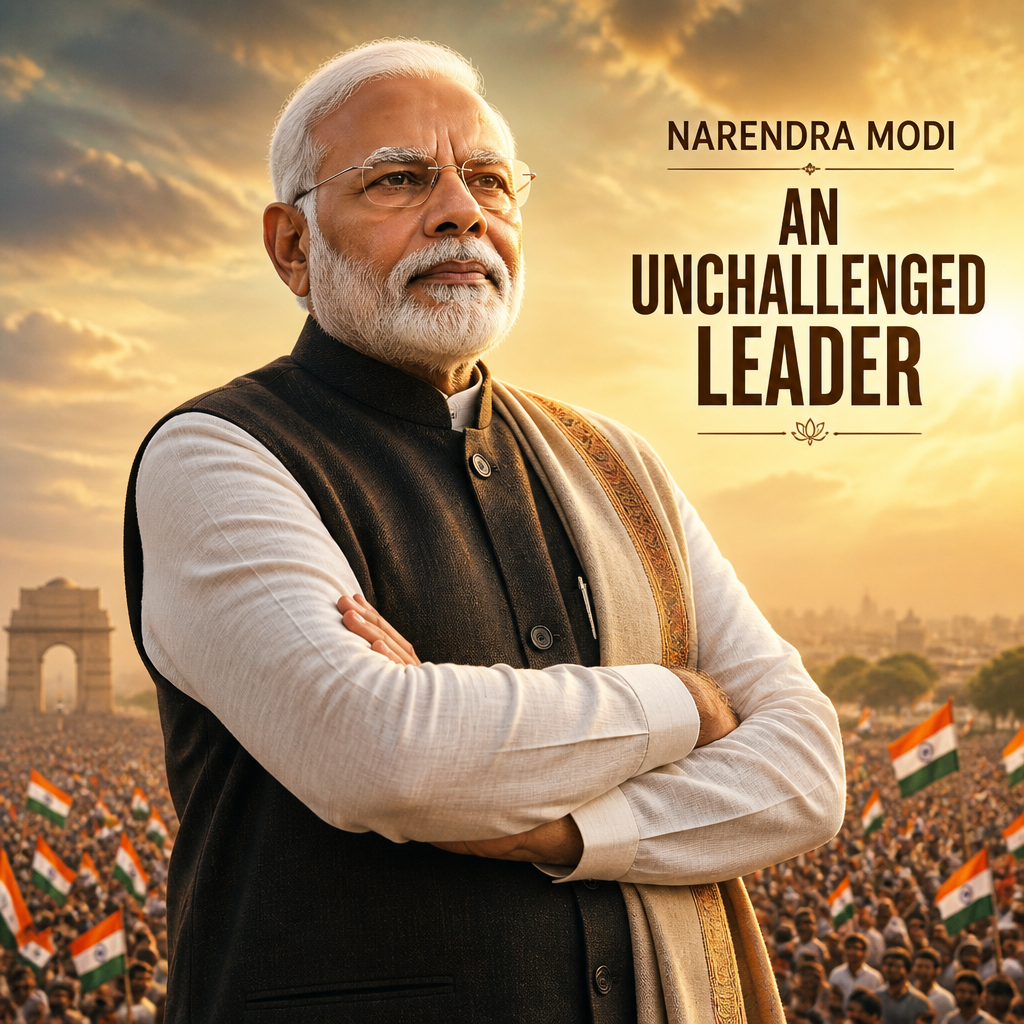
Vajpayee and Advani probably never imagined that the Narendra Modi who became Chief Minister on that day would hold the position for such a long tenure, go on to become Prime Minister, and complete a 25-year journey across both top offices. What is the secret behind Modi’s success, not just in securing a position, but in cementing himself within it and growing into an undisputed leader?
The developments in Gujarat are proof that internal conflicts within the party were severe during Vajpayee’s era. In Delhi too, a public feud played out between Sahib Singh Verma and Madan Lal Khurana. When Verma even refused to take Vajpayee’s phone calls, he had to be sidelined, and Sushma Swaraj was appointed Chief Minister 50 days before the elections. Leaders like Uma Bharti and Kalyan Singh also frequently rebelled.
The very first thing Modi did upon becoming Chief Minister was to crush internal party squabbles with an iron fist. Modi successfully managed to oust Sanjay Joshi—who was opposed to him—not just from Gujarat, but from the party entirely. This was because he realized that survival was only possible if he eliminated opposition through the classical political strategies of Sama, Dana, Bheda, and Danda (conciliation, gifts, division, and punishment).
The experience of attending the RSS Shakha in his childhood—where one person gives orders and everyone follows them with discipline—left a profound impact on Modi’s mind. The working style of the Sangh Parivar became his DNA. He completely believed that whatever a leader says must happen, leaving no room for a second opinion. Many writers who have authored books on him observed that getting everyone around him to focus solely on him and listen strictly to his word became deeply ingrained in his philosophy.
Gordhan Zadafia, who served as Minister of State for Home in Modi’s cabinet in Gujarat, remarked that Narendra Modi never tolerated his rivals. Not just Zadafia; even Keshubhai Patel, who could be considered Modi’s guru, ended up fading into political obscurity after founding separate parties in opposition to him.
Modi adopted the exact same attitude as Prime Minister that he had practiced as the Chief Minister of Gujarat. L.K. Advani—who had stood by him during the Gujarat riots, saved his chair, and ensured the entire party supported Modi—along with Murli Manohar Joshi, who had taken him along on the Ekta Yatra, were both relegated to the Margdarshak Mandal (Advisors’ Forum).
Be that as it may, for the past 12 years since Modi became Prime Minister, there has not been a single whisper of discord within the party. There has never been an instance where ministers or party members dared to utter a peep against the leadership. Whether appointing a Union Minister, a Chief Minister, or finally the National President of the party, there is no one left to question the decision. As an administrator, even if he appears to consult bureaucrats, he remains the absolute king of the political jungle. Whatever he says is gospel.
It is a testament to how firmly Modi has cemented his grip that today, not just BJP leaders, but even NDA leaders who once opposed him compete with one another on his birthday to praise him and light lamps. When leaders who didn’t even bother to celebrate the BJP’s foundation day now celebrate Modi’s birthday, it is hard not to attribute it to the sheer uniqueness of his leadership.
In the past, the phrase “Big Brother is watching” was used as a warning symbol of American hegemony and surveillance. Today, every BJP and NDA leader knows that this statement applies equally to Modi. Could Modi possibly not know who is lighting lamps, who is clapping, and who is praising him to the skies? Regardless, Modi has now joined the ranks of world leaders who have completed 25 years in governance, a list that includes figures like Putin, Castro, Gaddafi, Franco, and Tito.
Another key element in Modi’s success is making sure everyone notices him and talks exclusively about him. Whether he is criticized, insulted, or mocked, Modi’s nature ensures that he remains the central focus of every debate. He has followed this style since his Gujarat days. Whether changing attire, acting dramatically, smiling, or hugging foreign leaders, Modi’s intentional goal is to keep everyone’s eyes locked onto him.
Modi knows that this does not diminish his fan base or devotees; instead, it causes anyone who criticizes him to be met with redoubled, aggressive pushback. The ability to create a massive, deeply devoted following that remains enchanted by whatever he does is another reason for Modi’s success. No matter how many leaders there were from Nehru to Vajpayee, none of them possessed a devotional following quite like this.
He likely calculates that as long as he ensures his core vote bank of Hindutva loyalists remains intact, no harm can come to him. An elderly man who worked for the Jan Sangh and BJP for a long time recently met Modi and reportedly told him, “I know the secret of your success.”
“Let’s hear you guess,” Modi said.
“Rahul Gandhi!” At the man’s reply, Modi reportedly burst into uproarious laughter.
Rahul Gandhi, who has recently been making waves by moving extensively among students and mocking Modi, must secure at least one strong electoral victory over Modi if he ever wishes to change public perception.

