Tag: modi

  • Winning Without Contest: The New Politics of Power

    In the 2017 Legislative Council elections, some leaders from Rayalaseema exerted intense pressure on the Returning Officer, Satyanarayana Rao, who was then serving as the Assembly Secretary, to reject the nomination of a candidate. They also tried to influence him with inducements. Frightened and disturbed, that Returning Officer reportedly approached Chief Minister Chandrababu Naidu. It is said that he told the officer, “Do not yield to any pressures. Act fearlessly according to the rules.”

    In 2009, during the YSR era, Telugu Desam Party candidate Kadiri Baburao, who contested for the Legislative Assembly from Kanigiri, forgot to sign in one place in his affidavit. The Returning Officer, who maintained strategic silence without saying anything until 5 p.m., later rejected Baburao’s nomination papers on the grounds that the signature was missing. Baburao was known to be a close associate of the prominent film actor Nandamuri Balakrishna. These are merely examples to illustrate how crucial a role Returning Officers play in determining the fate of candidates. Just as Jayadratha in the Mahabharata possessed the power to prevent the Pandavas from entering the battlefield even for a single day, Returning Officers too occasionally play the role of Jayadratha in the electoral battle. Their power is that formidable.

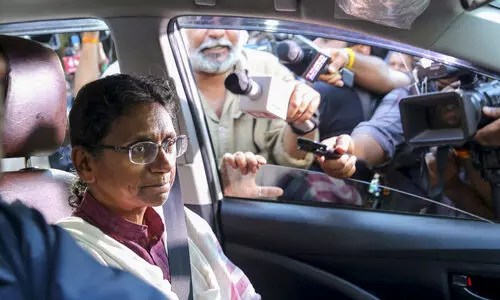
    Recently, in Madhya Pradesh, Returning Officer Arvind Sharma played a key role in rejecting the nomination papers of Congress candidate and party General Secretary Meenakshi Natarajan. Arvind Sharma, who is a Principal Secretary in the Madhya Pradesh government, had previously served as a Director in the Lok Sabha. The very fact that he came to Madhya Pradesh with the assistance of Narendra Singh Tomar, who was the Agriculture Minister during the period when farmers were protesting against the farm laws, indicates the strength of his connections with the BJP. Tomar is now the Speaker of the Madhya Pradesh Assembly.

    Perhaps BJP circles were aware of the complaint filed in Hyderabad against Meenakshi Natarajan even before they received official notification of it. Otherwise, they would not have fielded a third candidate despite lacking the necessary strength. Meenakshi filing her nomination, the BJP immediately reminding the Returning Officer about the case against her, the officer promptly rejecting her nomination, and then announcing the BJP candidate as elected unopposed—all of this happened in rapid succession. It appears that whatever the BJP does is executed with meticulous planning and considerable advance preparation.

    Although the Modi government convened special sessions of Parliament for three days last April, it failed to secure passage of the Delimitation and Women’s Reservation Bills, which it had introduced with great prestige. This was the first time since Modi came to power that the opposition succeeded in preventing the passage of such bills. Following the BJP’s first-ever sweeping victory with an overwhelming majority in West Bengal, the party’s confidence increased. It sought to employ all possible methods to increase its strength in both Houses of Parliament.

    As part of that effort, twenty Lok Sabha members belonging to the Trinamool Congress reportedly broke away from the party, joined an obscure party called the Nationalist Citizens Party, and declared support for the NDA. Three Rajya Sabha members belonging to that party resigned. Negotiations are reportedly underway with others as well. Leaders who until recently criticized Modi during the Bengal elections are now said to regard him as their leader. In Jharkhand, efforts are underway to field Parimal Nathwani, considered Ambani’s right-hand man, as an independent candidate and thereby attract legislators from the ruling party to their side. By strategically ensuring the rejection of Meenakshi Natarajan’s nomination, three BJP candidates from Madhya Pradesh were elected unopposed. Not only that, across the country nineteen BJP MPs won without any contest. These developments make it clear that the Modi government is preparing the ground to ensure that it faces no obstacles in either House and can pass the bills it desires. Although the NDA has not yet reached a two-thirds majority in both Houses, discussions are taking place in the national capital about how many more people the BJP might bring into its fold by the time the monsoon session begins in July.

    After the rejection of Meenakshi Natarajan’s nomination and the surrender of Trinamool Congress members to the NDA, a sense of anxiety regarding political survival has reportedly emerged in every party across the country. Reports suggest that even the Shiv Sena led by Uddhav Thackeray and the NCP led by Pawar are facing an existential test. In this context, it is becoming clear that the Modi government has prepared the ground to secure passage during the monsoon session of several important bills, including the Delimitation and Women’s Reservation Bills.

    The surprising thing is that although Returning Officers have behaved controversially in the past, no one has received as much sympathy as Meenakshi Natarajan. That may be because she is a Gandhian who leads a very simple life, making her a rare kind of political leader. There is little point in criticizing the Returning Officer here. “What can we do if orders come from above?” said one official from Madhya Pradesh.

    Rejecting her nomination on the basis of a case filed on the basis of a private complaint entirely unrelated to her appears completely unreasonable. Many individuals who have served as Returning Officers in legislative bodies say that under Section 33A of the Representation of the People Act, only cases in which a charge sheet has been filed, charges have been framed, and which are punishable with imprisonment of more than two years need to be disclosed. Even if the Returning Officer believed that the affidavit had not been fully completed, they say that a nomination should not be rejected solely for that reason and that the candidate should be given another opportunity to correct the error.

    On the very day Meenakshi Natarajan’s nomination was rejected in Madhya Pradesh, a BJP candidate in Jharkhand was given 24 hours to correct an error in his affidavit. There have been many such instances across the country where Returning Officers have acted fairly. Officials should facilitate a candidate’s democratic election, not create obstacles preventing that candidate from being elected. When officials act in accordance with the political interests of the ruling party, it becomes clear that democracy in our country is not in a healthy condition.

    Another surprising aspect is that courts also do not make efforts to dispose of election petitions quickly and thereby give wronged candidates an opportunity to be re-elected. Recently, even the Madras High Court criticized the Supreme Court on this issue. In a petition filed by a candidate who lost by just 49 votes in a constituency during the 2016 Tamil Nadu Assembly elections, it took the Supreme Court six years to deliver a verdict. What benefit is there in the court declaring that the defeated candidate had actually won? By then, the term of the Assembly had already ended. The Madras High Court criticized even the Supreme Court, saying that justice had become a mockery.

    A similar situation occurred in the case of Ponguleti Sudhakar Reddy versus Tummala Nageswara Rao. Although the case was filed in 1999 and Tummala had won, it took the High Court seven years to decide the matter.

    When Meenakshi Natarajan approached the Supreme Court claiming that her nomination had been unfairly rejected, it refused to intervene. The Supreme Court held that under Article 329(b), elections to legislative bodies cannot be challenged. The Court clarified that she could, if she wished, file an election petition in the High Court. The Supreme Court is also aware of the deplorable condition of election petitions in the country’s judicial system. A former Supreme Court judge said that, based on past experience, no one knows how many years it will take for Meenakshi Natarajan’s petition to be decided.

    In a speech in 2019, then Vice President Venkaiah Naidu also said that courts should establish special benches for election petitions and deliver decisions within six months. If the Supreme Court does not decide the matter and election petitions do not receive speedy judgments, who will protect the democracy that is being crushed in between?

    Moreover, under the current circumstances in the country, the attitude adopted by the courts appears peculiar. A situation is arising in which the courts themselves characterize those filing cases on public issues as cockroaches, idle people, or obstacles to development. “The Centre is spending money to build roads. Who are you to question the progress of roads under the Right to Information Act? This is yellow journalism,” the Supreme Court reportedly told an RTI activist on Tuesday before dismissing the case.

    Some say that it is politics for the ruling party to try to secure majorities in legislative bodies and achieve its desired objectives. Others call it Machiavellian politics. Whatever one may call it, it is not wrong to question the methods being adopted and the institutions that are failing.
  • Modi’s Political Dominance and the Challenges of Governance

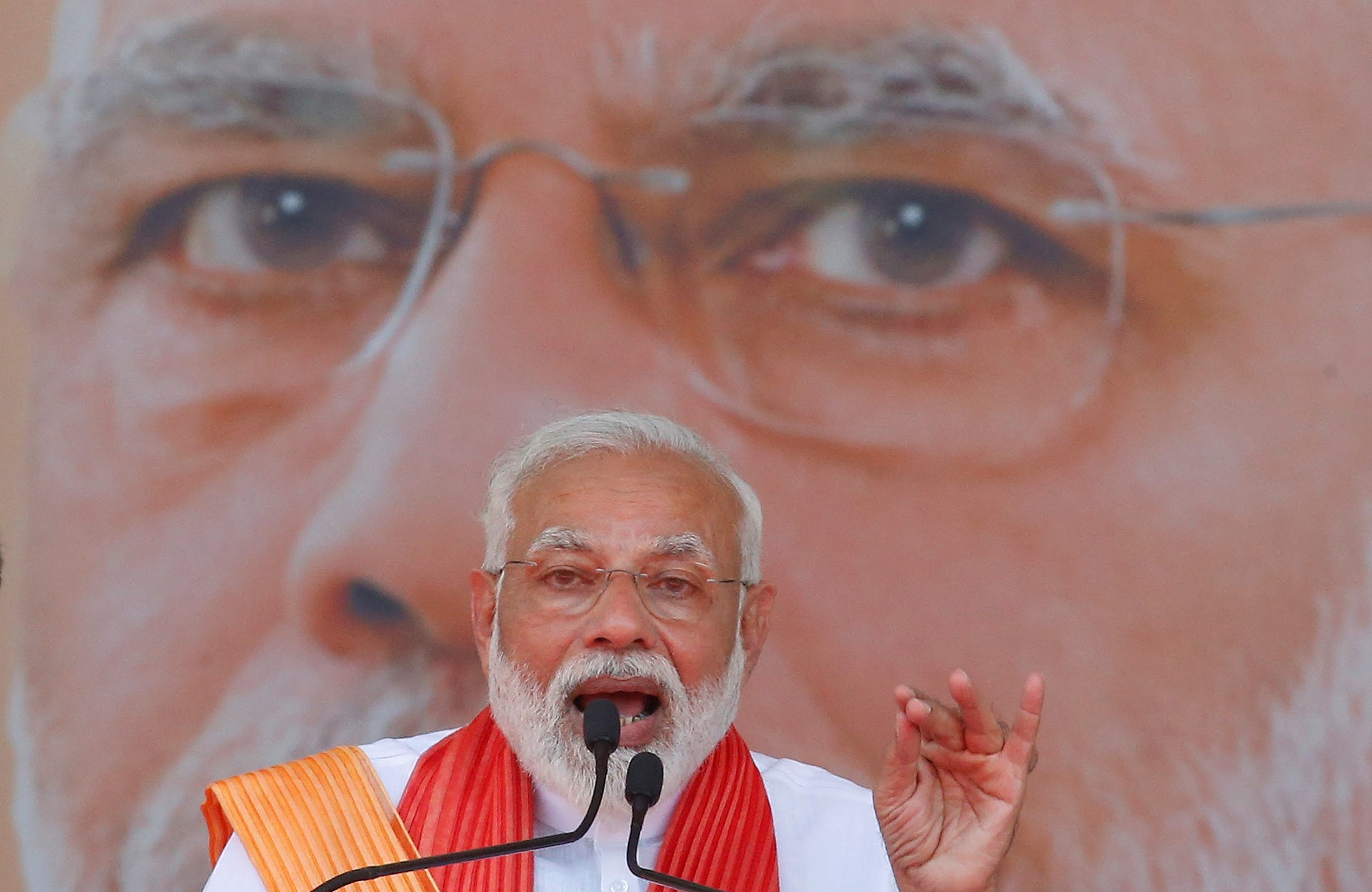
    “You win only when you play. If you don’t play, how can victory come?” Prime Minister Narendra Modi recently said while speaking to young children. Since joining the Bharatiya Janata Party (BJP) in 1987, Narendra Modi has been continuously playing in politics. Completing four decades in this political game next year, he has had no notable defeat so far. In 1987, when he was handed over the responsibility of the Ahmedabad Municipal Corporation as the BJP Gujarat General Secretary, he secured this victory for his party for the first time. Since then, he has never looked back.

    His journey of victory, which began in Gujarat with the corporation win, brought the party to power in the state, and later led to him personally taking over power as Chief Minister, delivering an unchallenged governance for 12 years. Without stopping there, even after taking over the responsibilities as the Prime Minister of the country in 2014, Modi has been continuously continuing in office for 12 years so far.

    By 1987, when Modi entered active politics, the Congress was in power at the Centre and in 15 states. With the recent victory in West Bengal, the BJP and its allies under Modi’s leadership have achieved power in 21 states. In a way, Modi is now in the ascendant phase of his political life. While on one hand preparing for the celebratory milestones of his 12 years of governance, on the other hand, he is getting ready for massive changes in both the party and the government. He is setting the stage for his next political game.

    “Victory is not just a game, it is also like riding a tiger,” political scientists often describe. Once you get down from it, it will swallow you. Baba Saheb Ambedkar said long ago that democracy is not just about victory in elections. Although Modi’s government is unchallenged in politics, India’s economic situation remains worrisome. Economists say that GDP growth is gradually declining, average inflation is doubling, and the pace of development is moving sluggishly. The monthly review prepared in May by the Ministry of Finance under the leadership of Union Finance Minister Nirmala Sitharaman made it clear that international developments are severely impacting India’s economic conditions. The value of the rupee is falling day by day. Crude oil import bills are rising. Reports are coming that petrol and diesel prices have increased four times since May 15 after the assembly election results, and there are chances of them rising again. For the second consecutive week, the decline in India’s foreign exchange reserves is clearly visible. Economists like former Economic Advisor Arvind Subramanian and representatives of the National Institute of Public Finance and Policy are warning that private investments in the country are also declining.

    In May last year, NITI Aayog CEO B.V.R. Subrahmanyam announced that India had overtaken Japan to become the fourth largest economy, but according to the World Economic Outlook recently released by the International Monetary Fund, India has dropped to the sixth largest economy. Regardless of this matter, irrespective of statistical details, everyone knows that the per capita income in the country is at a very low level. Economists state that since 1991, while per capita income in China has increased 38 times, it has increased only 8 times in India.

    The fact that Prime Minister Narendra Modi himself is appealing to the people to practice austerity measures indicates the severity of the situation. Economists say that the government is taking short-term measures from time to time but is not undertaking long-term measures. What are long-term measures? Discussions are ongoing whether it means further accelerating reforms or allowing foreign investments to enter more freely. No one has clarity on what steps Modi is taking in this direction. Organizations like NITI Aayog are also not transparently publishing reports on the country’s economic situation. It has been a long time since such organizations stopped trying to tell the government the actual situation, as they are instead eager to exaggerate minor developments into mountains. Will the situation improve merely by changing the heads of ministers as part of a cabinet reshuffle?

    Secondly, even though the opposition parties in this country have failed to win elections, they seem to have succeeded in creating an impression among the people that institutions are being weakened. They are giving scope to raise doubts not only on the functioning of institutions like the Election Commission, CBI, ED, IT, CVC, and National Testing Agency, but also on the judgments given by the Supreme Court. The strange thing is, even when elections are conducted properly, the credibility of the Election Commission is being questioned. Due to the indiscriminate deployment of agencies like the CBI, ED, and IT against political rivals, trust in them is lost even when they work genuinely. Judges are acting in a manner that raises suspicion whether the boundaries that should exist between the Supreme Court and the government are blurring.

    Ultimately, the fact that a miserable state exists in this country where even exams cannot be properly conducted for students was proven once again with the leak of NEET question papers. More recently, the controversy surrounding the CBSE’s On-Screen Marking (OSM) system has further deepened concerns about institutional competence. What began as isolated complaints soon turned into one of the biggest credibility crises faced by the country’s premier school education board. Remarkably, it was not political parties or government agencies that exposed the issue, but three young students. Vedant Shrivastava brought attention to the problem after allegedly receiving another student’s answer sheet during the verification process. Nisarga Adhikary, a young cybersecurity researcher, claimed to have uncovered serious vulnerabilities in the digital evaluation portal that could expose sensitive student data and examination records. Sarthak Sidhant raised questions regarding the tendering and procurement process behind the system’s implementation. Together, these three students forced a national debate on transparency, accountability, digital security, and administrative responsibility in the education system. Even CBSE was eventually compelled to acknowledge vulnerabilities in parts of the system after initially rejecting the allegations. The episode demonstrated how public institutions can lose credibility when legitimate concerns raised by students are not addressed promptly and transparently.

    The way the youth of this country responded in an unprecedented manner to the call given on social media under the name of ‘Cockroach Janata Party’ creates a feeling that a fire is smouldering somewhere. It is naive to think that those who ask questions will decrease just by suspending social media accounts. Therefore, it must be considered that the Modi government succeeds only when it tries not just to win elections, but to increase the credibility of institutions and to solve the problems of the youth of this country.

    Moreover, the political victories of the Modi government are not completed with the victory in Bengal. From next year onwards, they have to win again in BJP-ruled states. This includes the Prime Minister’s home state of Gujarat, as well as the largest state Uttar Pradesh, Madhya Pradesh, Rajasthan, and other states. The BJP’s situation in the four southern states is not very grand. In Karnataka, the BJP has no independent identity of its own outside of Yediyurappa. Even though several top RSS leaders like Dattatreya Hosabale, Santhosh, and Mukund hail from Karnataka, the BJP is unable to establish itself firmly there. As for Telangana, no party seems better than the BJP at cutting the very branch it is sitting on. In Tamil Nadu, Annamalai, who was once the party president, announced that the BJP has no future and is preparing to look out for his own path. BJP leaders do not seem to have realized that gaining acceptability in the South is more important than in Bengal.

    However, whatever Modi’s weaknesses may be, how far Congress is trying to utilize them remains a matter of debate. No one can say what Congress is doing to confront the BJP head-on in UP, Gujarat, Madhya Pradesh, and Rajasthan. After Congress won in Kerala, the Congress high command took 11 days to decide the Chief Minister. It took Rahul Gandhi these many days to realize that the people, senior party leaders, and the cadre there completely admire Satheesan. He could not restrain his right-hand man KC Venugopal, even though the latter made intense efforts to become the Chief Minister himself.

    Similarly, without even enjoying the happiness of winning in Kerala, the Karnataka headache started for Delhi. The Delhi elders are dragging both Siddaramaiah and DK Shivakumar along, in a helpless state where they cannot bring about a compromise between the two. Siddaramaiah, who represents the AHINDA group consisting of minorities, backward classes, and Dalits on one side, and DK, who is extremely loyal to the party and has stood by the high command in every crisis on the other side, have left the high command at a total loss. In fact, DK, who once had to move Gujarat MLAs to Bengaluru to ensure Ahmed Patel’s victory, had to get entangled in several cases. Ultimately, he even had to go to Tihar Jail. While it is justifiable to give the Chief Minister post to such a person as DK, nothing can be said right now about the future course of action of Siddaramaiah, who made it clear that he will remain active in politics and will not come to the Rajya Sabha.

    A situation arose where Shivakumar had no choice but to include everyone suggested by Siddaramaiah in his cabinet. For the past 20 days, Delhi hotels and the AICC have been overcrowded, initially with Kerala leaders and now with Karnataka leaders. Although infighting exists in Congress in every state, Delhi is in a situation where it can do nothing.

    That situation has never existed in the BJP. Even though there are BJP Chief Ministers in 17 states, there is no record of even a single one coming to Delhi for cabinet expansion or other changes. The BJP top brass has the grip to dictate who should be appointed without them needing to visit. That is the difference between the BJP and the Congress. That is also the secret behind their victories and defeats.

  • India’s Uneasy Balancing Act in the Trump Era

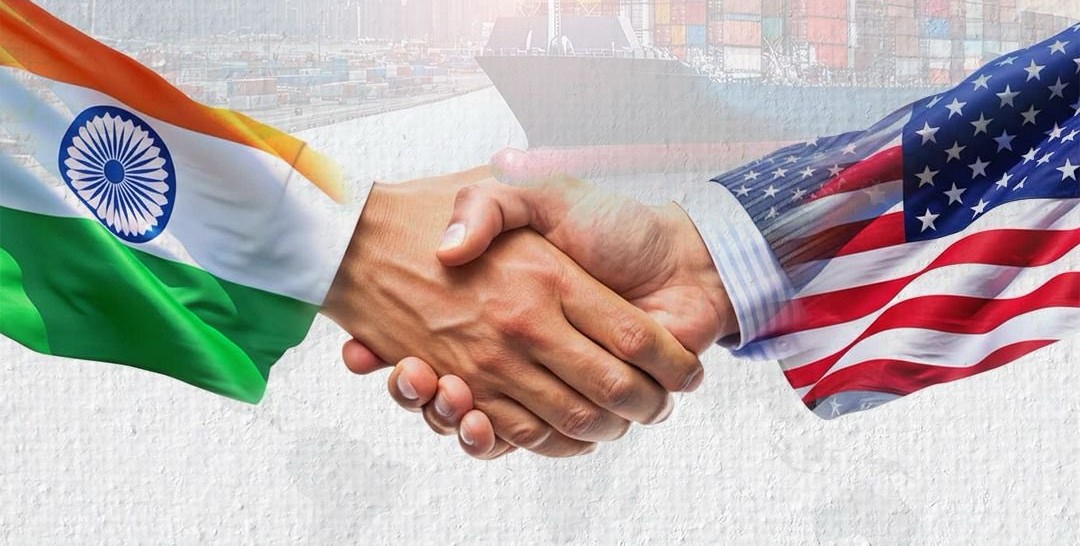
    A close reading of the India–US agreement makes it evident that New Delhi is unwilling to treat US President Donald Trump as an adversary. Keen to prevent any further deterioration in bilateral relations, India appears to have adopted a cautious and conciliatory approach. The United States has already imposed tariffs of up to 50% on Indian exports, severely impacting textiles, jewellery, engineering goods and chemicals. India’s trade deficit is widening, and a series of unilateral statements by Trump have pushed Prime Minister Narendra Modi into a defensive posture at home, where he faces questions he is increasingly unable to answer. This appears to have prompted efforts to placate the US President.

    Two months ago, US Senator Lindsey Graham, a close ally of Trump, told reporters aboard Air Force One that Indian Ambassador Vinay Kwatra had met him, conveyed that India had reduced oil imports from Russia, and urged him to persuade Trump to lower tariffs. Trump, standing beside him, warned that unless India completely stopped purchasing Russian oil, matters could worsen. “India wants to make me happy. Modi is a good man. He knows I’m not happy — and making me happy is very important. If India doesn’t help on the Russian oil issue, tariffs could be increased,” Trump said. The warning came shortly after the US attack on Venezuela, highlighting the pressure India was facing.

    Why should a US President certify India’s Prime Minister? Why should India align its policies to suit Washington’s preferences? Why should Modi seek to “please” Trump? These are questions India appears unwilling — or unprepared — to raise. Despite being larger than the European Union in scale, India does not seem ready to assert that it fears no one and can independently determine its foreign policy and internal security priorities. The ideals of non-alignment and strategic autonomy appear absent from current decision-making.

    At an RSS event marking its centenary year on Saturday, RSS chief Mohan Bhagwat underscored that while economic interdependence among nations is a reality, it must be voluntary and not driven by coercion. He cautioned against decisions imposed through trade wars and tariff pressure, arguing that international trade should be guided by a country’s free will. Agreements, he said, should not be entered into out of helplessness. He clarified that Swadeshi does not mean isolation or a blanket ban on imports.

    Against this backdrop, attention has turned to what Bhagwat may say about the recently announced draft India–US agreement. Many observers suspect the deal was not concluded on equal terms. Notably, even before the draft was officially announced, Trump unilaterally disclosed its details in a Truth Social post, stating that India would stop buying Russian oil and instead source oil from Venezuela. Prime Minister Modi promptly endorsed the announcement and expressed satisfaction, later being felicitated at an NDA meeting.

    Subsequently, US Trade Representative Jamieson Greer and Agriculture Secretary Brooke Rollins outlined the agreement’s details. Only thereafter did Commerce Minister Piyush Goyal address the issue, stating that Modi had leveraged his personal friendship with Trump to secure a favourable deal. Critics argue this framing overlooks the fact that agreements are concluded between nations, not individuals. It is India’s 1.4-billion-strong market that gives it negotiating strength — not personal rapport. After all, the India–US civil nuclear agreement was not a personal arrangement between Manmohan Singh and George W. Bush.

    Even with Trump reducing tariffs to 18%, questions remain about the deal’s benefits. Prior to July 2025, Indian exports to the US faced an average tariff of just 3%. The new rate represents a sixfold increase in less than a year. Meanwhile, India has reduced tariffs on American products such as Harley-Davidson motorcycles and several alcoholic beverages. Though US goods earlier faced tariffs averaging around 15% in India, these duties will now be eliminated.

    Goyal claimed the agreement would open the $30 trillion US market to Indian exporters, benefiting MSMEs, farmers and fishermen, and generating millions of jobs for women and youth. However, he avoided questions on the reported halt to Russian oil imports. External Affairs Ministry spokesperson Randhir Jaiswal maintained that India accords the highest priority to the energy security of its 1.4 billion citizens.

    Under the agreement, American products will enter India at zero tariffs, while the US will impose an 18% duty on Indian textiles, garments, leather, footwear, plastic and rubber goods, organic chemicals and select machinery. Generic pharmaceuticals, gems and jewellery, diamonds and aircraft parts will be exempt. India has committed to purchasing $500 billion worth of US goods, but the agreement does not specify reciprocal US purchases from India.

    The Congress party criticised the deal, alleging it was unequal and that India had opened its agricultural market to the US at zero tariffs. Congress spokesperson Pawan Khera described it as “Narender Surrender,” claiming it would enable dumping of American goods in India. Former Finance Minister P. Chidambaram said the agreement appeared heavily tilted in Washington’s favour, while former Union Minister Jairam Ramesh warned that India’s imports from the US could triple, erasing its long-standing trade surplus.

    Whether the government’s claims or the opposition’s criticism prove accurate remains to be seen.

    Meanwhile, there is little indication of any softening in the US stance on visa issues affecting Indians. Trump has significantly tightened visa norms, causing hardship for Indian professionals reliant on H-1B visas and for Indian students. Visa renewals now take years, and it remains unclear whether the Prime Minister’s much-touted personal rapport with Trump will yield any relief.

    The economic and political consequences of the India–US agreement, many argue, are likely to be far-reaching.