Tag: neet

  • Modi’s Political Dominance and the Challenges of Governance

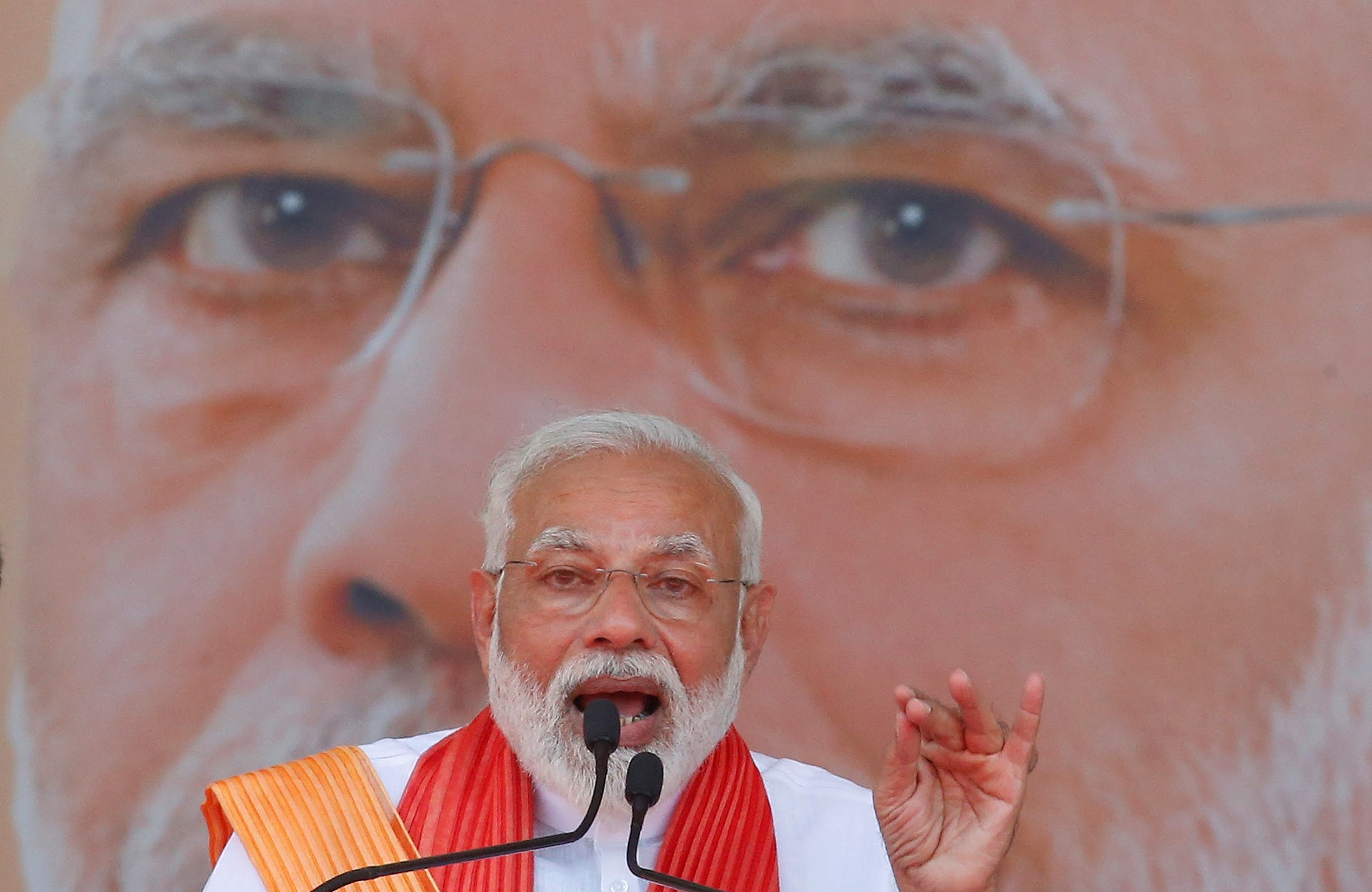
    “You win only when you play. If you don’t play, how can victory come?” Prime Minister Narendra Modi recently said while speaking to young children. Since joining the Bharatiya Janata Party (BJP) in 1987, Narendra Modi has been continuously playing in politics. Completing four decades in this political game next year, he has had no notable defeat so far. In 1987, when he was handed over the responsibility of the Ahmedabad Municipal Corporation as the BJP Gujarat General Secretary, he secured this victory for his party for the first time. Since then, he has never looked back.

    His journey of victory, which began in Gujarat with the corporation win, brought the party to power in the state, and later led to him personally taking over power as Chief Minister, delivering an unchallenged governance for 12 years. Without stopping there, even after taking over the responsibilities as the Prime Minister of the country in 2014, Modi has been continuously continuing in office for 12 years so far.

    By 1987, when Modi entered active politics, the Congress was in power at the Centre and in 15 states. With the recent victory in West Bengal, the BJP and its allies under Modi’s leadership have achieved power in 21 states. In a way, Modi is now in the ascendant phase of his political life. While on one hand preparing for the celebratory milestones of his 12 years of governance, on the other hand, he is getting ready for massive changes in both the party and the government. He is setting the stage for his next political game.

    “Victory is not just a game, it is also like riding a tiger,” political scientists often describe. Once you get down from it, it will swallow you. Baba Saheb Ambedkar said long ago that democracy is not just about victory in elections. Although Modi’s government is unchallenged in politics, India’s economic situation remains worrisome. Economists say that GDP growth is gradually declining, average inflation is doubling, and the pace of development is moving sluggishly. The monthly review prepared in May by the Ministry of Finance under the leadership of Union Finance Minister Nirmala Sitharaman made it clear that international developments are severely impacting India’s economic conditions. The value of the rupee is falling day by day. Crude oil import bills are rising. Reports are coming that petrol and diesel prices have increased four times since May 15 after the assembly election results, and there are chances of them rising again. For the second consecutive week, the decline in India’s foreign exchange reserves is clearly visible. Economists like former Economic Advisor Arvind Subramanian and representatives of the National Institute of Public Finance and Policy are warning that private investments in the country are also declining.

    In May last year, NITI Aayog CEO B.V.R. Subrahmanyam announced that India had overtaken Japan to become the fourth largest economy, but according to the World Economic Outlook recently released by the International Monetary Fund, India has dropped to the sixth largest economy. Regardless of this matter, irrespective of statistical details, everyone knows that the per capita income in the country is at a very low level. Economists state that since 1991, while per capita income in China has increased 38 times, it has increased only 8 times in India.

    The fact that Prime Minister Narendra Modi himself is appealing to the people to practice austerity measures indicates the severity of the situation. Economists say that the government is taking short-term measures from time to time but is not undertaking long-term measures. What are long-term measures? Discussions are ongoing whether it means further accelerating reforms or allowing foreign investments to enter more freely. No one has clarity on what steps Modi is taking in this direction. Organizations like NITI Aayog are also not transparently publishing reports on the country’s economic situation. It has been a long time since such organizations stopped trying to tell the government the actual situation, as they are instead eager to exaggerate minor developments into mountains. Will the situation improve merely by changing the heads of ministers as part of a cabinet reshuffle?

    Secondly, even though the opposition parties in this country have failed to win elections, they seem to have succeeded in creating an impression among the people that institutions are being weakened. They are giving scope to raise doubts not only on the functioning of institutions like the Election Commission, CBI, ED, IT, CVC, and National Testing Agency, but also on the judgments given by the Supreme Court. The strange thing is, even when elections are conducted properly, the credibility of the Election Commission is being questioned. Due to the indiscriminate deployment of agencies like the CBI, ED, and IT against political rivals, trust in them is lost even when they work genuinely. Judges are acting in a manner that raises suspicion whether the boundaries that should exist between the Supreme Court and the government are blurring.

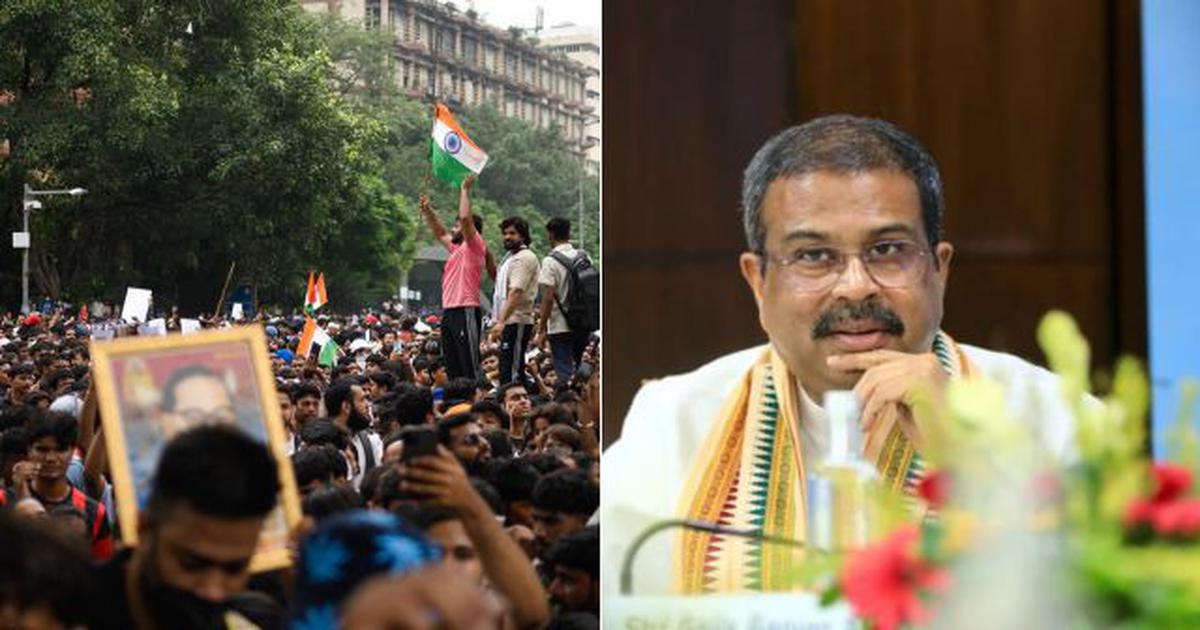
    Ultimately, the fact that a miserable state exists in this country where even exams cannot be properly conducted for students was proven once again with the leak of NEET question papers. More recently, the controversy surrounding the CBSE’s On-Screen Marking (OSM) system has further deepened concerns about institutional competence. What began as isolated complaints soon turned into one of the biggest credibility crises faced by the country’s premier school education board. Remarkably, it was not political parties or government agencies that exposed the issue, but three young students. Vedant Shrivastava brought attention to the problem after allegedly receiving another student’s answer sheet during the verification process. Nisarga Adhikary, a young cybersecurity researcher, claimed to have uncovered serious vulnerabilities in the digital evaluation portal that could expose sensitive student data and examination records. Sarthak Sidhant raised questions regarding the tendering and procurement process behind the system’s implementation. Together, these three students forced a national debate on transparency, accountability, digital security, and administrative responsibility in the education system. Even CBSE was eventually compelled to acknowledge vulnerabilities in parts of the system after initially rejecting the allegations. The episode demonstrated how public institutions can lose credibility when legitimate concerns raised by students are not addressed promptly and transparently.

    The way the youth of this country responded in an unprecedented manner to the call given on social media under the name of ‘Cockroach Janata Party’ creates a feeling that a fire is smouldering somewhere. It is naive to think that those who ask questions will decrease just by suspending social media accounts. Therefore, it must be considered that the Modi government succeeds only when it tries not just to win elections, but to increase the credibility of institutions and to solve the problems of the youth of this country.

    Moreover, the political victories of the Modi government are not completed with the victory in Bengal. From next year onwards, they have to win again in BJP-ruled states. This includes the Prime Minister’s home state of Gujarat, as well as the largest state Uttar Pradesh, Madhya Pradesh, Rajasthan, and other states. The BJP’s situation in the four southern states is not very grand. In Karnataka, the BJP has no independent identity of its own outside of Yediyurappa. Even though several top RSS leaders like Dattatreya Hosabale, Santhosh, and Mukund hail from Karnataka, the BJP is unable to establish itself firmly there. As for Telangana, no party seems better than the BJP at cutting the very branch it is sitting on. In Tamil Nadu, Annamalai, who was once the party president, announced that the BJP has no future and is preparing to look out for his own path. BJP leaders do not seem to have realized that gaining acceptability in the South is more important than in Bengal.

    However, whatever Modi’s weaknesses may be, how far Congress is trying to utilize them remains a matter of debate. No one can say what Congress is doing to confront the BJP head-on in UP, Gujarat, Madhya Pradesh, and Rajasthan. After Congress won in Kerala, the Congress high command took 11 days to decide the Chief Minister. It took Rahul Gandhi these many days to realize that the people, senior party leaders, and the cadre there completely admire Satheesan. He could not restrain his right-hand man KC Venugopal, even though the latter made intense efforts to become the Chief Minister himself.

    Similarly, without even enjoying the happiness of winning in Kerala, the Karnataka headache started for Delhi. The Delhi elders are dragging both Siddaramaiah and DK Shivakumar along, in a helpless state where they cannot bring about a compromise between the two. Siddaramaiah, who represents the AHINDA group consisting of minorities, backward classes, and Dalits on one side, and DK, who is extremely loyal to the party and has stood by the high command in every crisis on the other side, have left the high command at a total loss. In fact, DK, who once had to move Gujarat MLAs to Bengaluru to ensure Ahmed Patel’s victory, had to get entangled in several cases. Ultimately, he even had to go to Tihar Jail. While it is justifiable to give the Chief Minister post to such a person as DK, nothing can be said right now about the future course of action of Siddaramaiah, who made it clear that he will remain active in politics and will not come to the Rajya Sabha.

    A situation arose where Shivakumar had no choice but to include everyone suggested by Siddaramaiah in his cabinet. For the past 20 days, Delhi hotels and the AICC have been overcrowded, initially with Kerala leaders and now with Karnataka leaders. Although infighting exists in Congress in every state, Delhi is in a situation where it can do nothing.

    That situation has never existed in the BJP. Even though there are BJP Chief Ministers in 17 states, there is no record of even a single one coming to Delhi for cabinet expansion or other changes. The BJP top brass has the grip to dictate who should be appointed without them needing to visit. That is the difference between the BJP and the Congress. That is also the secret behind their victories and defeats.

  • Tamil Nadu’s Message to India’s Political Class

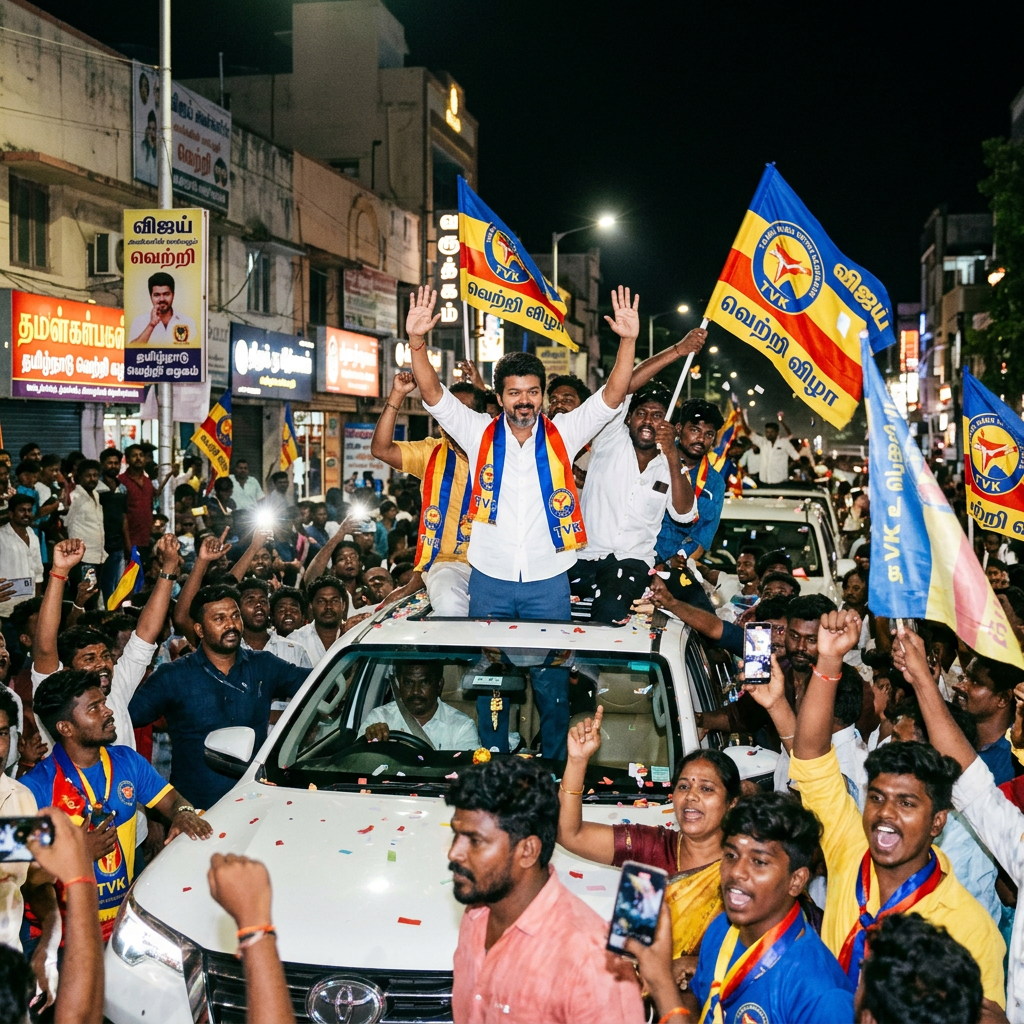
    Man standing on a car waving to crowd with supporters holding flags in a night rally
    Supporters cheer enthusiastically around a leader standing on a car during a lively political rally at night.

    In Andhra Pradesh, there was a political leader who used to send various kinds of gifts door to door in his constituency. On every occasion, he distributed sweets and snacks; during festivals, Raymond clothes for men and silk sarees for women. Every newly married couple received a gold mangalsutra pendant, silk clothes, and silver anklets as gifts. During elections, things went even further. Reports said that a separate truck was used exclusively for distributing cash lavishly. Even then, he lost the last election by a margin of more than 43,000 votes.

    This single example is enough to show that if people truly decide, no amount of inducement can make them surrender their conscience. Even though political parties and leaders are aware of this, they continue making every possible attempt to lure people and buy votes. This does nothing except create disgust among the public toward political leaders. When leaders try to purchase votes, people naturally begin to wonder how much these politicians are earning in politics and how much public money they are looting. Many people feel that all this money being distributed is nothing but wealth stolen from the public itself.

    Recently in Tamil Nadu, the DMK and AIADMK distributed money on a massive scale. Estimates suggest that between ₹20 crore and ₹50 crore was spent in each constituency. Videos showing these parties distributing cash in envelopes ranging from ₹3,000 to ₹10,000 circulated widely on social media, yet the Election Commission hardly paid attention. An NGO called “Arappor Iyakkam” even lodged a complaint with the Election Commission regarding the large-scale cash distribution. Surprisingly, the TVK party of actor Vijay, which reportedly did not distribute money at all, succeeded in getting the highest number of its candidates elected. Along with Chief Minister Stalin, 15 DMK ministers were defeated. In one constituency, a four-time DMK minister lost to an auto driver. Elsewhere, the son of a car driver won. In many constituencies, TVK candidates won with huge majorities, while in at least 20 seats they lost by extremely narrow margins. These developments prove that if elections had been conducted without the influence of money power, a massive Vijay wave would likely have swept Tamil Nadu.

    In recent democratic history, Vijay earned the distinction of winning elections in a state without purchasing votes from people. In fact, Vijay did not campaign extensively across the state. In many places, his party relied on cutouts, holograms, and duplicates for campaigning. Keeping in mind the stampede incident at Karur, he cancelled many rallies. TVK candidates themselves did not campaign aggressively in several constituencies. There were even reports that in some places DMK and AIADMK candidates offered money to TVK candidates and told them to stay home and rest. In many constituencies, TVK candidates did not even go to the counting centres. They were surprised to learn from television broadcasts that they had won.

    Although huge crowds attended Vijay’s meetings, many believed TVK could not succeed because the party lacked organizational machinery, proper local coordination, sufficient funds, and experienced candidates. In many constituencies, campaigns were carried out with nothing more than a small van, two auto-rickshaws, and a few children blowing whistles while walking ahead of the candidates. In several places, students and women voluntarily went door to door campaigning. Small donations were collected for campaign expenses. In some constituencies, there were not even TVK posters. Often, people could not even recognize TVK candidates when they walked on the roads.

    The Tamil Nadu elections should serve as a lesson to parties that rely on money power, muscle power, and manipulation of systems to come to power. It should open the eyes of those who collect funds from corporate companies in the name of electoral bonds, allot Rajya Sabha seats to donors, and even launch companies for them. Illegal funding from corporations forces governments to return favors through project allocations, ignore irregularities in those projects, and encourages politicians who buy votes to indulge in further corruption to recover their election expenses. Through such corrupt practices, entire systems have become rotten. Electoral corruption plays a major role in India’s political and administrative system. Legislatures are increasingly filled with corrupt individuals, corporates, and wealthy elites. Ordinary people are finding it impossible to contest elections. There is little doubt that black money amounting to 20–50 percent of the country’s GDP has become part of the electoral system.

    Officially, the Election Commission says that an MP candidate can spend up to ₹95 lakh and an MLA candidate up to ₹28 lakh. But politicians themselves say that in reality, this amount is not sufficient even for a single day of campaigning. Although the Election Commission officially seized black money worth ₹10,000 crore during the 2024 general elections, estimates suggest that around ₹1.35 lakh crore actually circulated during the elections—far exceeding the expenditure in the 2020 U.S. elections. The Centre for Media Studies had earlier estimated that an average of ₹1,500 is paid as bribes to every voter in the country. It would not be an exaggeration to say that election observers appointed by the Election Commission have become clowns in this entire drama. Instead of preventing electoral malpractice, they appear more focused on deciding which party should win.

    It appears that the people of Tamil Nadu responded against this vicious cycle of corruption and illegality. Out of the 107 MLAs elected from Vijay’s party, 93 were first-time entrants into politics. Half of them were between 40 and 45 years old. This helps explain the direction in which Tamil Nadu’s youth and Dalits are thinking. It also suggests that they are no longer interested in hollow identity slogans and ideological rhetoric. What they really want is simple: systems that function properly. They want efficient public services in return for the taxes they pay. They want government offices—especially revenue departments—to function properly, without power cuts and delays. Instead of political parties constantly raising emotional slogans and provoking caste, religious, or regional divisions to divert public attention, the country can become modern and ideal only when systems are reformed according to the aspirations of the youth.

    Although India ranks 91st among 182 countries in the corruption index, no government appears to be sincerely working to eliminate corruption within systems. Political parties focused solely on winning elections show little interest in institutional reforms. A recent example is the NEET question paper leak scandal. Over the last four years, question paper leaks have occurred in one form or another. Reports stated that question papers for the May 3 entrance examination were sold under the guise of “guess papers” for amounts ranging from ₹10 lakh to ₹25 lakh, and that a mafia network stretching from Rajasthan, Haryana, Maharashtra, and Uttarakhand to Kerala was responsible for the leak.

    Even after it was discovered last year that students who selected the same examination centre in Godhra, Gujarat scored unusually high marks, the examinations were not fully cancelled. Although a committee headed by former ISRO chairman Radhakrishnan was appointed to investigate the 2024 irregularities, its report merely gathered dust and was never implemented. Even after the CBI investigated 144 people who had purchased leaked question papers and submitted its findings to the Supreme Court, the Court concluded that there was no evidence of a nationwide systemic failure.

    Medical education in India costs crores of rupees. Affordable medical colleges are very few. This is one of the reasons behind examination paper leaks. What is the use of leaders delivering moral sermons when they cannot make education and healthcare accessible to ordinary citizens? After all, are these not the very sectors where people could save the most money?

    Meaningful change will not come unless the kind of political awareness shown by the generation that voted for Vijay in Tamil Nadu spreads across the country. Only when a new political consciousness emerges among the youth nationwide, as seen in Tamil Nadu, can real transformation become possible.