Prime Minister Narendra Modi stated in both Houses of Parliament that, due to the war raging in West Asia, the country is facing a situation similar to the crisis that arose during the COVID period, and that everyone should be prepared to face it together. While saying that there is no shortage of gas and oil at present, it is noteworthy that he also described the situation as worrying. He declared that not just India but the entire world is facing an energy crisis. In reality, it is not unknown to him that people have already begun facing difficulties regarding cooking gas. With the sudden rise in demand for induction stoves in the country, their prices have also increased. Those who cannot afford these stoves have already begun either going hungry or depending on others. “You have CNG at home, right… I’ll make four rotis and go…” our domestic worker asked. The sale of gas cylinders in the black market is also taking place. Shops that used to fill gas into 5 kg cylinders have shut down. There are many instances of consumers quarrelling with dealers over cylinders due to them. Prices of tea and food items at roadside stalls have also increased. “No stock” boards are visible at many petrol pumps. People, believing rumors, are lining up at petrol pumps. Since it is unclear how this situation will be in the future, Prime Minister Narendra Modi came before the people. Recalling the experience of some selling oxygen in the black market during COVID, he warned that black marketing will not be tolerated. Modi is also aware that people will not ignore these issues during the Assembly elections in five states. India imports nearly 60 percent of its LPG. Of that, 90 percent must pass through the Strait of Hormuz. According to the latest reports, with great difficulty, we have managed to bring in four ships so far. Modi told Parliament that a large number of Indians have been safely brought back from the Gulf. The benefits that families here used to receive from the remittances sent by them have now stopped. “We know you will face problems at present. But this war is happening so that there will be no problems in the world in the long term,” Israel’s ambassador Reuven Azar said recently in Delhi. Who gave Israel, or its godfather America, the authority to wage war on behalf of all countries in the world?
In fact, as soon as Parliament sessions began, the opposition strongly demanded that Prime Minister Narendra Modi make a statement on the West Asia situation. With insistence on a discussion in Parliament, the House was adjourned several times. Rahul Gandhi made serious allegations that Modi avoided discussion. Finally, Modi made a statement in Parliament explaining the situation, but a discussion on West Asia has still not been conducted. Modi said in his speech that he is speaking with Israel, America, and Iran, and has made it clear that the issue should be resolved diplomatically. However, even as he emphasized diplomacy, global developments indicate parallel backchannel efforts: the Donald Trump administration has reportedly offered a 15-point ceasefire plan to Iran, conveyed through intermediaries from Pakistan, which has also offered to host renewed negotiations between Washington and Tehran. Trump stated for a second consecutive day that the United States is in talks with Iran to end the war, while JD Vance may lead potential negotiations that could take place in Islamabad, with Pakistan acting as a mediator.
Unlike in the past when Trump claimed he had stopped an India–Pakistan war, Modi is not in a position to make such a claim now. India has developed such close ties with America and Israel during Modi’s tenure that it is no longer in a position to criticize those two countries. This could turn into a double-edged sword. The fact that Modi did not criticize the stance of America and Israel at all in his lengthy speech in both Houses of Parliament is evidence of this. Even when an Iranian ship returning after participating in naval exercises conducted by India in the waters off Visakhapatnam was blown up by America in the Indian Ocean, India did not condemn it. At the same time, India is also in a position where it cannot sever its historical ties with Iran. Modi has already spoken twice with Iran’s President Masoud Pezeshkian and expressed sympathy over the attacks. He requested that there be no obstacles to energy supplies.
In fact, when America attacked Iraq in 2003 on the pretext of chemical weapons, the government of Atal Bihari Vajpayee not only strongly condemned it but also introduced a resolution in Parliament. The ruling and opposition parties together unanimously passed that resolution condemning America’s stance. Speaker Manohar Joshi himself introduced the resolution, severely criticizing the attacks by American coalition forces on Iraq. Congress leader Jaipal Reddy described it as a very unusual resolution and explained how dangerously America was acting. He urged India to remain alert to the consequences of America’s toxic conspiracies. BJP leader Vijay Kumar Malhotra, Telugu Desam Parliamentary Party leader Yerran Naidu, Samajwadi Party leader Mulayam Singh Yadav, CPI(M) leader Somnath Chatterjee, along with leaders of all parties, condemned American aggression. Then External Affairs Minister Yashwant Sinha declared that no one could suppress the voice of India, the world’s largest democracy, and that the country was ready to face any challenge.
What changes have occurred between the Vajpayee government and the Modi government? Why are the BJP and its allies now unable to comment clearly on developments in West Asia? Why have they ignored attacks on Venezuela and Iran?
What is surprising is that Pakistan, which has been closer to America than India, is now playing a key role in trying to broker peace between Iran and America. Reports indicate that Pakistan’s Army Chief Field Marshal Munir spoke with US leadership, and Prime Minister Shehbaz Sharif also spoke with Iran’s President Masoud Pezeshkian. It is said that Pakistan, along with Turkey and Egypt, is making serious efforts to stop the war. In fact, Pakistan strongly condemned the joint attacks by America and Israel on the Islamic Republic of Iran in violation of international law. Instead of punishing such Pakistan, why is America allowing it to attempt mediation?
Amid these developments, the Indian government on Wednesday convened an all-party meeting around 5 pm over the ongoing West Asia conflict that began after US–Israeli strikes on Iran on February 28. Defence Minister Rajnath Singh chaired the meeting, with External Affairs Minister S. Jaishankar and Petroleum Minister Hardeep Singh Puri in attendance. The meeting was held inside the Parliament building without the presence of Prime Minister Narendra Modi. Rajya Sabha’s Leader of the Opposition Mallikarjun Kharge objected to the format and demanded a full debate in the House instead of just a briefing. Lok Sabha Leader of Opposition Rahul Gandhi said he would be unable to attend due to a prior engagement in Kerala. This meeting followed Modi’s address in Parliament, where he urged citizens to be prepared for every challenge and warned that the effects of the war could last for a long time. He also stated that the government has constituted seven empowered groups to formulate strategies on fuel, supply chains, fertilizers, and other sectors to mitigate the impact of the Iran–Israel–US conflict.
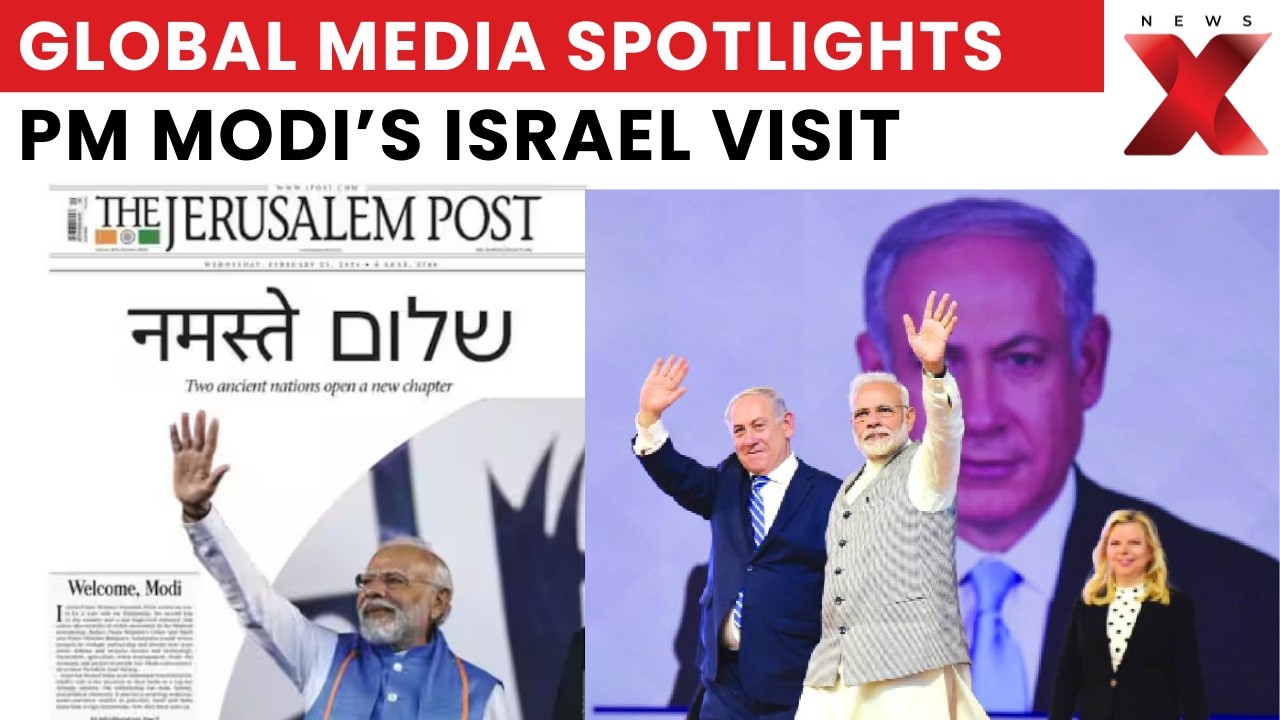
Prime Minister Modi has so far visited 68 countries. He has toured the United States, the United Arab Emirates, Japan, Russia, and many other countries multiple times. It cannot be said that this has not enhanced India’s reputation or brought economic benefits. Large-scale defense and industrial investments and technology transfers have increased. Modi has invited foreign direct investment from many countries, including China, and has entered into strategic agreements with several nations. Modi is the only Indian Prime Minister to have visited the United States nine times and Israel twice. Having recently completed 8,931 days in public office, Modi was praised unanimously by NDA leaders. Home Minister Amit Shah described him as a Prime Minister who upheld India’s self-respect on the global stage. Even so, it remains to be discussed whether India has lost its strategic autonomy under Modi, who has acted differently from the approaches followed during the tenures of Indira Gandhi, Vajpayee, and P.V. Narasimha Rao, or whether it is merely being forced to take a temporary step back.
In any case, at this juncture, the Modi government suddenly bringing forward the women’s reservation bill and the delimitation of constituencies is another surprising development. As initially planned, the latest census should have been completed, the number of constituencies increased, and then women’s reservation implemented. But why was there a need to introduce delimitation and women’s reservation based on the 2011 census? If these bills are passed, the focus of political parties and the public will certainly shift entirely to constituencies and women’s seats. Whether this will bring the expected political advantage to the Modi government in the Assembly elections in five states can only be known once the results are declared.