Tag: poetry

  • In the Light of Bashir Badr’s Memories…

    In the Light of Bashir Badr’s Memories…

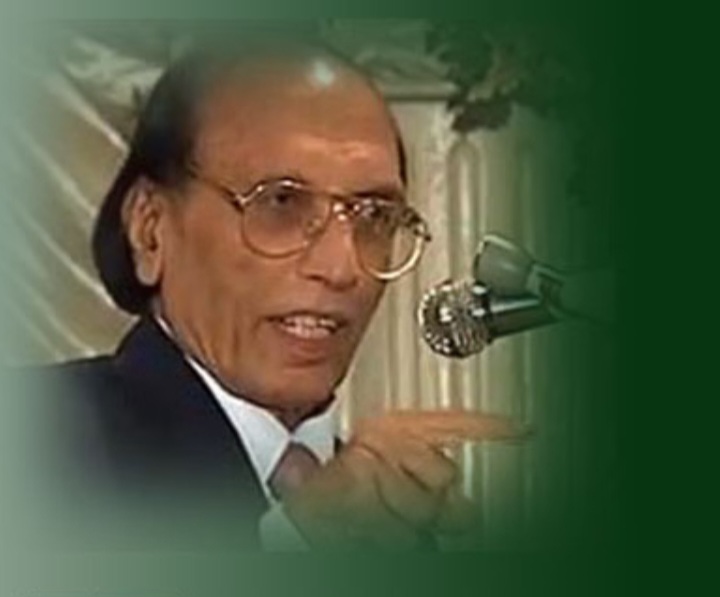
    We spend our entire lives in the light of certain memories. Every time we wonder whether they are just memories or the fluttering echoes of our own life force, the poet Bashir Badr comes to mind. Yes, we must keep the light of memories with us. Otherwise, who knows in which dark alley the evening of life will come to an end? As he once said: “Ujala apni yaadon ka hamare saath rehne do” (Let the light of your memories remain with me).

    On Thursday, the evening of Bashir Badr’s life also came to a close. Passing away at the age of 91, he was one of those poets who served as a bridge between the social evolution of pre- and post-independence India—a true representative of the country’s composite culture. With his demise, it must be said that an entire generation has almost gone extinct. For the past few years, it was known that he lived like a living corpse, having lost his thoughts and memories, in a state where he did not know who he was or what his poems were. True to his own lines: “Jeevan ke safar mein mujhe koi bhi na mila, hamraah to milte hain safar yaad nahi rehta” (I found no one to stand by me in life’s journey; many walk along the path, but once the journey ends, no one remembers those memories), he vanished along with his memories. And just as he had written: “Umr bhar jagne wala pada sota raha…” (The one who stayed awake all his life now lies fast asleep), he has entered an eternal sleep.

    In a way, he was fortunate. He had once lamented that sometimes, it is better not to know what is happening around us: “Koi haath bhi na milayega jo gale miloge” (No one will even shake your hand if you go to embrace them). He had written long ago:

    “If you go with deep affection to embrace someone, no one here will even shake your hand. This is the city of a new generation of people; keep a little distance here even when you meet.”

    Today, it is not just mechanical living, but the destruction of life itself that reigns supreme. How fortunate he was not to know that the very communal hatred he fled from in Meerut to find peace in Bhopal has now spread across the entire country? He had prayed to God to grant him the strength to forget those who had completely forgotten him: “Tumhe jisne dil se bhula diya, use bhoolne ki dua karo” (Pray to forget the one who forgot you from the heart). Perhaps the Almighty took pity on him and blessed him with Alzheimer’s until his death.

    The Scars of Meerut

    Indeed, the mention of Bashir Badr’s name brings back memories of the Meerut communal riots. During the 1987 Meerut riots, miscreants destroyed his house and his writings. Those were the days when Bashir Badr, born in Ayodhya—the birthplace of Lord Rama—was working as a lecturer in Meerut. He had never realized that the Ram Janmabhoomi-Babri Masjid dispute would erupt in his birthplace of Ayodhya, and that very conflict would engulf Meerut, where he lived, like a wildfire. Many Hindus and Muslims lost their lives in these riots that took place in May and June of 1987. However, reports emerged that the PAC (Provincial Armed Constabulary) forces, tasked with maintaining law and order, gunned down many Muslims in the villages of Maliyana and Hashimpura in Meerut and threw them into canals. Human rights leader Balagopal was among those who submitted reports on these atrocities at the time. Nearly three decades later, in October 2018, the Delhi High Court sentenced 16 PAC personnel to life imprisonment for killing 42 people.

    It was about these Meerut riots that Bashir Badr wrote:

    Log toot jaate hain ek ghar banane mein Tum taras nahi khate bastiyan jalane mein (People pour their entire lives into building a single home, but you show no mercy when you burn down entire neighborhoods.)

    Bashir noticed back then that if anyone spoke the truth, they were branded as rebels or anti-social elements. He depicted this reality in his ghazal, “Main bolta hoon to ilzaam hai baghavat ka.” He wrote:

    “If I speak, they accuse me of rebellion; if I remain silent, a deep sense of helplessness and agony gnaws at my conscience, watching injustice happen before my eyes and being unable to do anything.”

    He beautifully captured the plight of an intellectual torn between speaking the truth and enduring it silently in just two lines. He wrote that even the flow of one’s tears finds its own path, just like flowing water.

    A Unique Voice in Urdu Literature

    At the tender age of 12, the horrors and riots of the 1947 Partition left an indelible mark on Bashir’s mind. Writing poetry since the age of seven, Bashir’s ghazals mirrored the changing political, social, and cultural landscape. Transforming from Syed Muhammad Bashir to Bashir Badr (Bashir the Moon), he demonstrated extraordinary talent in mushairas (poetic symposiums) and poetry competitions as a student, winning numerous awards. While he was still a student at Aligarh Muslim University, some of his poems were included in the M.A. (Urdu) syllabus.

    By setting aside the heavy Persian influence on ghazals and choosing a simple language easily understood by the common reader, he earned immense popularity. By introducing Hindi, Braj, and Awadhi dialects, he carved a unique niche for his ghazals among modern Urdu poets. He introduced metaphors that no one had created before. He boldly declared: “My turn is unique in the history of Urdu ghazal. My style itself is the style of the ghazal.” Fluent in Persian, Hindi, Urdu, and English, he was honored with the Sahitya Akademi Award, the Padma Shri, and hundreds of other accolades. His poetry was published in seven volumes.

    Transcending traditional boundaries and refusing to be trapped in the frameworks of ideologies like progressivism or modernism, he beautifully and poetically expressed the daily experiences of the common man. He carried forward the trend in India that Faiz Ahmed Faiz had created in Pakistan. He deserves the credit for making poetry a part of the common vocabulary after Ghalib. Bashir Badr’s poems highlight the humane dimension, sensitivity, and love for freedom inherent in humans. He searched for humanity all his life. There were many occasions when he lamented that the paths they once walked together were asking, “Where is your companion (Humsafar)?” He grieved, “I searched for a human being all my life. I asked God to show me a human being in this vast universe, but I could not find one.”

    In another poem, he expresses his anguish:

    “There are names on houses, and big titles (designations) next to those names. But I searched extensively… and nowhere could I find a ‘human’.”

    The Romantic and the Humanist

    We often long to look at our loved ones to our heart’s content. We want to talk openly, and the desire to meet haunts us. He yearned: “Na jee bhar ke dekha na kuch baat ki, badi aarzoo thi mulaqaat ki” (Neither did I see you to my heart’s content, nor did we talk; I had a great desire to meet). He anxious sighed: “There are many close friends of mine in the city, but they have no news of me, and I do not know their addresses.” He grieved that despite living among hundreds of people, man is becoming lonely.

    Saying “Musafir hain hum bhi musafir ho tum bhi”, Bashir reminded us that we are all travelers and will meet somewhere. He warned those chasing fame: “The peaks of fame are but momentary sights. The branch we have climbed can break at any moment.” He advised finding history in nature: “If you find free time, try to read the writings on water, because every river keeps writing a history (story) of thousands of years through its flow.”

    In his poem “Udne do parindon ko abhi shokh hawa mein”, he wrote for elders who worry unnecessarily about children: “Let the birds (children) fly in this playful wind for a while, because the days of childhood, once gone, never return.”

    There was also a magnificent romantic poet within Bashir Badr. Beautiful lines resonate through his ghazals:

    • “You burn my heart so much, yet you look so beautiful.”
    • “Place your lips upon my eyes when I sleep… only then will I believe that the heart beats even behind closed eyelids.”
    • “Even when buried in a book, a lover sees nothing but the beloved’s face. That book-like face remained right before my eyes, and so, my studies went beautifully.” (Wo chehra kitabi raha saamne. Badi khoobsurat padhayi hui)
    • “Love is like a fragrance (Khushboo) that always walks with us; therefore, no person is ever left truly alone, even in solitude.”
    • “If you are angry, do not hide it. Only then will I get a chance to persuade you.”

    A Vision of Peace and the Game of Politics

    Despite being born amid communal hatred and being deeply affected by it, Bashir Badr desired nothing but friendship between people throughout his life. He said: “The journey of enmity lasts only a step or two, after that (fighting and fighting) you will get tired, and I will get tired too.” He wrote: “Pack hatred (Nafrat) into seven boxes and bury it deep in the earth; today, man desperately needs love (Mohabbat).” He counselled: “Guard the lamps (hopes) carefully in your eyes, because ahead, for a long distance, there will be nothing but darkness.”

    His verses frequently find a place on the lips of politicians.

    Dushmani jam kar karo lekin ye gunjaish rahe, Jab kabhi hum dost hojayen to sharminda na hona (Carry out your enmity with all your might, but leave this much room—if we ever become friends again, we should not feel ashamed to face each other.)

    It is said that when the Simla Agreement was signed between India and Pakistan in 1972, Zulfikar Ali Bhutto reminded Indira Gandhi of this very couplet.

    The same poem was read out in Parliament by Congress President Mallikarjun Kharge on September 6, 2018. The very next day, Prime Minister Narendra Modi also replied to Kharge using Bashir Badr’s poetry, taking a satirical jibe: “Jee bahut chahta hai sach bolne, kya karein hausla nahi hota” (The heart desperately wants to speak the truth, but what to do, the courage falls short).

    After poets pass away, politicians never hesitate to shamelessly use their poetry for political gains. But when poets are alive, these very leaders trample upon their hearts. Bashir Badr did not write these lines without reason:

    “Truth is heavily occupied, from politics to the judiciary. Speak lies; there is still immense love in lies!” (Sach, siyasat se adalat tak bahot masroof hai, jhooth bolo, jhooth mein ab bhi mohabbat hai bahot!)


  • Revamping the Sahitya Akademi: Restoring Credibility and Cultural Vision

    Indian literature today stands at a fascinating and critical crossroads. It is not a moment of decline, as some may fear, but rather a moment of immense possibility. Across the vast linguistic and cultural landscape of India, there exists an extraordinary wealth of writers—working in dozens of languages, representing countless traditions, and expressing a wide spectrum of human experience. Together, they form a living bridge between the classical past and the evolving modern present.

    This continuity becomes clearer when we look at the grand lineage of Indian literary thought. From ancient sages and poets to modern storytellers, each generation has enriched and reinterpreted the cultural inheritance of the land. The foundations were laid by timeless figures such as Kalidasa, Bhavabhuti, Valmiki, and Vyasa. Their works were not merely literary creations but civilizational pillars. Epics like the Ramayana and the Mahabharata shaped ethical imagination, social values, and philosophical inquiry for centuries. Classical Sanskrit literature brought refinement in aesthetics, language, and dramatic expression, creating standards that continue to inspire writers even today.

    This tradition flowed into regional languages with renewed vitality. Poets such as Tulsidas in Hindi and Kamban in Tamil reimagined the epics in ways that resonated with local cultures while preserving universal values. In Tamil literature, Subramania Bharati emerged as a transformative modern voice who infused poetry with nationalist fervor, social reform, and a passionate call for equality, especially women’s emancipation. His works combined lyrical beauty with revolutionary thought, making literature a vehicle for both cultural pride and progressive change.

    In Telugu literature, alongside the classical brilliance of the Kavitrayam and Pothana, modern writers like Gurajada Apparao played a pioneering role in shaping contemporary literary sensibilities. His celebrated work Kanyasulkam not only introduced realism and social critique into Telugu drama but also challenged regressive social practices such as dowry and caste discrimination. Gurajada’s emphasis on using spoken language (vyavaharika bhasha) marked a significant shift, making literature more accessible and socially relevant.

    These writers did not merely translate or imitate earlier traditions—they transformed, localized, and democratized literature, bringing it closer to the lived realities of the people.

    Alongside them, voices like Kabir emerged as powerful agents of social and spiritual questioning. Rejecting rigid orthodoxy, Kabir’s poetry cut across religious and social boundaries, emphasizing inner truth and human unity. This phase of Indian literature demonstrated that it could be both deeply rooted and radically questioning at the same time.

    As India moved into the modern era, literature began to engage more directly with social realities. Writers like Premchand brought the lives of ordinary people into the center of literary discourse. His works exposed poverty, caste oppression, and moral dilemmas with unprecedented realism and empathy, marking a shift towards socially conscious writing. Literary movements further expanded the expressive possibilities of Indian literature. The Chhayavad movement in Hindi poetry, for instance, introduced a new lyrical sensibility, blending romanticism with introspection and individual expression. Similarly, progressive and modernist movements across languages challenged established norms and opened new avenues for experimentation.

    What is remarkable is that all these writers and movements, despite their differences in time, language, and ideology, contributed to a shared literary civilization. They enriched Indian literature not by conforming to a single viewpoint, but by expanding its horizons. Each added a new dimension—whether it was spiritual insight, aesthetic excellence, social critique, or philosophical depth.

    At the heart of this literary tradition lies a deep engagement with human values—love, devotion, justice, dignity, equality, and the search for meaning. Writers have confronted complex issues such as caste oppression, gender inequality, cultural erosion, and social exploitation. They have not only documented society but have challenged it, questioned it, and, at times, reimagined it.

    In earlier decades, it was perhaps easier—or at least more common—to categorize writers along ideological lines, broadly labelling them as “left” or “right.” Such classifications may have had some contextual relevance during specific political or intellectual movements. However, in today’s literary landscape, these divisions appear increasingly inadequate. They oversimplify the richness of literary expression and reduce complex creative minds to narrow labels.

    A writer cannot be fully understood through the prism of ideology alone. A novelist who critiques tradition in one work may celebrate it in another. A poet who questions authority may simultaneously uphold cultural continuity. Literature is not bound by rigid binaries; it thrives in ambiguity, contradiction, and evolution. To judge writers primarily by their perceived ideological leanings is to diminish the very essence of their craft.

    This concern becomes particularly significant when we turn to contemporary debates around literary institutions and awards. The Sahitya Akademi, India’s premier literary body, continues to play a crucial role in recognizing and promoting literary excellence. However, recent discussions have raised important questions about its processes and decisions.

    The announcement of the annual awards once again triggered debate. The selection of writer Mamta Kalia brought both appreciation and criticism. Some observers argued that the specific work recognized was comparatively weaker, raising a broader concern that in recent years, senior writers have sometimes been honoured for works that may not represent their strongest contributions. This has led to a fundamental question: should awards be given for a particular work, or should they recognize a writer’s overall literary contribution?

    At the same time, concerns have been raised about the role of ideology in shaping decisions. It is often suggested that ideological leanings influence institutional functioning, and that selection committees may not always be entirely neutral.

    Procedural questions have also emerged. Changes in the award process, delays in announcements, administrative transitions within the Akademi, and the involvement of the Ministry have all contributed to a sense of uncertainty. There have been questions about whether proper procedures were consistently followed and whether transparency has been adequately maintained.

    These concerns cannot be dismissed outright. Institutional credibility depends on clarity, fairness, and trust. At the same time, it is important to recognize a deeper issue within these debates. Instead of focusing primarily on literary merit, discussions often shift quickly toward ideological suspicion. Writers and works are evaluated not only on their artistic value but also through the lens of perceived affiliations.

    This tendency reflects the very limitation that contemporary literary discourse must overcome. A writer like Mamta Kalia, with a long and respected career, cannot be reduced to a single work or judged solely through ideological assumptions. Similarly, any award decision should be examined first and foremost on the basis of literary quality.

    The more meaningful questions are: Does the work demonstrate depth, originality, and insight? Does it engage meaningfully with human experience? Does it contribute to the evolving tradition of literature? These are the criteria that must guide literary evaluation.

    In this context, the idea of bringing Indian writers into a shared national stream gains significance. This does not imply erasing differences or enforcing uniformity. On the contrary, it calls for a collective recognition that all these diverse voices—regardless of language, region, or viewpoint—are part of a common cultural heritage.

    Such a vision requires strong and thoughtful institutional support. The Sahitya Akademi must evolve beyond being merely an awarding body into a vibrant, inclusive forum that brings together writers who think beyond rigid ideological boundaries. It should encourage dialogue across languages and regions, expand translation initiatives, mentor emerging writers, and ensure that recognition is based purely on merit.

    At the same time, neutrality should not be mistaken for the absence of values. Literary institutions must nurture a broad and inclusive cultural consciousness—one that respects India’s civilizational depth, cultural diversity, and shared heritage. This perspective does not impose uniformity; rather, it celebrates plurality within a unifying framework.

    If guided by such a vision, Indian literature has the potential to achieve even greater global relevance. Its philosophical depth, ethical concerns, and aesthetic richness offer insights that resonate far beyond national boundaries. The idea of India as a cultural and intellectual guide to the world can find powerful expression through its literary traditions.

    Equally important is the need to elevate the public status of literature within the country. Literary achievements should be recognized as national achievements. Writers should be seen not as isolated individuals but as contributors to a larger cultural and intellectual tradition.

    However, in pursuing unity, one must not lose sight of diversity. The strength of Indian literature lies precisely in its plurality—in its ability to accommodate multiple perspectives within a shared cultural space.

    The way forward is not to erase differences but to transcend divisive labels. It is to move beyond ideological reductionism and return to the core values of literary engagement—depth, authenticity, creativity, and human insight.

    By doing so, we affirm Indian literature as a living, evolving tradition—one that continues to question, inspire, and connect. In that aspiration lies the true realization of India as a literary and cultural force with global significance.

  • The Sharpened Voice in the People’s Throat – Vairamuthu

    At a poetry festival held in 1975 at Pachaiyappa’s College in Chennai, the then Chief Minister M. Karunanidhi came and read poetry. At the same festival, a 23-year-old young man read his poems and said that from the age of 12, Karunanidhi had been his inspiration in poetry. Listening to those poems and the young man’s words, Karunanidhi was deeply impressed and suggested, “Why don’t you write for Kunkumam magazine?” From then on, a friendship developed between Karunanidhi and that young man. Whether Karunanidhi won or lost in politics, the friendship continued unchanged. Karunanidhi would even attend small programs for his sake. Out of the 37 books written by that young man, Karunanidhi himself released 18 of them. That young man is none other than Vairamuthu, who was selected for the Jnanpith Award, which is considered as the highest literary award in India. on Saturday. After C. Narayana Reddy, Vairamuthu is another writer who has received the Jnanpith Award as both a film lyricist and a literary figure.

    The Jnanpith Award is India’s highest literary honour, often called the “Nobel Prize of Indian literature,” awarded annually for outstanding contributions to literature by Indian citizens. It includes a ₹11 lakh cash prize, a citation, and a bronze Saraswati idol. Vairamuthu was selected for the 2025 (59th) award, becoming the third Tamil writer honoured

    Seventy-three-year-old Vairamuthu published his first poetry collection when he was just 19 years old. While he was still a student, that poetry collection became a textbook. Born in Mettur in Theni district, Vairamuthu, who belonged to the Kshatriya community, continued his education while doing agriculture. His poems express rural life, human relationships, the environment, and the dangers arising from globalization. Social problems such as poverty, a mother’s love, child marriages, and lack of freedom appear throughout his poetry. He says, “My poetry is the voice of those who remain silent.” Ancient Sangam literature has greatly influenced him. Blending ancient literary words with modern music is his specialty.

    After reading Vairamuthu’s poems, Bharathiraja gave him the opportunity to write songs for films in 1980, when he was 27 years old. His first song was sung by S. P. Balasubrahmanyam. From then on, he never looked back. Over the past 46 years, he has written about 7,500 songs. Directors and composers such as K. Balachander, A. R. Rahman, Ilaiyaraaja, and Mani Ratnam made his songs resonate on people’s lips. Singers like S. P. Balasubrahmanyam, Shankar Mahadevan, K. S. Chithra, and P. Unnikrishnan gave melodic beauty to his poetry. The song “Chinna Chinna Aasai” that he wrote for the Tamil film Roja later became a hit in many languages including Telugu. Not only songs, he also wrote screenplays and dialogues. At the same time, he never stopped writing poetry.

    Vairamuthu belonged to one of the 14 villages submerged because of the Vaigai dam; his novel Kallikkattu Ithikasam, which depicts the tears, blood, and suffering of the displaced people affected by modernization, received the Sahitya Akademi Award. Another novel, Karuvachi Kaviyam, about the life of a rural woman crushed by patriarchy, also became famous. Along with Padma Shri and Padma Bhushan, he has received many honors. As a lyricist, he has won the National Award seven times. Just as Viswanatha Satyanarayana is recognized as “Kavisamrat” in Telugu, Vairamuthu received the title “Kavisamrat” in Tamil. This title was presented when Atal Bihari Vajpayee was the Prime Minister.

    No bird
    builds a nest
    and rents it out.
    No animal
    steals land
    that it does not need.
    O human, observe—
    the life that lives together
    without collapsing
    still exists in the forest,
    not in human society.

    Through such lines, Vairamuthu feels that the forest and the animals living there are nobler than humans.

    Even if you leave,
    your shadow
    still remains the same—
    waiting
    in the depths of my heart.

    In these lines, Vairamuthu continues searching for the woman he loved.

    I was like the distant sky;
    with your scarf
    you pulled me close.
    How did you capture
    the twenty-five years of my life
    in a single moment?

    He asks her.

    If life suddenly falls apart,
    where can I find her again?
    In the east and the west
    I search for her in vain.

    Like a tiny drop of dew
    she sits silently
    upon a lonely blade of green grass.

    As memories slip away
    like rivers unseen,
    the days themselves
    melt away
    in meaningless silence.

    He writes that humanity cannot flourish in a society that does not respect womanhood.

    Vairamuthu loves trees and nature deeply. He writes:
    “A tree is a painting drawn by creation, an exclamation mark standing on the earth, branches—hands rising to touch the stars in the sky.”

    And he says:
    “Alas, human! If you truly want to become human, come to the tree! Within every human there is a Bodhi tree.”

    In the poem Pilupu (“The Call”), a mother tells her child:
    “Even if a star sleeps among the clouds,
    even if the wind sleeps among the leaves,
    my eyes will stay awake all night for you.”

    Though Vairamuthu writes songs for films, he does not wait for them to appear in movies. He keeps writing continuously. They eventually flow into films as songs. In an interview he once said:
    “I keep writing pallavis day and night. What I give is actually the eleventh pallavi. The first ten pallavis fall into the dustbin of my mind. I clean the dirt from gold before giving it to directors. I can feed today the hunger that will come in the future.”

    I am privileged to be part of the Jnanpith jury panel led by noted writer Pratibha Ray, along with Madhav Kaushik, K. Srinivasa Rao, Damodar Mauzo, Prafulla Shiledar, Keshubhai Desai, and Janaki Prasad Sharma. Writers from across the country were considered for the award.. This time, many great writers from across the country were considered for the Jnanpith Award. However, in the last six decades, only two writers from Tamil Nadu—Akilan in 1975 and Jayakanthan in 2002—received this award. That means no writer from Tamil Nadu had received the Jnanpith in the past 24 years. Along with this consideration, Vairamuthu’s literary brilliance led to his selection.

    “My father M. Karunanidhi would have embraced Vairamuthu and celebrated with joy if he were alive today. I now stand in his place,” announced M. K. Stalin.

    Unfortunately, there have also been sexual harassment allegations made against Vairamuthu way back in 2018. There is no known criminal conviction or active police investigation. He has strongly denied these allegations and stated that they are false and motivated. He has said that if the allegations are true, those concerned can file a case and he is ready to face the court. Asking people not to judge him prematurely, he remarked that no one should decide whether he is a good or bad person until the court delivers its verdict, and that he will bow to the court’s decision.