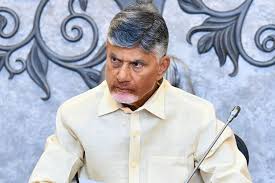
India’s fiscal federalism is facing a moment of quiet but consequential strain. Chief Minister N. Chandrababu Naidu’s remarks on tax devolution have once again brought to the surface a long-simmering grievance among better-performing states: that they contribute disproportionately to the Union’s tax kitty but receive a shrinking share in return. The data broadly supports this sentiment. A small group of economically advanced states account for the bulk of direct tax and GST collections, while a significant share of tax devolution flows to poorer, high-population states. However, for the country to prosper, all its regions have to prosper, Naidu said in an interview on Sunday with PTI Videos, adding that the states are allies, not enemies.
Yet, framing this issue simply as “performers versus non-performers” risks obscuring a deeper structural problem. The real question is not whether redistribution is justified—it is—but whether India’s current system of fiscal transfers is equipped to handle the vastly different development trajectories its states have chosen.
Finance Commissions are constitutionally mandated to address horizontal imbalances among states. Inevitably, this means that poorer states such as Uttar Pradesh, Bihar, and Madhya Pradesh receive a larger share of devolved taxes.Poorer states like UP, Bihar and MP received 36% of the tax meant for sharing with the states. Against this, these three states contributed only 5% of the total direct tax and Central GST collected by the Centre during that period. This is neither accidental nor malicious; it reflects the principle that citizens should have access to comparable public services regardless of where they live. From this perspective, redistribution is not a penalty on success but a cornerstone of national unity.
However, this logic begins to fray when redistribution appears perpetual and weakly linked to outcomes. Southern and western states that invested early in education, health, and population control now find themselves disadvantaged by formulae that give significant weight to population size and income distance. Their success in managing fertility and building human capital—once seen as national assets—now translates into lower relative shares. This creates a perverse incentive structure and a growing political resentment.
Complicating matters further is the Centre’s increasing reliance on cesses and surcharges, which lie outside the divisible pool. While the official share of states stands at 41 per cent of Union taxes, the effective share is considerably lower. States are being asked to shoulder expanding responsibilities—especially in health, education, and infrastructure—without commensurate fiscal space. It is unsurprising, then, that demands are growing to raise the states’ share to 50 per cent.
Yet, linking devolution directly to tax contribution alone would be equally problematic. Tax collections reflect not just effort but historical advantages, agglomeration effects, and the location of corporate headquarters. A purely contribution-based system would risk locking poorer states into a low-development trap, undermining both equity and long-term national growth.
The way forward lies in recognising that India is attempting to achieve too many objectives with a single instrument. Tax devolution is being asked to equalise, incentivise, and reward all at once—and predictably, it satisfies none fully.
A more mature framework would separate these goals. A core equalisation transfer should continue to ensure minimum fiscal capacity for all states. Alongside this, a distinct performance-oriented component could reward states for expanding the national economic pie—through growth, tax effort, infrastructure creation, demographic management, and human capital outcomes. Such a structure would acknowledge both need and contribution without pitting one against the other.
Equally important is addressing sectoral imbalances. States like Kerala, which prioritised social development, now face infrastructure constraints. Others, like Gujarat, built strong physical infrastructure but lag in social indicators. Poorer states struggle on both fronts. A dedicated, outcome-linked national infrastructure fund—outside routine tax devolution—could help bridge these gaps without distorting the principles of redistribution.
India’s diversity in development paths is a strength, not a flaw. But managing that diversity requires fiscal institutions that are transparent, differentiated, and forward-looking. Unless redistribution is paired with clear incentives and a fair sharing of resources, political “heartburn” will only intensify.
The choice before India is not between rewarding success and supporting the vulnerable. It is about designing a federal compact that does both—openly, credibly, and sustainably.


 akrishnarao