Tag: Regional Parties

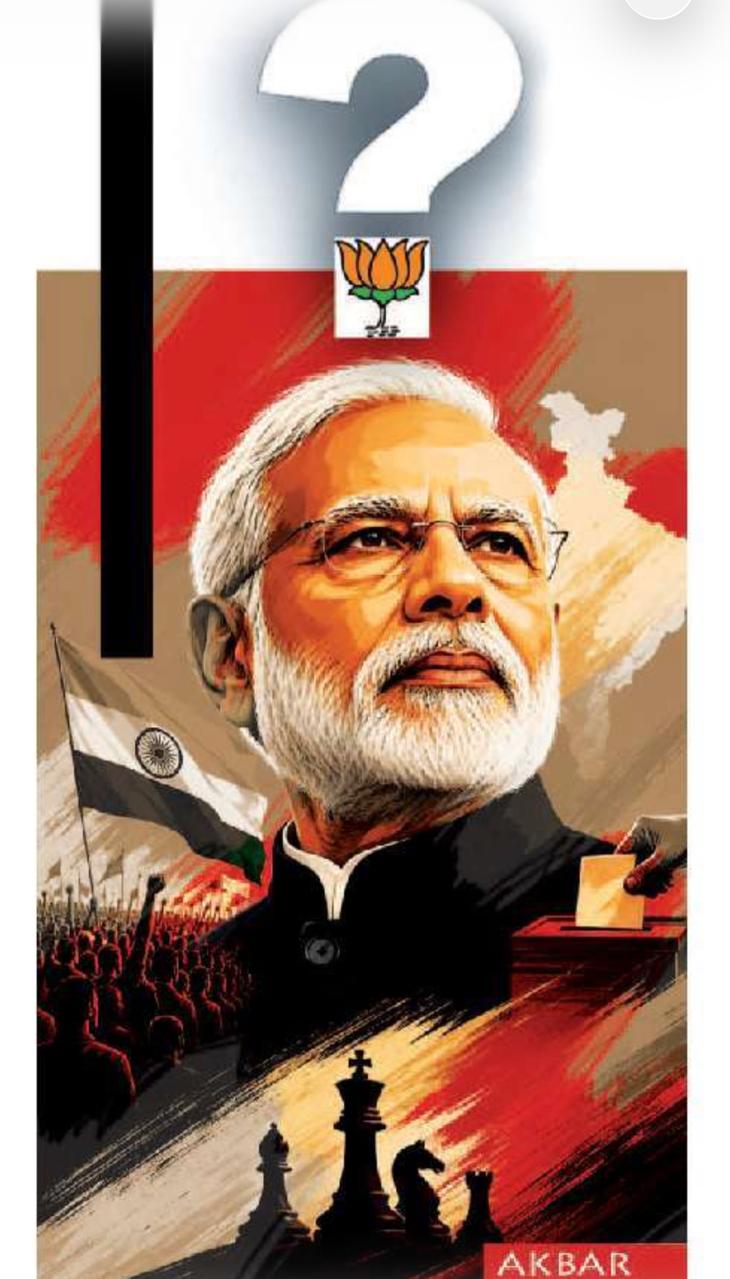
  • As Regional Parties Fade, a BJP–Congress Contest Looms

    A few days ago, Prime Minister Narendra Modi remarked that “the Congress is a parasite; it survives by depending on other parties and abandons them once its needs are fulfilled.” He may have made this comment keeping in mind the Congress party’s decision in Tamil Nadu to distance itself from the DMK and join hands with actor Vijay’s TVK. However, judging by the developments of the past few days, it has become impossible to predict how many parties will remain in the INDIA alliance or how many parties will remain in the National Democratic Alliance led by Modi by the time of the 2029 elections. Several regional parties are facing an existential test and must decide their future course, though they do not have much time to do so.

    In this context, the question arises: will the next general election witness a direct contest between the BJP and the Congress? The Congress does not appear particularly worried about regional parties splitting or aligning with the BJP. In fact, many regional parties have occupied the political space that once belonged to the Congress. The Congress also does not seem to be taking very seriously the BJP’s war-footing strategies to increase its strength in both Houses of Parliament. It appears that the Congress is moving with the objective of confronting the BJP directly by 2029. In particular, the party seems to be focusing on how to mobilize the youth.

    The Congress rarely appears to work according to a clear and consistent agenda. Until recently, it focused on caste census, social justice, and reservations. Now, observing growing unrest among the youth, it has begun efforts to attract them. It organized a massive rally titled “Chhatron Ki Goonj” in Kota, Rajasthan, where Rahul Gandhi addressed thousands of young men and women. The growing influence of the “Cockroach Janata Party” may also have strengthened Rahul Gandhi’s resolve to appeal to young voters. Several studies after the 2024 Lok Sabha elections indicated that in many states, women, youth, and especially first-time voters favored the BJP. Will this situation change by 2029? Can the Congress regain its lost support among youth and women? This question is crucial to the party’s future.

    At the same time, the BJP’s intensive efforts to increase its strength in both the Lok Sabha and Rajya Sabha and to bring many parties to its side cannot be dismissed lightly. According to an RSS leader, the Hindutva agenda remains the BJP’s highest priority. Only by remaining in power not just in 2029 but for several more decades can that agenda be fully implemented. As part of this objective, the BJP has focused on many regional parties across the country. It is rapidly moving to absorb parties such as JD(U), Trinamool Congress, Shiv Sena, and NCP. In Tamil Nadu, the DMK; in Jharkhand, the JMM; in Telangana, the BRS; and in Delhi, the AAP are now facing a difficult test of deciding their future direction. The BJP’s strategy is to bring various parties to its side through persuasion or pressure in order to fulfill its broader agenda.

    To ensure that the 2024 election results are not repeated in 2029 and that it does not again face the risk of losing its majority, the BJP is taking rapid measures. Delimitation and women’s reservation are among the most important of these. It hardly needs to be said that the Modi government’s approach to constituency delimitation would be favorable to the BJP. The party appears determined to ensure that neither the Congress nor regional parties outside the NDA gain significant advantage from the exercise. The BJP is attempting to secure more seats in Uttar Pradesh, Maharashtra, and West Bengal, where it fell short of expectations in the last elections, and to gain additional seats in Bihar, Jharkhand, Haryana, Rajasthan, and other states through changes in geographical and demographic arrangements.

    The consequences of delimitation in Assam and Jammu and Kashmir are already known. In Assam, Muslim-majority constituencies in Lower Assam and the Barak Valley were divided, and the fragmented areas were merged with constituencies dominated by local populations. This caused severe damage to the Congress and the AIUDF. The increase in seats reserved for Scheduled Tribes and Scheduled Castes benefited the BJP’s regional allies. Similarly, in Jammu and Kashmir, the number of Hindu-majority seats in Jammu increased relative to Muslim-majority seats in the Kashmir Valley. Furthermore, increasing the number of seats helps counter anti-incumbency against sitting legislators. By allocating newly created seats to youth, women, and newcomers, the BJP aims to maximize its majority.

    It is difficult to determine to what extent the Congress understands the BJP’s comprehensive strategies. The Congress campaign against the BJP remains largely centered on Narendra Modi. Instead of preparing itself ideologically to confront the growing influence of the RSS across the country, it raises unproductive debates such as whether the organization possesses formal registration. This creates doubts about whether the Congress truly understands the BJP’s strategies.

    Out of India’s 4,123 Assembly seats, the Congress holds only 662. The party failed to win even a single Assembly seat in five states. In states such as Uttar Pradesh, Bihar, Gujarat, and Odisha, it won less than ten percent of the seats. In the 2024 general elections, the BJP and the Congress directly contested 286 constituencies; the BJP won 180 and the Congress 83. Gaurav Gogoi, who serves as Deputy Leader in the Lok Sabha and PCC president, recently suffered a crushing defeat in the Assam Assembly elections. Another Lok Sabha member and two-time Chief Minister, V. Vaithilingam, the Puducherry PCC president, even lost his deposit in the previous Assembly elections.

    Why is the Congress unable to convert anti-incumbency sentiment into political gains? Until it answers this question, no number of rallies or dramatic displays will strengthen the party. Regional parties face the same problem, and many of them are also splitting. Rather than merely blaming the BJP, the leaders of these parties must honestly examine why these divisions are occurring and why people are turning against them. What is the present condition of the Left parties, which were once strong ideological forces?

    The reality is that regional strongholds based solely on a single leader’s charisma or caste equations are collapsing rapidly. It is becoming clear that political ambitions unsupported by ideology cannot succeed indefinitely. This explains why the futures of Mamata Banerjee, Sharad Pawar, Uddhav Thackeray, Arvind Kejriwal, K. Chandrashekar Rao, Naveen Patnaik, and Jagan Mohan Reddy appear uncertain. None of the regional giants currently enjoys overwhelming influence. The conduct of successors in some parties also appears unpromising. As one analyst observed, these are not ordinary developments but indications of deep structural changes taking place within India’s political system.

    Although the BJP revolves around Modi, it is not a Modi-dependent party. Numerous powerful forces behind the BJP ensure that its strategies, expansion, and actions align with long-term objectives. Both the RSS and the BJP understand that Modi is merely an important instrument in achieving these goals.

    The same cannot be said about the Congress. Under its dynastic leadership, there is little evidence that Rahul Gandhi is attempting to build a strong organizational and ideological structure that extends to every village and transforms the Congress into an overwhelmingly popular mass party. It has been demonstrated repeatedly that power cannot be attained merely through the opponent’s weaknesses, mistakes, or anti-incumbency.

    There is little reason to fear that India’s political system is collapsing. In reality, it is undergoing a phase of reorganization. As regional voices weaken, it is increasingly evident that future elections may witness a principal contest between two national poles. Regional forces struggling for survival may inevitably gravitate toward one of these poles. Delimitation and the absorption of regional forces may naturally increase the Congress’s seat tally to some extent. However, if it wishes to create a political wave and capture power, politics must once again be shaped by influential national ideologies rather than individual leaders.
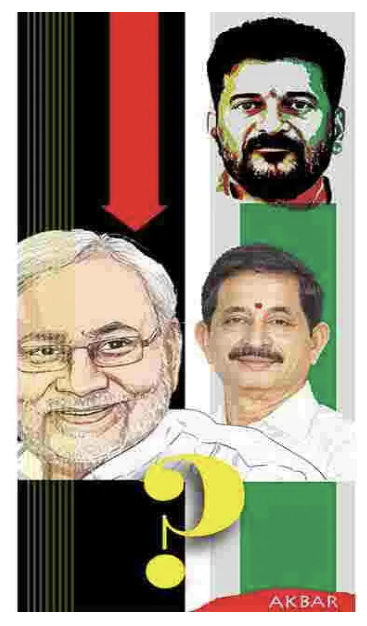
  • What does Nitish’s exit indicate?

    This is a story from two decades ago. In January 2006, an unprecedented Congress Party plenary was held at the Balayogi Auditorium in Hyderabad. Chief Minister Y. S. Rajasekhara Reddy and his associate K. V. P. Ramachandra Rao worked day and night to make the plenary a grand success. Congress president Sonia Gandhi was delighted after seeing the arrangements made in Hyderabad. After that, speculation arose that KVP would surely get a Rajya Sabha seat in the upcoming elections. When the time for selecting candidates approached, one day I asked AICC general secretary Digvijaya Singh, and he said that KVP had a good chance of getting the Rajya Sabha seat. I wrote that as a news report.

    The next day, when the media met Digvijaya Singh, a colleague asked him, “A report has come that KVP will be given a Rajya Sabha seat. Is he the one getting it?” Digvijaya Singh laughed and asked, “Who told you that? By the way, who is KVP?” Within a single day the mood of the Congress high command had changed. Some of YSR’s rivals in Delhi had told Sonia all sorts of things and changed her mind. In those days the Congress was in power in about 16 states. For every small matter YSR had to explain himself to Delhi. He had to wait another two years before his close confidant could get a Rajya Sabha seat.

    Compared with YSR’s situation then, the present Telangana Chief Minister Revanth Reddy can be described as extremely powerful. YSR could not get a Rajya Sabha seat immediately for his right-hand man even after asking, but Revanth succeeded in securing one for Vem Narender Reddy. Though YSR had been a loyal Congress leader for decades, even when he wanted his brother Y. S. Vivekananda Reddy to resign so that his son Y. S. Jagan Mohan Reddy could get the Kadapa seat, the high command did not agree. It took YSR many years to win over the Congress leadership. After his death, the high command did not hesitate to file cases against his son.

    But what is the secret behind Revanth Reddy’s success? Within four years of joining the Congress he became PCC president, and within another four years he became Chief Minister. Not only in the Rajya Sabha seat issue but in many matters he has been able to make the high command accept his word.

    Just as the unanimous election of Vem Narender Reddy to the Rajya Sabha from Telangana carries political significance, the decision of Bihar Chief Minister Nitish Kumar to contest for the Rajya Sabha also has equal importance. One development reflects the changed culture of power within the Congress, while the other reflects the expanding political dominance of the Bharatiya Janata Party across the country.

    Even leaders within his party are still shocked that Nitish Kumar, who served as Chief Minister of Bihar for nearly two decades and played a key role in the NDA’s victories, gave up the post. In internal meetings of the Janata Dal (United), several leaders questioned his decision. Party workers vandalized the JD(U) office outside Nitish Kumar’s residence at 1 Anne Marg. They raised slogans saying unknown conspirators were behind his resignation. Until recently no one imagined that Nitish’s son Nishant would enter politics. Moreover, Nitish himself had strongly criticized dynastic politics on several occasions. Even though he says he is voluntarily going to the Rajya Sabha, anyone observing the present course of national politics understands that his resignation as Chief Minister was not a natural development.

    In fact, it is believed that the BJP had long been writing the script for Nitish to leave Patna and move to Delhi. Reports say that after Union Home Minister Amit Shah’s three-day tour of the Seemanchal region in the last week of February and his discussions with party leaders, the decision was finalized. Through intermediaries Nitish was reportedly told that he had no option but to step aside. The BJP, which has already consolidated its hold over the Hindi belt, has long been strategizing to completely capture Bihar as well. Many political observers believe that this development happened because the BJP has begun moving its pieces to ideologically take control of Bihar, thereby tightening its grip over power politics across northern India.

    With about 18 percent Muslims and a border with Bangladesh, it would not be surprising if the BJP wanted to turn Bihar into a laboratory for Hindutva and nationalism. Some have even described this development as a bloodless coup. The social forces unleashed in Bihar through Mandal politics had brought leaders like Lalu Prasad Yadav and Nitish Kumar—disciples of socialist leader Karpoori Thakur—to prominence. They had given a sense of dignity to backward classes and emerged as forces that could not be ignored.

    There is historical significance in the BJP coming to power in the same Bihar where Lalu Prasad Yadav had once stopped L. K. Advani’s Ram Rath Yatra. Analysts say that Nitish Kumar—who created the conditions that eventually allowed the BJP to come to power there—now giving up his position for the party could herald major political developments across the country.

    The Janata Dal, which emerged in 1988 under the leadership of V. P. Singh against the Congress, has a long history. In 1989 it played a key role in the National Front government in which the Telugu Desam Party was a partner. In 1991 it emerged as the third largest party. In the United Front government that came to power in Delhi after P. V. Narasimha Rao, the Janata Dal was again a crucial participant. Later it split into several factions but survived in the form of parties such as Biju Janata Dal in Odisha, Janata Dal (Secular) in Karnataka, Rashtriya Janata Dal in Bihar, and Janata Dal (United).

    But now, with JD(U) handing over power in Bihar to the BJP, political observers believe this marks the final chapter in the history of the Janata Dal. The political strategies used by the BJP to weaken Janata Dal factions in Odisha and Karnataka are already recorded in history. Lalu Prasad Yadav, who was once part of the old Janata Dal, has retired from active politics after getting entangled in corruption cases. Ram Vilas Paswan has passed away. The final phase of the Janata Dal (United) under Nitish’s leadership has now begun.

    The Bihar elections held last year were fought entirely under Nitish’s leadership. Though the BJP initially hesitated to project him as the chief ministerial candidate, it later had to compromise. They entered the election with the slogan “Pachchis se Tees (from 2025 to 2030), once again Nitish.” Yet, even with four years remaining in the term, Nitish’s rule has ended within just four months. Amit Shah himself stood beside him when he filed his nomination for the Rajya Sabha.

    In fact, though the BJP won more seats than JD(U) in both the 2020 and 2025 elections, it continued to keep Nitish as Chief Minister out of political necessity. If it has now decided to assume power itself, it means Nitish must have been completely neutralized. His attempts to touch Narendra Modi’s feet during the NDA meeting in 2024 and again at the Patna airport after his swearing-in are cited as examples. His ill health also added to his weakness.

    Nitish Kumar, who broke away from Lalu Prasad and built his own party, is not an ordinary politician. In the early days he conducted “Janata Darbars” and personally resolved people’s grievances. Brick by brick he brought extremely backward non-Yadav groups closer to him. He earned the title “Sushasan Babu.” He also gained strong support from women. During his 20-year rule he brought at least some change to Bihar. Although in the last elections the JD(U) won only four seats fewer than the BJP, the latter seems to have gained confidence that it can take control of the party and run politics in Bihar on its own, and also attract all the social groups that Nitish had mobilized.

    After the NDA’s victory in Maharashtra in 2024, the BJP sidelined Eknath Shinde, the leader of the Shiv Sena breakaway faction who had been Chief Minister until then, and installed its own leader as Chief Minister. Though a similar formula was applied in Bihar, Nitish Kumar was allowed to continue as Chief Minister for four months. In the BJP, touching feet or excessive praise does not change the party’s assessment of individuals.

    Above all, the BJP’s determination to establish a two-party system in the country has now materialized in Bihar. Just as the BJP is confronting the Samajwadi Party in Uttar Pradesh and the Trinamool Congress in West Bengal, it is moving in the same direction across the country. Preparing for the simultaneous elections expected in 2029 in a presidential-style contest, Narendra Modi is positioning himself as an unbeatable leader on one side.

    But whom are the opposition parties preparing to face him? And in this battle, what will be the future of other regional party leaders?