Tag: RSS

  • Mid-Course Correction: Why Dharmendra Pradhan’s Exit is a Wake-Up Call

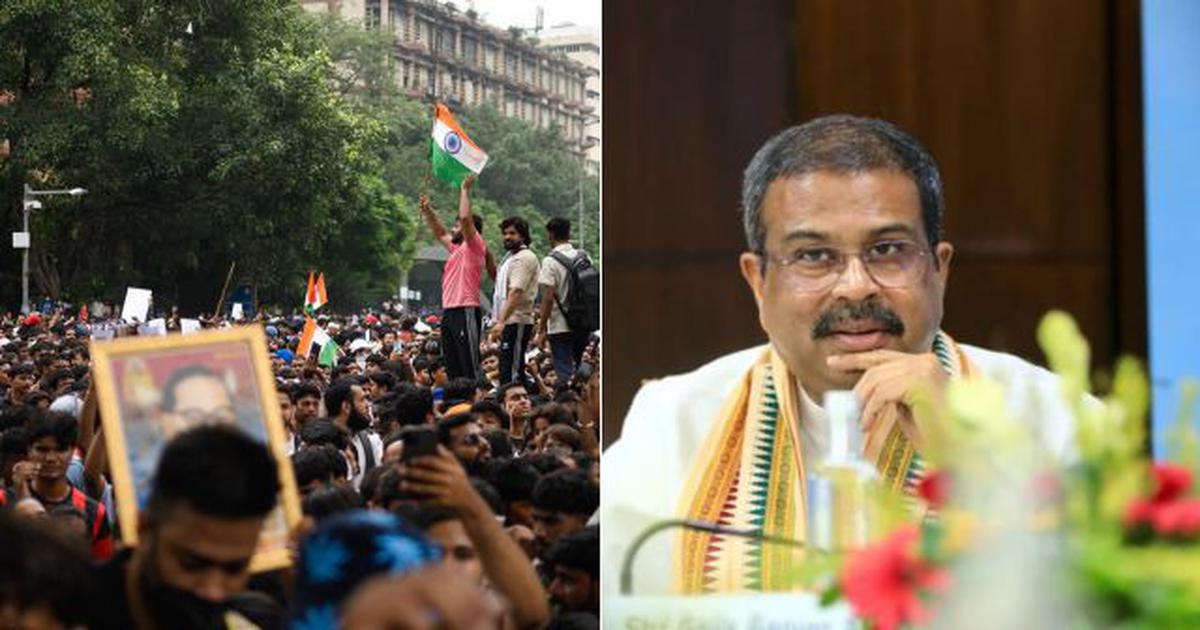
    ‘Today’s youth have not strayed from the right path. They are not acting without direction. One should engage in discussion with them, but not control them. They ask for reasons, not rules. They seek explanations. Curiosity is their trait. Rebellion is their nature’.. These words were spoken not by some Communist leader, but by Rashtriya Swayamsevak Sangh chief Mohan Bhagwat. On July 24, as he was speaking these words at the Vishwa Mangalya Sabha held at the Ambedkar International Centre.. just one kilometer away at Jantar Mantar, an aggrieved group of youth was expressing intense anger. Exactly 24 hours later, Union Education Minister Dharmendra Pradhan resigned from his post. ‘Though delayed, a good thing was done in the end..’ commented 92-year-old Murli Manohar Joshi. A day before Bhagwat made his statement, that veteran grandee commented that the lathicharge on students was atrocious. Joshi also justified that the students’ anxiety regarding the examination system was legitimate.

    Examining these developments closely reveals that it was not only the pressure from the youth, but also the pressure from internal forces within the BJP and the Sangh that led to Dharmendra Pradhan’s resignation. It also becomes clear how much internal disquiet the intensity of the Cockroach Janata Party’s protest demonstration at Jantar Mantar created within the BJP, albeit belatedly. Sonam Wangchuk, an educator and environmental activist from Ladakh who strengthened the Cockroach Janata Party’s protest through his hunger strike unto death, was once a supporter of Modi. When Article 370 was revoked and Ladakh was separated from Jammu and Kashmir, he overflowed with joy. When the BJP promised to include Ladakh in the Sixth Schedule, he campaigned in favor of the BJP during elections. Wangchuk even turned down Rahul Gandhi’s invitation to participate in the Bharat Jodo Yatra. The BJP turned such a person against itself. Not just him, among the young men and women who came to Jantar Mantar, there were many who once admired Modi and the BJP and later turned against them. ‘I too voted for Modi along with my parents. When I was coming to the Jantar Mantar demonstration in Delhi, they did not raise any objection at all,’ said a young woman. BJP leaders themselves say that even in the houses of several Union Ministers and MPs, their children expressed solidarity with the CJP demonstration. In the Jantar Mantar demonstration, many engineers, fashion designers, MBA and law students, and children of farmer families were seen from several states along with Punjab, Mumbai, Haryana, and Telangana. Wearing loose jeans, t-shirts, various kinds of attire, and bands tied around their heads, these youth cannot be linked to any political party.

    It is surprising that these very students are deciding the Parliament’s agenda today. After the commencement of the monsoon session of Parliament, the Lok Sabha functioned smoothly for the first time on Tuesday afternoon after seven days. The students were the reason for that. They were responsible not only for Dharmendra Pradhan’s resignation, but also for the government hastily bringing a bill to prevent irregularities in exams, for the Prime Minister announcing this bill late at night, and for the opposition finally agreeing to a debate. From Smriti Irani to Dharmendra Pradhan, four education ministers have changed during Modi’s tenure. During every education minister’s tenure, there was some controversy or the other. But the situation of having to resign due to student pressure arose only for Dharmendra Pradhan. When Dharmendra stepped into the Parliament premises after resigning, BJP MPs gave him a grand welcome chanting ‘Zindabad’ to him. They crowned him. For what? On whose orders and why did they honor him? It is clear that this was done to claim that even when knocked down, their upper hand remains. Who suffers the loss due to this? Is it not them?

    Many people across the country connected with the young men and women who conducted a peaceful protest demonstration for over a month, demanding that the Education Minister take moral responsibility for the exam paper leak. When they marched towards Parliament and their heads were fractured by lathicharges, and pellet fragments penetrated the bodies of those youths, many felt deep anguish. If those in the CJP were anti-social elements, why did Union Ministers hold three rounds of discussions with their representatives? Why did they promise to discuss reforms in the education system with them as well?

    In reality, in every movement, some amount of violence and destruction keeps taking place. Even in the Sampoorna Kranti movement led by Jayaprakash Narayan, there were allegations that a conspiracy was hatched to blow up railway bridges with dynamite. Violence broke out during the anti-reservation movement as well. Many times, after police brutality occurs, this angle of anti-social elements is brought forward to justify it. That alone does not take away credibility from the entire movement. Portraying every protest as a crime might work for a while, but it will not work at all times. Those in the ruling system must learn to respect the anger of protesters. Otherwise, a permanent hostility towards governance systems will be formed. This wisdom is evident in the comments made by Mohan Bhagwat, even if belatedly.

    Actually, had Congress acted properly, the need for students to take to the streets would not have arisen. Congress did not raise its voice strongly until after seeing the response to the formation of CJP on June 6. After the paper leak occurred in the first week of May and the exam was cancelled on May 12, Congress did not make enough efforts to respond strongly and hold the government accountable. Rahul Gandhi, who organized a student rally named ‘Chatron Ki Goonj’ in Kota, Rajasthan on June 17, disappeared for the next 23 days and spent time in Germany. Rahul showed signs of movement again only after the founder of CJP entered Delhi and intensified their protest, with just three days left for the Parliament session to begin. It was proven that if there is no continuity and daily active presence in politics, the situation goes into someone else’s hands. Congress must realize that theatrically organizing dharnas and getting arrested as in the past will not gain public sympathy. Since 2014, Congress has been stalling Parliament and holding protests. What change has come in electoral politics or in the government’s stance? With just a month-long protest, the Cockroach Party was able to make the government back down. Why did Congress and the opposition lack such moral strength?

    Just because bills are introduced in Parliament, it cannot be said that changes will come in the education system. Just by opening new IITs and medical colleges, the quality in higher education cannot be improved. To this day, not a single Indian university finds a place among the top hundred universities in the world. Even though the size of the Union Budget increases enormously every year, the share allotted to education in the Union Budget over the last 12 years has decreased significantly. In 2013–14, 4.65 percent of the total Union Budget was allocated to education, whereas by 2025–26, that share has fallen to 2.5 percent. Priority in the country is decreasing not just for education, but also for research. Going into the pages of history reveals that during the Congress regime, BJP leaders like Murli Manohar Joshi, Arun Jaitley, Sushma Swaraj, Narendra Modi, and others heavily criticized educational standards, facilities in educational institutions, and the lack of connection between higher education and employment. So to what extent has the situation changed now? Despite test papers leaking multiple times, why did the idea of setting up fast-track courts not arise earlier until students came onto the streets? In 2024, re-examinations were not conducted in certain test centers until the Supreme Court intervened. Now, the entire examinations had to be cancelled. Moreover, they are promoting it as a grand achievement that they are organizing exams properly on a war footing without loopholes. Days might even come when they claim in election manifestos that they conducted exams properly without paper leaks!

    PM Modi described the intervening period until achieving Viksit Bharat by 2047 as Amrit Kaal. The protest by the swarm of cockroaches during this Amrit Kaal should be considered, in a way, an auspicious development that served as an eye-opener for the government. Dharmendra Pradhan’s resignation need not be considered a humiliation. It should be regarded as an opportunity to engage in self-introspection over the developments that occurred and take appropriate measures. Perhaps realizing this very fact, Infosys co-founder Nandan Nilekani was entrusted with the responsibility of Chairman of the Task Force on NTA exam reforms. It was under his leadership during the UPA tenure that the Aadhaar project, which stood as the largest biometric identification system, took shape. He played a key role in the digital transformation currently visible in the country. Technical experts and intellectuals have no affiliation with parties. That is why Modi entrusted him with key responsibilities. If the government moves forward in this same direction and takes steps to bring key changes in the governance system rather than always focusing on politics, there is no one who would not appreciate it. There is an opportunity to take such mid-course correction measures in another three years. If that does not happen, the ruling party itself stands to lose!
  • Betraying Ram’s Path

    On the night before the demolition of the Babri Masjid structure on December 6, 1992, I met Rama Shankar Agnihotri in Ayodhya, a senior RSS member, journalist, and someone who oversaw media affairs during the Ram Janmabhoomi movement. Sitting right next to him, Vinay Katiyar, the MP of Faizabad (Ayodhya), gave me information about the Karseva. As the founding president of the Bajrang Dal, he was one of those who intensified the Ram Janmabhoomi movement. Without leaders like Ashok Singhal, Vinay Katiyar, Kalyan Singh, Mahant Vaidyanath—the guru of UP Chief Minister Yogi Adityanath—Uma Bharti, and Sadhvi Rithambhara, there would be no Ram Janmabhoomi movement at all. Advani, who went among the people in the name of the Ram Rath Yatra, gave a political shape to this movement, but the forces that actually organized the movement, like the VHP and Bajrang Dal, were different. Vinay Katiyar, who won three times from Ayodhya, gained popularity with slogans like ‘Mandir Wahi Banayenge’.

    Such a Vinay Katiyar is taking the developments happening in Ayodhya today very seriously. He expressed deep anguish over the large-scale looting of cash and valuables from the donation boxes (Hundis) in the temple. The severity of the situation can be understood by the very fact that he said, “Everyone who is currently there is a thief.” Not only Vinay Katiyar, but many saints also condemned this plunder. “Those who looted the funds are Ravanas,” said Dhirendra Krishna Shastri, the head of Bageshwar Dham. Swami Avimukteshvarananda Saraswati, preacher Devakinandan Thakur, and Mahant Kamal Nayan Das like many other saints alleged that powerful people are behind this plunder. Shri Ram Janmabhoomi Teerth Kshetra Trust member Mahant Dinendra Das Maharaj on Sunday backed the administration’s action in the alleged Ram Mandir donation embezzlement case, saying the steps taken were appropriate and demanding strict punishment for those found guilty. Speaking to news agency ANI, he said the ongoing investigation and arrests were justified and credited the state leadership for swift action. “If I tell the truth in this matter, I will get into trouble,” said a former BJP MP.

    Mahipal Singh, the former CEO of the trust, alleged that these funds have been plundered ever since the Centre formed the Shri Ram Janmabhoomi Teerth Kshetra Trust in 2020 to manage the temple construction, properties, and public donations, and that no one properly accounted for the gold, silver, and jewelry offered by the devotees. Instead of conducting an investigation after he pointed out the mismatch between vouchers, cash, and jewelry, he was removed from his job. The matter leaked out only after Akhilesh Yadav, the leader of the Samajwadi Party, raised this issue on June 7, 2026 and demanded a judicial inquiry. BJP leader Rajnish Singh wrote a letter directly to Prime Minister Narendra Modi, demanding that bank accounts and trust accounts be shown to the public and disclosed transparently. Finally, on June 13, the Yogi government appointed a Special Investigation Team (SIT).

    There is no count of how large an amount of donations, ornaments, gold, and silver bricks the devotees offered for the Ram Janmabhoomi in Ayodhya. One can gauge the extent of the issue across religious institutions as The Indian Express reported that the Shri Badrinath Kedarnath Temple Committee on Friday ordered an inquiry into allegations of misappropriation of donations at the Badrinath shrine in Uttarakhand. All employees and officials involved in counting donations have been issued show-cause notices, ANI quoted the temple committee chairperson, Hemant Dwivedi, as saying.

    Meanwhile, in Ayodhya, many devotees responded with deep devotion to the programs conducted in the name of distributing Akshatalu (sacred rice) and the ‘Ram Ram Gram Abhiyan’. Visuals of cash being taken away and bags being carried were exposed at least 70 times on CCTV cameras. The SIT concluded that some staff members intentionally stood in front of the cameras to prevent the scenes of stealing cash from the donation boxes from being recorded. Information was also obtained that large-scale lands were purchased with the looted money. Among those arrested by the SIT are some officials who count notes, the General Secretary of the Trust and International Vice President of the VHP, Champat Rai Bansal, and his personal driver Rama Shankar Yadav alias Tinnu Yadav, among others. But Champat Rai Bansal and Trustee Anil Mishra, who should have taken responsibility, merely resigned. Reports emerged that Anil Mishra built a magnificent three-story bungalow with ultra-modern amenities in Ayodhya. In fact, Alok Bansal, his wife Shivani Bansal, Chandan Rai Bansal, Manish Bansal, and others who ran real estate businesses worth crores of rupees in Ayodhya, are relatives of Champat Rai. Several land purchase documents seized by the SIT reached the media. Gopal Rao, a Pracharak of the Karnataka region belonging to Maharashtra and the Central Joint Secretary of the VHP, was appointed as the administrative officer. It is also reported that Gopal Rao, who is the most powerful person after Champat Rai, is the creator of many Udupi hotels in Ayodhya.

    It is not entirely far from the truth to say that if there were no Ram Mandir movement, there would be no Bharatiya Janata Party. Lal Krishna Advani himself explained in his autobiography that the Ram Janmabhoomi had a role in the rise of the BJP. He described the Ram Janmabhoomi movement as the largest mass movement in the history of independent India. Only after he conducted the Rath Yatra from Somnath did the BJP win 120 seats in the 1991 elections. After promising about the Ram Mandir in the BJP’s election manifesto in 1998, the first non-Congress coalition government led by the BJP under the leadership of Atal Bihari Vajpayee was formed at the Centre in the subsequent elections. He declared that they proved that if the people’s identification with religion is directed in a positive path, it can be shaped into an wonderful force, and that the collective expression of the people resonated in unison with the expression of a nation’s soul. Advani, who wished to awaken the dormant Hindutva through his movement, described Rama as a distinctive symbol of India’s national personality, unity, and integrity. Many people lost their lives due to this movement. Thousands of people died in the firing ordered by the then UP Chief Minister Mulayam Singh Yadav’s government in Ayodhya in October and November 1990, and in the riots that took place across the country after the demolition of the Babri Masjid structure. Many people were jailed. Today, it appears that the ultimate purpose of the many sacrifices made for the Ram Janmabhoomi has been lost.

    People like Advani believed that the Ramayana has influenced the high moral value system in this country for several decades. Pamidighantam Kodandaramaiah, a former High Court judge who established the Arsha Vijnana Trust, wrote that the Ramayana transcends religion and religious systems. He stated in his book ‘Ramayana Prabha’ that the Ramayana has endured forever in India because Rama is dharma personified, as in ‘Ramo Vigrahavan Dharmah’. Scholars like Ilapavuluri Panduranga Rao said that Valmiki’s Ramayana mentions Sri Rama’s truthfulness at every step, and that very adherence to the spoken truth has sustained Indian society through the ages. Valmiki made Maricha describe Rama as the personification of the Deity of Dharma. Valmiki praised Rama as a saintly person, one of true valor, devoted to truth and righteousness, true to his word, of truthful character, and one whose soul is truth itself. “Truth is the only God; truth is the foundation of devotion in the world. The root of everything lies in truth alone. There is no higher goal beyond truth,” Valmiki said. He formulated that “Dharma is born out of strength (Balo pratishtaho dharmah dharanyamiva jangamam). If righteousness and strength are coupled with truth, they can protect against any great calamity.” He said that even the world can be conquered through truth. Valmiki makes Rama himself say, “I have no infatuation for wealth, gold, objects, or vehicles; what I want is not the kingdom, but the nation (Na hahamartha paro devi lokamavastu mutsahe).”

    But what is happening now? Ramayana means the path walked by Rama. Are we walking in that path? Are the strong standing by truth and righteousness today? Do they think the nation is more important than the kingdom? Is it enough to construct a Ram temple and install the idol of Rama? The ongoing developments prove that there is absolutely no value for truth and righteousness anywhere in the country, and that self-interest, wealth accumulation, desire for power, and tyrannical rule have become the sole goals. Leaders of the BJP, along with other parties, are proving the maxim: “Power corrupts. Absolute power corrupts absolutely.” It has turned out that some within the Sangh Parivar are also not exceptions to this. Today, one has to search for virtuous people in the BJP and the Sangh like Nanaji Deshmukh, Kushabhau Thakre, J.P. Mathur, Bhairon Singh Shekhawat, and Lakshmanrao Inamdar. There is also a rumor going around that the plunder in Ayodhya took place either to take the management of the temple away from the Sangh into the control of the government, or to put Yogi Adityanath in a tight spot. At a time when the BJP’s grip on national politics was thought to be tightening completely, the occurrence of plunder in Ayodhya—the very place responsible for the party’s progress—is a bad development. This development is causing distress among the people. Today, even lawyers in Ayodhya are collectively refusing to argue on behalf of the plunderers. This is not a stain that has come upon just a political party or an organization like the RSS, which claims to be committed to Hindu Dharma. It is a wound inflicted on the minds of the people who worship Sri Rama and the Ramayana in the country. The responsibility lies on the leaders of that party to ensure that the very arrow of Rama that caused the rise of the BJP does not become the cause of the BJP’s downfall.

  • As Regional Parties Fade, a BJP–Congress Contest Looms

    A few days ago, Prime Minister Narendra Modi remarked that “the Congress is a parasite; it survives by depending on other parties and abandons them once its needs are fulfilled.” He may have made this comment keeping in mind the Congress party’s decision in Tamil Nadu to distance itself from the DMK and join hands with actor Vijay’s TVK. However, judging by the developments of the past few days, it has become impossible to predict how many parties will remain in the INDIA alliance or how many parties will remain in the National Democratic Alliance led by Modi by the time of the 2029 elections. Several regional parties are facing an existential test and must decide their future course, though they do not have much time to do so.

    In this context, the question arises: will the next general election witness a direct contest between the BJP and the Congress? The Congress does not appear particularly worried about regional parties splitting or aligning with the BJP. In fact, many regional parties have occupied the political space that once belonged to the Congress. The Congress also does not seem to be taking very seriously the BJP’s war-footing strategies to increase its strength in both Houses of Parliament. It appears that the Congress is moving with the objective of confronting the BJP directly by 2029. In particular, the party seems to be focusing on how to mobilize the youth.

    The Congress rarely appears to work according to a clear and consistent agenda. Until recently, it focused on caste census, social justice, and reservations. Now, observing growing unrest among the youth, it has begun efforts to attract them. It organized a massive rally titled “Chhatron Ki Goonj” in Kota, Rajasthan, where Rahul Gandhi addressed thousands of young men and women. The growing influence of the “Cockroach Janata Party” may also have strengthened Rahul Gandhi’s resolve to appeal to young voters. Several studies after the 2024 Lok Sabha elections indicated that in many states, women, youth, and especially first-time voters favored the BJP. Will this situation change by 2029? Can the Congress regain its lost support among youth and women? This question is crucial to the party’s future.

    At the same time, the BJP’s intensive efforts to increase its strength in both the Lok Sabha and Rajya Sabha and to bring many parties to its side cannot be dismissed lightly. According to an RSS leader, the Hindutva agenda remains the BJP’s highest priority. Only by remaining in power not just in 2029 but for several more decades can that agenda be fully implemented. As part of this objective, the BJP has focused on many regional parties across the country. It is rapidly moving to absorb parties such as JD(U), Trinamool Congress, Shiv Sena, and NCP. In Tamil Nadu, the DMK; in Jharkhand, the JMM; in Telangana, the BRS; and in Delhi, the AAP are now facing a difficult test of deciding their future direction. The BJP’s strategy is to bring various parties to its side through persuasion or pressure in order to fulfill its broader agenda.

    To ensure that the 2024 election results are not repeated in 2029 and that it does not again face the risk of losing its majority, the BJP is taking rapid measures. Delimitation and women’s reservation are among the most important of these. It hardly needs to be said that the Modi government’s approach to constituency delimitation would be favorable to the BJP. The party appears determined to ensure that neither the Congress nor regional parties outside the NDA gain significant advantage from the exercise. The BJP is attempting to secure more seats in Uttar Pradesh, Maharashtra, and West Bengal, where it fell short of expectations in the last elections, and to gain additional seats in Bihar, Jharkhand, Haryana, Rajasthan, and other states through changes in geographical and demographic arrangements.

    The consequences of delimitation in Assam and Jammu and Kashmir are already known. In Assam, Muslim-majority constituencies in Lower Assam and the Barak Valley were divided, and the fragmented areas were merged with constituencies dominated by local populations. This caused severe damage to the Congress and the AIUDF. The increase in seats reserved for Scheduled Tribes and Scheduled Castes benefited the BJP’s regional allies. Similarly, in Jammu and Kashmir, the number of Hindu-majority seats in Jammu increased relative to Muslim-majority seats in the Kashmir Valley. Furthermore, increasing the number of seats helps counter anti-incumbency against sitting legislators. By allocating newly created seats to youth, women, and newcomers, the BJP aims to maximize its majority.

    It is difficult to determine to what extent the Congress understands the BJP’s comprehensive strategies. The Congress campaign against the BJP remains largely centered on Narendra Modi. Instead of preparing itself ideologically to confront the growing influence of the RSS across the country, it raises unproductive debates such as whether the organization possesses formal registration. This creates doubts about whether the Congress truly understands the BJP’s strategies.

    Out of India’s 4,123 Assembly seats, the Congress holds only 662. The party failed to win even a single Assembly seat in five states. In states such as Uttar Pradesh, Bihar, Gujarat, and Odisha, it won less than ten percent of the seats. In the 2024 general elections, the BJP and the Congress directly contested 286 constituencies; the BJP won 180 and the Congress 83. Gaurav Gogoi, who serves as Deputy Leader in the Lok Sabha and PCC president, recently suffered a crushing defeat in the Assam Assembly elections. Another Lok Sabha member and two-time Chief Minister, V. Vaithilingam, the Puducherry PCC president, even lost his deposit in the previous Assembly elections.

    Why is the Congress unable to convert anti-incumbency sentiment into political gains? Until it answers this question, no number of rallies or dramatic displays will strengthen the party. Regional parties face the same problem, and many of them are also splitting. Rather than merely blaming the BJP, the leaders of these parties must honestly examine why these divisions are occurring and why people are turning against them. What is the present condition of the Left parties, which were once strong ideological forces?

    The reality is that regional strongholds based solely on a single leader’s charisma or caste equations are collapsing rapidly. It is becoming clear that political ambitions unsupported by ideology cannot succeed indefinitely. This explains why the futures of Mamata Banerjee, Sharad Pawar, Uddhav Thackeray, Arvind Kejriwal, K. Chandrashekar Rao, Naveen Patnaik, and Jagan Mohan Reddy appear uncertain. None of the regional giants currently enjoys overwhelming influence. The conduct of successors in some parties also appears unpromising. As one analyst observed, these are not ordinary developments but indications of deep structural changes taking place within India’s political system.

    Although the BJP revolves around Modi, it is not a Modi-dependent party. Numerous powerful forces behind the BJP ensure that its strategies, expansion, and actions align with long-term objectives. Both the RSS and the BJP understand that Modi is merely an important instrument in achieving these goals.

    The same cannot be said about the Congress. Under its dynastic leadership, there is little evidence that Rahul Gandhi is attempting to build a strong organizational and ideological structure that extends to every village and transforms the Congress into an overwhelmingly popular mass party. It has been demonstrated repeatedly that power cannot be attained merely through the opponent’s weaknesses, mistakes, or anti-incumbency.

    There is little reason to fear that India’s political system is collapsing. In reality, it is undergoing a phase of reorganization. As regional voices weaken, it is increasingly evident that future elections may witness a principal contest between two national poles. Regional forces struggling for survival may inevitably gravitate toward one of these poles. Delimitation and the absorption of regional forces may naturally increase the Congress’s seat tally to some extent. However, if it wishes to create a political wave and capture power, politics must once again be shaped by influential national ideologies rather than individual leaders.

  • “Between Inclusiveness and Centralization: The RSS at a Crossroads”

    What direction does Mohan Bhagwat’s idea of “Sarvesham Avirodhena” — accepting everyone without opposition — suggest for India? The question has gained renewed relevance as the Rashtriya Swayamsevak Sangh (RSS) enters its centenary phase and its chief addresses diverse audiences across the country. His meetings are drawing an unusually wide cross-section of society. Academics, doctors, lawyers, business leaders, artists, poets, writers, sportspersons, actors, media professionals, former judges, and representatives of voluntary organizations have attended his interactions. Even individuals who once sharply criticized the RSS, as well as those who earlier remained neutral, are now seen at these gatherings. In Mumbai, prominent film personalities were present to listen to him, and in Hyderabad even left-leaning participants attended his address. The sheer diversity of attendees has itself become a subject of discussion, raising questions about whether this reflects ideological curiosity, political pragmatism, or a broader search for direction in uncertain times.

    “Accepting everyone without opposition” implies social harmony that transcends divisions of religion, caste, language, and class. It suggests that minorities are partners in the national journey rather than adversaries, that ideological diversity is natural in a plural society, and that the strength of the nation ultimately rests on the character and discipline of its citizens. Within the RSS framework, this aligns with its long-standing objective of organizing Hindu society. At the same time, Bhagwat has acknowledged that certain earlier hardline positions — particularly some formulations associated with M. S. Golwalkar’s book Bunch of Thoughts — were shaped by specific historical contexts and should not be treated as eternal doctrine. This acknowledgment is widely viewed as an effort to recalibrate ideological emphasis for contemporary India.

    The historical evolution of the RSS provides important perspective. The organization was founded in 1925 by K. B. Hedgewar. An often-overlooked detail is that Hedgewar continued as a member of the Indian National Congress until 1935, even after establishing the RSS. This reflects the fluidity of nationalist politics in the early twentieth century, when ideological boundaries were not rigid. The period witnessed internal debates between moderate and radical tendencies within the Congress, the emergence of Mahatma Gandhi as a mass leader, the formation of the Communist Party of India, the influence of global ideological currents, and powerful social reform movements.

    Among the most significant of these reform efforts was the Mahad Satyagraha of 1927 led by B. R. Ambedkar. At Mahad, Ambedkar mobilized Dalits to assert their right to draw water from a public tank, challenging the entrenched system of untouchability. The movement was a forceful assertion of equality and dignity within Hindu society. The RSS emerged in this broader atmosphere of social churning, when caste hierarchy, representation, and reform were intensely debated. Hedgewar’s emphasis on transcending caste divisions must therefore be understood within this larger historical context.

    After Hedgewar’s death, the RSS underwent further transformation. The distance between the Congress and the RSS widened as Jawaharlal Nehru adopted a European-influenced model of secularism, and the Quit India Movement spearheaded by Gandhi and Nehru sought to rejuvenate mass resistance against colonial rule. Under Golwalkar, the trauma of Partition and communal tensions sharpened the articulation of cultural nationalism. Later, under Balasaheb Deoras, the organization expanded its social and political engagement. Deoras maintained working relations with leaders across ideological divides, including Indira Gandhi and P. V. Narasimha Rao, reflecting a pragmatic openness to dialogue. He also played a role in facilitating the merger of the Bharatiya Jana Sangh with the Janata Party in the post-Emergency period, a development that eventually led to the formation of the Bharatiya Janata Party (BJP). This phase demonstrated that the RSS could influence political realignments while retaining organizational distinctiveness.

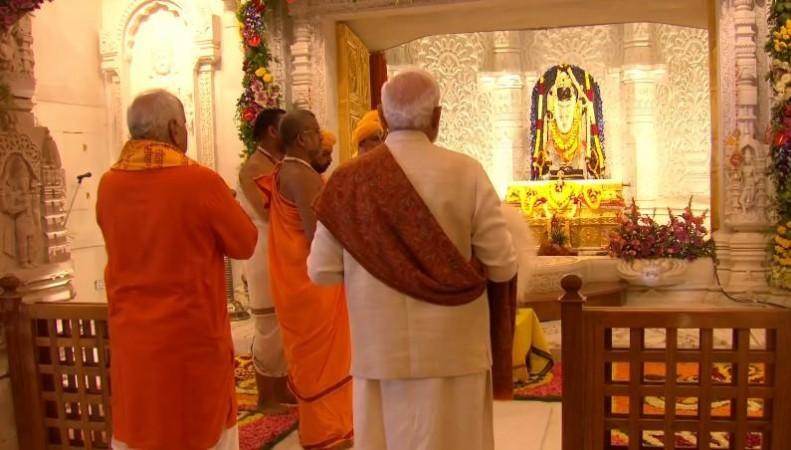
    In contemporary India, however, the distinction between the RSS and the BJP is often blurred in public perception. Bhagwat has repeatedly stated that the RSS does not seek political power and should not be equated with the BJP. Yet the BJP’s prolonged tenure under Narendra Modi has given rise to what critics describe as a “one man–one party” model, where political authority and electoral appeal are highly centralized around a single leader. Symbolism has reinforced this perception. When Bhagwat was seen standing behind Modi during the Pranaprathista of Lord Sriram at the Ram Temple in Ayodhya, many observers naturally assumed that Bhagwat stands behind Modi in all his actions and decisions. Such imagery strengthens the impression that ideological and political authority function in close alignment, even if institutional distinctions are formally maintained.

    This generates a fundamental tension. If “Sarvesham Avirodhena” calls for inclusiveness and accommodation, can it coexist with a political structure that appears increasingly centralized? Supporters argue that decisive leadership is necessary in a complex global environment. Critics counter that inclusiveness requires institutional pluralism, space for dissent, and broader participation in shaping national priorities.

    Bhagwat’s recent remarks have also addressed economic and intellectual concerns. He has expressed reservations about uncritical globalization and about the long-term implications of the Indo–US strategic and economic relationship. Observers debate whether such engagements enhance India’s autonomy or deepen structural dependencies. At the same time, Bhagwat has emphasized the urgency of building strong indigenous research ecosystems. Cultural confidence, in his view, must be matched by sustained investment in knowledge creation and innovation. However, India continues to invest less than one percent of its GDP in research and development, and the country lags significantly behind China in scientific and technological advancement.

    Ultimately, Bhagwat’s articulation suggests a vision rooted in cultural nationalism, social cohesion, character building, intellectual self-strengthening, and broad societal outreach. Yet the credibility of “Sarvesham Avirodhena” will depend not merely on its rhetorical appeal but on how effectively it addresses caste inequities, minority concerns, centralized political authority, research deficits, and strategic economic choices. India stands at a transitional juncture reminiscent of earlier periods of ideological debate and reform.

    The final and perhaps most consequential question, therefore, is whether the Rashtriya Swayamsevak Sangh under Bhagwat will actively shape this trajectory. Will it function primarily as a cultural and moral force, offering broad civilizational guidance while maintaining distance from day-to-day politics? Or will it intervene more directly in shaping policy priorities, influencing debates within the Bharatiya Janata Party, and moderating the balance between centralization and inclusiveness?

    If “Sarvesham Avirodhena” is to move beyond rhetoric, the RSS under Bhagwat may have to demonstrate through institutional conduct, public messaging, and social initiatives that inclusiveness is compatible with ideological conviction and strong leadership. Its engagement with questions of social harmony, minority outreach, caste reform, federal balance, and knowledge-driven development will be critical. In that sense, whether the RSS chooses to remain a guiding influence or becomes a more assertive actor may significantly shape how India’s democratic and civilizational journey unfolds in the decades ahead.

  • India’s Uneasy Balancing Act in the Trump Era

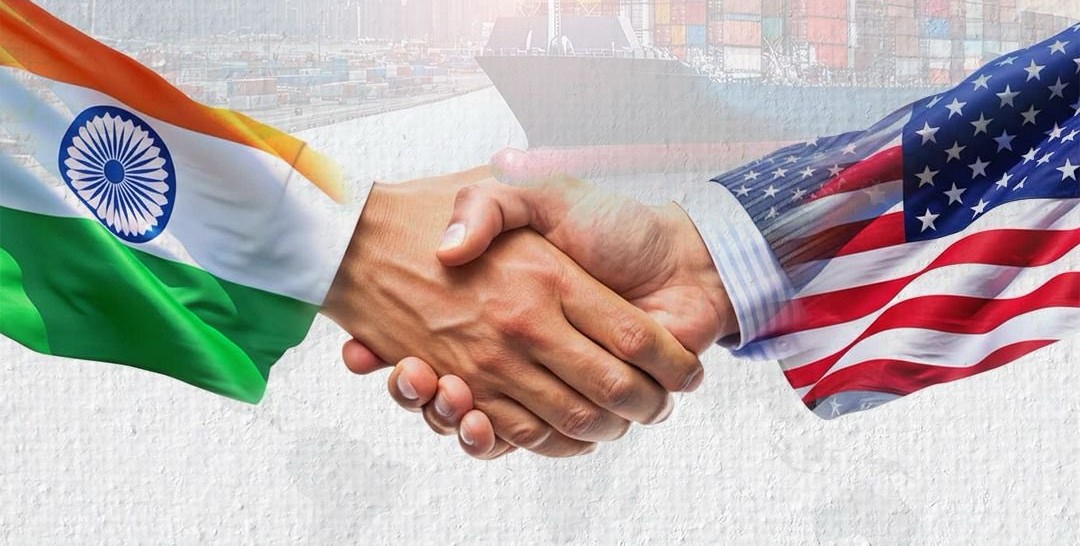
    A close reading of the India–US agreement makes it evident that New Delhi is unwilling to treat US President Donald Trump as an adversary. Keen to prevent any further deterioration in bilateral relations, India appears to have adopted a cautious and conciliatory approach. The United States has already imposed tariffs of up to 50% on Indian exports, severely impacting textiles, jewellery, engineering goods and chemicals. India’s trade deficit is widening, and a series of unilateral statements by Trump have pushed Prime Minister Narendra Modi into a defensive posture at home, where he faces questions he is increasingly unable to answer. This appears to have prompted efforts to placate the US President.

    Two months ago, US Senator Lindsey Graham, a close ally of Trump, told reporters aboard Air Force One that Indian Ambassador Vinay Kwatra had met him, conveyed that India had reduced oil imports from Russia, and urged him to persuade Trump to lower tariffs. Trump, standing beside him, warned that unless India completely stopped purchasing Russian oil, matters could worsen. “India wants to make me happy. Modi is a good man. He knows I’m not happy — and making me happy is very important. If India doesn’t help on the Russian oil issue, tariffs could be increased,” Trump said. The warning came shortly after the US attack on Venezuela, highlighting the pressure India was facing.

    Why should a US President certify India’s Prime Minister? Why should India align its policies to suit Washington’s preferences? Why should Modi seek to “please” Trump? These are questions India appears unwilling — or unprepared — to raise. Despite being larger than the European Union in scale, India does not seem ready to assert that it fears no one and can independently determine its foreign policy and internal security priorities. The ideals of non-alignment and strategic autonomy appear absent from current decision-making.

    At an RSS event marking its centenary year on Saturday, RSS chief Mohan Bhagwat underscored that while economic interdependence among nations is a reality, it must be voluntary and not driven by coercion. He cautioned against decisions imposed through trade wars and tariff pressure, arguing that international trade should be guided by a country’s free will. Agreements, he said, should not be entered into out of helplessness. He clarified that Swadeshi does not mean isolation or a blanket ban on imports.

    Against this backdrop, attention has turned to what Bhagwat may say about the recently announced draft India–US agreement. Many observers suspect the deal was not concluded on equal terms. Notably, even before the draft was officially announced, Trump unilaterally disclosed its details in a Truth Social post, stating that India would stop buying Russian oil and instead source oil from Venezuela. Prime Minister Modi promptly endorsed the announcement and expressed satisfaction, later being felicitated at an NDA meeting.

    Subsequently, US Trade Representative Jamieson Greer and Agriculture Secretary Brooke Rollins outlined the agreement’s details. Only thereafter did Commerce Minister Piyush Goyal address the issue, stating that Modi had leveraged his personal friendship with Trump to secure a favourable deal. Critics argue this framing overlooks the fact that agreements are concluded between nations, not individuals. It is India’s 1.4-billion-strong market that gives it negotiating strength — not personal rapport. After all, the India–US civil nuclear agreement was not a personal arrangement between Manmohan Singh and George W. Bush.

    Even with Trump reducing tariffs to 18%, questions remain about the deal’s benefits. Prior to July 2025, Indian exports to the US faced an average tariff of just 3%. The new rate represents a sixfold increase in less than a year. Meanwhile, India has reduced tariffs on American products such as Harley-Davidson motorcycles and several alcoholic beverages. Though US goods earlier faced tariffs averaging around 15% in India, these duties will now be eliminated.

    Goyal claimed the agreement would open the $30 trillion US market to Indian exporters, benefiting MSMEs, farmers and fishermen, and generating millions of jobs for women and youth. However, he avoided questions on the reported halt to Russian oil imports. External Affairs Ministry spokesperson Randhir Jaiswal maintained that India accords the highest priority to the energy security of its 1.4 billion citizens.

    Under the agreement, American products will enter India at zero tariffs, while the US will impose an 18% duty on Indian textiles, garments, leather, footwear, plastic and rubber goods, organic chemicals and select machinery. Generic pharmaceuticals, gems and jewellery, diamonds and aircraft parts will be exempt. India has committed to purchasing $500 billion worth of US goods, but the agreement does not specify reciprocal US purchases from India.

    The Congress party criticised the deal, alleging it was unequal and that India had opened its agricultural market to the US at zero tariffs. Congress spokesperson Pawan Khera described it as “Narender Surrender,” claiming it would enable dumping of American goods in India. Former Finance Minister P. Chidambaram said the agreement appeared heavily tilted in Washington’s favour, while former Union Minister Jairam Ramesh warned that India’s imports from the US could triple, erasing its long-standing trade surplus.

    Whether the government’s claims or the opposition’s criticism prove accurate remains to be seen.

    Meanwhile, there is little indication of any softening in the US stance on visa issues affecting Indians. Trump has significantly tightened visa norms, causing hardship for Indian professionals reliant on H-1B visas and for Indian students. Visa renewals now take years, and it remains unclear whether the Prime Minister’s much-touted personal rapport with Trump will yield any relief.

    The economic and political consequences of the India–US agreement, many argue, are likely to be far-reaching.