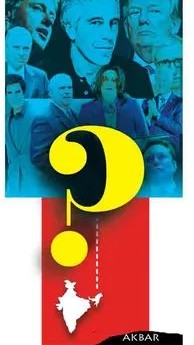
Within two days of U.S. Attorney General Pam Bondi announcing that all files related to Jeffrey Edward Epstein—who committed unheard-of atrocities—had been released, President Donald Trump declared that his innocence had been proven and that he had no connections whatsoever with the criminal. Although Trump’s name reportedly appeared 38,000 times in these files, the U.S. Department of Justice also clarified that the mere mention of names does not mean that everyone referenced had any involvement in Epstein’s heinous crimes.
There may continue to be numerous rumors on social media for some time regarding the names found in Epstein’s emails and the various photographs circulating online. However, strong efforts are underway to draw a curtain over the Epstein episode that shook not only the United States but many other countries as well. In fact, when Epstein was found dead in a U.S. jail in 2019, it seemed as though a major act in the effort to whitewash his crimes had concluded. With the U.S. Justice Department stating that it had nothing further to disclose about Epstein’s connections with top leaders of major American parties, as well as numerous global leaders, business magnates, and prominent individuals, many must have breathed a sigh of relief. How could they welcome the exposure of the rot within the world’s financial systems and the filth embedded in political structures that might engulf them?
Many of Prime Minister Narendra Modi’s opponents believed that the release of the Epstein files could pose a threat to his government as well. However, it turned out to be a storm in a teacup. Apart from a mention in emails that Modi traveled to Israel for work related to Trump, there was no other reference to him. As for Union Minister Hardeep Singh Puri, though his name reportedly appeared several times, no evidence was found suggesting his involvement in Epstein’s criminal activities. Puri maintains that he became acquainted with Epstein while working with an international peace organization, where Epstein was part of a delegation, and that he later sought his assistance in matters beneficial to India. After retiring from India’s Ministry of External Affairs in 2013, Puri was appointed to the Union Cabinet in 2019. If Prime Minister Modi entrusted the former diplomat with key responsibilities, it is not an exaggeration to assume that Puri must have rendered services beneficial to India on the international stage.
What does the Epstein affair tell us? It makes clear that the rule of law is not equal—not only in India but anywhere in the world. It reveals that there is perhaps no place where justice is dispensed equally to all, irrespective of wealth, influence, or social standing, and that institutional weaknesses exist everywhere in the investigative process. The growing tendency to commit grave crimes while disregarding the criminal justice system—backed by financial power and political clout—poses a major challenge to modern legal systems.
Although allegations that Epstein was involved in the trafficking of minor girls surfaced as early as 2005, the American legal system did not take them seriously. When he was arrested in 2008, Epstein accepted the charges against him, thereby securing a reduced legal process. The system appeared to acquiesce to his efforts to mitigate the severity of prosecution. Even during the few months he was in custody, he allegedly continued his illegal activities through his influence, with authorities turning a blind eye. Following renewed allegations and the anguished cries of victims, the case was reopened after 11 years in 2019, and he was arrested again. Within days of that arrest, Epstein died under suspicious circumstances in jail; it was officially ruled a suicide. Owing to media reports and public demand, the Epstein files were released, and the names of many powerful figures surfaced, causing a sensation.
The tragic reality is that the world is filled with such Epsteins. Exploiting loopholes in political and economic systems, individuals like him rise as influential figures. Though he had no notable academic credentials and once worked as a teacher, Epstein was worth 600 million dollars at the time of his death. He owned the largest private mansion in New York City, two islands, homes in New Mexico and Paris, numerous cars, private aircraft, and substantial investments in several companies. How did all this wealth accumulate?
Epstein cultivated relationships with U.S. Presidents Trump, Biden, and Clinton; billionaires Elon Musk and Bill Gates; Melania Trump; as well as numerous heads of state, business leaders, and senior officials worldwide. At least a hundred political leaders from various countries, senior diplomats, over 200 billionaires, and corporate chiefs were said to have fallen into his web. He funded public representatives, lawyers, and even media organizations. He provided financial support to universities and research institutions. Even progressive intellectual Noam Chomsky was among those who received his patronage. Epstein flew many individuals on his private jets and hosted others at his Palm Beach mansion in luxury. He not only sexually abused numerous young women and minor girls but also used them to entrap prominent figures. By financing political leaders across several European countries, he reportedly influenced their political systems. Once connections with him were exposed, major figures in ten countries resigned. Diplomats and ministers stepped down in multiple nations. Some expressed regret; most remained silent. “Documents may fuel rumors, but cases cannot be built solely on them,” remarked an American legal expert. The entire episode exposed the nexus between politicians, criminals, and major business magnates. It demonstrated that brokers and intermediaries often determine the dynamics of political and economic systems.
Do we not have brokers here? The late Prime Minister P. V. Narasimha Rao briefly alluded, in his novel The Insider, to the role played by brokers in the streets of Delhi, in the Prime Minister’s Office, other ministries, and party offices, including the presence of women in such networks. A report prepared by the Central Vigilance Commission during the Vajpayee era about the influence of middlemen in defense procurements was never made public. Although the Commission suggested legalizing intermediaries, who would be willing to transparently disclose financial transactions?
Global capitalism operates largely through wealth, social connections, and political networks. Power often flows not through official positions but through networks. In our country too, networks and lobbying are used to settle cases, transfer illicit funds abroad, and secure advantages for big business houses. Sponsorships, sexual favors, expensive gifts, and banquets in luxury hotels are common in this process, all under the guise of development. Leaders show little discretion about whom they elevate. Tragically, these brokers sometimes appear openly—and are even helped by political leaders to become members of legislative bodies.
According to Transparency International, India ranks 91st out of 182 countries in corruption. As per the National Crime Records Bureau, one girl goes missing every eight minutes. The Supreme Court of India has also expressed serious concern about sex trafficking and child exploitation in the country. Does this not reveal how our systems function? Do political leaders who speak grandly about Sanatana Dharma, tradition, Ram Rajya, patriotism, and righteousness practice honesty, transparency, and accountability? Are investigative agencies and judicial processes functioning properly? Are systems protecting those who abide by the law? Above all, are moral standards being upheld?
In the United States, at least under public pressure, documents related to a depraved individual were made public. In our country, who will discuss such grave secrets?
 akrishnarao