Tag: Supreme Court

  • The Cockroach Crisis: Is India’s Judiciary Losing Public Trust?

    “If the judiciary loses its credibility, nothing else will remain. An independent judiciary is the lifeblood of the Constitution. Without it, judges will exist, courts will exist, and judgments will exist—but their heart and soul will disappear,” said Supreme Court Judge Ujjal Bhuyan in a recent memorial lecture in Pune.

    He referred to a stark reality: the collegium itself recorded in its minutes that a High Court judge was being transferred in accordance with the wishes of the Central Government. This serves as a clear example of how a judiciary constitutionally expected to function independently can find itself working under government pressure.

    “The judiciary must remain distant from party politics and function firmly. Changes in government should have absolutely no connection with the judiciary. It should act with goodwill and sympathy towards everyone, but should not side with anyone,” said the first Chief Justice of India, H. J. Kania, at the inaugural sitting of the Supreme Court. Yet, reviewing the situation more than 75 years after the Constitution came into force, deep doubts arise as to whether standards in the higher judiciary have improved or deteriorated.

    The Historical Shield and the Ultimate Downfall

    For nearly twenty-five years after the Constitution came into force, the judiciary largely fulfilled its responsibility of preserving its own existence, protecting the fundamental rights of citizens, and defining the limits of government authority. The Supreme Court progressively interpreted Articles 14, 15, 19, and 31. In the 1967 Golaknath case, it clarified that fundamental rights could not be diluted, and in the landmark 1973 Kesavananda Bharati case, it solidified that Parliament had no authority to alter the basic structure of the Constitution.

    However, after coming to power with an overwhelming majority in 1971, Indira Gandhi’s administration began to toy with judicial independence. The absolute peak of the judiciary’s downfall in capitulating to executive overreach was the infamous ADM Jabalpur case during the Emergency.

    When thousands of political opponents and journalists were jailed without trial, and citizens sought the intervention of the courts to protect their fundamental liberties, a five-judge Constitution Bench delivered one of the most disgraceful judgments in Indian history. By a 4:1 majority, the bench ruled that during an Emergency, citizens do not even possess the right to life under Article 21.

    The majority consisted of Chief Justice A. N. Ray, Justice P. N. Bhagwati, Justice M. H. Beg, and Justice Y. V. Chandrachud (father of former Chief Justice D. Y. Chandrachud). When Justice H. R. Khanna—the sole courageous dissenter—asked during the hearings, “Does that mean people cannot question even if they are shot dead in the name of Emergency?”, the then-Attorney General chillingly replied, “My Lord, that is what the law says.”

    A Era of Introspection and Activism

    Following the Emergency—one of the darkest chapters in judicial history—the Supreme Court undertook deep introspection and initiated significant corrective measures. Moving past its catastrophic failure, the court aggressively declared that the Constitution, not the executive, was supreme.

    It opened its doors to the masses through Public Interest Litigations (PILs), ordered the release of thousands of undertrial prisoners languishing in jails, liberated bonded laborers, and eventually introduced the collegium system to insulate judicial appointments from political interference.

    Most importantly, it expanded the scope of personal liberties, protected the environment, championed the interests of working women, and curbed the arbitrary dismissal of state governments by ruling that political majorities must be proven on the floor of the legislature. At that stage, judicial activism was a remarkable shield for the vulnerable.

    Modern Shadows and Internal Fractures

    If the Supreme Court denied protection to human life twenty-five years after Independence, today, five decades after that judgment, the core functioning of the institution faces renewed skepticism. We may not be living in a formal Emergency, but public faith in the judiciary is noticeably shrinking.

    The fact that sitting judges themselves feel compelled to speak out demands serious reflection:

    • Justice Ujjal Bhuyan publicly emphasized that no external forces should be allowed to intrude upon judicial independence, asserting that personal political or ideological views must not influence decisions on the bench.
    • Justice B. V. Nagarathna warned that judges must not succumb to external pressures, noting that those who cannot live contentedly on their legitimate income should be eliminated from the system entirely. “A tainted judge is a stain on the entire system,” she remarked.
    • Justice S. Muralidhar, former Chief Justice of the Orissa High Court, once noted: “Impartiality is the soul of the judiciary, and independence is the blood flowing through its veins.” Notably, during his tenure at the Delhi High Court, he was transferred overnight after questioning police inaction during civil unrest in the capital.

    In her book Constitution Is My Home, senior advocate Indira Jaising recalled a harrowing 2022 case involving sexual harassment allegations made by a female Additional District Judge against a Madhya Pradesh High Court judge. Not only did the victim fail to find immediate recourse, but she was also swiftly transferred and forced to resign.

    Through Jaising’s persistent legal battles, a Supreme Court bench headed by Justice L. Nageswara Rao eventually restored her position and questioned why the then-Chief Justice of the High Court had refused to even grant her an interview. Disturbingly, just days later, that very Chief Justice was elevated to the Supreme Court.

    Growing Questions and the “Cockroach” Backlash

    Why has it become necessary for judges to comment so defensively on their own institution? Critics increasingly argue that the higher judiciary—originally designed to protect the common citizen—is becoming overwhelmingly responsive to the wealthy, the state, and political elites.

    Calculated bench allocations and predictable judgments in politically sensitive cases have sparked intense debate. Former Supreme Court Bar Association President Dushyant Dave openly criticized the court for failing to check the erosion of vital institutions like the Election Commission, pointing out that judges routinely scramble for lucrative post-retirement positions.

    Simultaneously, ethical questions have mounted. Organizations like the Campaign for Judicial Accountability and Reforms (CJAR) heavily criticized several judges and their families for utilizing private aircraft provided by state governments, arguing it severely compromises judicial ethics. Furthermore, instances like the discovery of massive cash bundles at the residence of a former Delhi High Court judge—followed by an apparent lack of accountability—have deepened public cynicism.

    Perhaps because the public, especially the younger demographic, is closely watching these lapses, an explosive reaction occurred following recent remarks made by Supreme Court Judge Surya Kant.

    During a judicial hearing, Justice Surya Kant criticized unemployed youth, comparing them to “cockroaches” who populate social media, media outlets, and RTI activism to attack institutions. Though he later clarified that the comment was contextualized within a specific petition regarding a lawyer’s designation and was not aimed at the youth at large, the damage was done.

    Justice Surya Kant has faced widening backlash for a series of oral remarks. On May 11, 2026, during a hearing on the Pipavav Port expansion project in Gujarat, his comments drew sharp rebukes from environmentalists and legal experts. Former civil servants under the Constitutional Conduct Group warned that these remarks showed a disturbing pro-corporate bias from the bench, creating an atmosphere of fear that silences dissent. Over 70 lawyers noted that treating citizens who enforce environmental laws as “obstructionists” marks a dangerous jurisprudential shift.

    Similarly, on January 29, 2026, during a PIL hearing on domestic workers’ rights, Justice Surya Kant blamed trade unions for stifling industrial growth and shutting down traditional industries. Labor bodies, including the AITUC, strongly condemned the court for misreading economic realities, arguing that industrial stagnation is driven by corporate monopoly and pro-corporate state policies, not by workers asserting their legal rights.

    The Danger of Erased Boundaries

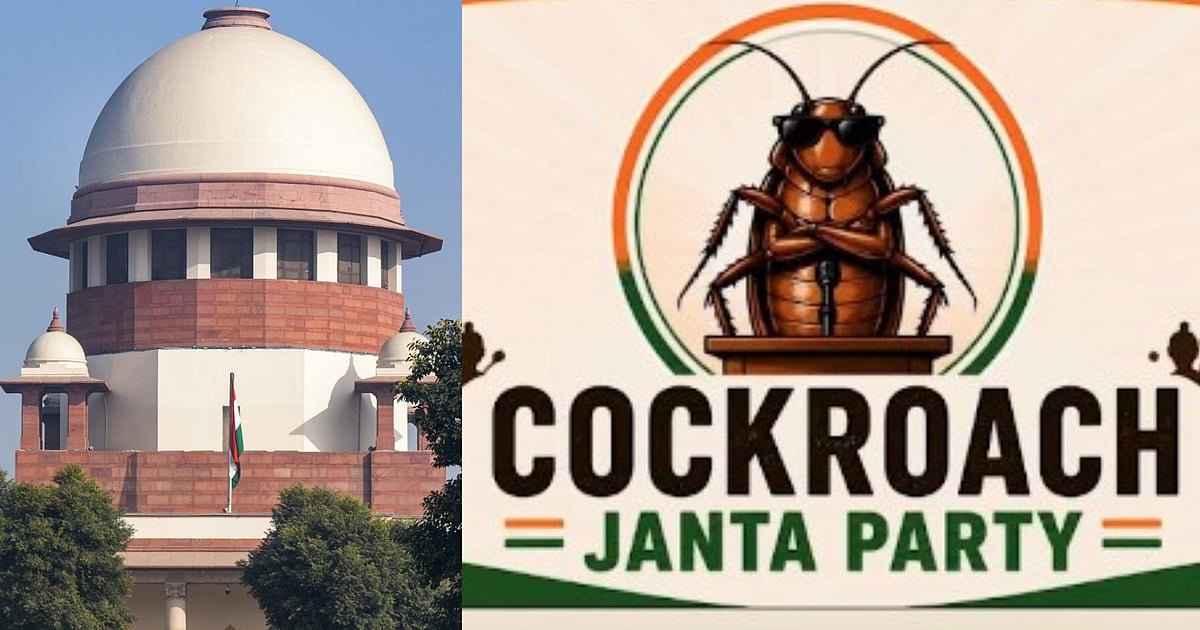
    Following the “cockroach” commentary, a young citizen created a social media movement under the banner of the “Cockroach Janata Party.” Millions responded. Instead of merely deflecting the insult, the youth weaponized it, using the platform to furiously criticize the government over unemployment, inflation, corruption, and systemic scams, proclaiming: “Yes, we are cockroaches.”

    This reaction highlights a profound systemic crisis. The derogatory comments were made by a member of the judiciary, yet the public directed its anger squarely at the executive government.

    This reveals a terrifying reality: the public no longer views the government and the judiciary as separate entities.

    In a constitutional democracy, nothing is more dangerous than the total erasure of the boundary between the ruling executive and the independent judiciary. The judiciary must aggressively reform and rescue itself from this crisis. If it fails, the day may soon arrive when the “cockroaches” themselves feel forced to become the arbiters of justice.

  • Tamil Nadu’s Message to India’s Political Class

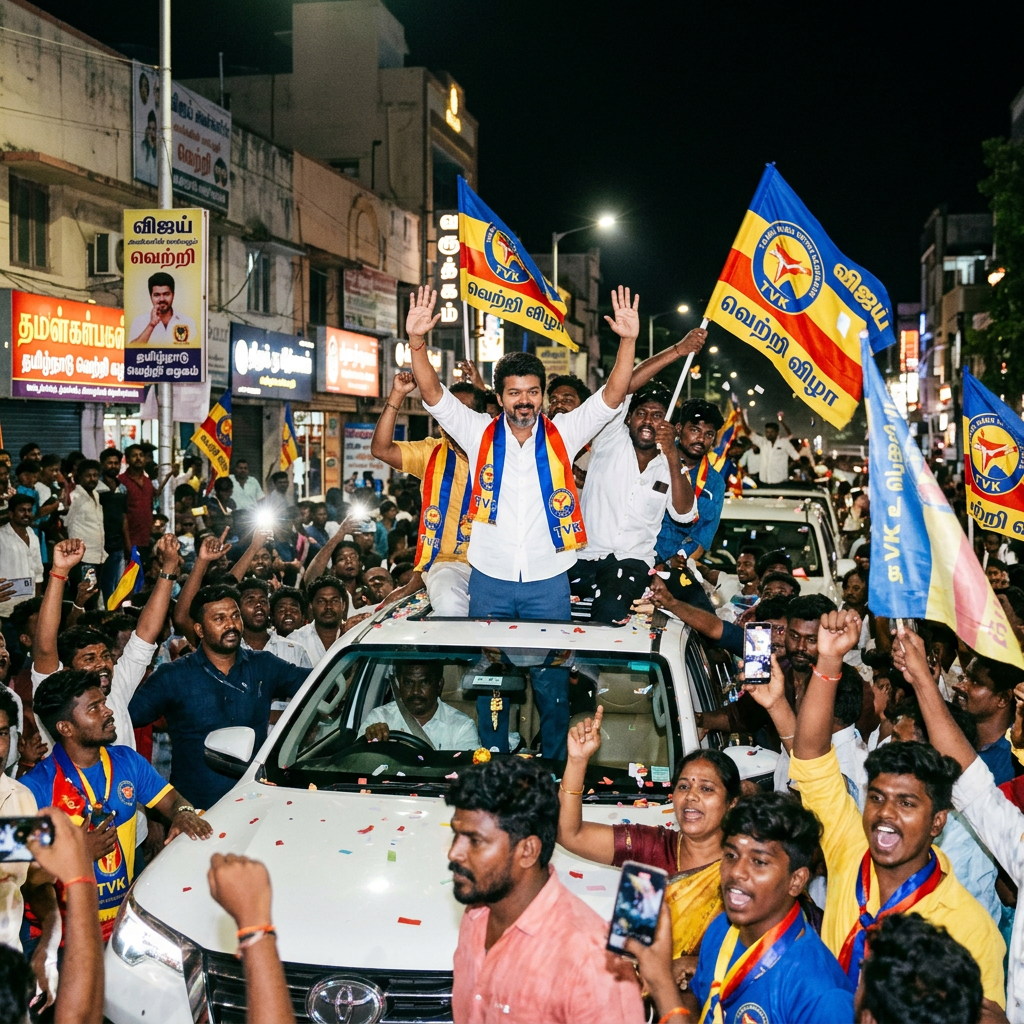
    Man standing on a car waving to crowd with supporters holding flags in a night rally
    Supporters cheer enthusiastically around a leader standing on a car during a lively political rally at night.

    In Andhra Pradesh, there was a political leader who used to send various kinds of gifts door to door in his constituency. On every occasion, he distributed sweets and snacks; during festivals, Raymond clothes for men and silk sarees for women. Every newly married couple received a gold mangalsutra pendant, silk clothes, and silver anklets as gifts. During elections, things went even further. Reports said that a separate truck was used exclusively for distributing cash lavishly. Even then, he lost the last election by a margin of more than 43,000 votes.

    This single example is enough to show that if people truly decide, no amount of inducement can make them surrender their conscience. Even though political parties and leaders are aware of this, they continue making every possible attempt to lure people and buy votes. This does nothing except create disgust among the public toward political leaders. When leaders try to purchase votes, people naturally begin to wonder how much these politicians are earning in politics and how much public money they are looting. Many people feel that all this money being distributed is nothing but wealth stolen from the public itself.

    Recently in Tamil Nadu, the DMK and AIADMK distributed money on a massive scale. Estimates suggest that between ₹20 crore and ₹50 crore was spent in each constituency. Videos showing these parties distributing cash in envelopes ranging from ₹3,000 to ₹10,000 circulated widely on social media, yet the Election Commission hardly paid attention. An NGO called “Arappor Iyakkam” even lodged a complaint with the Election Commission regarding the large-scale cash distribution. Surprisingly, the TVK party of actor Vijay, which reportedly did not distribute money at all, succeeded in getting the highest number of its candidates elected. Along with Chief Minister Stalin, 15 DMK ministers were defeated. In one constituency, a four-time DMK minister lost to an auto driver. Elsewhere, the son of a car driver won. In many constituencies, TVK candidates won with huge majorities, while in at least 20 seats they lost by extremely narrow margins. These developments prove that if elections had been conducted without the influence of money power, a massive Vijay wave would likely have swept Tamil Nadu.

    In recent democratic history, Vijay earned the distinction of winning elections in a state without purchasing votes from people. In fact, Vijay did not campaign extensively across the state. In many places, his party relied on cutouts, holograms, and duplicates for campaigning. Keeping in mind the stampede incident at Karur, he cancelled many rallies. TVK candidates themselves did not campaign aggressively in several constituencies. There were even reports that in some places DMK and AIADMK candidates offered money to TVK candidates and told them to stay home and rest. In many constituencies, TVK candidates did not even go to the counting centres. They were surprised to learn from television broadcasts that they had won.

    Although huge crowds attended Vijay’s meetings, many believed TVK could not succeed because the party lacked organizational machinery, proper local coordination, sufficient funds, and experienced candidates. In many constituencies, campaigns were carried out with nothing more than a small van, two auto-rickshaws, and a few children blowing whistles while walking ahead of the candidates. In several places, students and women voluntarily went door to door campaigning. Small donations were collected for campaign expenses. In some constituencies, there were not even TVK posters. Often, people could not even recognize TVK candidates when they walked on the roads.

    The Tamil Nadu elections should serve as a lesson to parties that rely on money power, muscle power, and manipulation of systems to come to power. It should open the eyes of those who collect funds from corporate companies in the name of electoral bonds, allot Rajya Sabha seats to donors, and even launch companies for them. Illegal funding from corporations forces governments to return favors through project allocations, ignore irregularities in those projects, and encourages politicians who buy votes to indulge in further corruption to recover their election expenses. Through such corrupt practices, entire systems have become rotten. Electoral corruption plays a major role in India’s political and administrative system. Legislatures are increasingly filled with corrupt individuals, corporates, and wealthy elites. Ordinary people are finding it impossible to contest elections. There is little doubt that black money amounting to 20–50 percent of the country’s GDP has become part of the electoral system.

    Officially, the Election Commission says that an MP candidate can spend up to ₹95 lakh and an MLA candidate up to ₹28 lakh. But politicians themselves say that in reality, this amount is not sufficient even for a single day of campaigning. Although the Election Commission officially seized black money worth ₹10,000 crore during the 2024 general elections, estimates suggest that around ₹1.35 lakh crore actually circulated during the elections—far exceeding the expenditure in the 2020 U.S. elections. The Centre for Media Studies had earlier estimated that an average of ₹1,500 is paid as bribes to every voter in the country. It would not be an exaggeration to say that election observers appointed by the Election Commission have become clowns in this entire drama. Instead of preventing electoral malpractice, they appear more focused on deciding which party should win.

    It appears that the people of Tamil Nadu responded against this vicious cycle of corruption and illegality. Out of the 107 MLAs elected from Vijay’s party, 93 were first-time entrants into politics. Half of them were between 40 and 45 years old. This helps explain the direction in which Tamil Nadu’s youth and Dalits are thinking. It also suggests that they are no longer interested in hollow identity slogans and ideological rhetoric. What they really want is simple: systems that function properly. They want efficient public services in return for the taxes they pay. They want government offices—especially revenue departments—to function properly, without power cuts and delays. Instead of political parties constantly raising emotional slogans and provoking caste, religious, or regional divisions to divert public attention, the country can become modern and ideal only when systems are reformed according to the aspirations of the youth.

    Although India ranks 91st among 182 countries in the corruption index, no government appears to be sincerely working to eliminate corruption within systems. Political parties focused solely on winning elections show little interest in institutional reforms. A recent example is the NEET question paper leak scandal. Over the last four years, question paper leaks have occurred in one form or another. Reports stated that question papers for the May 3 entrance examination were sold under the guise of “guess papers” for amounts ranging from ₹10 lakh to ₹25 lakh, and that a mafia network stretching from Rajasthan, Haryana, Maharashtra, and Uttarakhand to Kerala was responsible for the leak.

    Even after it was discovered last year that students who selected the same examination centre in Godhra, Gujarat scored unusually high marks, the examinations were not fully cancelled. Although a committee headed by former ISRO chairman Radhakrishnan was appointed to investigate the 2024 irregularities, its report merely gathered dust and was never implemented. Even after the CBI investigated 144 people who had purchased leaked question papers and submitted its findings to the Supreme Court, the Court concluded that there was no evidence of a nationwide systemic failure.

    Medical education in India costs crores of rupees. Affordable medical colleges are very few. This is one of the reasons behind examination paper leaks. What is the use of leaders delivering moral sermons when they cannot make education and healthcare accessible to ordinary citizens? After all, are these not the very sectors where people could save the most money?

    Meaningful change will not come unless the kind of political awareness shown by the generation that voted for Vijay in Tamil Nadu spreads across the country. Only when a new political consciousness emerges among the youth nationwide, as seen in Tamil Nadu, can real transformation become possible.

  • How long will these unethical politics continue?

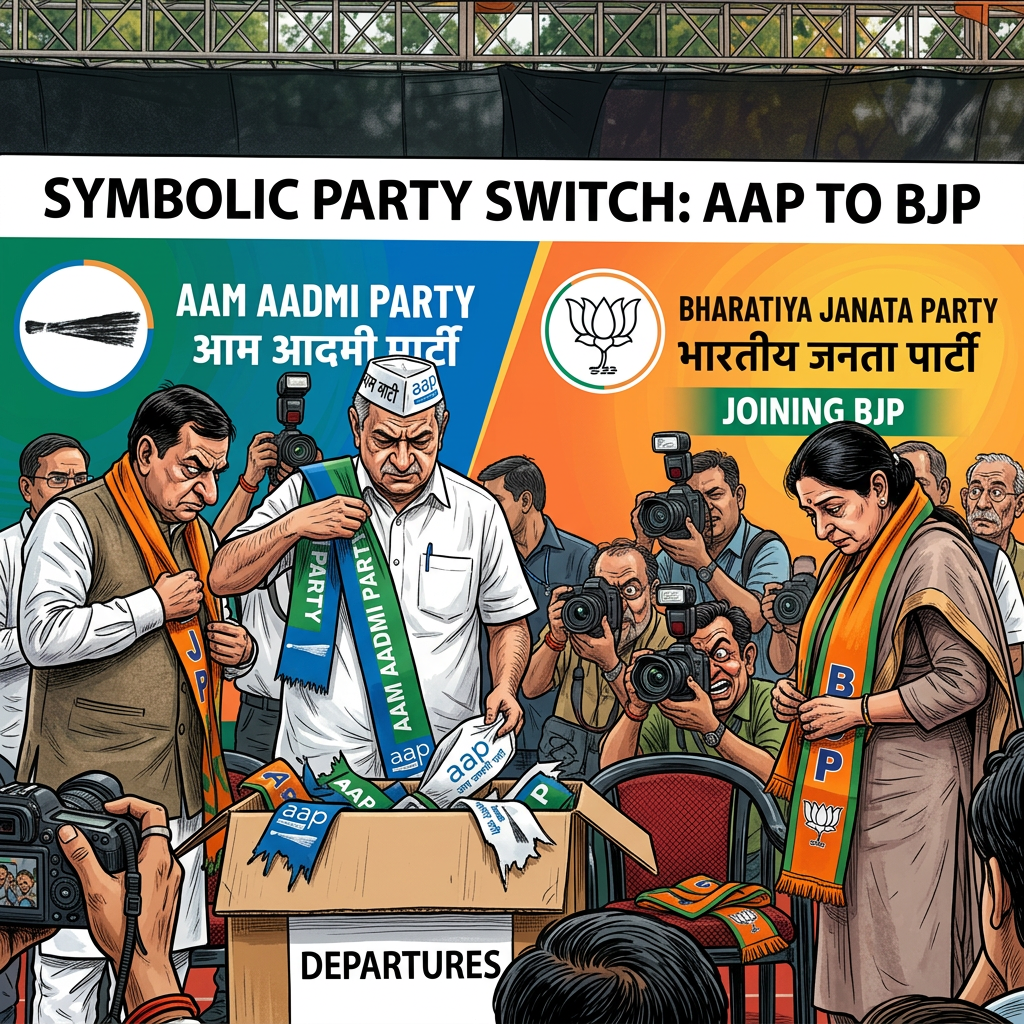
    Leaders exchanging party scarves during symbolic switch from AAP to BJP
    Leaders symbolically switch from Aam Aadmi Party to Bharatiya Janata Party

    On the last day of the election campaign, Prime Minister Narendra Modi confidently declared, “After May 4, I will have to come to Bengal once again for the swearing-in ceremony of a BJP government.” He expressed confidence that “after Odisha and Bihar, the lotus will bloom in Bengal.” The Election Commission has deployed CAPF forces across Bengal. Union Home Minister Amit Shah said, “Even after the elections are over, these forces will remain in Bengal for another two months.”

    While Modi’s campaign efforts aim to attract the masses, especially women voters, Amit Shah, who stayed in Bengal for 15 days, is an expert strategist working at a micro level. This leadership duo prepares meticulous strategies well in advance to win a state. They craft narratives necessary for victory, employ all possible tactics—persuasion, incentives, division, and force—and make use of every system available. With 250,000 security personnel, Bengal has been turned into a battleground. Even after all this, can the BJP come to power in Bengal? If people desire change, if Hindu voters consolidate, if women support in large numbers, and if institutions fully cooperate, BJP’s victory is certain. However, if the people of Bengal view Mamata Banerjee as a symbol of their identity and resist Hindutva influence, the Trinamool Congress will return to power for a fourth consecutive term.

    In reality, even the Congress party under Rahul Gandhi does not want Mamata Banerjee to win in Bengal. When the Women’s Reservation Bill was collectively opposed in Parliament by the INDIA alliance, Trinamool supported it. The very next day, Rahul Gandhi toured Bengal and sharply criticized Mamata Banerjee’s corrupt governance. He argued that her policies are responsible for the consolidation of Hindu voters. While leaders like Tejashwi Yadav and Jharkhand Chief Minister Hemant Soren campaigned in her support, Congress and the Left parties strongly criticized her. This approach not only exposes divisions within the INDIA alliance but may also benefit the BJP to some extent. As Venkaiah Naidu once described, Congress behaves like “friendship in Delhi, wrestling in the streets.” While the BJP unites forces at both national and regional levels under the NDA, Congress has failed to build a strong coalition capable of challenging BJP across the country, highlighting its weakness.

    Not just with Mamata Banerjee, but even in the case of Kejriwal, Congress follows a similar approach. There are reasons for this, but it also reflects how independent regional parties in the country are becoming isolated and forced into defensive positions.

    Even as the Bengal elections are underway, a significant development is that seven Aam Aadmi Party MPs have joined the BJP. What does this indicate? Even before the current assembly battles conclude, BJP leaders have turned their attention to Punjab, where elections are due in eight months. Considering the growing anti-incumbency against the AAP government there, BJP seems to have devised a strong strategy to strengthen itself in the state. Though there are allegations that leaders like Raghav Chadha were pressured and others intimidated using ED and CBI cases, Kejriwal’s leadership style has also contributed to this situation. BJP is making every effort to weaken AAP, a one-man party, both in Punjab and Delhi, and to draw its leaders into their fold. This reflects BJP’s political strategy—using every possible tool to assert dominance and weaken opposition parties.

    The way AAP handled Rajya Sabha seats also contributed to this moral decline. Selling seats and later intimidating or re-buying those who purchased them is not difficult. By sidelining people like Yogendra Yadav, Prashant Bhushan, Ashutosh, and Shazia Ilmi and elevating industrialists and millionaires instead, AAP weakened itself morally. In contrast, Mamata’s party, though regional, sent individuals like journalist Sagarika Ghose, lawyer Menaka Guruswamy, and marginalized representative Mamata Bala Thakur to the Rajya Sabha. Similarly, CPI(M) sent journalist John Brittas from Kerala. Can BJP lure such individuals? This episode shows how carefully regional parties must choose whom they send to Parliament.

    The fact that seven AAP MPs left their party overnight to join another highlights how degraded Indian politics has become. Leaders like Raghav Chadha, who once labeled BJP as a party using agencies like CBI and ED as tools of intimidation, and Ashok Mittal, now joining BJP, what message are they sending? Are parliamentary seats being expanded just to accommodate such leaders? Rajya Sabha MPs are not directly elected by the people but chosen by party MLAs. When those MLAs remain in the same party, how is it legal for MPs to defect? The current anti-defection law appears not to prevent defections but to enable them through loopholes.

    When ideological commitment and political ethics are abandoned for selfish gains, can other systems remain unaffected? Recently, former U.S. President Trump calling India a “hellhole” was completely inappropriate. His remark recalls Russian writer Alexander Kuprin’s novel “The Pit,” which exposed prostitution. Kuprin’s observation—that systems often promote the very evils they claim to prevent—applies equally to the anti-defection law. The provision for “merger” within the law creates room for legal defections. The law mentions party merger but not parliamentary party merger. How can a parliamentary party be considered the real party? The Supreme Court’s constitutional bench in the Eknath Shinde case ruled that legislative or parliamentary parties cannot act independently of the political party’s stance. Should this not apply to the AAP MPs’ merger? As early as 2003, the Supreme Court clarified that defining a parliamentary party as the real party would render the Tenth Schedule meaningless. However, in 2019, the Bombay High Court’s Goa bench ruled differently, validating Congress defections as mergers. The Supreme Court’s delay in hearing the appeal rendered it irrelevant, as the assembly term ended and fresh elections were held in 2022. Now, it remains uncertain when the Supreme Court will address the petition challenging AAP’s merger into BJP in the Rajya Sabha.

    The BJP government claims to enact useful laws for the country, but why does it not introduce a law to curb unethical political defections? Until such a law is enacted, MPs and MLAs will continue defecting at will. BJP, which claims to be different, is behaving no differently from Congress, which once popularized the “Aaya Ram, Gaya Ram” culture. Its focus remains on winning elections and expanding nationwide rather than fostering ethical political values. It was Congress’s past mistakes that led people to embrace BJP. For years, people supported BJP despite its flaws, keeping Congress’s misdeeds in mind. However, just as medicine has an expiry date, political support too has a time limit. Until recently, Raghav Chadha enjoyed immense popularity on social media, but after joining BJP, over two million people distanced themselves from him. Once leaders begin to decline morally, it does not take long for people to see them as corrupt.

  • If the Judiciary Is Bleeding, Who Fired the First Shot?

    Screenshot

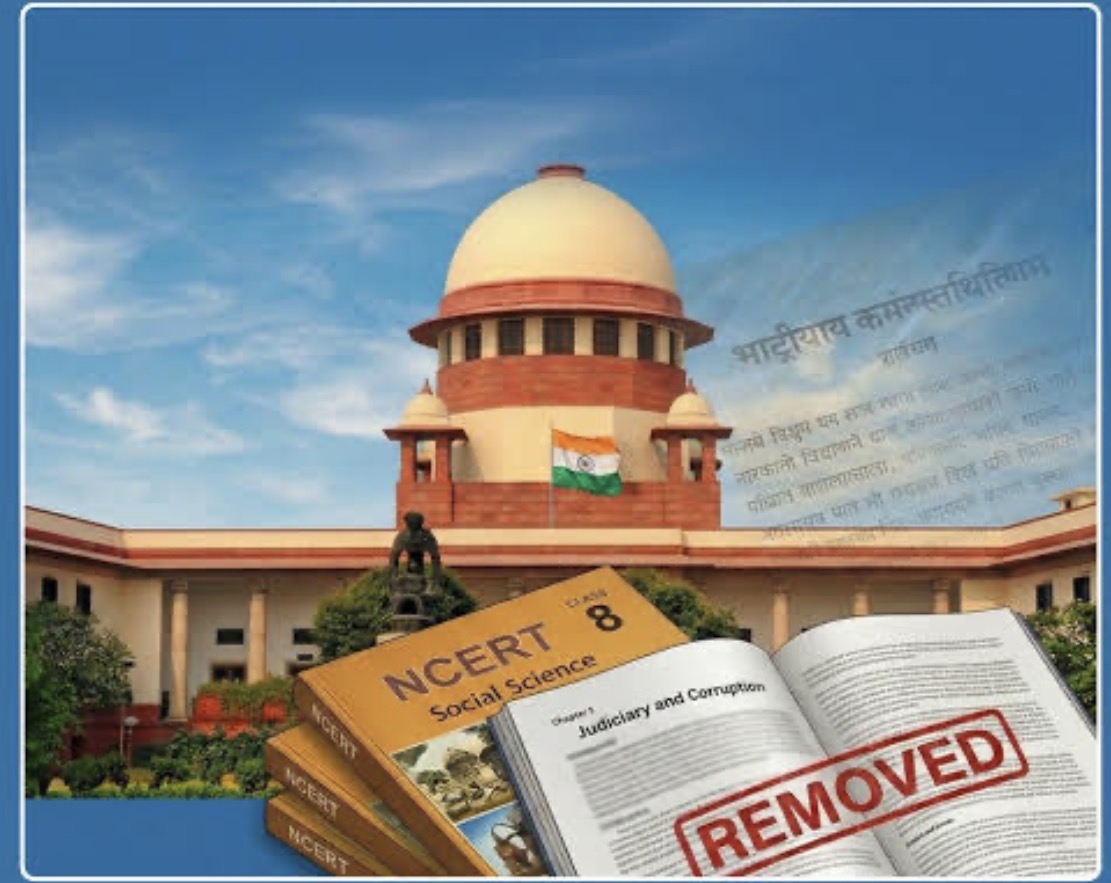
    There are systematic attempts underway to undermine the institutional authority of the Supreme Court and to damage the reputation of the judiciary. If these attempts are not stopped, the sanctity of the judiciary in the eyes of the people will erode. It will influence the tender minds of the youth. “Shots have been fired at us… the judiciary is bleeding,” expressed Justice Suryakant of the Supreme Court of India in anguish. For describing corruption in the judiciary in an 8th-grade textbook published by the National Council of Educational Research and Training, he went so far as to announce a ban on that very book. He ordered that the book should not be available even in digital form. Following these prohibitory orders, NCERT withdrew several lakh copies of the textbook. It was also reported that a bookstore owner was arrested by the police for selling photocopies of the textbook. “I will not tolerate anyone on this earth attempting to defame the judiciary,” said the Chief Justice.

    When he expressed his anger over the textbook, Prime Minister Narendra Modi was in Israel. Official sources told the media that Modi too was distressed that the judiciary’s sentiments had been hurt and remarked, “Who is overseeing all this?” After returning to the country, Modi reportedly raised the issue in a Cabinet meeting as well. News reports said he remarked, “How can we tell 8th-grade children ourselves that there is corruption in our judiciary?” Education Minister Dharmendra Pradhan also expressed regret over including the controversial chapter on corruption in the judiciary in the 8th-grade textbook. “We have immense respect for the judiciary. We did not intend to insult it deliberately,” he said. The Supreme Court sent notices to NCERT Chairman Professor Dinesh Prasad Saklani.

    With the Chief Justice expressing concern, is there really a conspiracy behind this entire episode to defame the judiciary? Are there systematic efforts underway to reduce public respect for the judiciary? In fact, the Congress attempted to create the impression that it was the Modi government itself that engineered this conspiracy. “For a decade, the BJP government has been trying to spread its ideological virus through textbooks. The inclusion of details about corruption in the judiciary was not accidental. It was a systematic attempt to corrupt the minds of students,” said Congress spokesperson Jairam Ramesh. He made indirect remarks suggesting there was evidence that Modi himself guided this process and that the RSS was behind it. Lawyers Kapil Sibal and Abhishek Singhvi, who argue opposition cases in the Supreme Court, made submissions that led Justice Suryakant to treat the matter more seriously. They succeeded in creating the impression that a major conspiracy had taken place.

    It is because people believe that they will ultimately receive justice through the judiciary that lakhs of them approach the courts. If they did not believe courts would deliver justice, there is a possibility that they might resort to vigilante justice instead of going to court. It cannot be said that Justice Suryakant’s view — “We cannot allow students to develop the impression that justice is not available in this country” — is entirely wrong. The textbook mentioned a judgment that described slum dwellers as encroachers. However, by highlighting such instances, it would be inappropriate to portray the entire judiciary as anti-poor.

    Quoting Martin Luther King Jr.’s words, “Injustice anywhere is a threat to justice everywhere,” CBI Special Judge Justice Jitendra Singh, in his recent judgment on the Delhi liquor case, detailed across nearly 600 pages how the CBI allegedly tailored facts to suit its narrative in order to implicate political opponents of the ruling party. He asked, “If even policy decisions taken to strengthen the economy are treated as crimes, how can any government take decisions?” He pointed out the injustice of keeping accused persons imprisoned for months based solely on the statements of approvers and accomplice witnesses. He observed that the right to life and personal liberty did not come from the government’s grace but from the Constitution, and that unless a balance is maintained between the Constitution and statutory law, public trust in the criminal justice system would erode. It is noteworthy that even constitutional benches which had refused stays in several instances in the Delhi liquor cases did not reflect at such depth as the lower court did. Regardless of how much this judgment is challenged in higher courts, the significance of the questions it raises will not diminish.

    By banning a textbook that mentioned corruption in the judiciary, students may lose the opportunity to learn in the classroom about what is happening within the judicial system. The very act of banning it has created greater discussion and drawn more attention to the issue. Do students learn about the world only through textbooks? Just because something is not mentioned in a textbook, will they automatically form a favorable opinion of the judiciary? It is no secret that today social media has far greater influence than any textbook. Do 8th-grade students not watch television or read newspapers? Moreover, as mentioned in the textbook, the government itself has repeatedly informed Parliament that crores of cases are pending across the Supreme Court, High Courts, district and subordinate courts. The textbook also cited remarks made in 2025 by then Chief Justice Justice Gavai that corruption and misconduct in the judiciary erode public trust. Therefore, merely banning the textbook will not increase public respect for the judiciary. It is impossible to conceal such matters from students simply by excluding them from textbooks.

    Secondly, it has become a matter of debate whether the Supreme Court has the constitutional authority to ban a book or a speech. In a democratic society, censoring a book falls under curtailing freedom of expression guaranteed by Article 19. Legal experts are raising questions about whether judicial orders fall within the permissible restrictions under Article 19 and whether the Constitution grants such authority to the judiciary. When their fundamental rights are violated, citizens can approach the courts. But when courts themselves infringe upon fundamental rights, what is to be done? they ask.

    After the strict stance taken by the Supreme Court, NCERT has fallen in line—and so has the government. Everyone is offering clarifications and apologies. NCERT apologized in court and assured that the books would be withdrawn, but the court is not satisfied with that. The Chief Justice has put a stay on the book. But is this really an issue related to corruption in the judiciary, or is there some other story behind it?

    In reality, the chapter titled ‘Corruption in Judiciary’ included in NCERT’s Class 8 book was not an attempt to inform students about corruption existing at any level within the judiciary. It appears to be an effort to raise questions about the credibility of the judiciary and influence public perception. It should be noted that NCERT books are not prepared randomly, as if someone wrote something arbitrarily and it got printed. There is a long process behind it. Every subject has two committees that oversee the entire process—from preparing the content to its publication.

    This chapter appears in the Class 8 Social Science book. It is perhaps just a coincidence that the head of the Curricular Area Group that prepared the Social Science book is a guest professor at IIT Gandhinagar, Michel Danino. This committee oversees the selection and writing of content for social science textbooks. After this comes the National Syllabus and Teaching Learning Materials Committee, a high-level committee that gave the book its final shape. The chairman of this committee is MC Pant, Chancellor of the National School of Planning and Administration. Professor Manjul Bhargava of Princeton University is its co-chair. Apart from them, there are 19 members including Sudha Murty and Sanjeev Sanyal, a member of the Prime Minister’s Economic Advisory Council. Think about it—if all these people have truly fulfilled their responsibilities, it would mean that the book’s content passed through all their scrutiny and none of them found anything objectionable in it. It is worth noting that around the same time, remarks previously made by Sanjeev Sanyal that “the judiciary is the main obstacle to rapid development in this country,” were also brought up.

    So the question is whether a committee that prepares textbook content in line with the prevailing social and political narrative in the country would inadvertently decide to teach eighth-grade students about alleged corruption in the judiciary. It is hard to believe that this happened accidentally.

    Then the question arises: why did the government not defend it in court? If so many people collectively played a role in preparing the book, then either action should be taken against all of them, or the government should defend the book in court. If one closely observes the narrative that has emerged on social media regarding this entire episode, it seems that the objective behind including this chapter in the book has already been achieved. A discussion on corruption in the judiciary has begun, and a debate has also erupted over the Supreme Court’s move to stop this discussion. There is a large group arguing that corruption exists in the judiciary and that it should be investigated and openly discussed. The same group is also saying that the judiciary becomes immediately sensitive about matters concerning itself and does not want its issues to come before the public.

    Senior Supreme Court lawyer and public interest litigator Prashant Bhushan has also objected to certain remarks made by the Supreme Court and some senior lawyers. He wrote on social media that in 2007, Transparency International had said that in public perception, the judiciary was the second most corrupt institution. He wrote that if discussion on this issue is suppressed, it will only strengthen public perception. Later, former NCERT Director JS Rajput also questioned the Supreme Court’s stance and said that stopping discussion on corruption in the judiciary is not appropriate.

    Why should the court react only when corruption in the judiciary is mentioned? Why remain silent when other institutions are criticized? This entire episode has also brought the case of Yashwant Varma back into discussion. Burnt currency notes were reportedly recovered from his residence when he was a judge of the Delhi High Court. The incident took place around Holi last year, and now another Holi has arrived. Nothing has happened in one year. There is an impeachment motion in Parliament that is to be investigated. People are asking what happened after sacks of cash were allegedly recovered from a judge’s residence. If action had been taken and an example set, it would have positively influenced public perception. But no action has been taken on such a major issue of corruption.

    There are those who argue that there is nothing wrong with textbooks discussing the ailments present in the country and that only by discussing them can they be resolved. For example, irregularities in the electoral system have also been discussed in textbooks, including an image of currency notes found in a candidate’s car. Do such incidents not occur? Over time, several allegations have been made against High Court and Supreme Court judges. There are no records of any judge being convicted or impeached over corruption allegations; at most, transfers have taken place. While ordinary citizens and political leaders face CBI raids and ED investigations, why does the same not happen to judges? The very higher judiciary that banned the 8th-grade textbook must answer these questions.

  • Constitutional Courts and Economic Power: A Tale of Two Democracies

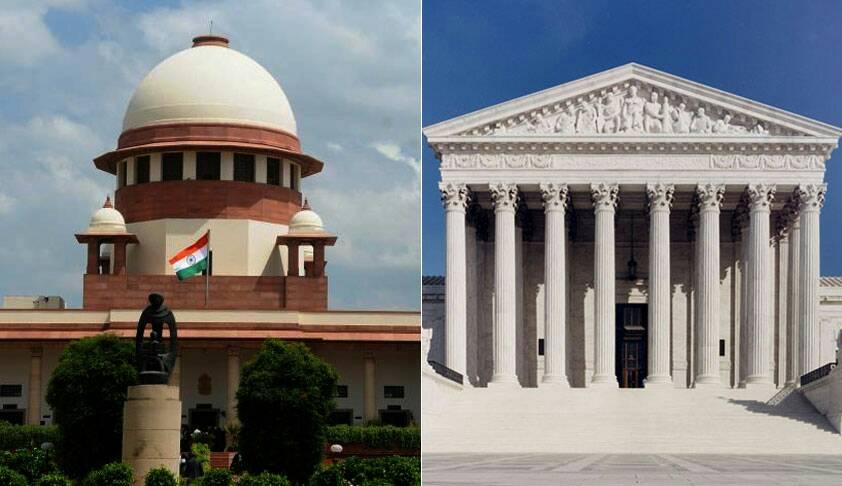
    The recent ruling of the Supreme Court of the United States striking down former President Donald Trump’s sweeping global tariffs has not only redrawn the limits of executive authority in Washington but also triggered diplomatic and political recalibration in New Delhi. At the core of the episode lies a constitutional constant shared by both democracies: the principle of judicial independence and the judiciary’s role in enforcing the separation of powers.

    In a 6–3 verdict, the U.S. Supreme Court held that the President had exceeded his authority under the International Emergency Economic Powers Act by imposing wide-ranging import duties without explicit congressional approval. Reaffirming that the constitutional power to levy taxes and duties rests with Congress under Article I, Section 8, the Court underscored that emergency powers cannot become a gateway for bypassing legislative authority. The judgment was widely viewed as a strong institutional assertion of judicial independence, especially given the political and economic stakes attached to the tariff regime.

    The ripple effects were immediate. The interim Indo-U.S. trade framework, announced earlier with provisions to reduce reciprocal tariffs on Indian goods from 25% to around 18%, was premised on the enforceability of the U.S. Executive’s tariff structure. With the Supreme Court invalidating the legal foundation of that regime, trade experts suggested that more than half of India’s exports to the United States could revert to standard tariff treatment. Although the U.S. administration subsequently invoked Section 122 of the Trade Act of 1974 to impose temporary global tariffs for 150 days, the long-term contours of the bilateral arrangement remain uncertain. Indian negotiators have reportedly deferred further talks to reassess the new legal landscape, placing the trade deal in a state of cautious pause rather than definitive rollback.

    Domestically, the ruling has intensified political debate. Senior Congress leader Jairam Ramesh questioned the timing of the interim agreement and called for it to be placed on hold until greater clarity emerges from the U.S. side. He urged the government to ensure that import liberalisation would not proceed without legally sustainable commitments and warned of potential adverse effects on Indian farmers cultivating crops such as corn, cotton, soybeans, and apples. Ramesh’s remarks framed the U.S. Court’s decision as an illustration of constitutional checks in action and suggested that India must exercise similar prudence in safeguarding domestic interests.

    The broader debate inevitably draws comparisons with India’s own judicial approach to major economic decisions. The Supreme Court’s judgment in Vivek Narayan Sharma v. Union of India, which upheld the 2016 demonetisation of ₹500 and ₹1000 notes, remains one of the most consequential economic rulings in recent years. By a 4–1 majority, the Court concluded that the decision-making process satisfied the requirements of the Reserve Bank of India Act and that economic policy choices fall within the domain of the Executive unless they violate constitutional or statutory limits. The majority emphasized judicial restraint, holding that courts should not substitute their judgment for that of policymakers in complex fiscal matters.

    However, the verdict also contained a powerful dissent. Justice B.V. Nagarathna held that such a sweeping measure, which invalidated 86% of the currency in circulation overnight, should have been carried out through legislation rather than by executive notification. She argued that bypassing Parliament undermined constitutional procedure and that the RBI’s recommendation process was not independent in substance. Critics of the majority judgment contended that the Court avoided a searching inquiry into the socio-economic impact of demonetisation, including hardship faced by small traders, daily wage earners, and rural populations. They also noted that no retrospective relief was granted despite the acknowledgment of widespread inconvenience.

    India’s judicial engagement with economic power can also be seen in its handling of high-stakes corporate and natural resource disputes. In the case concerning gas extraction from the Krishna-Godavari Basin, the Supreme Court, in a judgment authored by Justice Sudershan Reddy in Reliance Natural Resources Ltd. v. Reliance Industries Ltd. (2010), examined the dispute between the Ambani brothers over gas supply from the KG-D6 block operated by Reliance Industries Limited. The Court held that natural gas is a national asset and that its pricing and allocation fall within the sovereign domain of the Government of India. It ruled that private family agreements could not override government policy or the production-sharing contract framework. The verdict reaffirmed that natural resources are held in trust for the public and that executive policy decisions regarding their allocation must align with constitutional principles.

    That judgment underscored an important dimension of judicial independence in India: the willingness to assert the State’s sovereign control over strategic resources while resisting attempts to privatise public policy through corporate agreements. At the same time, the Court showed deference to governmental policy prerogatives in determining pricing and allocation, thereby balancing judicial review with executive competence in economic administration.

    This contrast between the U.S. Supreme Court’s assertive invalidation of executive tariffs and the Indian Supreme Court’s deferential stance in demonetisation highlights differing judicial temperaments. While both courts operate within robust constitutional frameworks, the American ruling reflects a readiness to directly curtail executive economic power on separation-of-powers grounds. The Indian verdict, in contrast, underscored institutional restraint in matters of fiscal policy, even as dissenting voices articulated constitutional concerns about process and parliamentary oversight.

    Earlier landmark cases such as Kesavananda Bharati v. State of Kerala had established that judicial review and separation of powers form part of the Constitution’s basic structure, beyond Parliament’s amending power. Yet, the demonetisation ruling demonstrated that the exercise of judicial independence is often calibrated rather than absolute. The Court reaffirmed its authority to review executive action but chose a limited standard of scrutiny in economic governance.

    As the Indo-U.S. trade deal stands at a crossroads, these developments serve as a reminder that judicial decisions can reshape not only domestic governance but also international economic relations. The U.S. Supreme Court’s judgment has recalibrated trade diplomacy, while India’s own judicial precedents continue to shape debates over executive accountability in economic policymaking. In both democracies, the judiciary remains a central constitutional actor—sometimes assertive, sometimes restrained—but always pivotal in defining the limits of power.

  • Freebies or Bribery? India’s Welfare State on Constitutional Trial

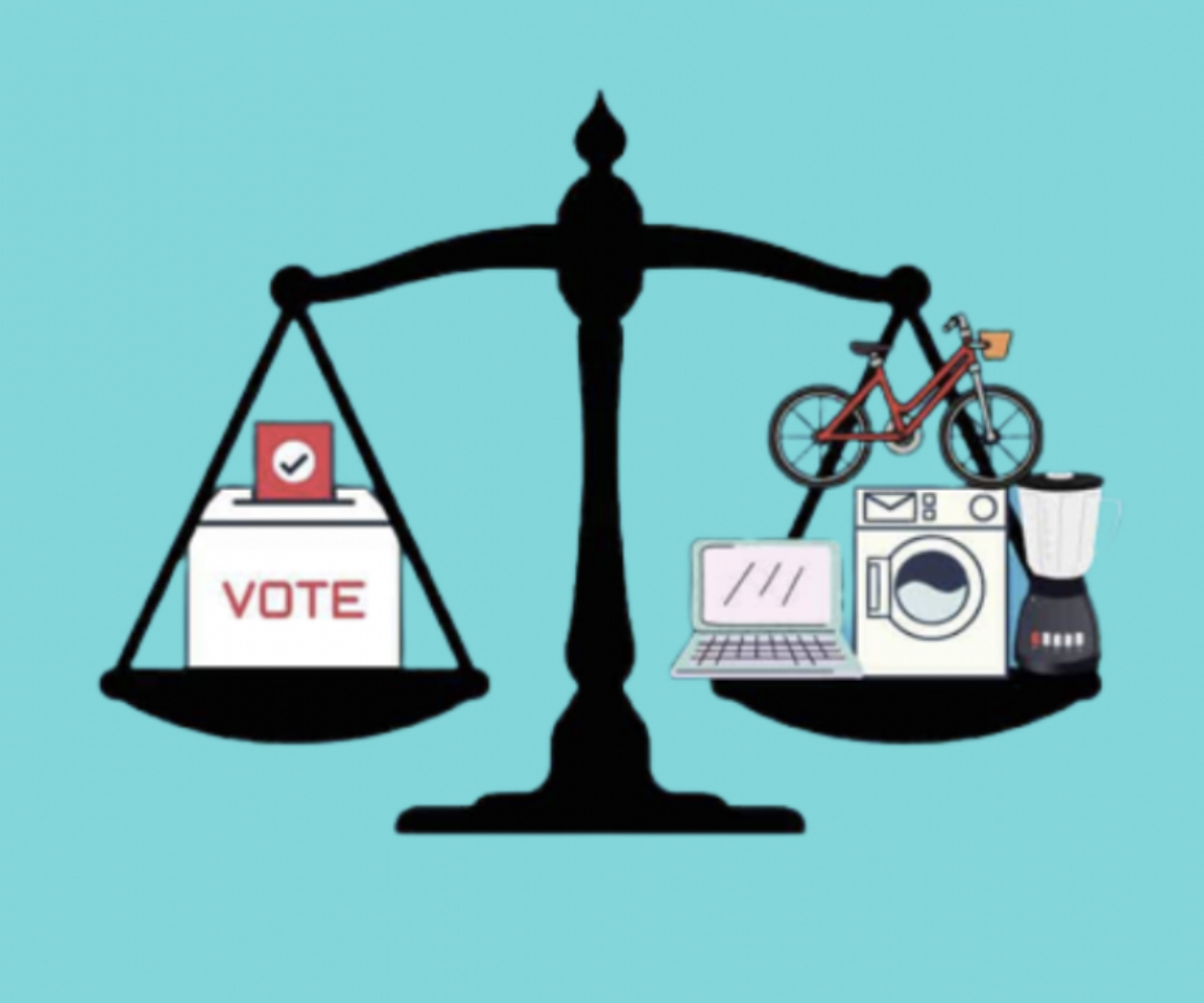
    The debate over “freebies” in Indian politics has now entered the constitutional arena, with the Supreme Court of India agreeing to examine whether pre-election promises of cash transfers funded from the public exchequer amount to a “corrupt practice” under the Representation of the People Act, 1951. The Supreme Court said the petition will be heard in March. What began as a political accusation has evolved into a deeper inquiry into fiscal responsibility, democratic fairness, and the character of India’s welfare state. At stake is not merely the legality of campaign promises, but the broader balance between social justice and macroeconomic prudence in a competitive democracy.

    Tamil Nadu Chief Minister M.K. Stalin’s announcement on February 13, 2026, implementing a major bonanza for women in the poll-bound state of Tamil Nadu—crediting ₹5,000 each to the bank accounts of 1.31 crore women family heads who are beneficiaries under the scheme Kalaignar Magalir Urimai Thittam (KMUT)—has added further interest to the debate.

    The petition filed by BJP leader Ashwini Kumar Upadhyay raises foundational questions. Can electoral promises financed from public funds distort the level playing field? Where does legitimate welfare end and electoral inducement begin? And should courts regulate what is essentially a political and fiscal policy choice? The Representation of the People Act identifies certain forms of bribery and inducement as corrupt practices, yet it does not clearly define whether manifesto promises of welfare schemes fall within that ambit. This definitional ambiguity has allowed successive governments across party lines to expand direct benefit transfers without clear judicial boundaries.

    The controversy gains urgency when viewed through the prism of fiscal sustainability. In Maharashtra, the Ladki Bahin Yojana reportedly costs approximately ₹46,000 crore annually—nearly 8 percent of the state’s total budget—at a time when the fiscal deficit exceeds ₹66,000 crore. Such recurring commitments constrain fiscal space for capital expenditure on infrastructure, education, and healthcare. The 2019 farm loan waiver of roughly ₹25,000 crore provided immediate relief but was widely criticized for restricting long-term investment capacity. Economists warn that debt-financed consumption spending can crowd out growth-oriented expenditure, raise debt-to-GSDP ratios, and increase interest burdens that future taxpayers must bear. The Reserve Bank of India has cautioned that excessive non-merit subsidies may affect macroeconomic stability, underscoring the long-term risks of fiscally expansive populism.

    Yet the debate is complicated by the absence of a universally accepted definition of a “freebie.” Economist C. Rangarajan has suggested distinguishing between subsidies on merit goods such as education and health and non-merit transfers that lack productivity linkages. But even this distinction is not always clear. Is free electricity for farmers a distortionary subsidy or a growth investment? Is free education merely welfare, or a constitutional obligation under the right to education framework? Is unconditional income support empowerment for vulnerable households, or an electoral inducement timed for political gain? The boundary between welfare and populism is not merely economic; it is normative and political.

    International comparisons add nuance but not easy solutions. Countries such as Germany and South Korea operate structured welfare systems in which benefits are often linked to employment search requirements, skill development, or contributory social insurance. These systems are embedded within stable fiscal architectures and high levels of formal employment. India, by contrast, confronts a large informal sector, weak employment absorption, and rising aspirations among its population. In such a setting, unconditional cash transfers are administratively simpler and politically more attractive than complex structural reforms.

    Electoral timing further complicates perceptions of legitimacy. In several states, welfare schemes have been expanded, advanced, or newly announced shortly before elections. Even when legally permissible, such timing creates the impression that public finances are being leveraged for electoral advantage. The criticism is not confined to one political formation. Prime Minister Narendra Modi has warned against what he termed “revdi culture,” arguing that fiscally irresponsible promises burden future generations. Yet critics note that the Modi government is providing free food grains to over 81 crore beneficiaries under the Pradhan Mantri Garib Kalyan Anna Yojana (PMGKAY) to ensure food security and reduce financial burdens. This initiative covers Antyodaya Anna Yojana (AAY) and Priority Households (PHH) under the National Food Security Act, with a five-year budget of ₹11.80 lakh crore. Moreover, BJP-led governments in states such as Assam, Delhi, Maharashtra, and Madhya Pradesh operate substantial direct transfer schemes of their own. What emerges is less an ideological contradiction than a structural incentive within a competitive democracy.

    Direct transfers produce immediate and visible benefits to identifiable voters. Infrastructure projects, by contrast, yield slower and more diffuse gains that are harder to attribute to a particular government. In an electoral environment where tangible short-term relief can decisively influence outcomes, parties across the spectrum may feel compelled to adopt similar strategies. The result is a normalization of competitive cash-transfer politics, where the debate shifts from whether to provide transfers to how large and how frequent they should be.

    As the Supreme Court considers the legal framework, it faces a delicate institutional balance. An aggressive intervention could risk judicial overreach into policymaking and blur the separation of powers. A restrained approach, however, may leave fiscal populism unchecked in shaping electoral competition. The solution may not lie in absolute prohibition or blanket endorsement, but in greater transparency and accountability. Mechanisms such as mandatory fiscal impact disclosures in manifestos, adherence to medium-term fiscal responsibility frameworks, or the establishment of independent fiscal councils could introduce discipline without undermining democratic choice.

    Ultimately, the freebies debate reflects a deeper tension within India’s development trajectory—between redistribution and growth, between immediate relief and long-term investment, and between electoral competition and fiscal prudence. In a democracy committed to both social justice and economic stability, the challenge is not to eliminate welfare but to design it responsibly. Whether cash transfers represent empowerment or populism depends on their timing, targeting, sustainability, and measurable outcomes. The Court may clarify legal boundaries, but the enduring balance between welfare and responsibility will remain a political question, to be negotiated through informed public debate and accountable governance.