Tag: Trump

  • Constitutional Courts and Economic Power: A Tale of Two Democracies

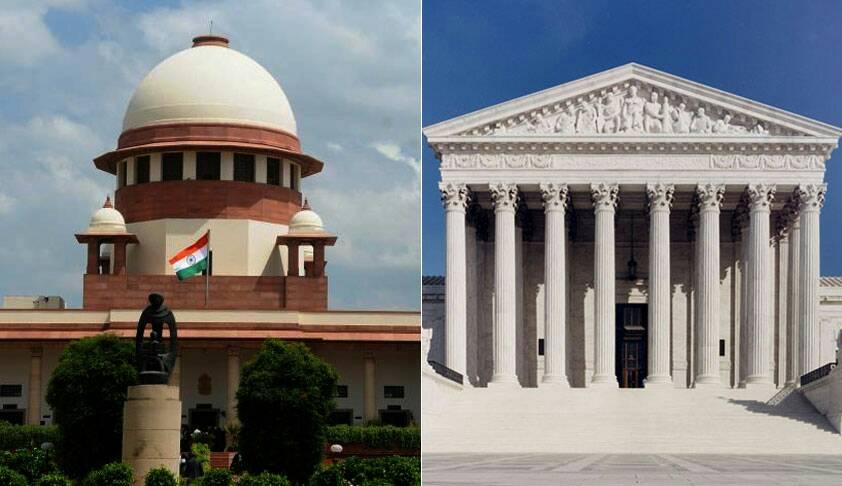
    The recent ruling of the Supreme Court of the United States striking down former President Donald Trump’s sweeping global tariffs has not only redrawn the limits of executive authority in Washington but also triggered diplomatic and political recalibration in New Delhi. At the core of the episode lies a constitutional constant shared by both democracies: the principle of judicial independence and the judiciary’s role in enforcing the separation of powers.

    In a 6–3 verdict, the U.S. Supreme Court held that the President had exceeded his authority under the International Emergency Economic Powers Act by imposing wide-ranging import duties without explicit congressional approval. Reaffirming that the constitutional power to levy taxes and duties rests with Congress under Article I, Section 8, the Court underscored that emergency powers cannot become a gateway for bypassing legislative authority. The judgment was widely viewed as a strong institutional assertion of judicial independence, especially given the political and economic stakes attached to the tariff regime.

    The ripple effects were immediate. The interim Indo-U.S. trade framework, announced earlier with provisions to reduce reciprocal tariffs on Indian goods from 25% to around 18%, was premised on the enforceability of the U.S. Executive’s tariff structure. With the Supreme Court invalidating the legal foundation of that regime, trade experts suggested that more than half of India’s exports to the United States could revert to standard tariff treatment. Although the U.S. administration subsequently invoked Section 122 of the Trade Act of 1974 to impose temporary global tariffs for 150 days, the long-term contours of the bilateral arrangement remain uncertain. Indian negotiators have reportedly deferred further talks to reassess the new legal landscape, placing the trade deal in a state of cautious pause rather than definitive rollback.

    Domestically, the ruling has intensified political debate. Senior Congress leader Jairam Ramesh questioned the timing of the interim agreement and called for it to be placed on hold until greater clarity emerges from the U.S. side. He urged the government to ensure that import liberalisation would not proceed without legally sustainable commitments and warned of potential adverse effects on Indian farmers cultivating crops such as corn, cotton, soybeans, and apples. Ramesh’s remarks framed the U.S. Court’s decision as an illustration of constitutional checks in action and suggested that India must exercise similar prudence in safeguarding domestic interests.

    The broader debate inevitably draws comparisons with India’s own judicial approach to major economic decisions. The Supreme Court’s judgment in Vivek Narayan Sharma v. Union of India, which upheld the 2016 demonetisation of ₹500 and ₹1000 notes, remains one of the most consequential economic rulings in recent years. By a 4–1 majority, the Court concluded that the decision-making process satisfied the requirements of the Reserve Bank of India Act and that economic policy choices fall within the domain of the Executive unless they violate constitutional or statutory limits. The majority emphasized judicial restraint, holding that courts should not substitute their judgment for that of policymakers in complex fiscal matters.

    However, the verdict also contained a powerful dissent. Justice B.V. Nagarathna held that such a sweeping measure, which invalidated 86% of the currency in circulation overnight, should have been carried out through legislation rather than by executive notification. She argued that bypassing Parliament undermined constitutional procedure and that the RBI’s recommendation process was not independent in substance. Critics of the majority judgment contended that the Court avoided a searching inquiry into the socio-economic impact of demonetisation, including hardship faced by small traders, daily wage earners, and rural populations. They also noted that no retrospective relief was granted despite the acknowledgment of widespread inconvenience.

    India’s judicial engagement with economic power can also be seen in its handling of high-stakes corporate and natural resource disputes. In the case concerning gas extraction from the Krishna-Godavari Basin, the Supreme Court, in a judgment authored by Justice Sudershan Reddy in Reliance Natural Resources Ltd. v. Reliance Industries Ltd. (2010), examined the dispute between the Ambani brothers over gas supply from the KG-D6 block operated by Reliance Industries Limited. The Court held that natural gas is a national asset and that its pricing and allocation fall within the sovereign domain of the Government of India. It ruled that private family agreements could not override government policy or the production-sharing contract framework. The verdict reaffirmed that natural resources are held in trust for the public and that executive policy decisions regarding their allocation must align with constitutional principles.

    That judgment underscored an important dimension of judicial independence in India: the willingness to assert the State’s sovereign control over strategic resources while resisting attempts to privatise public policy through corporate agreements. At the same time, the Court showed deference to governmental policy prerogatives in determining pricing and allocation, thereby balancing judicial review with executive competence in economic administration.

    This contrast between the U.S. Supreme Court’s assertive invalidation of executive tariffs and the Indian Supreme Court’s deferential stance in demonetisation highlights differing judicial temperaments. While both courts operate within robust constitutional frameworks, the American ruling reflects a readiness to directly curtail executive economic power on separation-of-powers grounds. The Indian verdict, in contrast, underscored institutional restraint in matters of fiscal policy, even as dissenting voices articulated constitutional concerns about process and parliamentary oversight.

    Earlier landmark cases such as Kesavananda Bharati v. State of Kerala had established that judicial review and separation of powers form part of the Constitution’s basic structure, beyond Parliament’s amending power. Yet, the demonetisation ruling demonstrated that the exercise of judicial independence is often calibrated rather than absolute. The Court reaffirmed its authority to review executive action but chose a limited standard of scrutiny in economic governance.

    As the Indo-U.S. trade deal stands at a crossroads, these developments serve as a reminder that judicial decisions can reshape not only domestic governance but also international economic relations. The U.S. Supreme Court’s judgment has recalibrated trade diplomacy, while India’s own judicial precedents continue to shape debates over executive accountability in economic policymaking. In both democracies, the judiciary remains a central constitutional actor—sometimes assertive, sometimes restrained—but always pivotal in defining the limits of power.
  • How Many Epsteins Walk Among Us?

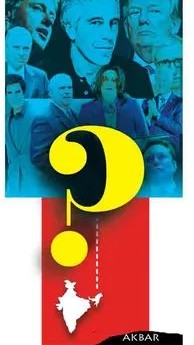
    Within two days of U.S. Attorney General Pam Bondi announcing that all files related to Jeffrey Edward Epstein—who committed unheard-of atrocities—had been released, President Donald Trump declared that his innocence had been proven and that he had no connections whatsoever with the criminal. Although Trump’s name reportedly appeared 38,000 times in these files, the U.S. Department of Justice also clarified that the mere mention of names does not mean that everyone referenced had any involvement in Epstein’s heinous crimes.

    There may continue to be numerous rumors on social media for some time regarding the names found in Epstein’s emails and the various photographs circulating online. However, strong efforts are underway to draw a curtain over the Epstein episode that shook not only the United States but many other countries as well. In fact, when Epstein was found dead in a U.S. jail in 2019, it seemed as though a major act in the effort to whitewash his crimes had concluded. With the U.S. Justice Department stating that it had nothing further to disclose about Epstein’s connections with top leaders of major American parties, as well as numerous global leaders, business magnates, and prominent individuals, many must have breathed a sigh of relief. How could they welcome the exposure of the rot within the world’s financial systems and the filth embedded in political structures that might engulf them?

    Many of Prime Minister Narendra Modi’s opponents believed that the release of the Epstein files could pose a threat to his government as well. However, it turned out to be a storm in a teacup. Apart from a mention in emails that Modi traveled to Israel for work related to Trump, there was no other reference to him. As for Union Minister Hardeep Singh Puri, though his name reportedly appeared several times, no evidence was found suggesting his involvement in Epstein’s criminal activities. Puri maintains that he became acquainted with Epstein while working with an international peace organization, where Epstein was part of a delegation, and that he later sought his assistance in matters beneficial to India. After retiring from India’s Ministry of External Affairs in 2013, Puri was appointed to the Union Cabinet in 2019. If Prime Minister Modi entrusted the former diplomat with key responsibilities, it is not an exaggeration to assume that Puri must have rendered services beneficial to India on the international stage.

    What does the Epstein affair tell us? It makes clear that the rule of law is not equal—not only in India but anywhere in the world. It reveals that there is perhaps no place where justice is dispensed equally to all, irrespective of wealth, influence, or social standing, and that institutional weaknesses exist everywhere in the investigative process. The growing tendency to commit grave crimes while disregarding the criminal justice system—backed by financial power and political clout—poses a major challenge to modern legal systems.

    Although allegations that Epstein was involved in the trafficking of minor girls surfaced as early as 2005, the American legal system did not take them seriously. When he was arrested in 2008, Epstein accepted the charges against him, thereby securing a reduced legal process. The system appeared to acquiesce to his efforts to mitigate the severity of prosecution. Even during the few months he was in custody, he allegedly continued his illegal activities through his influence, with authorities turning a blind eye. Following renewed allegations and the anguished cries of victims, the case was reopened after 11 years in 2019, and he was arrested again. Within days of that arrest, Epstein died under suspicious circumstances in jail; it was officially ruled a suicide. Owing to media reports and public demand, the Epstein files were released, and the names of many powerful figures surfaced, causing a sensation.

    The tragic reality is that the world is filled with such Epsteins. Exploiting loopholes in political and economic systems, individuals like him rise as influential figures. Though he had no notable academic credentials and once worked as a teacher, Epstein was worth 600 million dollars at the time of his death. He owned the largest private mansion in New York City, two islands, homes in New Mexico and Paris, numerous cars, private aircraft, and substantial investments in several companies. How did all this wealth accumulate?

    Epstein cultivated relationships with U.S. Presidents Trump, Biden, and Clinton; billionaires Elon Musk and Bill Gates; Melania Trump; as well as numerous heads of state, business leaders, and senior officials worldwide. At least a hundred political leaders from various countries, senior diplomats, over 200 billionaires, and corporate chiefs were said to have fallen into his web. He funded public representatives, lawyers, and even media organizations. He provided financial support to universities and research institutions. Even progressive intellectual Noam Chomsky was among those who received his patronage. Epstein flew many individuals on his private jets and hosted others at his Palm Beach mansion in luxury. He not only sexually abused numerous young women and minor girls but also used them to entrap prominent figures. By financing political leaders across several European countries, he reportedly influenced their political systems. Once connections with him were exposed, major figures in ten countries resigned. Diplomats and ministers stepped down in multiple nations. Some expressed regret; most remained silent. “Documents may fuel rumors, but cases cannot be built solely on them,” remarked an American legal expert. The entire episode exposed the nexus between politicians, criminals, and major business magnates. It demonstrated that brokers and intermediaries often determine the dynamics of political and economic systems.

    Do we not have brokers here? The late Prime Minister P. V. Narasimha Rao briefly alluded, in his novel The Insider, to the role played by brokers in the streets of Delhi, in the Prime Minister’s Office, other ministries, and party offices, including the presence of women in such networks. A report prepared by the Central Vigilance Commission during the Vajpayee era about the influence of middlemen in defense procurements was never made public. Although the Commission suggested legalizing intermediaries, who would be willing to transparently disclose financial transactions?

    Global capitalism operates largely through wealth, social connections, and political networks. Power often flows not through official positions but through networks. In our country too, networks and lobbying are used to settle cases, transfer illicit funds abroad, and secure advantages for big business houses. Sponsorships, sexual favors, expensive gifts, and banquets in luxury hotels are common in this process, all under the guise of development. Leaders show little discretion about whom they elevate. Tragically, these brokers sometimes appear openly—and are even helped by political leaders to become members of legislative bodies.

    According to Transparency International, India ranks 91st out of 182 countries in corruption. As per the National Crime Records Bureau, one girl goes missing every eight minutes. The Supreme Court of India has also expressed serious concern about sex trafficking and child exploitation in the country. Does this not reveal how our systems function? Do political leaders who speak grandly about Sanatana Dharma, tradition, Ram Rajya, patriotism, and righteousness practice honesty, transparency, and accountability? Are investigative agencies and judicial processes functioning properly? Are systems protecting those who abide by the law? Above all, are moral standards being upheld?

    In the United States, at least under public pressure, documents related to a depraved individual were made public. In our country, who will discuss such grave secrets?

  • India’s Uneasy Balancing Act in the Trump Era

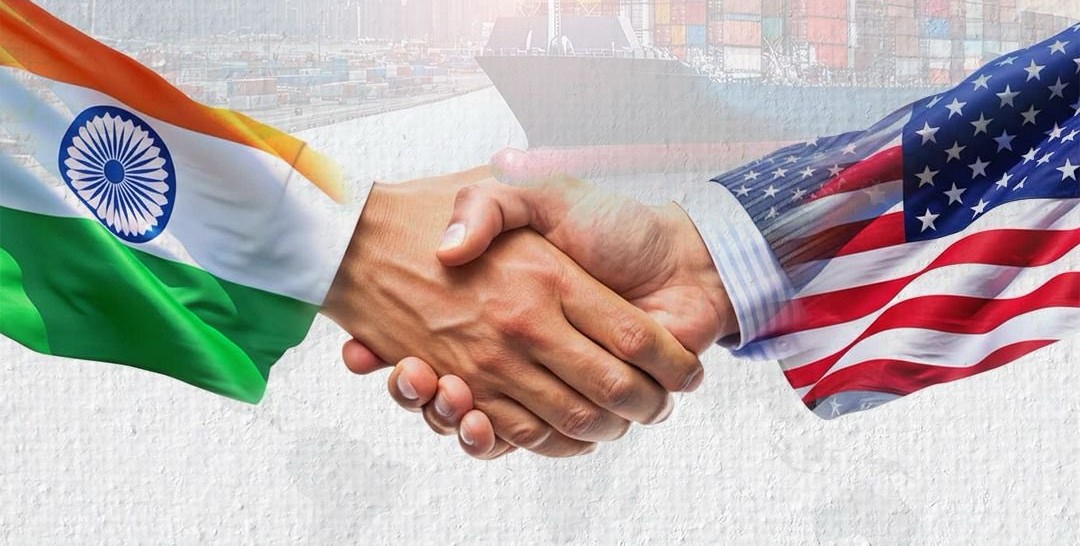
    A close reading of the India–US agreement makes it evident that New Delhi is unwilling to treat US President Donald Trump as an adversary. Keen to prevent any further deterioration in bilateral relations, India appears to have adopted a cautious and conciliatory approach. The United States has already imposed tariffs of up to 50% on Indian exports, severely impacting textiles, jewellery, engineering goods and chemicals. India’s trade deficit is widening, and a series of unilateral statements by Trump have pushed Prime Minister Narendra Modi into a defensive posture at home, where he faces questions he is increasingly unable to answer. This appears to have prompted efforts to placate the US President.

    Two months ago, US Senator Lindsey Graham, a close ally of Trump, told reporters aboard Air Force One that Indian Ambassador Vinay Kwatra had met him, conveyed that India had reduced oil imports from Russia, and urged him to persuade Trump to lower tariffs. Trump, standing beside him, warned that unless India completely stopped purchasing Russian oil, matters could worsen. “India wants to make me happy. Modi is a good man. He knows I’m not happy — and making me happy is very important. If India doesn’t help on the Russian oil issue, tariffs could be increased,” Trump said. The warning came shortly after the US attack on Venezuela, highlighting the pressure India was facing.

    Why should a US President certify India’s Prime Minister? Why should India align its policies to suit Washington’s preferences? Why should Modi seek to “please” Trump? These are questions India appears unwilling — or unprepared — to raise. Despite being larger than the European Union in scale, India does not seem ready to assert that it fears no one and can independently determine its foreign policy and internal security priorities. The ideals of non-alignment and strategic autonomy appear absent from current decision-making.

    At an RSS event marking its centenary year on Saturday, RSS chief Mohan Bhagwat underscored that while economic interdependence among nations is a reality, it must be voluntary and not driven by coercion. He cautioned against decisions imposed through trade wars and tariff pressure, arguing that international trade should be guided by a country’s free will. Agreements, he said, should not be entered into out of helplessness. He clarified that Swadeshi does not mean isolation or a blanket ban on imports.

    Against this backdrop, attention has turned to what Bhagwat may say about the recently announced draft India–US agreement. Many observers suspect the deal was not concluded on equal terms. Notably, even before the draft was officially announced, Trump unilaterally disclosed its details in a Truth Social post, stating that India would stop buying Russian oil and instead source oil from Venezuela. Prime Minister Modi promptly endorsed the announcement and expressed satisfaction, later being felicitated at an NDA meeting.

    Subsequently, US Trade Representative Jamieson Greer and Agriculture Secretary Brooke Rollins outlined the agreement’s details. Only thereafter did Commerce Minister Piyush Goyal address the issue, stating that Modi had leveraged his personal friendship with Trump to secure a favourable deal. Critics argue this framing overlooks the fact that agreements are concluded between nations, not individuals. It is India’s 1.4-billion-strong market that gives it negotiating strength — not personal rapport. After all, the India–US civil nuclear agreement was not a personal arrangement between Manmohan Singh and George W. Bush.

    Even with Trump reducing tariffs to 18%, questions remain about the deal’s benefits. Prior to July 2025, Indian exports to the US faced an average tariff of just 3%. The new rate represents a sixfold increase in less than a year. Meanwhile, India has reduced tariffs on American products such as Harley-Davidson motorcycles and several alcoholic beverages. Though US goods earlier faced tariffs averaging around 15% in India, these duties will now be eliminated.

    Goyal claimed the agreement would open the $30 trillion US market to Indian exporters, benefiting MSMEs, farmers and fishermen, and generating millions of jobs for women and youth. However, he avoided questions on the reported halt to Russian oil imports. External Affairs Ministry spokesperson Randhir Jaiswal maintained that India accords the highest priority to the energy security of its 1.4 billion citizens.

    Under the agreement, American products will enter India at zero tariffs, while the US will impose an 18% duty on Indian textiles, garments, leather, footwear, plastic and rubber goods, organic chemicals and select machinery. Generic pharmaceuticals, gems and jewellery, diamonds and aircraft parts will be exempt. India has committed to purchasing $500 billion worth of US goods, but the agreement does not specify reciprocal US purchases from India.

    The Congress party criticised the deal, alleging it was unequal and that India had opened its agricultural market to the US at zero tariffs. Congress spokesperson Pawan Khera described it as “Narender Surrender,” claiming it would enable dumping of American goods in India. Former Finance Minister P. Chidambaram said the agreement appeared heavily tilted in Washington’s favour, while former Union Minister Jairam Ramesh warned that India’s imports from the US could triple, erasing its long-standing trade surplus.

    Whether the government’s claims or the opposition’s criticism prove accurate remains to be seen.

    Meanwhile, there is little indication of any softening in the US stance on visa issues affecting Indians. Trump has significantly tightened visa norms, causing hardship for Indian professionals reliant on H-1B visas and for Indian students. Visa renewals now take years, and it remains unclear whether the Prime Minister’s much-touted personal rapport with Trump will yield any relief.

    The economic and political consequences of the India–US agreement, many argue, are likely to be far-reaching.