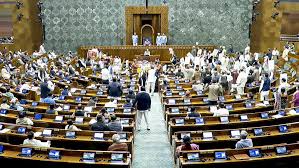
Unusual developments have taken place in Parliament. For the first time, the motion expressing thanks to the President for her address was passed in the Lok Sabha on Thursday by a voice vote. On this occasion, the Prime Minister did not come to the Lok Sabha to reply to the debate on the motion, which is without precedent.
Lok Sabha Speaker Om Birla stated that he had advised the Prime Minister not to attend the House due to security considerations, following an incident on Wednesday in which a few women Members of Parliament approached the Prime Minister’s seat. Congress MP Priyanka Gandhi later clarified that only three women MPs had gone near the Prime Minister’s seat and questioned the security assessment within Parliament.
Opposition leaders alleged that the Prime Minister’s absence was linked to the issues raised by Rahul Gandhi in connection with remarks made by former Army Chief General Manoj Naravane in his book. Congress spokesperson Pawan Khera questioned whether protesting women MPs should be viewed as a security threat.
Prime Minister Narendra Modi was scheduled to respond to the debate on the motion of thanks at 5 p.m. on Wednesday but did not attend the Lok Sabha throughout the day. Speaker Om Birla also remained in his chamber during this period.
Opposition parties stated that they would continue to disrupt proceedings until Rahul Gandhi was allowed to complete his speech in the Lok Sabha, citing references to General Naravane’s book. As a result, Lok Sabha proceedings were disrupted for three consecutive days. The government did not respond substantively to the issue during this period. Parliamentary Affairs Minister Kiren Rijiju made efforts to facilitate conditions for the Prime Minister’s reply, but these efforts were unsuccessful.
Rahul Gandhi indicated that he intended to present copies of General Naravane’s book to the Prime Minister in the House. The book reportedly states that during instances of Chinese military intrusions, political leadership did not issue specific directions to the armed forces. Continued disruptions in the House led to a legislative stalemate.
Rahul Gandhi had earlier told the media that the Prime Minister would not attend the House, and the Prime Minister subsequently did not appear. Some observers, including within the ruling party, reportedly believe that the situation might have been resolved had Rahul Gandhi been permitted to complete his speech.
Separately, the government faced questions from the opposition regarding the India–United States trade agreement. According to sources in the Commerce Ministry, the agreement has not yet been finalized, and discussions are ongoing, including on access for certain agricultural products. Despite this, statements were made by the US President regarding large-scale purchases by India and changes in India’s energy imports, prompting calls for clarification.
Although the White House Press Secretary issued an official statement, the Indian government did not provide detailed clarification. Commerce Minister Piyush Goyal stated that the proposed agreement would benefit India’s population and support exports but did not outline specific details.
These developments have raised broader questions regarding decision-making during periods of border tensions with China and the nature of political direction provided at such times, as referenced in General Naravane’s book. Observers have called for clear explanations on both national security matters and the status of the India–US trade discussions.
On the second day after the Union Budget was presented, immediately following the President’s address, Parliament plunged into severe chaos. This raises a fundamental question: do either the opposition or the government genuinely intend for Parliament to function smoothly? Conventionally, after the Budget is presented, discussion takes place on the motion of thanks to the President’s address, and only thereafter do debates on budget proposals begin. The President’s address to both Houses of Parliament is, in effect, a policy document of the government.
The President’s address detailed the various welfare schemes being implemented by the Modi government, its programmes, and the priority being accorded to infrastructure development. Rising above political differences, the President called upon all national representatives to work collectively in the national interest in line with the goal of Viksit Bharat (Developed India). Ironically, the very next day after the Budget presentation, parliamentary proceedings became impossible due to intense confrontations between the ruling and opposition parties. Who is responsible for this situation?
During the discussion on the President’s address that began on Monday, BJP MP Tejasvi Surya launched sharp attacks on the Congress. His remarks accusing the Congress of being opposed to Indian civilisation, culture, nationalism, and patriotism provoked the party. Would a Congress already seething with multiple wounds remain silent?
Immediately thereafter, Leader of the Opposition Rahul Gandhi entered the fray, strongly objecting to questioning Congress’s patriotism and nationalism. He began by saying, “Since the BJP’s young MP has made remarks about our patriotism and Indian culture, I would like to read out a few sentences.” He proceeded to read excerpts published by The Caravan magazine from Four Stars of Destiny, a book written by former Army Chief General M.M. Naravane on the 2020 border clash with China.
As soon as Rahul Gandhi began reading passages written by Naravane about Prime Minister Narendra Modi and Defence Minister Rajnath Singh, BJP MPs created an uproar. Defence Minister Rajnath Singh, Home Minister Amit Shah, and Parliamentary Affairs Minister Kiren Rijiju raised strong objections, questioning how excerpts from an unpublished book could be read in Parliament. Speaker Om Birla clarified that doing so was not permissible under Rule 342. Heated arguments ensued not only between ruling and opposition members but also between the Speaker and opposition MPs.
The same situation continued on Tuesday. Rahul Gandhi submitted a written note to the Speaker asserting that the contents of Naravane’s book were authentic and resumed his speech. However, ruling party members obstructed him as usual. Every time the word “Prime Minister” was uttered, the Speaker intervened. Amid the chaos over Rahul Gandhi being repeatedly stopped, eight Congress MPs were suspended. Eventually, after several adjournments, the House was adjourned till Wednesday.
Why did the situation deteriorate to this extent? Were Tejasvi Surya’s attacks solely responsible for provoking Congress? Why is the BJP preventing any reference to the contents of General Naravane’s book? In reality, the Centre has been blocking the book’s publication for the past two years. The Ministries of Defence and External Affairs have not yet granted permission to the publisher. Naravane himself stated, “I have written what I had to write. It is for the publisher to decide how to release the book.” He has neither commented on the controversy surrounding the book’s contents nor responded to The Caravan excerpts—suggesting that he stands by what he wrote.
Border clashes between India and China are not new. Numerous books have documented the mistakes of the Nehru government that led to war with China. During that war, Nehru expressed anguish over possibly losing Assam, saying, “My heart goes out to the people of Assam,” a remark that caused a sensation. The Congress never attempted to conceal the failures, defeats, and mistakes that occurred during its rule. Those very failures are partly why Congress today finds itself on the defensive on issues of national security and unable to recover from electoral defeats.
But under Modi’s tenure, even discussion of such matters appears impossible. Why is there a refusal to debate issues of national importance, even while minor successes are exaggerated and celebrated with excessive propaganda? Had Naravane’s book been released, it would have been debated for a few days and the matter would have settled.
Naravane wrote that during China’s intrusion into the Galwan Valley, the Defence Minister conveyed that the Prime Minister told him, “Do whatever you deem appropriate.” What exactly happened at that time, how many discussions were held, with whom, and after how much deliberation the Prime Minister decided to leave the matter to the Army—these details cannot be explained transparently on the floor of Parliament. At the same time, completely suppressing the issue and preventing any voice from being raised in Parliament only fuels suspicion.
In reality, budget sessions are meant for discussion on the Budget. A positive environment should have been created for debate on the so-called “mother of all agreements” signed with the European Union just days before the Budget. Instead, discussion on the Budget presented by Nirmala Sitharaman collapsed on the second day itself.
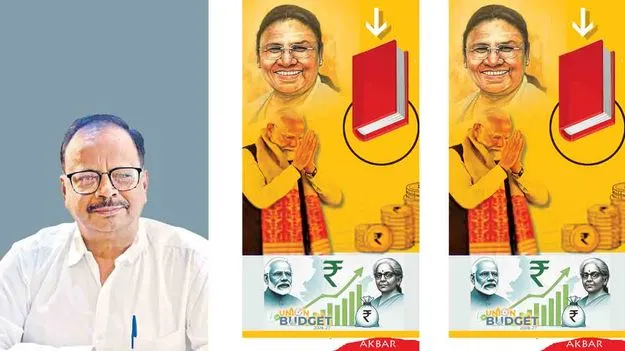
This is the third Budget presented by the Modi government since returning to power for a third term. With revenues estimated at ₹36.5 lakh crore and expenditures at ₹53.5 lakh crore, the government plans to borrow nearly ₹12 lakh crore and raise the remaining funds from the public and through disinvestment. Allocating ₹12.20 lakh crore for capital expenditure, nearly half of it to roads and rail networks, supporting the manufacturing sector, announcing industrial corridors, attempting to curb food inflation, and preparing the country for free trade agreements with global markets—all these may appear impressive. However, none of this may be sufficient to dramatically revive the Indian economy. While the Economic Survey suggested structural reforms, the government appears to have limited itself to announcements suited to current conditions, avoiding tough policy decisions.
Markets behave like flowing rivers. When blocked in one place, they find another route. The world was not intimidated by Trump’s tariffs. The U.S. was isolated as even its partner countries entered into their own trade agreements. The EU’s agreement with India introduced zero tariffs on many goods. China and Canada struck their own agreements as well. Consequently, Trump was compelled to revise his stance and reduce tariffs on India to 18% to stay competitive.
However, Trump’s declaration that India would stop buying Russian oil and instead purchase $500 billion worth of agricultural products, energy, technology, coal, and other goods from the U.S. triggered debate over the agreement’s implications. Rahul Gandhi alleged that Modi compromised with the U.S. and that Indian farmers would suffer, while Commerce Minister Piyush Goyal asserted that this historic agreement would create vast opportunities for Indian citizens.
Until the official details of the India–U.S. joint trade agreement are publicly disclosed, neither excessive optimism nor pessimism is advisable. Nevertheless, the Modi government has entered into two major international agreements at the beginning of 2026—an undeniable development. At the same time, it has become entangled in controversies such as Naravane’s book and the Epstein files. The consequences of these developments will become clear in due course.(4-2-2026)
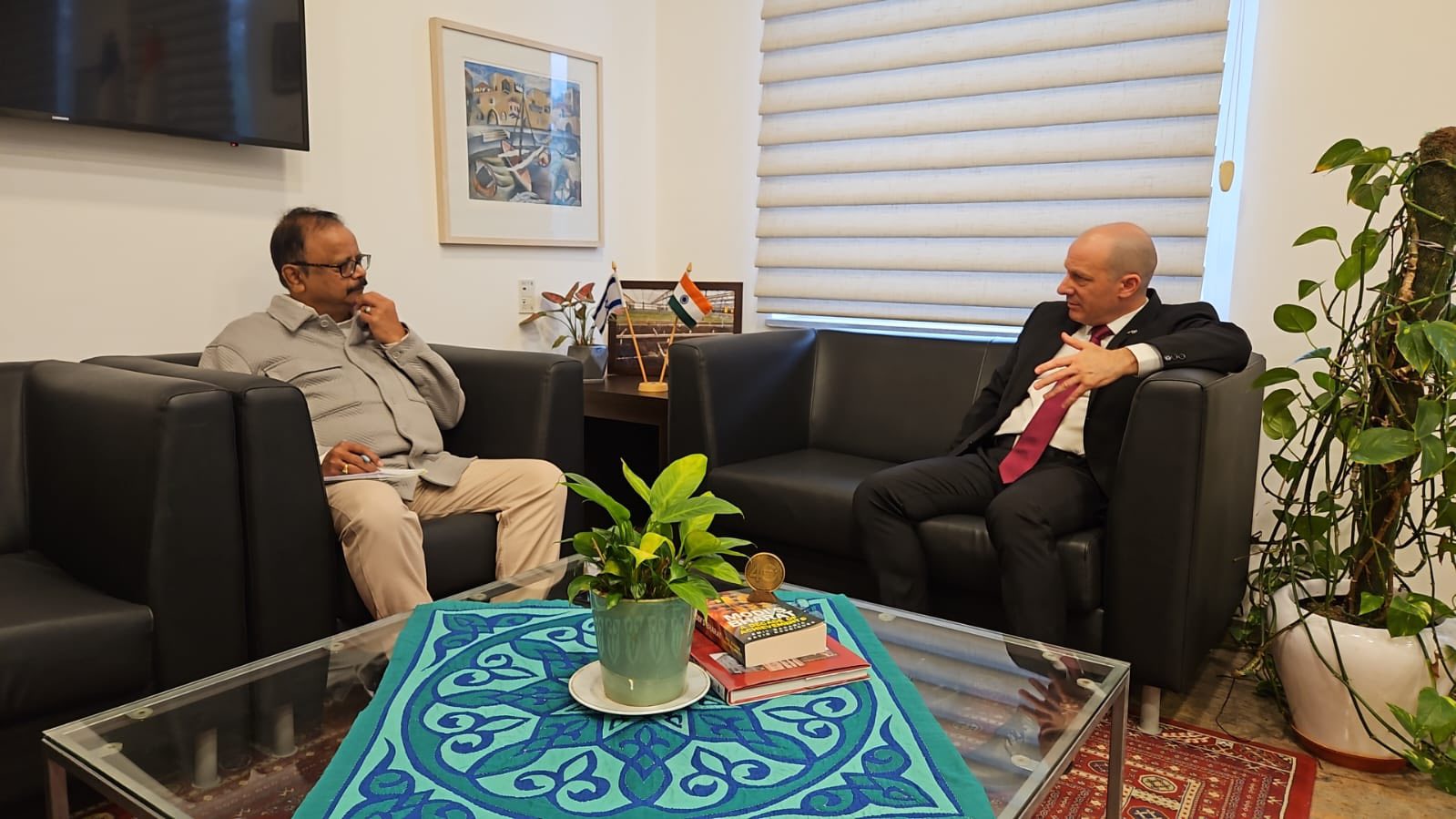
Israel’s Ambassador to India, Reuven Azar, expressed confidence that the American peace plan aimed at eliminating Hamas in Palestine and establishing peace and development would succeed. He dismissed allegations that Israel is committing genocide against Palestinians as propaganda, stating that Israel has taken several precautions to prevent civilian casualties during the war. He said Israel has no faith in the United Nations, alleging that many Hamas elements have infiltrated the organization. Noting that both India and Israel face the problem of terrorism, he said the two countries must jointly eliminate terrorist forces. He expressed hope that discussions held by Andhra Pradesh Chief Minister N. Chandrababu Naidu and Telangana Chief Minister Revanth Reddy with Israeli companies at Davos would yield positive results. Reuven Azar spoke on several issues in an interview with Andhra Jyothy’s Delhi correspondent A. Krishnarao
Will the American plan to establish peace between Israel and Palestine succeed? There are doubts about it.
American leadership in this plan is very important to us. In our region, some try to turn even a military defeat into a diplomatic victory. Therefore, it is necessary for us to convert our military victory into a diplomatic victory. War is said to be a continuation of diplomacy; diplomacy too is a continuation of war. Our primary objective is to permanently remove the threat of terrorism from our lives. We believe the American plan will succeed.
Does the American plan really matter?
We have brought back all our hostages who were held by Hamas. Just yesterday, the last hostage returned as a body. While we may have destroyed Hamas’ military infrastructure, there is still a risk of the organization regrouping and attacking us again. The American peace plan seeks to dismantle Hamas through diplomatic means. More than half of Gaza is under Israeli control. However, the areas with the highest population density in Gaza remain under Hamas’ control. The plan aims to establish a new government without the involvement of Hamas or Fatah.
Why is the United States taking the lead when the United Nations exists? Many countries criticize Trump for acting as if the UN does not exist.
The UN Security Council has passed a resolution supporting America’s 20-point plan. That itself indicates Security Council support for us. We do not wish for a greater role for the UN, because some UN agencies have colluded with Hamas, especially the UN Relief and Works Agency. Established in 1948, this organization perpetuates the conflict by ensuring that Palestinian refugees are not resettled. Senior Hamas officials are part of this agency. That is why we do not trust the UN regarding the peace plan.
Is there any truth to allegations that Israel is committing mass killings in Palestine?
Several hostile countries in the UN are trying to rewrite international law. They portray Israel as deliberately starving Palestinian children and committing genocide. The number of children vaccinated by the World Health Organization in Gaza is higher than the number of children before the war. Where are the reports of deaths due to starvation? In reality, Israel has done everything possible to prevent civilian deaths during the war. The number of civilian casualties in this conflict is very low.
But it is being said that 70,000 people were killed in Israeli attacks. Is that a small number?
That is not true. Of those 70,000, about 11,000 died of natural causes. Around 5,000 were killed due to failed Hamas rocket launches. At least 25,000 of the dead were Hamas terrorists. In urban warfare, civilian casualties are generally high, often in a ratio of 1:4 or 1:5 compared to combatants. But in this war, civilian casualties are comparatively low. Still, even one death is tragic.
Many people in India believe that Israel is an aggressor and is carrying out mass killings of Palestinians.
Yes. This narrative needs to change. Several UN member states that distort facts, along with media outlets such as Al Jazeera from Qatar, TRT from Turkey, and some organizations that support Muslim countries, are driving this narrative. Israel is a small Jewish nation with a much smaller population compared to those supporting Palestinian terrorist organizations. As a result, the situation you describe prevails in mainstream media.
In India, poetry and literature also support Palestine. No one writes poetry supporting Israel.
Changing this situation is indeed a challenge for us. In reality, Israel follows higher standards than many other countries. We have faced attacks not just from Hamas but from adversaries on seven fronts. Iran provided direct and indirect support. Hezbollah in Lebanon, militias in Syria, Iraq, Yemen, and terrorist groups in Samaria were involved. For two years, we made extraordinary efforts. Naturally, we lack resources to create favorable narratives for ourselves. Israel has restored security in all sectors. We hope for a bright future for the Palestinian people.
We have been hearing about the Palestine issue since childhood. From Jimmy Carter to Trump, US presidents have tried. Will it succeed this time?
Even I am not fully confident that peace will be achieved. But sincere efforts must continue. Some American presidents succeeded. Peace was established with Egypt and Jordan. We signed agreements with four Arab nations. Efforts must go on. Peace is very important to us. We have good relations with our neighboring countries. We have given Palestinians many opportunities to establish peace.
Even when leaders like Arafat were present, nothing worked, right?
In 2000, we proposed that they could form a state, but Arafat rejected it. After a pause, he launched another war called the Second Intifada. In 2007 and 2008, we again proposed statehood. In 2005, we withdrew from Gaza. However, terrorist organizations repeatedly exploited these opportunities to attack Israel. Therefore, we decided not to allow such situations again.
How did the US include Pakistan in the peace council when Pakistan itself promotes terrorism against India? How can you support that?
It is Trump’s decision whom to include in the peace council. We cannot dictate diplomatic protocols. However, we remain firm on security matters. We will not withdraw from Gaza until Hamas’ infrastructure is completely dismantled.
Your view on Pakistan-sponsored terrorist attacks against India? You condemned the Pahalgam attack.
Terrorism is terrorism anywhere. It should not be used as a tactic of war. Civilians should not be targeted. Terrorism is a global war. India and Israel must fight it together — not just militarily but diplomatically as well.
If peace is achieved, will Trump receive the Nobel Prize? (Laughs) Let us see what happens.
Tell us about India–Israel relations.
Following the Hamas attack on Israel and India’s Operation Sindoor after the Pahalgam attack, India–Israel relations have taken on a special character. This friendship must be strengthened further. Defense agreements have been signed. Talks are underway for another agreement to deepen industrial cooperation. We have signed the framework for a free trade agreement, which is expected to be finalized by the end of this year. By 2025, the number of Indian workers in Israel has doubled. Highly skilled Indian workers are greatly benefiting our construction sector. Israeli companies are in discussions to invest in Indian stock exchanges.
What is Israel’s role in Andhra Pradesh and Telangana?
Recently at Davos, Andhra Pradesh Chief Minister Chandrababu Naidu met our Finance Minister Nir Barkat and proposed an Israeli industrial park in Andhra Pradesh. We hope this proposal will move forward. I visited Telangana, where efforts are underway for cooperation between DRDO and Israeli defense technology firms. At Davos, Chief Minister Revanth Reddy discussed partnerships with the Israel Innovation Authority in AI, agriculture, climate change, and deep tech sectors. We hope these initiatives will succeed.
 akrishnarao