Tag: india

  • India’s Uneasy Balancing Act in the Trump Era

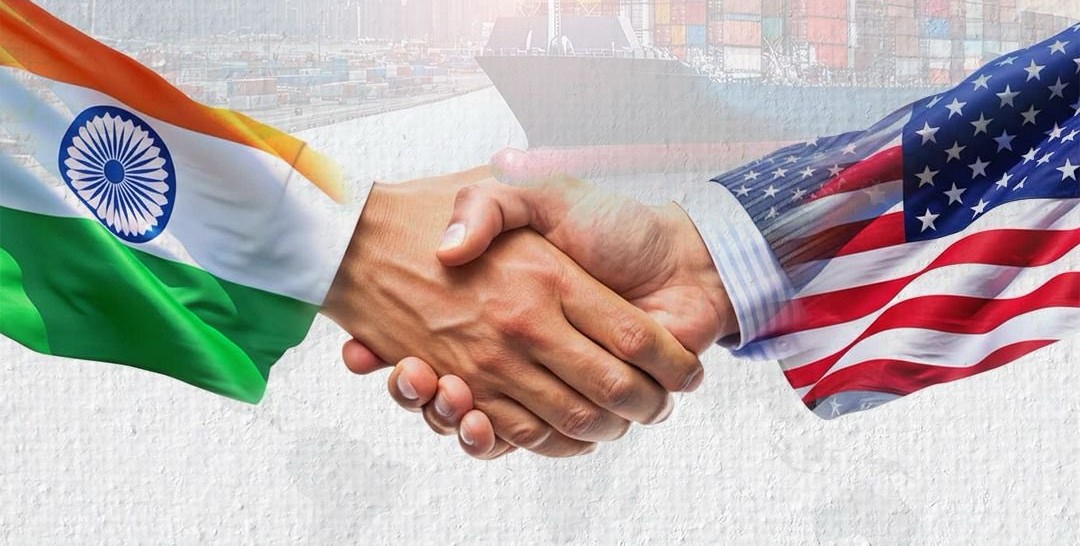
    A close reading of the India–US agreement makes it evident that New Delhi is unwilling to treat US President Donald Trump as an adversary. Keen to prevent any further deterioration in bilateral relations, India appears to have adopted a cautious and conciliatory approach. The United States has already imposed tariffs of up to 50% on Indian exports, severely impacting textiles, jewellery, engineering goods and chemicals. India’s trade deficit is widening, and a series of unilateral statements by Trump have pushed Prime Minister Narendra Modi into a defensive posture at home, where he faces questions he is increasingly unable to answer. This appears to have prompted efforts to placate the US President.

    Two months ago, US Senator Lindsey Graham, a close ally of Trump, told reporters aboard Air Force One that Indian Ambassador Vinay Kwatra had met him, conveyed that India had reduced oil imports from Russia, and urged him to persuade Trump to lower tariffs. Trump, standing beside him, warned that unless India completely stopped purchasing Russian oil, matters could worsen. “India wants to make me happy. Modi is a good man. He knows I’m not happy — and making me happy is very important. If India doesn’t help on the Russian oil issue, tariffs could be increased,” Trump said. The warning came shortly after the US attack on Venezuela, highlighting the pressure India was facing.

    Why should a US President certify India’s Prime Minister? Why should India align its policies to suit Washington’s preferences? Why should Modi seek to “please” Trump? These are questions India appears unwilling — or unprepared — to raise. Despite being larger than the European Union in scale, India does not seem ready to assert that it fears no one and can independently determine its foreign policy and internal security priorities. The ideals of non-alignment and strategic autonomy appear absent from current decision-making.

    At an RSS event marking its centenary year on Saturday, RSS chief Mohan Bhagwat underscored that while economic interdependence among nations is a reality, it must be voluntary and not driven by coercion. He cautioned against decisions imposed through trade wars and tariff pressure, arguing that international trade should be guided by a country’s free will. Agreements, he said, should not be entered into out of helplessness. He clarified that Swadeshi does not mean isolation or a blanket ban on imports.

    Against this backdrop, attention has turned to what Bhagwat may say about the recently announced draft India–US agreement. Many observers suspect the deal was not concluded on equal terms. Notably, even before the draft was officially announced, Trump unilaterally disclosed its details in a Truth Social post, stating that India would stop buying Russian oil and instead source oil from Venezuela. Prime Minister Modi promptly endorsed the announcement and expressed satisfaction, later being felicitated at an NDA meeting.

    Subsequently, US Trade Representative Jamieson Greer and Agriculture Secretary Brooke Rollins outlined the agreement’s details. Only thereafter did Commerce Minister Piyush Goyal address the issue, stating that Modi had leveraged his personal friendship with Trump to secure a favourable deal. Critics argue this framing overlooks the fact that agreements are concluded between nations, not individuals. It is India’s 1.4-billion-strong market that gives it negotiating strength — not personal rapport. After all, the India–US civil nuclear agreement was not a personal arrangement between Manmohan Singh and George W. Bush.

    Even with Trump reducing tariffs to 18%, questions remain about the deal’s benefits. Prior to July 2025, Indian exports to the US faced an average tariff of just 3%. The new rate represents a sixfold increase in less than a year. Meanwhile, India has reduced tariffs on American products such as Harley-Davidson motorcycles and several alcoholic beverages. Though US goods earlier faced tariffs averaging around 15% in India, these duties will now be eliminated.

    Goyal claimed the agreement would open the $30 trillion US market to Indian exporters, benefiting MSMEs, farmers and fishermen, and generating millions of jobs for women and youth. However, he avoided questions on the reported halt to Russian oil imports. External Affairs Ministry spokesperson Randhir Jaiswal maintained that India accords the highest priority to the energy security of its 1.4 billion citizens.

    Under the agreement, American products will enter India at zero tariffs, while the US will impose an 18% duty on Indian textiles, garments, leather, footwear, plastic and rubber goods, organic chemicals and select machinery. Generic pharmaceuticals, gems and jewellery, diamonds and aircraft parts will be exempt. India has committed to purchasing $500 billion worth of US goods, but the agreement does not specify reciprocal US purchases from India.

    The Congress party criticised the deal, alleging it was unequal and that India had opened its agricultural market to the US at zero tariffs. Congress spokesperson Pawan Khera described it as “Narender Surrender,” claiming it would enable dumping of American goods in India. Former Finance Minister P. Chidambaram said the agreement appeared heavily tilted in Washington’s favour, while former Union Minister Jairam Ramesh warned that India’s imports from the US could triple, erasing its long-standing trade surplus.

    Whether the government’s claims or the opposition’s criticism prove accurate remains to be seen.

    Meanwhile, there is little indication of any softening in the US stance on visa issues affecting Indians. Trump has significantly tightened visa norms, causing hardship for Indian professionals reliant on H-1B visas and for Indian students. Visa renewals now take years, and it remains unclear whether the Prime Minister’s much-touted personal rapport with Trump will yield any relief.

    The economic and political consequences of the India–US agreement, many argue, are likely to be far-reaching.
  • Air Pollution Outside, Political Pollution Within: India’s Twin Crises

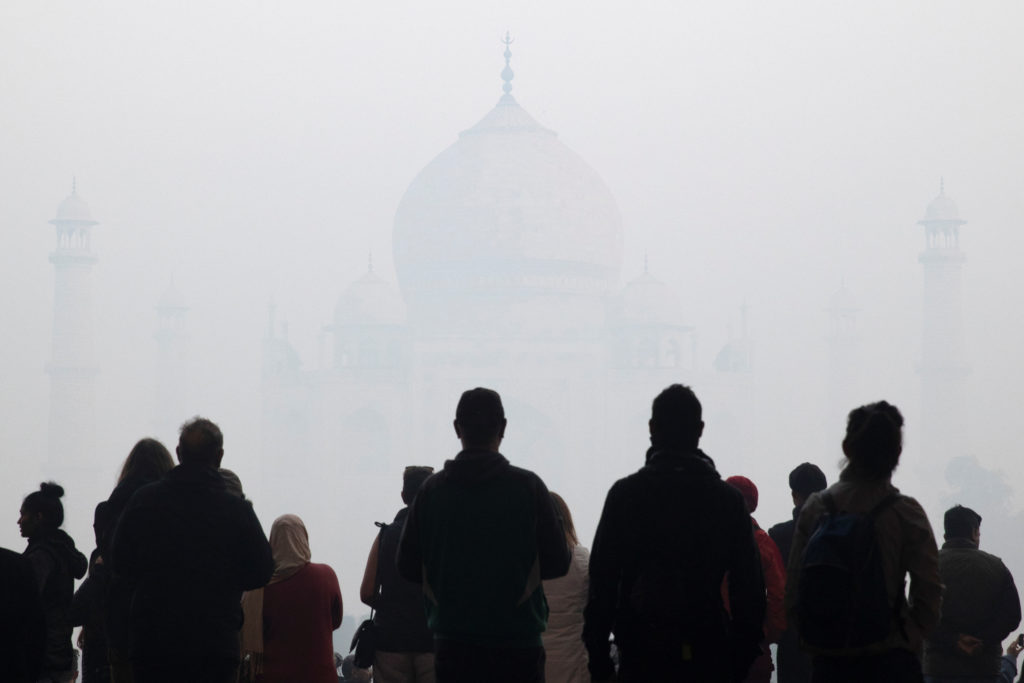
    Air pollution has engulfed India’s national capital. What were once winter mornings marked by dew on leaves are now defined by thick smog. At daybreak, a chemical sting in the eyes and persistent coughing have become routine. Although the Air Quality Index (AQI), which exceeded 300 during November and December, may have declined to around 260 by the end of January, daily life in Delhi remains severely affected.

    Beyond the toxic air outside Parliament, the atmosphere within appears no less suffocating. In both Houses, heated confrontations between the ruling party and the opposition have created a climate of near-constant disruption. Prime Minister Narendra Modi did not attend the Lok Sabha to respond to the debate on the motion thanking the President for her address, but he did speak in the Rajya Sabha, launching familiar attacks on the Congress. As he has often done, Modi traced the party’s alleged failures back to the Indira Gandhi era, accused the opposition of seeking his political demise, and charged it with disrespecting Dalits and Sikhs. The speech bore a closer resemblance to an election rally than a parliamentary response. Few leaders in India match Modi’s effectiveness as a political orator—a point even his critics concede.

    The government has attempted to sidestep discussion of a book written by former Army Chief General Manoj Naravane, but the opposition appears determined to keep the issue alive. The debate on the President’s address ended amid disorder, and there are signs that the upcoming Budget discussion may face similar disruptions. Meanwhile, Commerce Minister Piyush Goyal has said an India–US trade agreement could be finalized within days. Whether India has made significant concessions will only become clear once the details are released. Politically, the agreement represents another test for Modi, even as his opponents watch closely for potential revelations from the so-called Epstein files.

    At the World Economic Forum, IMF Chief Economist Gita Gopinath underscored a more fundamental challenge. She said air pollution poses a far greater threat to India’s economy than US tariffs on Indian goods. Gopinath noted that air pollution causes an estimated 1.7 million deaths annually and discourages foreign investment. She warned that the resulting health costs, premature deaths, and productivity losses could reduce India’s GDP by as much as 9.5 percent. India’s Commerce Minister Ashwini Vaishnaw, who was present at the forum, offered no public response.

    These concerns are echoed within India’s own policy establishment. The National Institute of Public Finance and Policy (NIPFP) has described air pollution as a failure of government policy and an ongoing public health emergency. Economist Lekha Chakraborty has pointed to rising cases of severe respiratory illness in public hospitals, increasing health expenditures, and declining labor force participation—all of which weigh on economic growth. Air pollution, she argues, is not an unavoidable risk but a solvable problem. Yet it continues to reflect governance shortcomings. Despite India’s claims of leadership in environmental economic federalism, implementation remains weak.

    China’s experience offers a contrast. Both India and China enacted environmental laws around 2000, but China followed up with sustained, long-term action. It invested heavily in pollution-control technologies, shut down thousands of obsolete and highly polluting industrial units, and aggressively promoted electric vehicles. China’s progress demonstrates what political will and consistent policy execution can achieve.

    India today faces two parallel forms of pollution—one in its air, and the other in its politics. Leaders appear more invested in applause, spectacle, and rhetoric than in effective governance that delivers tangible improvements to citizens’ lives.

  • Trade ties and War controversies

    On the second day after the Union Budget was presented, immediately following the President’s address, Parliament plunged into severe chaos. This raises a fundamental question: do either the opposition or the government genuinely intend for Parliament to function smoothly? Conventionally, after the Budget is presented, discussion takes place on the motion of thanks to the President’s address, and only thereafter do debates on budget proposals begin. The President’s address to both Houses of Parliament is, in effect, a policy document of the government.

    The President’s address detailed the various welfare schemes being implemented by the Modi government, its programmes, and the priority being accorded to infrastructure development. Rising above political differences, the President called upon all national representatives to work collectively in the national interest in line with the goal of Viksit Bharat (Developed India). Ironically, the very next day after the Budget presentation, parliamentary proceedings became impossible due to intense confrontations between the ruling and opposition parties. Who is responsible for this situation?

    During the discussion on the President’s address that began on Monday, BJP MP Tejasvi Surya launched sharp attacks on the Congress. His remarks accusing the Congress of being opposed to Indian civilisation, culture, nationalism, and patriotism provoked the party. Would a Congress already seething with multiple wounds remain silent?

    Immediately thereafter, Leader of the Opposition Rahul Gandhi entered the fray, strongly objecting to questioning Congress’s patriotism and nationalism. He began by saying, “Since the BJP’s young MP has made remarks about our patriotism and Indian culture, I would like to read out a few sentences.” He proceeded to read excerpts published by The Caravan magazine from Four Stars of Destiny, a book written by former Army Chief General M.M. Naravane on the 2020 border clash with China.

    As soon as Rahul Gandhi began reading passages written by Naravane about Prime Minister Narendra Modi and Defence Minister Rajnath Singh, BJP MPs created an uproar. Defence Minister Rajnath Singh, Home Minister Amit Shah, and Parliamentary Affairs Minister Kiren Rijiju raised strong objections, questioning how excerpts from an unpublished book could be read in Parliament. Speaker Om Birla clarified that doing so was not permissible under Rule 342. Heated arguments ensued not only between ruling and opposition members but also between the Speaker and opposition MPs.

    The same situation continued on Tuesday. Rahul Gandhi submitted a written note to the Speaker asserting that the contents of Naravane’s book were authentic and resumed his speech. However, ruling party members obstructed him as usual. Every time the word “Prime Minister” was uttered, the Speaker intervened. Amid the chaos over Rahul Gandhi being repeatedly stopped, eight Congress MPs were suspended. Eventually, after several adjournments, the House was adjourned till Wednesday.

    Why did the situation deteriorate to this extent? Were Tejasvi Surya’s attacks solely responsible for provoking Congress? Why is the BJP preventing any reference to the contents of General Naravane’s book? In reality, the Centre has been blocking the book’s publication for the past two years. The Ministries of Defence and External Affairs have not yet granted permission to the publisher. Naravane himself stated, “I have written what I had to write. It is for the publisher to decide how to release the book.” He has neither commented on the controversy surrounding the book’s contents nor responded to The Caravan excerpts—suggesting that he stands by what he wrote.

    Border clashes between India and China are not new. Numerous books have documented the mistakes of the Nehru government that led to war with China. During that war, Nehru expressed anguish over possibly losing Assam, saying, “My heart goes out to the people of Assam,” a remark that caused a sensation. The Congress never attempted to conceal the failures, defeats, and mistakes that occurred during its rule. Those very failures are partly why Congress today finds itself on the defensive on issues of national security and unable to recover from electoral defeats.

    But under Modi’s tenure, even discussion of such matters appears impossible. Why is there a refusal to debate issues of national importance, even while minor successes are exaggerated and celebrated with excessive propaganda? Had Naravane’s book been released, it would have been debated for a few days and the matter would have settled.

    Naravane wrote that during China’s intrusion into the Galwan Valley, the Defence Minister conveyed that the Prime Minister told him, “Do whatever you deem appropriate.” What exactly happened at that time, how many discussions were held, with whom, and after how much deliberation the Prime Minister decided to leave the matter to the Army—these details cannot be explained transparently on the floor of Parliament. At the same time, completely suppressing the issue and preventing any voice from being raised in Parliament only fuels suspicion.

    In reality, budget sessions are meant for discussion on the Budget. A positive environment should have been created for debate on the so-called “mother of all agreements” signed with the European Union just days before the Budget. Instead, discussion on the Budget presented by Nirmala Sitharaman collapsed on the second day itself.

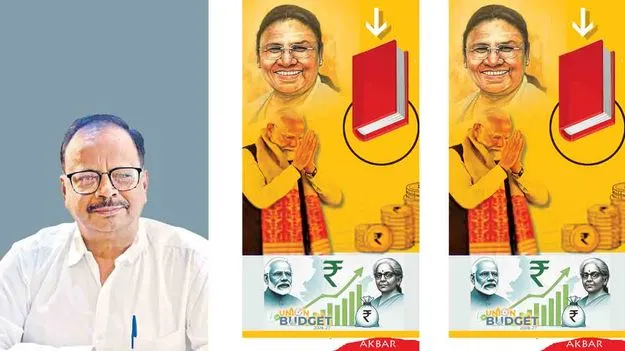
    This is the third Budget presented by the Modi government since returning to power for a third term. With revenues estimated at ₹36.5 lakh crore and expenditures at ₹53.5 lakh crore, the government plans to borrow nearly ₹12 lakh crore and raise the remaining funds from the public and through disinvestment. Allocating ₹12.20 lakh crore for capital expenditure, nearly half of it to roads and rail networks, supporting the manufacturing sector, announcing industrial corridors, attempting to curb food inflation, and preparing the country for free trade agreements with global markets—all these may appear impressive. However, none of this may be sufficient to dramatically revive the Indian economy. While the Economic Survey suggested structural reforms, the government appears to have limited itself to announcements suited to current conditions, avoiding tough policy decisions.

    Markets behave like flowing rivers. When blocked in one place, they find another route. The world was not intimidated by Trump’s tariffs. The U.S. was isolated as even its partner countries entered into their own trade agreements. The EU’s agreement with India introduced zero tariffs on many goods. China and Canada struck their own agreements as well. Consequently, Trump was compelled to revise his stance and reduce tariffs on India to 18% to stay competitive.

    However, Trump’s declaration that India would stop buying Russian oil and instead purchase $500 billion worth of agricultural products, energy, technology, coal, and other goods from the U.S. triggered debate over the agreement’s implications. Rahul Gandhi alleged that Modi compromised with the U.S. and that Indian farmers would suffer, while Commerce Minister Piyush Goyal asserted that this historic agreement would create vast opportunities for Indian citizens.

    Until the official details of the India–U.S. joint trade agreement are publicly disclosed, neither excessive optimism nor pessimism is advisable. Nevertheless, the Modi government has entered into two major international agreements at the beginning of 2026—an undeniable development. At the same time, it has become entangled in controversies such as Naravane’s book and the Epstein files. The consequences of these developments will become clear in due course.(4-2-2026)