Tag: Parliament

  • Beyond Invincibility: Lessons from the Monsoon Session

    Once a wound is formed, it may heal in a few days. But politics does not let those wounds heal easily. If possible, leaders stand ready to create new wounds. Many people may have recovered from the injuries inflicted on July 20 by the police using various weapons against students in the national capital. But since then, parliamentary proceedings have been almost paralyzed. The Monsoon session in both houses was practically washed out as Congress leader Rahul Gandhi demanded that Union Home Minister Amit Shah personally clarify who incited the attacks on the students.

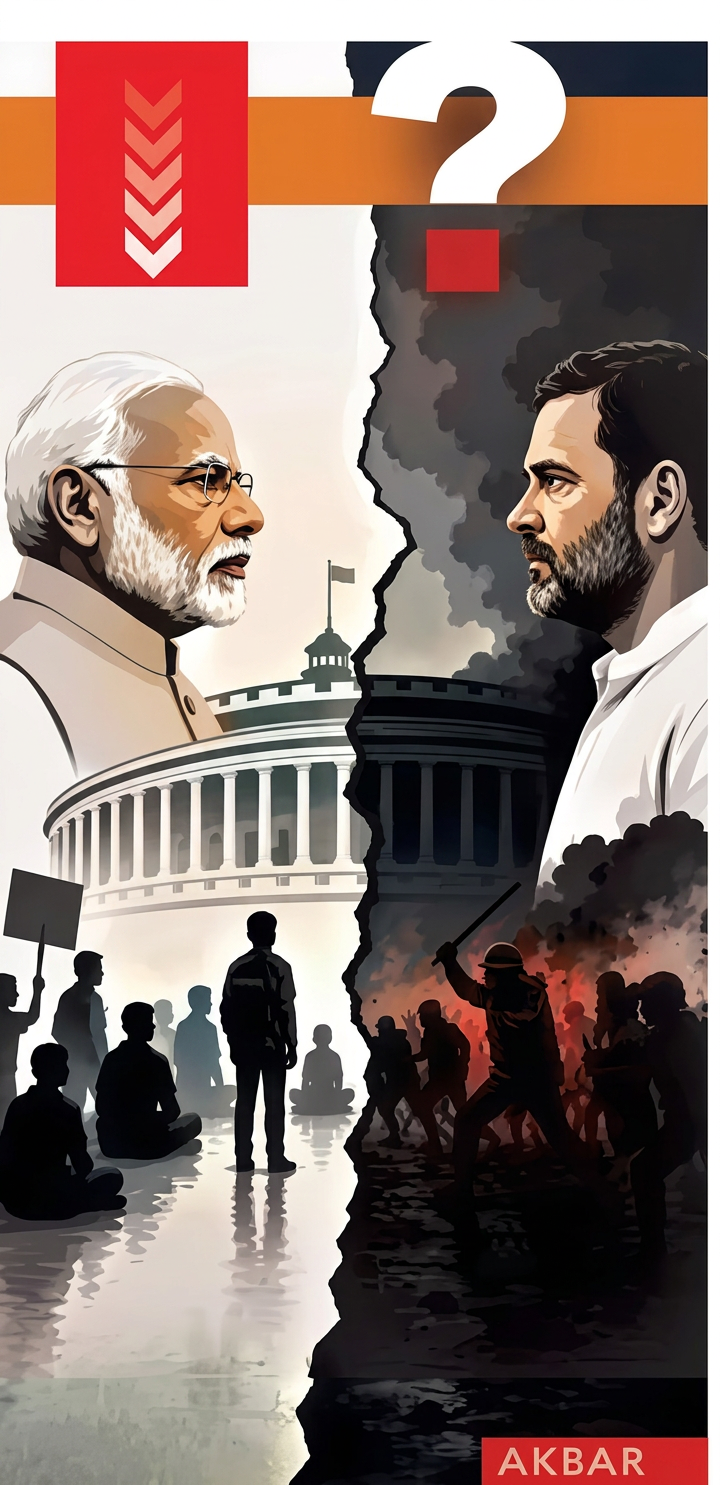
    On one hand, relentless rains over the past few days in the national capital disrupted normal life; on the other, political slogans froze the atmosphere inside Parliament. Opposition parties, who until yesterday chanted “Paper Chor, Gaddi Chhod” (Paper thief, step down), are now chanting “Amit Shah Jawab Do, Chanda Chor, Gaddi Chhod” (Amit Shah answer us, donation thief, step down). Surprisingly, ruling party members also stood near the Makardwar on Tuesday confronting the opposition, shouting “Rahul Gandhi Jawab Do…” The lathi charge against students in Jharkhand—ruled by JMM, a partner in the INDIA bloc—provided an opportunity for the ruling party members. Parliament security personnel had to stand like a wall between the shouting members of the ruling and opposition parties. Amidst the clamor of these ruling and opposition members, news related to the “Cockroach Janata Party” also seems to have been swept away.

    Those who expected miracles during the Monsoon session—believing the Modi government could pass the Delimitation Bill, Women’s Reservation Bill, FCRA Bill, and Viksit Bharat Shiksha Anusandhan Bill as planned—must be disappointed now. Narendra Modi’s team had set the stage to pass these bills. Exuberant after their victory in Bengal, they engineered a split of 20 MPs from the Trinamool Congress to join an obscure party. They poached Uddhav Thackeray’s Shiv Sena MPs to their side. Seven Rajya Sabha members from the Aam Aadmi Party were turned toward the BJP. In Tamil Nadu, after Congress supported Vijay’s party, negotiations took place with the DMK, which had backed out of the INDIA bloc. Talks were also held with Sharad Pawar’s NCP. Modi’s admirers swelled with pride, believing that Narendra Modi—who could split any party at any time and damage anyone—could achieve anything. Surrendered to Modi and terrified of his actions, several political parties concluded that he was unstoppable in this country and that there was no choice but to follow in his footsteps.

    With only two working days remaining in the Monsoon Session—and effectively only one full working day left for substantive business before the traditional sine die adjournment on the final day around noon—that sense of unstoppable momentum has hit a wall. The quality of parliamentary debate came under severe scrutiny; apart from the anti-paper leak legislation, almost no major bill saw sustained discussion as Lok Sabha proceedings repeatedly collapsed within an hour of opening at 11 am due to incessant sloganeering and protests.

    In reality, while Trump’s international actions had put Modi on the defensive regarding foreign policy for the past two years, several domestic developments over the last two months shattered the atmosphere of fear he had built. In particular, the emergence of the Cockroach Janata Party, the student agitation, children mocking Modi, and their questioning of his every action damaged Modi’s invincibility for the first time in the country. As a result of this agitation and sustained pressure from opposition parties following the police action against student protests at Jantar Mantar, Union Education Minister Dharmendra Pradhan was forced to resign in the very first week of the session. This forced a shift in a government mindset that previously dismissed everything.

    Following Pradhan’s resignation, the opposition intensified its confrontation. Rahul Gandhi alleged that the police action was carried out at Shah’s behest—an allegation the government categorically and repeatedly rejected—and the focus shifted entirely to demanding a statement from the Home Minister. Although the government offered to facilitate a statement by Shah along with a comprehensive debate on the student movement, the opposition remained unconvinced, leaving Shah’s statement as a central sticking point through the final stretch of the session.

    The student protest in Delhi created ripples across many cities, undoubtedly forcing the BJP and the Sangh into reflection. Those who thought this movement could be suppressed and quieted down like the farmers’ movement were left bewildered. The Chief Justice of the Supreme Court, who had characterized them as parasites and cockroaches, began hearing the students’ cases. Although RSS leaders like Atul Limaye initially described the student protest as treason, Mohan Bhagwat later entered the scene himself, albeit late, attempting to properly understand the situation. “Even birds have the right to peck,” he recently stated. “We must listen to them. We must talk to them. That is why they protested,” he said. Prime Minister Narendra Modi also started creating Instagram content and Reels to appeal to the youth. Ministers began speaking in student slang, using terms like “delulu” and “fomo.” For the first time in six years, Narendra Modi attended the Delhi IIT convocation on August 8, calling on students to question thoughtless decisions and demonstrate courage for real solutions. Isn’t that precisely what students in the country did? If they hadn’t dared to question, a bill setting up fast-track courts for question paper leaks would not have been rushed through. If there was anything noteworthy in Parliament during this month-long session, it was only the passage of this bill.

    There is no need to remind BJP ideologues that questioning holds the most honored place in Bharatiya Sanatana Dharma. Upanishads like the Bhagavad Gita and Prashnopanishad assigned a pivotal role to questioning. Nothing in our culture is valued more than the freedom to question and search in the pursuit of truth. Yet until now, questioning wrong decisions, unethical acts, dismantled institutions, and corrupt activities brought fear. However, that situation now appears to be changing slightly.

    Whether the student movement calms down, erupts in new regions, or inspires other forces remains to be seen, but it has reinvigorated an opposition crushed by Modi’s surge. Dismayed by the BJP’s major victory in West Bengal and divisions within the INDIA bloc, the student agitation offered the opposition room to breathe. Shielding the students in the final stages of the protest, the opposition stepped in to expand the movement into Parliament and onto the streets. The massive student turnout at Rahul Gandhi’s “Chatron Ki Goonj” in Prayagraj can be considered a key development. The opposition will undoubtedly make intense efforts to leverage the anti-Modi sentiment generated by students in the upcoming elections. That is why they maintained heat in Parliament from start to finish, and now that heat is likely to spill onto the streets.

    Any gain above zero is good for Congress. But for the BJP at its peak, staying on top requires immense effort. For Narendra Modi, hitherto an unquestioned leader, the students and the opposition are not the only issues; he also faces internal challenges within the party and the Sangh. The party losing the seat vacated by Nitin Nabin, whom Modi appointed as BJP National President, is no small matter. In fact, discontent has been simmering within the party regarding several leaders Modi placed in key positions. Appointing Rekha Gupta as Chief Minister—who used to roam the party office in Delhi and wait hours just to meet a party secretary-level leader—caused severe dissatisfaction within the ranks. The world only realized someone was serving as Chief Minister of Madhya Pradesh after the Ujjain land scam came to light. Except for chief ministers who switched from other parties in Assam and West Bengal, one would struggle to name the leaders heading BJP-ruled states. Aside from Chief Ministers, two Union Ministers recently became controversial. While Dharmendra Pradhan had to resign over the NEET paper leak, the PMO abruptly removed several people from Environment Minister Bhupender Yadav’s office without notice, with no official reason given regarding what corrupt activities prompted it. Although party leaders have claimed for six months that a Cabinet expansion would occur and Nitin Nabin would announce his team, these changes keep getting postponed. It is said these shifts stalled due to internal resistance within the party. Either way, anyone navigating Delhi’s official corridors realizes things inside the BJP are not as smooth as assumed. Additionally, the theft of donations at the Ayodhya Ram Temple has undeniably damaged the BJP’s moral foundation.

    Ultimately, when will the Modi government introduce the high-stakes Delimitation Bill and Women’s Reservation Bill? The push for Delimitation hit a complete roadblock during the session. Parliamentary Affairs Minister Kiren Rijiju held three rounds of talks with Rahul Gandhi on the matter; Gandhi insisted on an all-party meeting first, while Rijiju maintained that such a meeting would only happen if Congress committed to supporting the bill. With neither side yielding, the talks failed to break the deadlock.

    Similarly, will they manage to pass the FCRA Bill that emerged after the Kerala and Tamil Nadu elections? The bill became one of the central flashpoints of the entire session. Following objections by various groups, Amit Shah held consultations inside Parliament with representatives of the Christian community, assuring them the government would proceed only after consulting all stakeholders. Yet opposition concerns remained unresolved. With two days left, Congress and Trinamool Congress MPs demanded the bill’s complete withdrawal in the Rajya Sabha Business Advisory Committee, while others suggested sending it to a Joint Parliamentary Committee (JPC). Government sources indicate the Centre is considering referring it to a JPC, leaving its legislative fate shrouded in uncertainty.

    Is there any connection between US Vice President James David Vance’s phone call to Modi two days ago and the non-introduction of this bill? These questions remain to be answered. The issue is not merely failing to pass bills; pushing forward unilaterally without democratic efforts and dismissing those expressing concern over issues creates new problems. Modi’s style of functioning may be his natural disposition, but changing times show that such a temperament will not always guarantee victory.
  • From Delhi to Patna: How Student Unrest Reshaped Bankipur

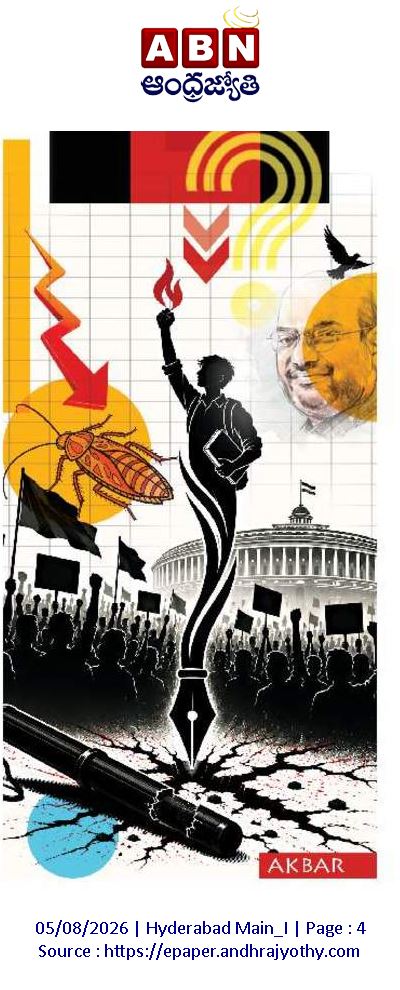
    Even though more than a week has passed since the agitation ignited in the national capital, Delhi, by thousands of students and other forces under the banner of the “Cockroach Janata Party” subsided, its tremors have not yet died down. The situation has not completely settled even after the resignation of Union Education Minister Dharmendra Pradhan. The Opposition is stalling Parliament, demanding a statement from Union Home Minister Amit Shah regarding the lathi charge and firing of pellets on the students. It is gathered that the government, unable to introduce key bills apart from minor and insignificant ones, is planning to adjourn Parliament indefinitely as early as possible. Chief Justice of India Justice Surya Kant—who commented two weeks ago, “Why are you showing us scenes of lathi charge on students? Don’t waste our time”—is now enabling the government to withdraw FIRs against the students. Since the Centre itself approached the Supreme Court in this matter, he appears to be offering the government a way to save face.

    On one side, although his fans and BJP leaders are abusing the students with various words, Prime Minister Narendra Modi announced with a very large heart that he has forgiven them. However, this announcement did not yield the expected positive results. Modi and Amit Shah are coming to Parliament, but they are not getting the opportunity to attend both Houses. Surprisingly, officials themselves say that the Home Minister is not coming to Kartavya Bhavan (the seat of the Home Ministry) at all, and is conducting one or two important meetings in his own room in Parliament. The only incident that made Modi very happy during this crisis was being entertained with songs, dances, and a torrential rain of praise on the occasion of the inauguration of Bhogapuram Airport in Andhra Pradesh. But as soon as he returned to Delhi, the situation returned to the same heat!

    It is unknown how long this troubled period will last, but many observers say that the results of the three Assembly by-elections held during this time indicate a coming change in the country’s politics—especially the election results of the Bankipur constituency in Bihar. Bankipur, a constituency under the Patna Sahib Lok Sabha area in the capital of Bihar, became the center of the Cockroach Janata Party agitation. Recently, when students took to the streets across several cities in the country during the NEET question paper leak, its intensity was seen severely in Patna. Demanding the resignation of Union Education Minister Dharmendra Pradhan, thousands of students residing in colleges and hostels centered in Bankipur marched out in a procession. Normal life came to a standstill on Ashok Rajpath and Boring Road, where a large number of coaching centers for students are located in the city.

    In Siwan and other key districts, the protest turned violent. Incidents such as lathi charges, stone-pelting, use of tear gas and water cannons, burning of police jeeps, and blockades of national highways took place. Videos of students being injured due to firing with AK-47s were circulated. Police barged into private hostels located in the narrow lanes of Bankipur, dragged out students who had come for coaching, and beat them severely. On the single day of the Bihar Bandh called on July 25, 690 people were detained. Murder charges were framed against many. The surprising fact is that while the Bankipur by-election was on July 30, the Bihar Home Department issued emergency orders on July 27 withdrawing all FIRs against the students. Yet, it was of no use.

    In March 1974, when Patna University students laid siege to the Assembly under the leadership of Jayaprakash Narayan, several students lost their lives in the firing and lathi charge carried out by the police. Afterwards, at a public meeting held at Gandhi Maidan in the presence of lakhs of people, JP gave a call for “Sampoorna Kranti” (Total Revolution). The statue of Jayaprakash built at the crossroads right next to the same Gandhi Maidan in Bankipur stands as a direct witness to recent events. In the surroundings of this area, known as JP Golambar, police once again pounced upon students. Before the Emergency, the JP movement spread from Patna to Delhi. Now, the Cockroach protest from Delhi echoed in the streets of Patna. It is no exaggeration to say that this echo decided the Bankipur election results.

    It goes without saying that in Bankipur, which had been in the BJP’s grip for the past three decades, the winner was not Prashant Kishor, leader of the Jan Suraaj Party that lost all its seats in the previous elections, but the students. It was only because he won five times from here that Nitin Nabin was able to become the BJP National President. The reason he gave up his MLA seat to choose the Rajya Sabha was that the top leaders of that party believed the BJP would win there effortlessly. The comment made by former Union Minister and Patna MP Ravi Shankar Prasad—”Even if a dog is fielded there, the BJP will make it win”—is proof of this. However, the BJP’s vote share plummeted from 62 percent to 34.4 percent in just one year! Because Kayasthas constitute 14 percent of the voters in Bankipur, Nitin Nabin used to win from there, as Bhumihars and Brahmins at 8 percent each, Rajputs at 7 percent, Kurmis at 5 percent, and Kushwahas at 3 percent also used to vote for him. In these by-elections, caste equations failed completely. These results must serve as an eye-opener to politicians who rely solely on caste equations!

    The Bankipur election results are merely a warning that the Bharatiya Janata Party must act with extreme caution hereafter in urban areas with high concentrations of middle-class and upper-caste populations. Bankipur made it clear that educated young voters in this country can influence election results. BJP leaders can no longer remain confident that urban areas like Lucknow, Prayagraj, Kanpur, and Noida in Uttar Pradesh, where elections are due in another seven to eight months, will remain their strongholds as in the past.

    Lekha Chakraborty, a prominent economist and professor at the National Institute of Public Finance and Policy (NIPFP) under the Union Ministry of Finance, attempted to scientifically analyze the students’ agitation. In a study, she expressed the view that just because individuals face similar problems, they do not fight spontaneously; when issues like paper leaks and job insecurity become strong motivators, combined with digital technology, youth unite on a massive scale. She stated that there is no connection between degrees and employment, and that only one-fourth of those with degrees get proper salaried jobs. One-third of the Periodic Labour Force lives on self-employment, and most of them depend on agriculture, earning low incomes.

    The ‘State of Working India 2026’ report released by Azim Premji University also confirms the study conducted by Lekha Chakraborty. It stated that although education has become accessible to sections that did not benefit in the past, meaningful opportunities to convert their qualifications into productive employment are not arising. These studies express deep concern over faculty leaving public universities, the decline in curriculum quality, and the falling value of degrees.

    They make it clear that advanced technology can reduce leaks and increase transparency, but it cannot create labor demand or restore the credibility of educational institutions. Economists themselves say that without increasing the education budget to 6 percent of GDP as recommended by the National Education Policy, and without properly building classrooms, providing teacher salaries and training, creating high-skilled jobs, and restoring the credibility of examinations, the problems cannot be solved. They warn that unresolved discontent provides continuous motivation to the people, and government suppression measures raise the danger level and strengthen collective unity.

    If politicians thought as scientifically as economists think, why would problems turn into crises and water flow under their rugs? Famous historian Will Durant did not remark in vain regarding the fall of the Roman Empire: “Great empires are not conquered from the outside; they destroy themselves from within.”

  • India at a Political Crossroads

    “Be extremely cautious while speaking about the theft of money from the donation boxes (hundis) at the Ram Temple in Ayodhya. This incident has hurt the entire Hindu community and the BJP. It happened because of a few wrong individuals. The government will not spare the culprits,” BJP National President Nitin Nabin said two days ago at a meeting of key party leaders in Uttar Pradesh. His remarks themselves reveal how deeply the incident has shaken the BJP.

    In fact, the thefts in Ayodhya came to light just as Prime Minister Narendra Modi was preparing for a major reshuffle in both the BJP organization and the Union government, including appointments of office-bearers and changes in the Cabinet. Before the upcoming Parliament session, Modi had intended to give both the party and the government a fresh shape. Several rounds of high-level discussions had already taken place.

    The very fact that the Prime Minister was planning a large-scale Cabinet reshuffle suggests that he was not fully satisfied with the performance of several ministries. He held lengthy review meetings with Cabinet ministers and Ministers of State, both individually and collectively, signaling that changes were inevitable. Reports suggesting that key ministers—including the Finance Minister and the Education Minister—might be shifted indicate dissatisfaction with the functioning of their departments.

    It is also noteworthy that Morning Consult, which has consistently reported rising approval ratings for the Prime Minister, has now indicated a decline from around 75–78% to 68–70%. It is therefore understandable that Modi would want to proceed cautiously. However, whether because he felt the timing was not right or due to internal challenges, the proposed reshuffle now appears to have been postponed. According to official sources, several ministers who feared removal have, for the time being, breathed a sigh of relief.

    Ayodhya is not the only issue. One controversy after another continues to emerge across the country.

    A dispute has arisen over the University Grants Commission’s equity regulations. The prestigious NEET-UG medical entrance examination has been rocked by allegations of irregularities and repeated paper leaks. Supporting protesting students, a prominent educationist and environmental activist from Ladakh has been on a hunger strike at Jantar Mantar for the past eight days.

    The government’s E20 ethanol blending policy has also come under severe criticism. Opponents argue that the policy threatens food security and allege that certain ministers have vested interests influencing policy decisions.

    Meanwhile, the ₹90,000-crore Great Nicobar Mega Infrastructure Project in the Andaman and Nicobar Islands has become the subject of intense controversy between the Centre, environmentalists, and opposition parties. Critics claim that the project would require cutting down nearly 15 million rare rainforest trees, damage fragile coral reefs and marine ecosystems, and threaten the survival of indigenous tribal communities. Against this backdrop, the recent removal of several officials from the Union Environment Ministry has also attracted considerable attention.

    The opposition is likely to use all these issues to create disruptions during the upcoming Monsoon Session of Parliament. But the question is: where is the opposition?

    Major constituents of the INDIA alliance—including the Trinamool Congress, Shiv Sena, and Aam Aadmi Party—have been weakened by large-scale defections, raising concerns about their political survival. In Tamil Nadu, after Congress aligned with TVK, the DMK has reportedly distanced itself from Congress. Sharad Pawar’s NCP is also facing an internal crisis. The Jharkhand Mukti Morcha’s position has become uncertain after it supported the BJP-backed independent candidate in recent Rajya Sabha elections. The Aam Aadmi Party has already declared that it is no longer part of the INDIA alliance.

    In these circumstances, even if Congress and a few other parties manage to disrupt Parliament for a day or two, the BJP may face little resistance in advancing its legislative agenda afterward.

    Against this backdrop, the weakening of the opposition ahead of the Monsoon Session and the changing composition of Parliament represent significant developments in Indian politics.

    Even more important is the government’s reported intention to reintroduce the 130th and 131st Constitutional Amendment Bills. The opposition had successfully blocked these bills in April and again during a subsequent special session. But the situation is different now.

    If these two bills are passed, they are expected to bring significant changes to India’s political and constitutional framework. Alongside the Constitutional Amendment Bill providing women’s reservation, the government is also preparing to secure the required two-thirds majority for a delimitation bill.

    If passed, the delimitation exercise would proceed based on the previous Census rather than waiting for the ongoing Census. The bill may also specify the exact increase in the number of parliamentary seats. Furthermore, many observers believe that the Delimitation Commission constituted by the government could redraw constituency boundaries in ways that benefit the ruling BJP.

    The proposed 130th Constitutional Amendment Bill is equally significant. It would reportedly provide for the immediate removal of a Prime Minister, Chief Minister, Union Minister, or State Minister from office if they are arrested in a serious criminal case and remain in jail for 30 days. Many believe this provision is primarily aimed at opposition chief ministers and ministers.

    If the government succeeds in establishing dominance in Parliament and securing passage of these constitutional amendment bills during the Monsoon Session, there may be few obstacles left to passing other major legislation. Most notably, it would pave the way for legislation enabling simultaneous elections under the “One Nation, One Election” proposal.

    BJP chief ministers across the country have already declared their readiness for simultaneous elections. Party strategists reportedly believe that implementing women’s reservation alongside simultaneous elections would significantly strengthen the BJP’s prospects of returning to power once again.

    If that happens, it would mark a major transformation in Indian democracy. BJP circles also reportedly view this as an opportunity to postpone the Assembly elections due in Telangana, Madhya Pradesh, Chhattisgarh, and Rajasthan in 2028 until the next general election.

    This raises an important question: what will elections look like by 2029?

    The Congress does not appear to be taking seriously the possibility that the BJP could further consolidate its dominance in Parliament as several regional parties split or decline. Congress leaders seem to believe that if regional parties disappear, Congress itself will fill the vacuum.

    If that were to happen, India could gradually evolve into a two-party system. Whether the BJP or Congress, other parties could steadily weaken. Is such a development healthy for democracy? Would regional aspirations lose their place in Indian politics? These are questions that deserve discussion.

    The decline of Odia, Bengali, and Dravidian regional identity politics in electoral politics has contributed to these concerns. At the same time, another question must also be asked: have regional parties genuinely safeguarded regional aspirations? Or have parties willing to compromise anything for the survival of their leaders lost their credibility in the eyes of the people?

    It should not be forgotten that India has always functioned as a pluralistic democracy. Even when the Congress was the dominant political force, it was never the only one. During Jawaharlal Nehru’s tenure as Prime Minister, Congress won 364 seats with about 46% of the vote, but opposition parties together secured 54% of the vote and won 125 seats. They represented a wide variety of social groups.

    From the second general election onward, the number of regional parties steadily increased. Even Congress recognizes that this happened largely because of its own arrogance and overconfidence during its years of dominance. As a result, Dravidian parties, socialist parties, and various regional and identity-based political movements emerged, becoming symbols of India’s diversity.

    At one stage, coalition governments at the national level appeared to be the country’s permanent political reality. Leaders like Atal Bihari Vajpayee viewed regional aspirations as an essential expression of India’s pluralism and federal spirit.

    Today, however, history appears to be moving in the opposite direction.

    Whether this trend is dangerous or healthy is not the central question. More troubling is the fact that the number of voices willing to ask difficult questions is steadily diminishing.

  • From Masterstroke to Misfire: The Amendment That Backfired

    The failure of the Constitution (131st Amendment) Bill, 2026 marks a significant political and constitutional moment. It demonstrates that even a strong executive cannot always secure its will, and that institutional checks within India’s parliamentary system remain robust. For Prime Minister Narendra Modi, whose style of governance has often been described as decisive and minimally consultative, this episode represents a rare but important setback.

    The Bill, widely expected to pass, fell short of the required two-thirds majority. While 298 members voted in favour and 230 against, it did not meet the threshold of 352 votes out of the 528 members present and voting. In response, the government chose to shelve not only the amendment but also the Delimitation Bill and the Union Territories Laws (Amendment) Bill, arguing that these measures were interconnected. Notably, this is the first time in over a decade in power that such a major legislative initiative has been blocked.

    The Opposition’s coordinated resistance played a crucial role. What initially appeared to be a foregone conclusion turned into a rare moment of unity among diverse political parties. Critics argue that the government’s approach itself contributed to this consolidation, as a top-down style of decision-making left little room for dialogue or consensus-building.

    Rahul Gandhi sharpened the political attack by likening the Prime Minister to a “magician” who had been “caught,” suggesting that the push to expand the Lok Sabha was driven by political calculations rather than genuine reform. According to the Opposition, the proposal sought to reshape India’s electoral map while simultaneously projecting a pro-women image through the reservation component.

    This episode raises a broader question: can strong, centralized leadership consistently deliver effective governance? While such leadership can accelerate decision-making, it may also limit consultation and erode consensus. The perception of “bulldozing” policies—whether accurate or not—can undermine democratic legitimacy. At the same time, it is important to recognize that this pattern is not unique to the current government. Indian political history offers several examples of unilateral decision-making, from the Emergency under Indira Gandhi to the Shah Bano legislation under Rajiv Gandhi.

    The proposal to introduce 33% reservation for women in legislatures is, in itself, a landmark reform. It addresses a long-standing structural imbalance in political representation and has the potential to significantly enhance women’s participation in governance. However, the timing and method of its introduction have raised legitimate concerns. Convening a special session of Parliament during ongoing assembly elections, rather than building broader consensus, invited suspicion about political motives.

    From an electoral perspective, the move is understandable. Women voters now constitute a decisive segment of the electorate, often turning out in greater numbers than men. Welfare policies targeting women have already proven electorally effective across several states. Expanding political representation could further consolidate this support. Even opposition resistance could be framed politically to mobilize women voters in favour of the ruling party.

    Yet, the linkage of women’s reservation with delimitation proved to be the most contentious aspect. Home Minister Amit Shah attempted to reassure critics by offering verbal guarantees that southern states would not lose proportional representation in an expanded Lok Sabha. He even proposed a temporary pause to revise the Bill. However, the Opposition rejected these assurances, pointing out that such safeguards were absent from the Bill’s text.

    As drafted, the proposal relied on the 2011 Census for delimitation, which would likely reduce the representation of states with lower population growth—particularly in southern and northeastern India—while increasing the share of the Hindi heartland. This raised serious concerns about federal balance and fairness.

    The urgency with which the government pursued the amendment further fueled criticism. With the 2026–27 Census still underway, many questioned the need to rush such a significant constitutional change. Linking a broadly supported reform like women’s reservation with a highly divisive issue like delimitation was seen by critics as a strategic miscalculation.

    The Opposition’s unified stance, particularly within the INDIA bloc, proved decisive. Parties such as the Congress, Trinamool Congress, DMK, and the Left coordinated effectively, setting aside differences. In contrast, regional parties like the TDP and AIADMK faced criticism for supporting the Bill based on assurances rather than textual guarantees, despite potential implications for their states.

    The defeat of the Bill has been framed by the Opposition as a victory for constitutional principles. Rahul Gandhi described it as a rejection of an “attack on the Constitution,” while Priyanka Gandhi Vadra emphasized the importance of separating women’s reservation from delimitation. These reactions highlight the broader political narrative that has emerged from the episode.

    Procedurally, the outcome underscores the strength of constitutional safeguards. Amendments of this nature require not only a majority of the total membership but also a two-thirds majority of members present and voting, along with ratification by at least half of the state legislatures in certain cases. These high thresholds are designed to ensure that major structural changes are enacted only with broad consensus—and in this instance, that safeguard functioned as intended.

    Looking ahead, the proposal to expand the Lok Sabha remains contentious. Critics argue that such a move, especially if based on outdated Census data, risks deepening regional imbalances and straining the federal structure. While women’s reservation enjoys wide support, delimitation is likely to remain a politically sensitive and divisive issue.

    Ultimately, the episode highlights a fundamental principle of democracy: process matters as much as outcome. Even well-intentioned reforms can lose legitimacy if they are perceived as unilateral or politically driven. The challenge for any government lies not only in pursuing reform but in building the consensus necessary to sustain it.

  • Privilege, Politics and Policy: The Debate After Rahul Gandhi’s Speech

    The political storm following Leader of the Opposition Rahul Gandhi’s speech in the Lok Sabha has shifted from economic policy to parliamentary privilege. The Bharatiya Janata Party is reportedly considering a privilege motion against him over remarks linking senior leaders to the so-called “Epstein Files.” Union Minister Hardeep Singh Puri has firmly rejected the allegations as “baseless,” clarifying that his limited interactions with Jeffrey Epstein were in the context of an International Peace Institute delegation and unrelated to any criminal matters.

    Whether Gandhi’s remarks constitute a breach of parliamentary privilege is ultimately a matter for the Speaker of the Lok Sabha, who must interpret them within established rules and precedents. Parliament provides wide latitude for political speech, but it also imposes responsibility. That determination should be made institutionally and without partisan escalation.

    Yet focusing exclusively on the privilege question risks overlooking the larger policy issues raised in the speech — issues that warrant substantive engagement rather than procedural confrontation.

    The Strategic Context

    In his address, Rahul Gandhi framed the Union Budget and the India–U.S. trade understanding within a broader geopolitical narrative. He argued that the global order is entering a phase of instability marked by conflict, technological rivalry, and the weaponisation of energy and finance. In such an environment, he contended, India must negotiate from a position of strength.

    At the core of his argument was the assertion that India possesses three strategic assets: its population and digital data, its agricultural base, and its energy sovereignty. According to him, recent trade negotiations risk diluting these strengths.

    These are consequential claims. They deserve careful examination.

    One area of concern raised relates to digital trade rules. Has India altered its position on data localisation? Are cross-border data flows being liberalised in ways that constrain regulatory autonomy? Do trade commitments affect India’s ability to impose digital taxes or regulate major technology firms?

    Given the centrality of data to artificial intelligence and digital sovereignty, clarity on these points is essential. Trade agreements in the digital domain often contain complex provisions that are not easily understood without detailed disclosure.

    A transparent explanation of the Government’s commitments would help dispel uncertainty.

    Agriculture and Market Access

    Gandhi also warned that the trade framework could expose Indian farmers to competition from highly mechanised American agriculture. India’s agricultural economy is dominated by small and marginal farmers whose cost structures differ significantly from those of large-scale U.S. farms.

    The key question is whether tariff reductions or market access commitments contain adequate safeguards. If protections remain intact, the Government should clearly articulate them. If phased adjustments are planned, their timeline and compensatory measures should be made public.

    Food security is not merely an economic issue; it is a matter of national resilience.

    Energy Sovereignty

    Energy security formed the third pillar of Gandhi’s critique. In an era when sanctions, supply disruptions and geopolitical tensions influence energy markets, any perception that India’s sourcing flexibility is constrained can generate concern.

    Here again, clarity matters. If India retains full sovereign discretion over its energy imports, an unequivocal statement to that effect would strengthen confidence.

    Trade Balance and Industrial Impact

    Concerns were also expressed about tariff asymmetry and potential sectoral impacts, particularly in textiles. Trade agreements often produce winners and losers across industries. The role of government is to ensure that transitions are managed, vulnerabilities are addressed, and competitiveness is strengthened.

    A detailed presentation of expected gains and sector-specific protections would elevate the discussion beyond rhetoric.

    Democratic Accountability Over Escalation

    The controversy over alleged personal references and the potential privilege motion should not overshadow the importance of answering substantive policy questions. Democratic accountability requires both responsible speech from the Opposition and transparent explanation from the Government.

    Prime Minister Narendra Modi enjoys a strong domestic mandate and significant international stature. Supporters argue that his government would not compromise India’s interests in any negotiation. That confidence can only be reinforced through openness.

    Parliamentary debate is not an act of defamation; it is a mechanism of scrutiny. Equally, allegations must be supported by evidence. The health of democratic institutions depends on maintaining this balance.

    If a privilege motion is moved, it should proceed strictly within parliamentary rules. But beyond procedural action, what the moment calls for is clarity — on the nature of India’s trade commitments, on safeguards for farmers and industry, and on the preservation of data and energy sovereignty.

    In times of global uncertainty, trust in national leadership is strengthened not by silencing dissent, but by addressing it transparently.

    The Government has an opportunity to do precisely that.

  • In Search of Lost Standards

    “Lok Sabha’s first Speaker G.V. Mavalankar, the second Speaker Ananthasayanam Ayyangar, and the first Chairman of the Rajya Sabha and Vice President Dr. Sarvepalli Radhakrishnan had a profound influence on the functioning of parliamentary institutions. They conducted themselves with dignity and impartiality while framing rules, procedures, conventions, and practices. Even though the Jana Sangh had no representation in the Rajya Sabha, I used to watch the proceedings from the visitors’ gallery. It was because of them that I had the opportunity to learn about Question Hour, adjournment motions, bills and resolutions, standing committees, calling attention notices, members’ privileges, and many other aspects. Eminent leaders sitting on the opposition benches spoke with as much eloquence as those on the treasury benches. The Speaker acted as an honest guardian of the rights of the opposition. It was because of these noble traditions that Indian democracy withstood many tests and maintained its international reputation.”

    These words were written by none other than Lal Krishna Advani, one of the founders of the Bharatiya Janata Party, in his autobiography My Country–My Life, describing the parliamentary standards of earlier times.

    Standards endure only when individuals uphold them. If individuals sacrifice standards for personal interests, no standards remain worth citing as examples. If declining social standards enter Parliament, the current functioning of legislatures is proof of what happens. “Guide us. If we go astray, correct us if necessary. Advise us. Scrutinize our conduct,” India’s first Prime Minister Jawaharlal Nehru requested the first Lok Sabha Speaker G.V. Mavalankar. Mavalankar acted accordingly. Whenever serious differences arose, the Prime Minister and the Speaker would consult and resolve them. On one occasion, there was an argument between Nehru and Mavalankar in the House. Nehru wanted to make a second statement the same day, but Mavalankar clarified that it was against the rules. Nehru accepted and withdrew.

    Mavalankar strongly opposed the frequent promulgation of ordinances. He insisted they should be issued only in rare emergencies and that laws must be made in Parliament. He even wrote to the Prime Minister on this matter. If any legal doubt arose, he personally consulted the Attorney General, asserting that the Speaker must function like a judge. Nehru accorded him equal respect. When officials complained to Nehru that parliamentary committees were subjecting their decisions to excessive scrutiny, Nehru replied that it was not within his domain and advised them to approach the Speaker. Many rules framed by Mavalankar remain in force even today. The first Lok Sabha Secretary-General Shakdher described him as a Speaker who maintained balance between the ruling and opposition parties, conducted the House efficiently, and safeguarded public interest. It is noteworthy that Mavalankar, who insisted that Parliament must remain independent of government control, was elected from Gujarat.

    After Mavalankar’s death, Ananthasayanam Ayyangar followed the same path. Born into a Vaishnava Brahmin family in Tiruchanur near Tirupati, he conducted the Lok Sabha impartially. He once stated: “Under a dictatorship or absolute monarchy, citizens’ lives and freedoms have no protection. If the dictator is benevolent, people may live well. But even in a democracy, there is a danger that dominant groups may behave dictatorially and suppress those in smaller numbers. The only person who can firmly control such tendencies and protect minority interests in the House is the Speaker.” He remarked that there were no greater orators than Hiren Mukherjee (CPI) in English and Atal Bihari Vajpayee (Jana Sangh) in Hindi. Even without formal recognition of an Opposition Leader due to inadequate numbers, Ayyangar gave full respect and opportunity to opposition members. In the second Lok Sabha, both ruling and opposition members unanimously proposed his re-election as Speaker — a testimony to the standards he upheld. In 1972, when a Dalit Christian candidate contested from Tirupati, Ayyangar campaigned to support him at Congress’s request, responding to critics by saying, “Secularism is embedded within Vishishtadvaita.” This was later revealed by former Prime Minister P.V. Narasimha Rao.

    After Mavalankar, Speaker Sardar Hukam Singh admitted no-confidence motions against Nehru’s government, declaring that Parliament held supremacy over the government. His successor Neelam Sanjiva Reddy allowed a discussion on a no-confidence motion on the very day the President addressed both Houses. During his tenure, the first parliamentary committee on the welfare of Scheduled Castes and Scheduled Tribes was formed.

    Gradually, parliamentary standards began to decline from 4th Lok Sabha. During the Emergency, parliamentary proceedings were censored in unprecedented ways, yet the presiding officers remained silent. Indira Gandhi forced G.S. Dhillon to resign as Speaker and appointed him Shipping Minister the same day. After the Emergency, Speakers such as K.S. Hegde, Balram Jakhar, Rabi Ray, Shivraj Patil, P.A. Sangma, Balayogi, Manohar Joshi, and Somnath Chatterjee each tried in their own way to uphold the dignity of the office. Balayogi, the first Dalit and first Speaker from a regional party, maintained such neutrality that during his tenure the Vajpayee government fell by just one vote. Later, during the tenures of women Speakers Meira Kumar and Sumitra Mahajan, frequent disruptions occurred. The Telangana movement made Meira Kumar’s tenure extremely difficult, while increasing confrontation between ruling and opposition parties during Narendra Modi’s premiership placed Sumitra Mahajan in a challenging position. Since then, tensions have intensified, and Speaker Om Birla too has found himself in a helpless situation over the past six years, with parliamentary standards steadily declining.

    Recently, opposition parties moved a no-confidence motion against Om Birla for not allowing Congress leader Rahul Gandhi to speak — a sign of the deteriorating condition of Indian democracy. If a discussion had been allowed on former Army General Naravane’s book on the India–China conflict, and if the government had responded, people would have had the opportunity to assess the facts. Instead, opposition parties stalled Parliament. Sessions ended without full discussions on the President’s Address or the Budget, and without the Prime Minister speaking in the Lok Sabha. Furthermore, the Speaker himself claimed he had information that women MPs were planning to attack Modi — an unusual development. In reality, both government and opposition are responsible for failing to show flexibility and for using Parliament as a political arena. In an atmosphere where mutual respect is absent, no one expects the Speaker to remain impartial. As a result, the office of the Speaker too appears to be losing its dignity.

    “The Speaker represents the entire House. He reflects its dignity and freedom. Since the House represents the nation, the Speaker becomes a symbol of freedom in the country. It is therefore a position of great honor. Only individuals of the highest competence and impartiality should occupy it,” said Nehru. But it is impossible to compare those days with the present. Those in power then sought to set standards themselves and serve as role models for future generations. At a time when the country aspires toward a ‘Viksit Bharat’ (Developed India), leaders must internally deliberate on preserving parliamentary democratic standards within a defined timeframe.

  • Air Pollution Outside, Political Pollution Within: India’s Twin Crises

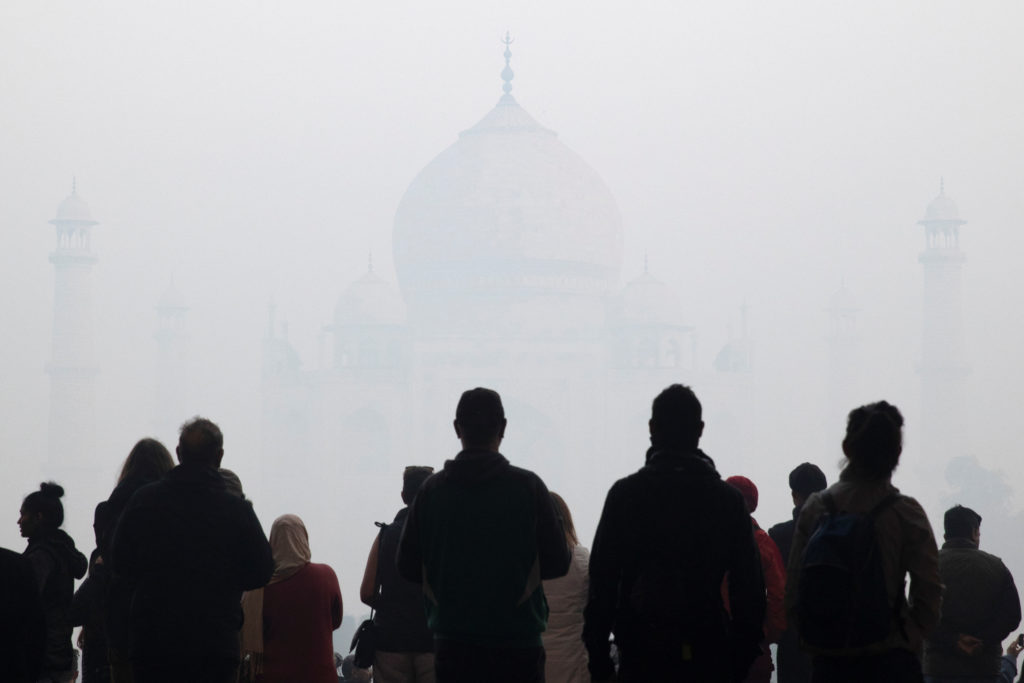
    Air pollution has engulfed India’s national capital. What were once winter mornings marked by dew on leaves are now defined by thick smog. At daybreak, a chemical sting in the eyes and persistent coughing have become routine. Although the Air Quality Index (AQI), which exceeded 300 during November and December, may have declined to around 260 by the end of January, daily life in Delhi remains severely affected.

    Beyond the toxic air outside Parliament, the atmosphere within appears no less suffocating. In both Houses, heated confrontations between the ruling party and the opposition have created a climate of near-constant disruption. Prime Minister Narendra Modi did not attend the Lok Sabha to respond to the debate on the motion thanking the President for her address, but he did speak in the Rajya Sabha, launching familiar attacks on the Congress. As he has often done, Modi traced the party’s alleged failures back to the Indira Gandhi era, accused the opposition of seeking his political demise, and charged it with disrespecting Dalits and Sikhs. The speech bore a closer resemblance to an election rally than a parliamentary response. Few leaders in India match Modi’s effectiveness as a political orator—a point even his critics concede.

    The government has attempted to sidestep discussion of a book written by former Army Chief General Manoj Naravane, but the opposition appears determined to keep the issue alive. The debate on the President’s address ended amid disorder, and there are signs that the upcoming Budget discussion may face similar disruptions. Meanwhile, Commerce Minister Piyush Goyal has said an India–US trade agreement could be finalized within days. Whether India has made significant concessions will only become clear once the details are released. Politically, the agreement represents another test for Modi, even as his opponents watch closely for potential revelations from the so-called Epstein files.

    At the World Economic Forum, IMF Chief Economist Gita Gopinath underscored a more fundamental challenge. She said air pollution poses a far greater threat to India’s economy than US tariffs on Indian goods. Gopinath noted that air pollution causes an estimated 1.7 million deaths annually and discourages foreign investment. She warned that the resulting health costs, premature deaths, and productivity losses could reduce India’s GDP by as much as 9.5 percent. India’s Commerce Minister Ashwini Vaishnaw, who was present at the forum, offered no public response.

    These concerns are echoed within India’s own policy establishment. The National Institute of Public Finance and Policy (NIPFP) has described air pollution as a failure of government policy and an ongoing public health emergency. Economist Lekha Chakraborty has pointed to rising cases of severe respiratory illness in public hospitals, increasing health expenditures, and declining labor force participation—all of which weigh on economic growth. Air pollution, she argues, is not an unavoidable risk but a solvable problem. Yet it continues to reflect governance shortcomings. Despite India’s claims of leadership in environmental economic federalism, implementation remains weak.

    China’s experience offers a contrast. Both India and China enacted environmental laws around 2000, but China followed up with sustained, long-term action. It invested heavily in pollution-control technologies, shut down thousands of obsolete and highly polluting industrial units, and aggressively promoted electric vehicles. China’s progress demonstrates what political will and consistent policy execution can achieve.

    India today faces two parallel forms of pollution—one in its air, and the other in its politics. Leaders appear more invested in applause, spectacle, and rhetoric than in effective governance that delivers tangible improvements to citizens’ lives.

  • Trade ties and War controversies

    On the second day after the Union Budget was presented, immediately following the President’s address, Parliament plunged into severe chaos. This raises a fundamental question: do either the opposition or the government genuinely intend for Parliament to function smoothly? Conventionally, after the Budget is presented, discussion takes place on the motion of thanks to the President’s address, and only thereafter do debates on budget proposals begin. The President’s address to both Houses of Parliament is, in effect, a policy document of the government.

    The President’s address detailed the various welfare schemes being implemented by the Modi government, its programmes, and the priority being accorded to infrastructure development. Rising above political differences, the President called upon all national representatives to work collectively in the national interest in line with the goal of Viksit Bharat (Developed India). Ironically, the very next day after the Budget presentation, parliamentary proceedings became impossible due to intense confrontations between the ruling and opposition parties. Who is responsible for this situation?

    During the discussion on the President’s address that began on Monday, BJP MP Tejasvi Surya launched sharp attacks on the Congress. His remarks accusing the Congress of being opposed to Indian civilisation, culture, nationalism, and patriotism provoked the party. Would a Congress already seething with multiple wounds remain silent?

    Immediately thereafter, Leader of the Opposition Rahul Gandhi entered the fray, strongly objecting to questioning Congress’s patriotism and nationalism. He began by saying, “Since the BJP’s young MP has made remarks about our patriotism and Indian culture, I would like to read out a few sentences.” He proceeded to read excerpts published by The Caravan magazine from Four Stars of Destiny, a book written by former Army Chief General M.M. Naravane on the 2020 border clash with China.

    As soon as Rahul Gandhi began reading passages written by Naravane about Prime Minister Narendra Modi and Defence Minister Rajnath Singh, BJP MPs created an uproar. Defence Minister Rajnath Singh, Home Minister Amit Shah, and Parliamentary Affairs Minister Kiren Rijiju raised strong objections, questioning how excerpts from an unpublished book could be read in Parliament. Speaker Om Birla clarified that doing so was not permissible under Rule 342. Heated arguments ensued not only between ruling and opposition members but also between the Speaker and opposition MPs.

    The same situation continued on Tuesday. Rahul Gandhi submitted a written note to the Speaker asserting that the contents of Naravane’s book were authentic and resumed his speech. However, ruling party members obstructed him as usual. Every time the word “Prime Minister” was uttered, the Speaker intervened. Amid the chaos over Rahul Gandhi being repeatedly stopped, eight Congress MPs were suspended. Eventually, after several adjournments, the House was adjourned till Wednesday.

    Why did the situation deteriorate to this extent? Were Tejasvi Surya’s attacks solely responsible for provoking Congress? Why is the BJP preventing any reference to the contents of General Naravane’s book? In reality, the Centre has been blocking the book’s publication for the past two years. The Ministries of Defence and External Affairs have not yet granted permission to the publisher. Naravane himself stated, “I have written what I had to write. It is for the publisher to decide how to release the book.” He has neither commented on the controversy surrounding the book’s contents nor responded to The Caravan excerpts—suggesting that he stands by what he wrote.

    Border clashes between India and China are not new. Numerous books have documented the mistakes of the Nehru government that led to war with China. During that war, Nehru expressed anguish over possibly losing Assam, saying, “My heart goes out to the people of Assam,” a remark that caused a sensation. The Congress never attempted to conceal the failures, defeats, and mistakes that occurred during its rule. Those very failures are partly why Congress today finds itself on the defensive on issues of national security and unable to recover from electoral defeats.

    But under Modi’s tenure, even discussion of such matters appears impossible. Why is there a refusal to debate issues of national importance, even while minor successes are exaggerated and celebrated with excessive propaganda? Had Naravane’s book been released, it would have been debated for a few days and the matter would have settled.

    Naravane wrote that during China’s intrusion into the Galwan Valley, the Defence Minister conveyed that the Prime Minister told him, “Do whatever you deem appropriate.” What exactly happened at that time, how many discussions were held, with whom, and after how much deliberation the Prime Minister decided to leave the matter to the Army—these details cannot be explained transparently on the floor of Parliament. At the same time, completely suppressing the issue and preventing any voice from being raised in Parliament only fuels suspicion.

    In reality, budget sessions are meant for discussion on the Budget. A positive environment should have been created for debate on the so-called “mother of all agreements” signed with the European Union just days before the Budget. Instead, discussion on the Budget presented by Nirmala Sitharaman collapsed on the second day itself.

    This is the third Budget presented by the Modi government since returning to power for a third term. With revenues estimated at ₹36.5 lakh crore and expenditures at ₹53.5 lakh crore, the government plans to borrow nearly ₹12 lakh crore and raise the remaining funds from the public and through disinvestment. Allocating ₹12.20 lakh crore for capital expenditure, nearly half of it to roads and rail networks, supporting the manufacturing sector, announcing industrial corridors, attempting to curb food inflation, and preparing the country for free trade agreements with global markets—all these may appear impressive. However, none of this may be sufficient to dramatically revive the Indian economy. While the Economic Survey suggested structural reforms, the government appears to have limited itself to announcements suited to current conditions, avoiding tough policy decisions.

    Markets behave like flowing rivers. When blocked in one place, they find another route. The world was not intimidated by Trump’s tariffs. The U.S. was isolated as even its partner countries entered into their own trade agreements. The EU’s agreement with India introduced zero tariffs on many goods. China and Canada struck their own agreements as well. Consequently, Trump was compelled to revise his stance and reduce tariffs on India to 18% to stay competitive.

    However, Trump’s declaration that India would stop buying Russian oil and instead purchase $500 billion worth of agricultural products, energy, technology, coal, and other goods from the U.S. triggered debate over the agreement’s implications. Rahul Gandhi alleged that Modi compromised with the U.S. and that Indian farmers would suffer, while Commerce Minister Piyush Goyal asserted that this historic agreement would create vast opportunities for Indian citizens.

    Until the official details of the India–U.S. joint trade agreement are publicly disclosed, neither excessive optimism nor pessimism is advisable. Nevertheless, the Modi government has entered into two major international agreements at the beginning of 2026—an undeniable development. At the same time, it has become entangled in controversies such as Naravane’s book and the Epstein files. The consequences of these developments will become clear in due course.(4-2-2026)