Tag: Election Commission

  • The Brahmastra of Power: Delhi’s Crucible of Protest and Suppression

    Hanuman initially destroyed the Ashoka Vatika, and later killed the Kinkaras. Jambumali, the sons of ministers, and army commanders all fell. He smashed Ravana’s son, Akshakumara, to the ground and killed him. Ultimately, Hanuman’s prowess only diminished after Indrajit deployed the Brahmastra. Watching the scenes unfolding in the national capital over the past two or three months brings to mind the episodes of the Sundara Kanda from Valmiki’s Ramayana.

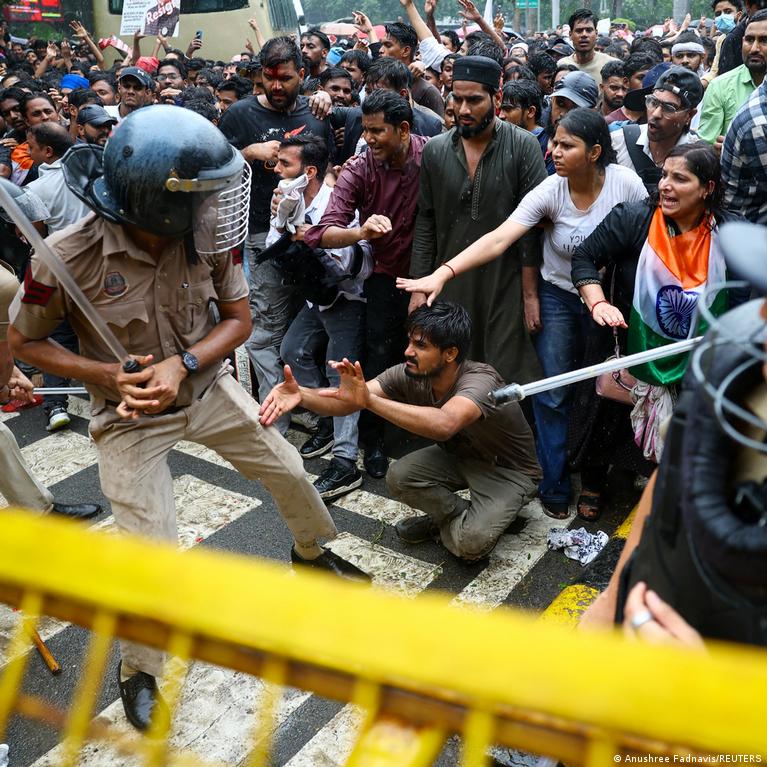
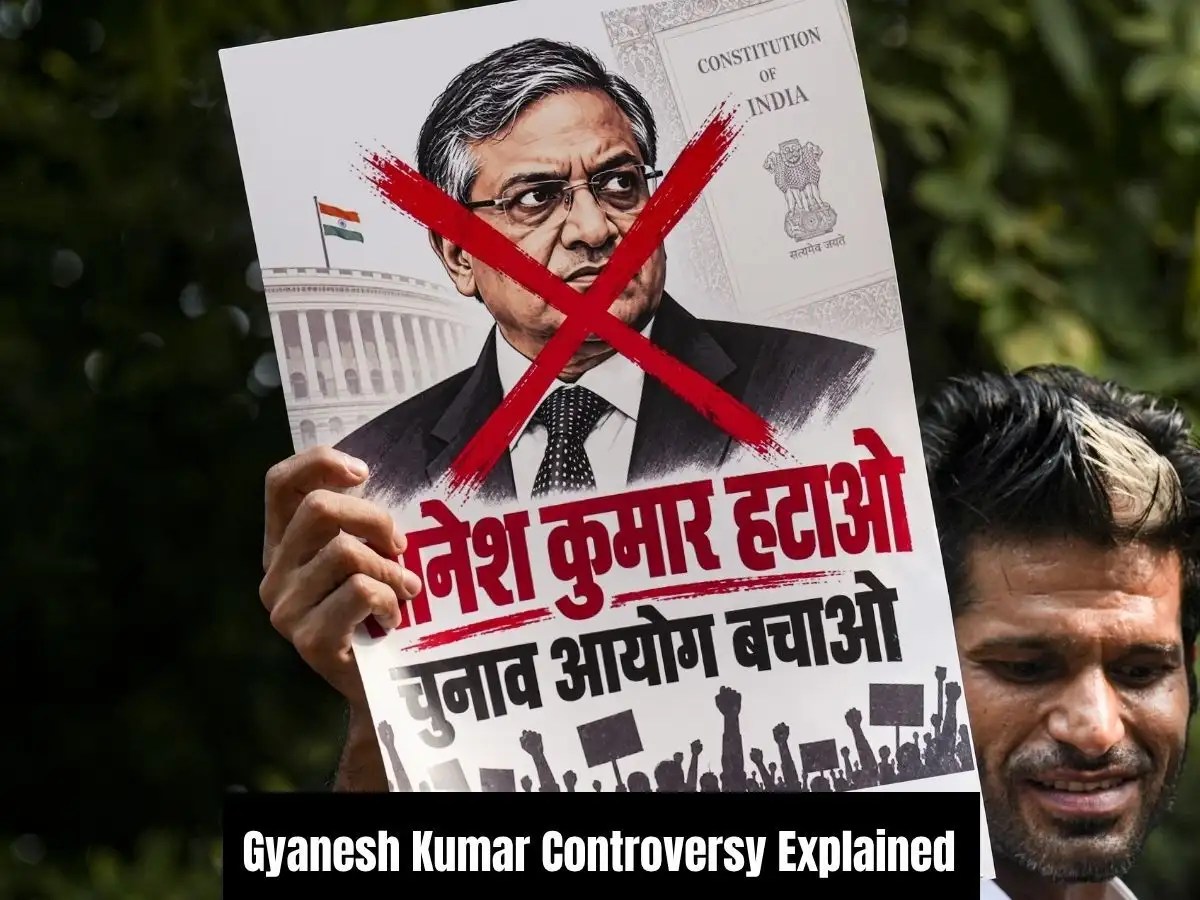
    In July and August, Prime Minister Modi’s government was shaken by the Cockroach Janata Party (CJP). It became inevitable for Modi to remove Dharmendra Pradhan—who has mastered numerous electoral battles—from the Union Cabinet. When the CJP announced that it would stage another protest at Jantar Mantar on October 10, demanding the resignation of Election Commissioner Gyanesh Kumar, the Modi administration went on high alert. Two days prior, Border Security Forces, armed police, the Central Reserve Police Force (CRPF), paramilitary units, and the Rapid Action Force were deployed. It is estimated that private forces joined nearly 50,000 security personnel. Barricades were placed at every step, and police wielded lathis. For two or three days, the air in New Delhi seemed to come to a complete standstill. CJP leaders Abhijit Dipke, Saurav Das, and Ashutosh Rankas were arrested on flights and diverted to different locations. Nearly 10,000 people were arrested in Delhi alone. Numerous online commentators and activists were taken into custody. Majority metro stations were shut down, more than 250 trains coming to Delhi were cancelled, and internet services were suspended. Nevertheless, young men and women who pushed through to Connaught Place and Jantar Mantar were detained. The media was not spared either; to prevent people from escaping the buses, lockups made of iron rods were constructed right inside them. These actions made it clear that the government was terrified of what might happen if a youth wave erupted in the national capital.

    Surprisingly, banners under Section 163 of the Bharatiya Nagarik Suraksha Sanhita (BNSS) were put up even inside the Supreme Court, the highest court of the land. Security personnel entered the lawyers’ chambers in front of the Supreme Court and arrested lawyers as well. Lawyers marching in a procession from the Supreme Court to Mandi House were arrested and taken to the Yamuna Complex. Senior advocate Dinesh Dwivedi was one of them; he is the biological brother of Rakesh Dwivedi, who argues on behalf of the Election Commission. When senior advocate Gopal Sankaranarayanan asked Chief Justice Justice Surya Kant, “Did you even take permission to impose prohibitory orders inside and in front of the Supreme Court?”, the CJI had no answer. Solicitor General Tushar Mehta, the government’s chief law officer, stated that he too was unaware of these prohibitory orders. The Supreme Court Bar Association, High Court Bar Associations, and the Advocates-on-Record Association condemned the arrest of the lawyers. Eventually, with the intervention of the Chief Justice of India, the lawyers were released. Citing the 2020 judgment by Justice Ramana’s bench in the Anuradha Basin case—which ruled that suspending internet and telecommunication facilities in Jammu and Kashmir violates constitutionally guaranteed fundamental rights—several lawyers compelled CJI Surya Kant to direct the Centre to lift the prohibitory orders in Delhi. The heat generated by the movement launched over Gyanesh Kumar’s resignation seems to have reached the Supreme Court, as the helplessness of being unable to intervene at the right time has put the apex court on the defensive.

    Against this backdrop, the INDIA bloc organized a protest march up to the Supreme Court on October 12. The government played a near-spectator role. According to Congress, despite prohibitory orders, nearly 2.5 lakh people participated in the four-hour protest demonstration in New Delhi. Connaught Place and its surrounding areas were packed with crowds as students, youth, and civil society members responded to the Cockroach Party’s call alongside workers from the Congress and partner parties of the INDIA bloc. For the first time, Congress fully centralized its strength, bringing thousands of leaders and workers from various states to Delhi. For the first time, a fear of incurring the high command’s wrath if they failed to show up in Delhi was visible among Congress leaders. It became evident that the march to the Supreme Court was merely a pretext, and Rahul Gandhi’s strategy was to ignite the spirit of movement and street-fighting resolve throughout the party. Careerist Congress leaders who live for positions and lobbying sweated it out for the first time. How could Congress workers not be stirred when Rahul and Priyaank argued with police, resisted them, and pushed past barricades? In a way, this was the moment that infused life into every nerve of the Congress party. Rahul and Priyaank appeared ready to fan this spark even further, first staging marches up to the Election Commission office and then to the Supreme Court. It remains to be seen with what revolutionary spirit Congress executes its announced action plan across the states. Unless this movement, initiated over vote theft, gathers momentum in raising voter awareness about their right to vote, desired results will not be achieved.

    At the same time, there are currently no metrics to measure how much damage the controversy surrounding EVMs and the credibility of institutions has inflicted on Modi and BJP’s prestige. It is impossible to say how long the deadlock surrounding Chief Election Commissioner Gyanesh Kumar will continue. Forcing Gyanesh Kumar to resign would amount to the government conceding the opposition’s criticisms regarding vote theft. However, top BJP leaders do not appear to have lost confidence that, regardless of how much noise the opposition makes or how intensely they escalate their fight, they can still secure victories in elections through their machinery, strategic planning, emotional appeals in campaigns, and social coalitions. They have adopted the strategy that as long as they win elections, the opposition will wither away.

    There is no doubt that public life will be thrown into disarray during this period of crisis. Unseating Modi has become a life-and-death matter for Congress and other forces. As these forces intensify their struggle, the government is likely to resort to even harsher measures. Train cancellations, metro station closures, prohibitory orders in public spaces, traffic jams, and internet restrictions are bound to cause severe inconvenience to thousands of ordinary people. Political and public movements are expected to expand not just in Delhi, but primarily across the 22 NDA-ruled states. Far from the government being in a position to hold a special session for delimitation, even the winter session scheduled for November and December risks being disrupted. There are no signs of the crisis subsiding; rather, it threatens to intensify right up to the five state assembly elections coming up next April.

    The government failed in its attempts to thwart the protests and could not control the agitators despite imposing prohibitory orders. Making Jantar Mantar inaccessible as a hub for protests was easy, but it could not stop the lava flowing from the volcano of public anger—that flow simply found another path. Furthermore, shifting public opinion by tying protest demonstrations to patriotism, nationalism, and foreign conspiracies is no longer easy. The current generation may not know the days of the Emergency, but the perception is growing among them that an undeclared Emergency is currently in place. Rulers must ponder what impression the younger generation forms in this social media age when suppression and violence are enforced by the government itself. To achieve a major victory, those in power cannot avoid being prepared for minor setbacks. The chapter of the NEET paper leak ended with Dharmendra Pradhan’s resignation; now, any action taken against Gyanesh Kumar—who is becoming an increasingly heavy and burdensome liability for the government day by day—must be weighed carefully, lest it turn into a trap of having a tiger by the tail.
  • When Democracy Falters: The Crisis of Institutions and Public Trust in India

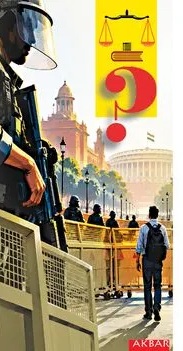
    To understand what a police state looks like, one must currently try traveling through New Delhi. Within a radius of a few kilometers around Union Home Minister Amit Shah’s residence, the Election Commission, Parliament, and Jantar Mantar, police have erected barricades and deployed personnel at every step. Media personnel are not being allowed through unless they show their identity cards. Vehicles have to be parked somewhere afar, leaving people with no choice but to walk. Hearing the warnings broadcast through loudspeakers set up every few feet on the roads sends a chill down one’s spine. These loudspeakers warn that strict action will be taken under Section 160 of the Bharatiya Nyaya Sanhita, 2023, for acts aiding rebellion and incitement in the armed forces, and under Section 223 for defying or showing disobedience toward orders issued by government authorities. Warnings are also being issued to stay away from protesters and not to obstruct the measures taken by the police in the interest of law and maintenance of public order.

    This has been the situation ever since Gandhi Jayanti, when the Cockroach Party and opposition parties announced protests, alleging that the names of crores of voters across the country are being deleted and that vote theft is helping the BJP win. Security measures were tightened further on Tuesday to block opposition MPs from taking out a procession from Parliament to the Election Commission. Although a sit-in organized by CJP in Mumbai saw the participation of 10,000 people and ended peacefully, the imposition of prohibitory orders and the massive deployment of forces in the Jantar Mantar area of Delhi give it the feel of a war zone. It appears the government has realized that if protest demonstrations are permitted in the national capital, it will be difficult to prevent them from escalating.

    Why on earth is the government causing the situation to intensify? Ever since it was forced to rely on allies after coming to power for a third time in 2024 with 240 seats, the Modi government has appeared to be on the defensive. Opposition parties have successfully managed to raise doubts among the public regarding the manner in which the Modi government has won every assembly election held since then. While the opposition can easily be branded as anti-national, the protests have now outgrown the level of political parties. Following the emergence of the Cockroach Janata Party, the massive response from lakhs of youth is clearly visible. Now, with judges, former judges, former election commissioners, and various other sections joining them, anti-government sentiment is spilling over. Developments took another turn last week with news leaking that two election commissioners had also submitted multiple internal notes protesting the unilateral actions of CEC Gyanesh Kumar. There are also auto-drivers and other common sections expressing doubts about the BJP’s electoral victories. “We fought and won against Mamata Banerjee’s lawless rule in West Bengal, yet we cannot claim it was a genuine victory”—the anguish expressed by a senior BJP leader reflects how day by day, the government’s credibility is plunging.

    The primary reason things have reached this pass is the persistent attempt to bring institutions under one’s grip. Respect for the functioning of institutions eroded long ago when agencies like the ED and CBI were weaponized ruthlessly to crush opponents while ignoring criminals who joined hands with the ruling side, and when bodies like the CVC, CAG, and the Central Information Commission were reduced to toothless entities. In this process, the functioning of the Election Commission and the judiciary also became suspicious. While it is true that past regimes also used institutions, critics point out that the blatant and brazen manner in which all institutions have been utilized in the current tenure is unprecedented. Amidst all this, constructive discussions on the Modi government’s achievements or developmental actions are getting swept away by the wind. It is a paradox that these developments are unfolding precisely during the implementation of the Sewa Sankalp announced by Modi to mark 25 years of his governance. When he won 282 seats in 2014 and 303 seats in 2019, forming governments without needing anyone and turning a massive nationwide “Hindu wave” in his favor, no one blamed the Election Commission. But it must be said that many of the steps taken by the government out of the confidence inspired by those victories are responsible for the current state of affairs.

    Above all institutions, the higher judiciary in the country cannot escape blame. A situation where grand thieves are bred arises precisely because petty thefts were not stopped in the past. There are no longer judges like Justice Jagmohan Reddy of the Allahabad High Court—who courageously unseated an unquestionable figure like Indira Gandhi for six years for electoral malpractice—or Justice Krishna Iyer of the Supreme Court, who stripped Indira Gandhi of her right to speak and vote in Parliament. Where are the judges who laid down through the Kesavananda Bharati judgment that fundamental rights in the Constitution cannot be touched, or the judges who struck down the 39th Constitutional Amendment designed to keep the Prime Minister’s election beyond judicial review? Judges who give utmost importance to citizens’ voting rights by declaring criminals immediately disqualified and by introducing NOTA are also dwindling.

    In fact, a constitution bench headed by Justice Joseph delivered a bold verdict in 2023 stating that the appointment of Election Commissioners had been unilateral for the past seven decades and that they should be appointed by a high-powered committee consisting of the Prime Minister, the Leader of the Opposition, and the Chief Justice of India. But which government wants to lose its grip on Election Commissioners? The Modi government promptly enacted a law in Parliament removing the Chief Justice from the committee and replacing him with a Union Minister. This law cleared all hurdles for appointing Gyanesh Kumar as the CEC. Curiously, the Supreme Court did not even agree to place an interim stay on the legislation passed against its own constitution bench’s verdict. Moreover, the apex court did not strike down the bill designed to shield the CEC and the two commissioners from any civil or criminal action. Furthermore, the petition filed by various organizations alleging massive voter deletions was dismissed by Chief Justice Surya Kant, who stated that the maintenance of electoral rolls is an internal administrative exercise and that the court cannot interfere. It was only after this that CEC Gyanesh Kumar expanded the voter deletion program nationwide under the name of SIR. Even though the Supreme Court issued orders on paper, justice was not delivered to voters in West Bengal prior to the elections. Out of more than 2.7 million voters whose names were deleted, 22 lakh filed appeals with the 19 tribunals. Against these, CEC Gyanesh Kumar unilaterally filed 1.61 million counter-appeals. Buoyed by the soft stance of the Supreme Court, the audacity was taken to delete 13 crore voter names nationwide. The apex court did not feel the need to take stringent measures to make people believe that these deletions were carried out lawfully. On top of that, casual remarks made by Justice Surya Kant—stating that some youth have become idle like cockroaches and have made it a habit to attack everyone in media and social media—created a sensation. These very remarks led to the formation of the “Cockroach Party” and massive support for them from the youth. Those who initially forced Education Minister Dharmendra Pradhan to resign are now joining opposition voices demanding Gyanesh Kumar’s resignation.

    Now, the number of protesting sections is increasing day by day. “Whether it is a rickshaw puller or a millionaire, the right to vote is equal. No one has the right to take it away,” remarked Supreme Court judge Justice Ujjal Bhuyan at a NALSAR event in Hyderabad, while another judge, Justice Rohinton Nariman, observed that the right to vote—the lifeblood of democracy—is in danger. Rohinton Nariman is the son of Fali S. Nariman, who was nominated to the Rajya Sabha by the Vajpayee government. Moreover, even past election commissioners appointed by the Modi government are protesting Gyanesh Kumar’s actions.

    Perhaps witnessing the remarks of sitting judges and the rising public agitation, the Supreme Court may have had a change of heart, as it has now taken up a petition filed against the removal of Gyanesh Kumar. It also rejected the Election Commission’s argument that changes to Form 6 were made with the Supreme Court’s permission. Whatever may happen, if the credibility of institutions is to be restored, there must be a change in the government’s attitude. Otherwise, the higher judiciary must intervene and salvage its own credibility, facilitating balanced, data-driven corrections. Failure to do so risks a scenario where institutions, gripped by insecurity and losing all sense of proportion, take actions that could plunge society into turmoil.

  • The Trigger, The Thought Police, and The Electoral Battleground

    “Even though the gun is in the hands of the police, the finger on the trigger that decides whom to shoot is in the hands of those above,” renowned novelist George Orwell depicted a terrifying dystopian world in his novel Nineteen Eighty-Four (1984). In the system he defined as the ‘Thought Police’, those who execute decisions lose the power to think independently. They become like robots that do whatever the person above tells them. The administrative system in India functions precisely according to this formula. Not just the atrocities committed against the people during the Emergency, but many anti-people decisions are implemented in alignment with this ‘Thought Police’ system.

    When The Indian Express leaked 14 notes on September 24 sent by two Election Commissioners to various departments within the Election Commission regarding key decisions taken without their knowledge under the name of Special Intensive Revision (SIR) of the voter list, it sparked immense outrage among the opposition and various anti-BJP sections in the country. Demands were raised branding Chief Election Commissioner Gyanesh Kumar a traitor and calling for him to be hanged. Even a newly born cockroach party called for nationwide protests. Curiously, two days later, the very same Election Commission announced that all their decisions were taken collectively. They also released a photograph of the three Election Commissioners meeting to the press.

    However, no matter how much hue and cry the opposition and other sections raise, Prime Minister Narendra Modi and Home Minister Amit Shah—who make the crucial decisions at the center—do not appear to be taking it all that seriously. Around the time the news broke in The Indian Express, Modi was holding a two-day high-level meeting with Union Cabinet ministers under the name of ‘Chintan Shivir’ at Sevatirth in Delhi. They discussed at length the administrative reforms they are going to undertake and the Viksit Bharat 2047 roadmap. On September 25, while the opposition was fiercely raging over the Express news, Modi participated in ‘Bhajan Clubbing’ on the occasion of Deendayal Upadhyaya Jayanti, singing devotional songs like Achyutam Keshavam and Radhe Radhe along with young men and women. Playing the kanjira himself, he immersed himself in devotion. Union Home Minister Amit Shah also participated in programs like the UP Trade Show, the launch of an LNG train in Ahmedabad, and an anti-terrorism conference, but did not respond at all to the opposition’s protests.

    No thinking intellectual would assume that the electoral system in the country is running properly simply because the three Election Commissioners announced there are no differences among them. Even Lavasa and Rawat—former Election Commissioners appointed during Prime Minister Narendra Modi’s tenure—severely criticized the manner in which the SIR is being conducted. While Lavasa criticized the method adopted for conducting the SIR as unconstitutional and flawed, Rawat opined that the way the Election Commission is functioning is not proper and dark clouds are hovering over its credibility. In fact, how did the notes sent by the two current commissioners to various departments reach the Mumbai correspondent of The Express? Internal sources say that collecting notes from individual departments is difficult, and it is possible that either of the two Election Commissioners leaked all the notes in their possession. Be that asit may, these three Election Commissioners finally washed their hands of the matter by issuing a press release claiming everything is fine. In fact, it is not hard to guess which covert hand aided these three officials—who had not laid eyes on each other from last May to August—in patching things up among themselves.

    Until recently, only Congress used to criticize vote theft. But after the notes of the two Election Commissioners came out, various anti-Modi forces across the country began responding differently. YouTubers everywhere started extensively denouncing Gyanesh Kumar. However, it is impossible to say how long any controversy in the country survives. The NEET paper leak controversy subsided. No one talks about the donation theft at the Ram Mandir in Ayodhya. The levy charges on UPI did not get as much discussion as they should have. The ethanol-petrol controversy faded into oblivion long ago. Controversies keep coming and going one after another. Parliament sessions happening and getting disrupted has become normal. Now, it is hard to say how long anyone will talk about the irregularities happening in the electoral system. The less said about the judiciary, the better. When a judge spoke about the opportunity to appoint favored individuals as Election Commissioners, the Solicitor General retorted, “Aren’t you yourselves appointing people you like as judges in the collegium?”

    In the past, the opposition agitated fiercely over the Bofors scam for nearly two years, eventually leading to the fall of Rajiv Gandhi’s government. Regarding corruption during the UPA-2 regime, BJP did not rest until it carried out protests for over three years and brought Modi to power. The illegal deletion of 13 million voter names by the Election Commission, the unavailability of the central database to district and state officials, the CEC unilaterally filing appeals stating that the removal of 1.6 million voters was proper, and local officials being unable to restore deleted voters in the voter lists in Goa are indeed serious matters. But if the opposition cannot build a passionate public backlash against all these, there is little they can do. Why are the opposition parties—which argue that the BJP won the elections in Bengal, Bihar, and Haryana largely due to massive voter deletions—failing to organize public protests in these states? Can a situation capable of arousing public consciousness like the Bofors scam and the Watergate scandal ever arise regarding electoral irregularities?

    It is hard to say how many people are fighting for the right to vote in India. At least 3 million (3 crore) people in the country have not registered themselves as voters. Among those who registered, if we consider the names removed by the Election Commission under the guise of ‘SIR’, only 860 million (86 crore) voters remain out of the total 990 million (99 crore) voters. Even among them, based on the statistics of the last general elections, only 66 percent—meaning 330 million (33 crore) people—do not even show interest in casting their vote. In fact, the Election Commission’s job is to increase public awareness for voting. But enthusiasm is being drained away because of the ‘SIR’ process. Who has the interest to answer various questions and run around government offices? The population aged between 18-35 in the country is around 350-400 million (35-40 crore). But how many of them are voters? Do the opposition parties and intellectuals have the power to make the people, especially the youth, agitate to register themselves as voters? Will migrant laborers and youth traveling to various places and abroad for livelihood have the eager desire to vote? Even those who express opinions on social media in our country are doubtful to exercise their right. Even those who once told people to boycott elections are now talking about the right to vote.

    Perhaps knowing this is why Modi and Shah appear to be watching the ongoing debate as mere spectators. In this country, every party builds a voter base dedicated to itself and subjects them to promises, welfare programs, allurement, and emotional appeals accordingly. With the database under control, it is not impossible for the Bharatiya Janata Party—which devises a booth-level strategy—to know state-by-state who will vote for them and who will vote for their opponents. The party may believe that the deletion of votes resulting from the ‘SIR’ process undertaken by its own shop may not cause significant loss to their favorable majority votes. Furthermore, they might think that the more the opposition makes a fuss over the lost votes of a certain section, the more their own majority votes will consolidate. Amidst this squabbling for votes, no one cares about actual electoral reforms. No one is interested in the thousands of crores of black money flowing lavishly in every election. Nonetheless, it would be a welcome development if the protests built by the opposition and Gen Z on the functioning of the Election Commission bring even the slightest jolt to the system.

  • “Beyond the Uproar: Elections Will Decide All”

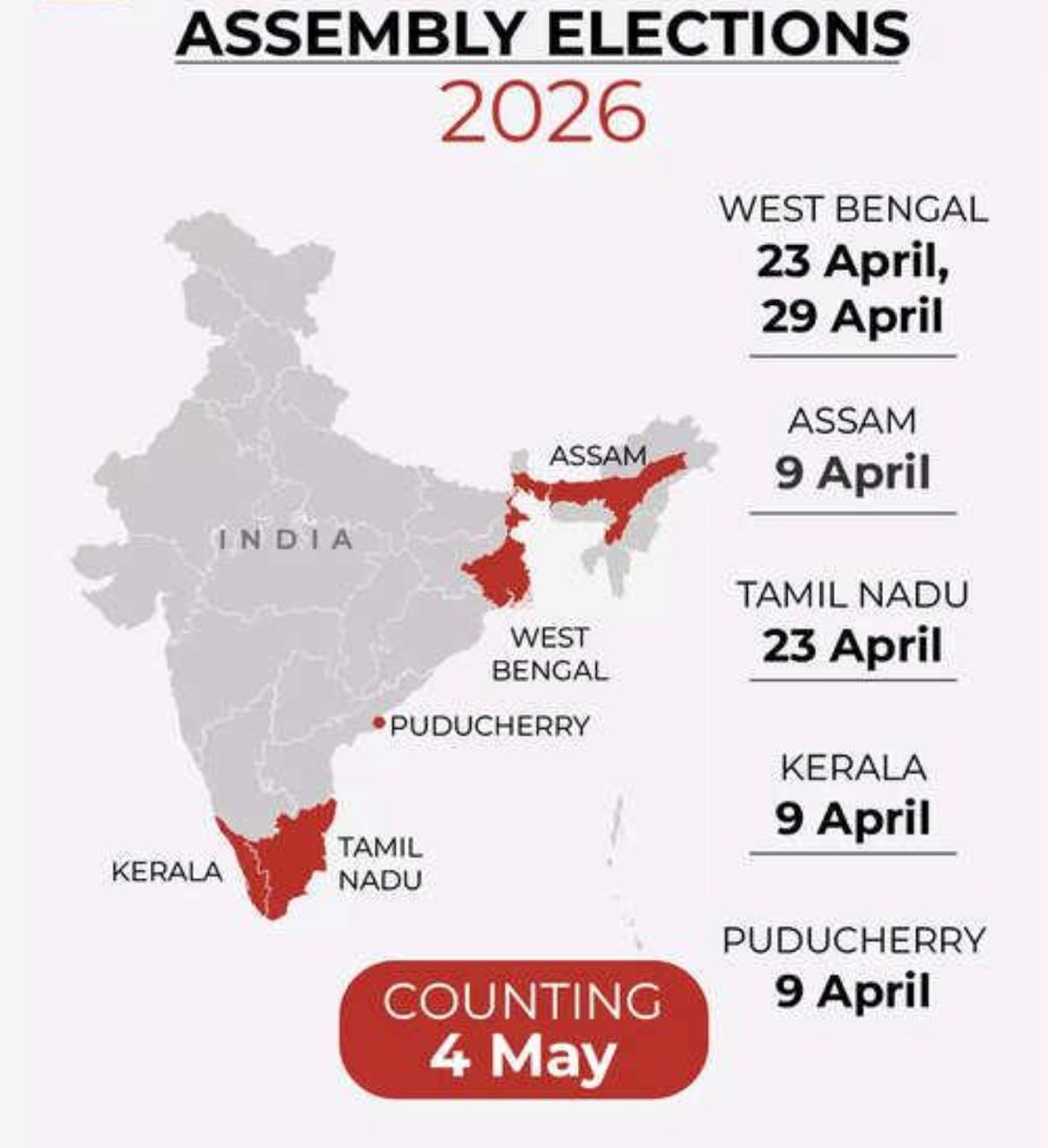
    Elections have been announced in a Union Territory. Now everyone’s attention is on the developments taking place in the election-bound states. For the past two days, parliamentary proceedings have been running smoothly. The government and the Speaker agreeing to lift the suspension of eight MPs who were suspended in previous sessions is an indication that some understanding has been reached between both sides. However, no matter how much uproar is created in Parliament, or how stubbornly the government behaves, ultimately both the ruling party and the opposition must prove their strength before the people, right? Unless public anger against the government erupts and is reflected in election results, there is no benefit in stalling Parliament. After Parliament discussed and rejected the no-confidence motion brought against him over two days, Speaker Om Birla, upon resuming his seat, remarked, “These two days of the House’s time have been wasted.”

    It is surprising that the opposition was not even ready for voting on the no-confidence motion they themselves introduced. Wouldn’t it have been better if a message had gone out that 233 opposition members in the House opposed Om Birla? Perhaps the opposition feared that it would give an impression to the public that they are not united. It is noteworthy that MPs from the Samajwadi Party and Trinamool Congress did not sign the no-confidence motion. Even so, adhering to opposition dharma, they spoke in favor of it. While a discussion was supposed to take place on the no-confidence motion against Om Birla, insisting on discussing West Asia and stalling the House suggests that Congress was not serious about its own motion and had its reasons. Yet, their opposition is directed more at Modi than at Birla, isn’t it?

    In fact, Parliament provides an excellent platform for the opposition to clearly present their views and attract public attention. In the past, leaders like Hiren Mukherjee, Indrajit Gupta, Piloo Mody, Atal Bihari Vajpayee, George Fernandes, Sushma Swaraj, Arun Jaitley, and Venkaiah Naidu made remarkable speeches while in opposition, which established them as national leaders. Compared to them, it must be said that Rahul Gandhi has not yet emerged as a powerful orator in Parliament. It cannot be said that Congress lacks good speakers, but since Rahul Gandhi is the Leader of the Opposition, politics revolves around him. He seems to have developed a style of creating commotion by bringing up topics like Nirav or Epstein just moments after beginning to speak. Perhaps he is missing the opportunity to present the same issues in a powerful, flowing speech that could captivate not only members but the entire nation. On the other hand, Priyanka Gandhi Vadra, though she has delivered only a few speeches so far, has made them widely discussed. After she challenged, “Make all your criticisms against Nehru at once… let’s discuss them,” the ruling party’s criticism of Nehru in Parliament subsided. During the debate on the no-confidence motion against Om Birla, Trinamool MP and 33-year-old actress Sayoni Ghosh spoke so effectively and exposed the BJP’s stance in a way that no one had expected.

    The fortune of the Bharatiya Janata Party, especially Prime Minister Narendra Modi, lies in the fact that the opposition has not only failed to stand strong in elections but is also not effectively using Parliament as a platform. Even though there are many issues to criticize Modi on, Congress’s attacks are not reaching the public strongly. Interestingly, even in states where the BJP is not very strong, there are intellectuals who argue that Modi is extremely powerful. For example, in Karnataka, Tamil Nadu, Kerala, Andhra Pradesh, and Telangana, the BJP is not very strong. Yet, if two people from these regions talk for ten minutes, Modi’s name repeatedly comes up in their conversation. There are more people overestimating Modi’s strength than perhaps necessary. It is said that a German leader once remarked, “Even criticizing me is a crime, and ignoring me is also a crime!” This situation is perhaps pushing Modi to consider simultaneous elections.

    Coming to the southern states, after losing in Karnataka in 2023, the BJP has not yet recovered and is struggling with internal conflicts. B. S. Yediyurappa has completed 50 years in politics but has made it clear that he is not ready to retire. Just as there is uncertainty at the national level about who will succeed Modi, in Karnataka too it is unclear who will lead after Yediyurappa. Even BJP leaders themselves cannot say whether the party will strengthen in Karnataka by the next elections. In Telangana, everyone knows the BJP is struggling to rise above the third position. In Kerala, which is heading into assembly elections, it is not easy to predict whether the BJP will increase its vote share or win even ten seats. In Tamil Nadu, the confusion within the BJP is evident from its own actions. Despite attempts to split the AIADMK or promote Annamalai, the BJP has not gained strength. Ultimately, it has had to ally again with the AIADMK and depend on the seats given by it, even resorting to moves like offering the Deputy Chief Minister post to actor Vijay, who is new to politics. No matter how much the BJP expands in northern India, the people of the southern states have not yet embraced it. It is leaders who are welcoming it with shawls, not the people!

    At the national level, the BJP’s strategy broadly includes consolidating Hindu votes, pursuing politics in the name of nationalism, and projecting Modi as a strong leader. However, in states like West Bengal, Assam, Tamil Nadu, Kerala, and Puducherry, where elections are being held, Hindutva politics is not as strong as in the north and west. A form of sub-nationalism exists in these states, similar to Andhra Pradesh and Telangana. Therefore, making BJP-style politics succeed in these states is a real test for the party and for Modi. The BJP knows that fighting regional parties is not as easy as fighting Congress. Moreover, in states where the BJP has won, even relatively unknown leaders have been accepted as Chief Ministers. But such a situation does not exist in the current election-bound states. When L. K. Advani was BJP president, strong leadership was built in every state, including leaders like Modi. Today, Modi does not have leaders at either the national or regional level who can stand beside him and draw public applause. This is both his strength and his weakness.

    In the southern states, apart from marginally increasing vote share and maintaining alliances, there is little the BJP can achieve. Winning West Bengal is a major challenge for Modi. Modi and Amit Shah are making every possible effort to defeat Mamata Banerjee this time. They are well aware that Hindutva politics alone cannot secure victory in Bengal. Efforts such as revising voter lists and allegedly removing over six million voters, replacing the governor with IPS officer R. N. Ravi, making administrative changes, conducting ED raids, and consolidating Hindu votes are all being undertaken. Addressing a rally at Kolkata’s Parade Ground a day before the election announcement, Modi expressed concern that Hindus might become a minority in Bengal. The BJP’s strength in Bengal is gradually increasing. However, Modi and Amit Shah failed to defeat Mamata Banerjee in 2016 and 2021. Now they are facing her for the third time. Although they could not defeat Arvind Kejriwal in Delhi in 2015 and 2020, they managed to secure victory in 2025 on the third attempt. Will they be able to repeat that success in Bengal this time? Can Bengal be compared with Delhi? In any case, past elections are one thing, and the upcoming elections are another. These elections can be seen as a trial by fire for the strategies Modi has pursued over the past twelve years. Will Modi be able to withstand the challenges emerging at both national and international levels, counter questions about his policies, and outmaneuver opposition strategies to stand tall like a formidable leader?